Follow Me On Social Media!

How long to cook a turkey is the first question every Thanksgiving cook asks, and it has the most useful answer, because the USDA publishes the times in a chart by weight. Find your turkey’s weight, read the time for a stuffed or unstuffed bird at 325°F, and plan the day around it. The chart gives you the window. The thermometer gives you the answer. Thanksgiving is Thursday, November 26, 2026, and a 16 pound unstuffed turkey needs about 3 3/4 to 4 1/4 hours in the oven, so a 4 p.m. dinner means the bird goes in around 11 a.m., with time to rest before carving.
The Short Answer: 325°F, 165°F, and the Chart Below
Roast a fully thawed turkey at 325°F and cook it until a food thermometer reads 165°F in the innermost part of the thigh, the innermost part of the wing, and the thickest part of the breast. As a planning rule, allow about 13 to 15 minutes per pound for an unstuffed bird at 325°F, and about 15 minutes per pound or a little more for a stuffed bird. The USDA’s published chart gives the same answer in ranges: an 8 to 12 pound unstuffed turkey takes 2 3/4 to 3 hours, a 12 to 14 pound bird takes 3 to 3 3/4 hours, a 14 to 18 pound bird takes 3 3/4 to 4 1/4 hours, an 18 to 20 pound bird takes 4 1/4 to 4 1/2 hours, and a 20 to 24 pound bird takes 4 1/2 to 5 hours. Stuffed birds take 15 to 30 minutes longer. After the turkey comes out, let it rest for 20 to 30 minutes before carving. The chart is a planning tool, not a promise: ovens run hot and cold, birds are shaped differently, and only the thermometer decides when the turkey is done.
Turkey Cooking Time Chart by Weight (325°F)

The chart below is the FoodSafety.gov turkey roasting chart, from the USDA Food Safety and Inspection Service. Set the oven to 325°F, start with a fully thawed bird, and read the row for your weight. The minimum internal temperature is 165°F in the thigh, wing, and breast, and the centre of the stuffing must also reach 165°F. The USDA’s turkey tips page gives the same thawing and roasting guidance for the holiday.
For a turkey breast of 4 to 6 pounds, allow 1 1/2 to 2 1/4 hours unstuffed; stuffing is not usually applicable at this size. For a 6 to 8 pound breast, allow 2 1/4 to 3 1/4 hours unstuffed and 3 to 3 1/2 hours stuffed. For a whole turkey of 8 to 12 pounds, allow 2 3/4 to 3 hours unstuffed and 3 to 3 1/2 hours stuffed. For 12 to 14 pounds, allow 3 to 3 3/4 hours unstuffed and 3 1/2 to 4 hours stuffed. For 14 to 18 pounds, allow 3 3/4 to 4 1/4 hours unstuffed and 4 to 4 1/4 hours stuffed. For 18 to 20 pounds, allow 4 1/4 to 4 1/2 hours unstuffed and 4 1/4 to 4 3/4 hours stuffed. For 20 to 24 pounds, allow 4 1/2 to 5 hours unstuffed and 4 3/4 to 5 1/4 hours stuffed. Start checking the temperature about 45 minutes before the earliest time in your row, because a smaller bird in the band, a hot oven, or a bird that went in at room temperature will all finish early. Plan dinner for the late end of the range plus about 30 minutes of rest and carving time, so the bird is never the reason the table waits.
How Many Minutes per Pound?

Minutes per pound is the quick version of the chart, with one warning: the USDA gives times by weight band rather than a per-pound rate, because a per-pound rate breaks down at the small end. Worked out from the chart, the rate falls as birds get bigger: roughly 15 to 20 minutes per pound for 8 to 12 pounds, about 14 to 16 for 12 to 18 pounds, and about 12 1/2 to 14 for 18 to 24 pounds. The commonly quoted figure of 13 to 15 minutes per pound for an unstuffed bird at 325°F sits in the middle of those bands.
Use the per-pound figure to set your first temperature check, not your carving time. A 16 pound turkey at 13 to 15 minutes per pound works out to about 3 1/2 to 4 hours, which matches the USDA band of 3 3/4 to 4 1/4 hours closely enough for planning. A stuffed bird needs about 15 minutes per pound or a little more, and the stuffing itself must reach 165°F in the centre, which is why the USDA chart adds 15 to 30 minutes for a stuffed bird. The per-pound math is also useful when you are buying the bird: the USDA’s planning rule is about 1 pound of turkey per person, which covers the bone, the trim, and a reasonable amount of leftovers. A 16 pound turkey feeds about 16 people at that rule. If your guests are light eaters, 3/4 pound per person is enough, but the 1 pound rule is the safer plan when you want leftovers.
Stuffed vs Unstuffed: How Much Longer?

A stuffed turkey takes longer because the stuffing blocks the flow of hot air inside the cavity and insulates the centre of the bird. The USDA chart adds 15 to 30 minutes for a stuffed turkey of the same weight, and the stuffing itself must reach 165°F in the centre before the bird is safe to eat. That is a second temperature to check, in addition to the breast, thigh, and wing. If the meat reaches 165°F but the stuffing is still at 150°F, the bird is not done: either keep roasting until the stuffing catches up, or scoop the stuffing out into a baking dish and finish it in the oven on its own.
The USDA recommends cooking stuffing separately for more even cooking, and it is the safer option. If you do stuff the bird, fill the cavity loosely, never pack it tight, and put the stuffing in just before the bird goes into the oven, never the night before. Use about 3/4 cup of stuffing per pound of turkey as a rough guide. After the meal, leftover stuffing follows the same rules as the turkey: refrigerate within two hours and use within three to four days. For the details, see our guides to freezing leftover stuffing and what to do with leftover stuffing.
What Temperature Should You Roast a Turkey At?
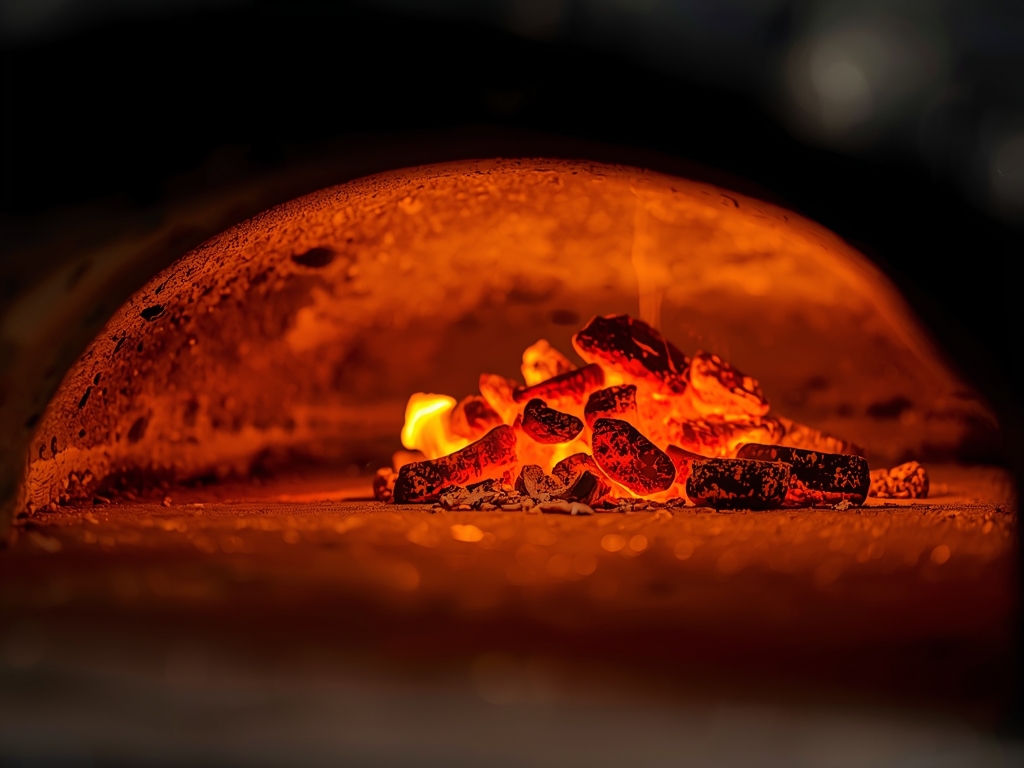
Set the oven to 325°F or higher: the lowest temperature the USDA publishes roasting times for, and the standard for a whole turkey. A lower oven, such as 250°F, leaves the bird in the danger zone between 40°F and 140°F for too long while it heats up. A higher temperature is safe but changes the timing: at 350°F the cook is shorter, and the USDA chart no longer applies, so you cook by thermometer alone. A very high start, such as 450°F for the first 30 to 45 minutes to crisp the skin, then 325°F, also moves you off the chart, to roughly 10 to 12 minutes per pound.
For a first turkey, roast at 325°F the whole time and use the chart. Keep the oven door closed as much as possible, because every time it opens the temperature drops and the cook stretches. If the breast browns too fast, tent it loosely with foil and leave the legs exposed. If the skin is still pale near the end, remove the foil for the last 30 to 45 minutes. A roasting rack in a shallow pan helps hot air circulate under the bird; a deep pan with high sides blocks that airflow and adds time.
How to Tell When the Turkey Is Done

The turkey is done when a food thermometer reads 165°F in three places: the innermost part of the thigh, the innermost part of the wing, and the thickest part of the breast. Check all three, without touching bone, because bone reads hotter than the meat around it. The thigh is usually the last part to reach 165°F, so it is the place to watch: the breast can reach 165°F while the thigh is still at 150°F. If any of the three is below 165°F, the bird goes back in the oven.
Do not rely on the pop-up timer, on clear juices, or on a leg that wiggles freely. A pop-up timer measures one spot in the breast, juices can run clear before the thigh is safe, and a loose leg joint tells you about the connective tissue, not the temperature. A leave-in probe thermometer, set with the probe in the thickest part of the thigh, is the most useful tool for a whole turkey, because it lets you watch the temperature climb without opening the oven. Start checking with an instant-read thermometer about 45 minutes before the earliest time in your chart row, and check again every 20 to 30 minutes after that. If the bird was cooked from frozen, the same 165°F rule applies in the same three places, and the cooking time will be at least 50 percent longer than the chart says for a thawed bird. When the turkey reaches 165°F, take it out. It does not need to cook past that point, and every degree beyond 165°F is moisture leaving the meat.
How Long Should a Turkey Rest Before Carving?
Let the turkey rest for 20 to 30 minutes before carving. The USDA Food Safety and Inspection Service says to let the turkey stand for 20 minutes so the juices set and the bird carves more easily. The National Turkey Federation suggests a longer rest, at least 30 minutes and up to an hour for a large bird. The honest figure is a range: 20 minutes is the minimum, 30 minutes is a good target for a typical 14 to 18 pound turkey, and up to an hour is fine for a very large bird. Tent the turkey loosely with foil while it rests, and leave it on the carving board or in the roasting pan so the juices collect instead of running across the counter.
Resting does two things. First, the temperature evens out: the outer layers cool slightly while the centre finishes rising a few degrees, a process called carryover cooking, which can add 5 to 10 degrees to the breast. That is why some cooks pull the bird at 160°F in the breast and let carryover take it to 165°F, although the meat must reach 165°F somewhere, and checking after the rest confirms it. Second, the juices redistribute: a turkey carved the moment it leaves the oven loses its juices onto the board, and the slices come out dry. Use the rest to finish the gravy from the pan drippings — our guide to making gravy ahead of time covers reheating it without lumps — warm the plates, and get the sides to the table.
What If the Turkey Is Done Early — or Late?

A turkey that finishes early is easier to handle than a late one. Keep the bird hot, above 140°F, and do not let it sit at room temperature for more than two hours in total. Tent it loosely with foil and keep it in a warm oven, set to about 200°F, for up to an hour, or carve it and hold the sliced meat in a covered dish in a warm oven with a little broth or pan juices. Carving early and holding the meat is usually better, because a whole bird held too long keeps cooking and dries out. Do not hold a turkey for more than about an hour, and never hold it in an oven that has been switched off and is cooling down.
If the breast is done and the thigh is behind, cut the legs and thighs off and return them to the oven in a separate pan while the breast rests. If the whole bird is behind, raise the oven to 350°F or 375°F and check the temperature every 15 minutes. If the bird went in late because the thaw ran long, remember that a partly frozen turkey needs at least 50 percent more time than the chart says. Serve the sides first, and do not rush the bird: pulling it before 165°F in all three places is the one mistake that cannot be fixed at the table.
The Bottom Line
A turkey’s cooking time comes from its weight, and the USDA chart is the source to use. At 325°F, allow 2 3/4 to 3 hours for 8 to 12 pounds, 3 to 3 3/4 hours for 12 to 14 pounds, 3 3/4 to 4 1/4 hours for 14 to 18 pounds, 4 1/4 to 4 1/2 hours for 18 to 20 pounds, and 4 1/2 to 5 hours for 20 to 24 pounds, unstuffed, and add 15 to 30 minutes if the bird is stuffed. As a shorthand, plan on about 13 to 15 minutes per pound unstuffed and about 15 minutes per pound stuffed, and about 1 pound of turkey per person. Roast at 325°F or higher, never lower, and finish only when a thermometer reads 165°F in the innermost thigh, the innermost wing, and the thickest part of the breast, with the centre of any stuffing at 165°F as well. Rest the bird for 20 to 30 minutes before carving, and up to an hour for a very large bird. Start checking about 45 minutes before the earliest time in your row, plan dinner for the late end of the range plus rest time, and hold a finished bird hot and covered for no more than about an hour. Leftovers keep for three to four days in the fridge; see our guide on how long Thanksgiving leftovers last for the full table.

Ghani is the founder of TwiceTasty and a passionate home cook who believes no meal should go to waste. What started as a personal mission to transform leftovers into exciting new dishes has grown into a community of food lovers who share the same philosophy.