Follow Me On Social Media!

Thanksgiving 2026 falls on Thursday, November 26, and when the turkey is carved and the plates are cleared, the carcass is the part most people throw away. That is a mistake. The carcass — the bones, the wings, the neck, the bits of meat still clinging to the frame — is the best ingredient in the whole bird for making stock, and a pot of homemade turkey stock is worth more than the turkey itself for the week after Thanksgiving. It is the base for soup, for gravy, for risotto, for beans, and for every dish that needs a rich, savoury liquid instead of water from a carton.
This guide covers why the carcass makes the best stock, what you need, the exact steps, how long to simmer and why low and slow wins, how to strain and cool the stock safely, how to store it in the fridge and freezer, how long it lasts, and what to cook with it. The quantities here are the ones in the recipe card: the carcass of one turkey, about four quarts of water, two onions, three carrots, three celery stalks, two bay leaves, a tablespoon of peppercorns, and a few sprigs of parsley. No special equipment, no special skill — just a big pot, a few hours, and a carcass you were about to throw away.
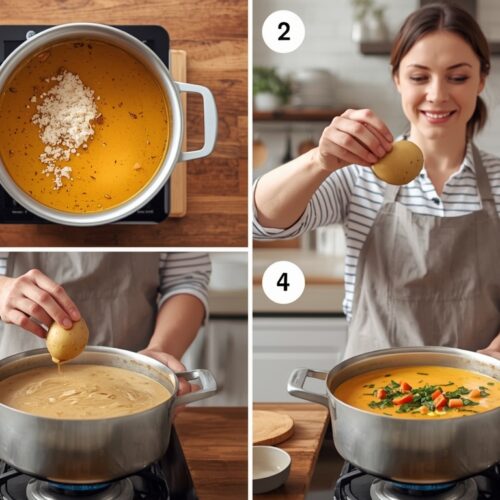
Turkey Stock From the Carcass
Ingredients
- Carcass of 1 turkey meat picked off, broken into pieces
- About 4 quarts (16 cups) cold water enough to cover
- 2 onions quartered
- 3 carrots cut into chunks
- 3 celery stalks cut into chunks
- 2 bay leaves
- 1 tablespoon black peppercorns
- 4 sprigs fresh parsley
- 1 tablespoon apple cider vinegar
- 1 teaspoon salt added at the end to taste
Instructions
- Break the carcass to fit the pot.
- Cover with water.
- Bring to a boil.
- Skim the foam for 20–30 minutes.
- Add the vegetables, bay leaves, peppercorns, parsley and vinegar.
- Simmer gently for 3–4 hours.
- Strain through a fine-mesh sieve.
- Cool quickly, and refrigerate or freeze.
Notes
Fridge 3–4 days; freezer 4–6 months.
Why the Carcass Is the Best Part of the Bird
The carcass makes better stock than any other part of the turkey because it is mostly bone, and bones are where the flavour and the body of a stock come from. As the bones simmer, the collagen in the joints and connective tissue dissolves into gelatin, and gelatin is what gives a good stock its body — the way it coats a spoon, the way it sets into a soft jelly in the fridge, the way it makes a soup taste rich rather than watery. Meat alone cannot do that. A stock made from turkey breast would taste like turkey, but it would be thin. A stock made from the carcass tastes like turkey and feels like something.
The carcass also has the parts that a cook would otherwise waste: the wings, the neck, the back, the rib cage, and the small pieces of meat that are too fiddly to carve but too flavourful to throw away. All of that goes into the pot, and all of it gives up its flavour over three or four hours of gentle simmering. The skin and the fat that come with the carcass add richness too, and the fat can be skimmed off the top once the stock is cold — it lifts off in a solid layer, and what is left underneath is a clean, clear stock.
There is a practical reason as well. The carcass is free. You have already bought it, you have already cooked it, and the alternative is the bin. A pot of stock made from it replaces three or four cartons of shop-bought stock, and it tastes better than any of them — deeper, more savoury, and unmistakably turkey rather than generically meaty. If you have made stock from a chicken carcass before, the method is the same, and our guide to making stock from a chicken carcass covers the smaller-scale version of the same process. The turkey version is bigger, richer, and more useful, because a Thanksgiving turkey leaves behind a lot more bone.
What You Need (Carcass, Vegetables, Water, Pot)

You need the carcass of one turkey, with as much meat picked off it as you can manage — save the meat for sandwiches and soup, and put the bare frame in the pot. Break the carcass into pieces that fit your largest pot: twist the wings off, snap the legs at the joints, and crack the rib cage in half if you need to. A carcass that fits flat in the pot, fully covered with water, will give up its flavour far more evenly than one that sticks out of the water at the top. If the carcass is too big for your pot, a pair of kitchen shears will cut through the joints, and a heavy knife will crack the backbone.
The vegetables are the classic trio: two onions, quartered (leave the skins on — they add a golden colour), three carrots, cut into chunks, and three celery stalks, cut into chunks. You do not need to peel the carrots or trim the celery carefully; this is stock, not a salad, and everything will be strained out at the end. Add two bay leaves, a tablespoon of black peppercorns, four sprigs of fresh parsley, and a tablespoon of apple cider vinegar. The vinegar is not for flavour — it is a small amount of acid that helps draw minerals and gelatin out of the bones, and you will not taste it in the finished stock. Hold the salt until the end: salt added at the start concentrates as the stock reduces, and a stock that tastes right at the start will be too salty by the finish. One teaspoon at the end, tasted and adjusted, is the right amount.
For water, you need about four quarts — sixteen cups — enough to cover the carcass and the vegetables by an inch or two. Cold water is the right choice: starting cold lets the proteins dissolve slowly into the water instead of seizing up, and it gives you a clearer stock. For the pot, use the largest one you own — at least eight quarts, and twelve is better — because a pot that is too small will boil over, and a stock that boils over is a mess and a waste. The photo at this section shows a tray of carrot and celery sticks, which is the vegetable base of the stock, and it is worth buying the vegetables fresh for this: a limp carrot from the back of the fridge will still work, but a fresh one gives a cleaner, sweeter flavour.
How to Make Turkey Stock Step by Step

Put the broken carcass in the pot and add the cold water — about four quarts, enough to cover everything by an inch or two. Put the pot over high heat and bring it to a boil, and as it comes up to the boil, watch for the foam. The foam is greyish-white scum that rises to the surface as the water heats, and it is made of dissolved proteins and impurities from the bones. Skim it off with a spoon or a small strainer, and keep skimming for the first twenty to thirty minutes, until the foam stops forming and the surface is mostly clear. This is the step that decides whether your stock is clear or cloudy, and it is worth the patience.
Once the foam has stopped, add the vegetables — the two quartered onions, the three carrots, the three celery stalks — along with the two bay leaves, the tablespoon of black peppercorns, the four sprigs of parsley, and the tablespoon of apple cider vinegar. Turn the heat down until the pot is at a gentle simmer: a few lazy bubbles breaking the surface every second or two, not a rolling boil. Put the lid on ajar, leaving a gap for steam to escape, and leave it alone. The photo at this section shows a wooden spoon stirring a pot of soup, and stirring is something you should do very little of from here on — once an hour, gently, is plenty, and every time you stir you disturb the sediment at the bottom and cloud the stock.
After three to four hours, the stock is done. The bones will look pale and picked clean, the vegetables will be soft and spent, and the liquid will be a deep golden colour with a rich smell. Fish out the large bones and vegetables with tongs or a slotted spoon, then pour the stock through a fine-mesh sieve into a large bowl or another pot. For the clearest stock, line the sieve with a piece of cheesecloth or a clean tea towel. Taste it, add the teaspoon of salt, and adjust — it should taste savoury and full, like turkey, with no single flavour dominating. If it tastes weak, it probably needs more time rather than more salt, and an extra thirty minutes on the heat will do more than another pinch.
How Long to Simmer (and Why Low and Slow Wins)

Simmer the stock for three to four hours at a gentle simmer — never a rolling boil. Three hours is the minimum for a good stock: by then the collagen has dissolved, the flavour has moved from the bones into the water, and the stock has body. Four hours is better if you have the time, and it is the upper end of the range for a turkey carcass — past four hours the returns diminish, the vegetables start to break down and cloud the stock, and the flavour can turn muddy rather than deeper. The total cooking time for this recipe is four hours, including the time it takes to bring the pot to a boil and skim it, and the preparation — breaking the carcass, chopping the vegetables — takes about thirty minutes.
The reason for the gentle simmer is that a rolling boil does three bad things at once. It churns the stock and emulsifies the fat into the liquid, which makes the stock cloudy and greasy instead of clear. It breaks the vegetables apart and stirs the sediment up from the bottom, which clouds the stock further. And it evaporates the water too fast, which concentrates the stock unevenly and can leave it too salty or too strong. A gentle simmer does the opposite: the heat is enough to dissolve the collagen and extract the flavour, and the liquid is calm enough to stay clear. The photo at this section shows a pot of dumplings boiling in broth — a vigorous, rolling boil — and it is a good picture of exactly what to avoid. Your stock pot should never look like that. It should look almost still, with a bubble breaking the surface every second or two, and steam rising lazily from the top.
If you are short on time, a pressure cooker will make a good stock in about an hour, and a slow cooker will make one in eight to ten hours on low. Both work, and both are worth knowing about, but the stovetop method in this guide is the one that gives you the most control — you can skim it, taste it, and stop it when it is right. Whatever method you use, the rule is the same: low and slow, never a rolling boil, and three to four hours on the stove is the range to aim for.
Straining and Cooling Stock Safely

Straining is a two-step job. First, lift out the big pieces — the bones, the wings, the spent vegetables — with tongs or a slotted spoon, and discard them. They have given up everything they have to give, and there is nothing left in them worth keeping. Then pour the stock through a fine-mesh sieve into a clean bowl or pot, and for the clearest result, line the sieve with cheesecloth or a clean tea towel. Do this slowly, in batches, and do not press on the solids in the sieve — pressing squeezes out cloudy sediment and bits of vegetable that you spent four hours keeping out of the stock.
Cooling is where food safety matters, and it matters because stock is a large volume of hot liquid that cools slowly. The USDA’s rule is that cooked food should be refrigerated within two hours of cooking, and a pot of stock left on the counter will take far longer than two hours to cool on its own — the outside cools while the centre stays warm, and warm stock in the middle of the danger zone is exactly where bacteria grow. The fix is to cool it fast. The simplest way is an ice bath: set the bowl of stock in the sink, surround it with cold water and ice, and stir the stock occasionally. A large pot of stock will cool to fridge temperature in about thirty to forty-five minutes this way. The other way is to divide it into shallow containers — the wider and shallower the container, the faster the stock cools — and put those straight into the fridge once they are no longer steaming.
The photo at this section shows two glass jars of orange soup, and it is a good image for the cooling stage: clear glass, a sensible portion size, and a container you can see through. Stock stored in glass jars looks the same, and the same rules apply — cool it first, then put it in the jar, and leave about an inch of headspace if the jar is going into the freezer, because the stock will expand as it freezes. Do not put a hot pot of stock into the fridge. It will warm everything else in the fridge, and it will take hours to cool down — the ice bath or the shallow containers are faster, safer, and easier.
How to Store Turkey Stock: Fridge and Freezer
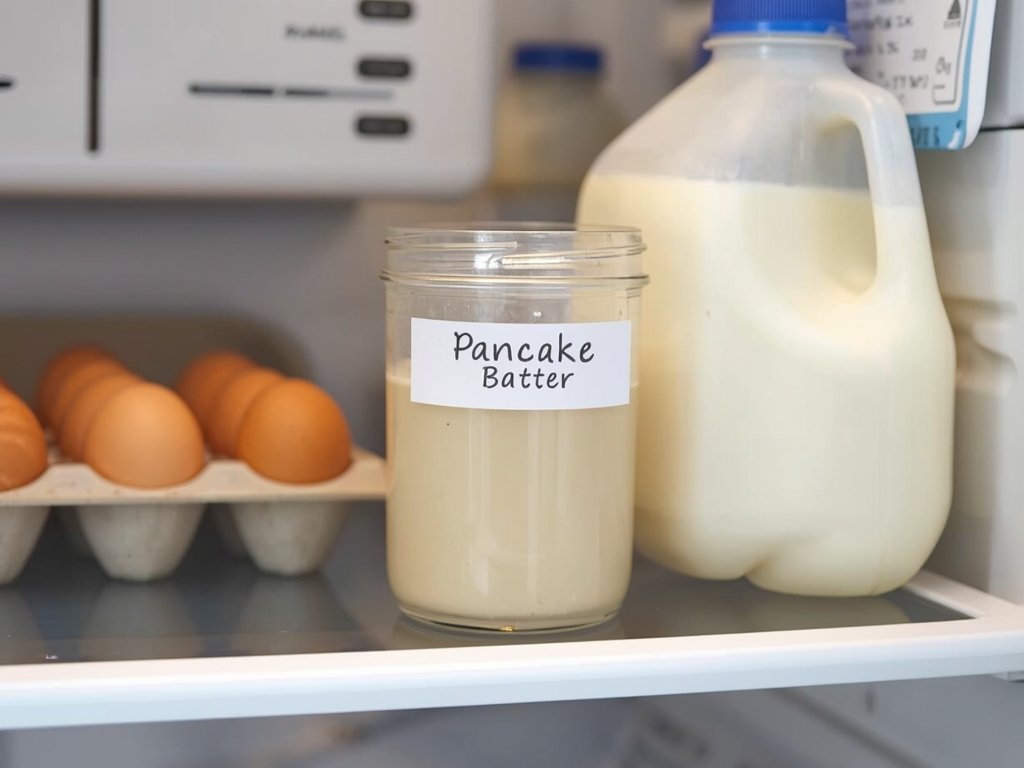
In the fridge, store the stock in covered containers — glass jars, deli containers, or a large jug with a lid — and use it within three to four days. Once the stock is cold, the fat will rise to the top and set into a solid layer. Leave it there while the stock is stored: it seals the surface and protects the stock underneath, and you can lift it off with a spoon when you are ready to use the stock. If the stock has set into a soft jelly, that is a good sign — it means the gelatin dissolved properly, and the jelly will melt back into liquid as soon as it is heated.
In the freezer, stock keeps its best quality for four to six months. Freeze it in portions you will actually use: one-cup and two-cup containers for sauces and risottos, quart containers for soup, and ice cube trays for the small amounts you need to deglaze a pan or enrich a sauce. Leave about an inch of headspace in every container, because the stock expands as it freezes and a full jar will crack or push its lid off. Label every container with the contents and the date, and freeze the containers flat if you are using bags, so they stack neatly. The photo at this section shows a refrigerator shelf with a jar, milk, and eggs — and the jar in that photo is labelled “Pancake Batter”, not stock, so do not let the image confuse you. The point of the photo is the shelf itself: a cold, organised fridge with the stock in a labelled container, where you can see it and reach it.
For the full storage method, including which containers work best and how to thaw frozen stock safely, see our guide to storing broth in the fridge vs freezer, which covers the same ground for chicken stock and applies here word for word. And if you are freezing soup made with the stock rather than the stock itself, our guide to freezing leftover turkey soup covers the portion sizes and thawing times for the finished dish.
How Long Does Turkey Stock Last?

In the fridge, turkey stock lasts three to four days, which is the USDA’s window for cooked leftovers and for soups and stews generally. The FoodSafety.gov cold food storage chart gives soups and stews three to four days in the fridge and two to three months in the freezer, and the USDA’s guidance on leftovers and food safety gives the same three-to-four-day fridge window and says to reheat leftovers to 165°F. Stock is a cooked leftover in the same sense as soup, and the same numbers apply.
In the freezer, the best-quality window for turkey stock is four to six months. That is longer than the two-to-three-month window for finished soup, because stock is a simpler liquid with no vegetables or meat in it to go soft, and it holds up better over time. Past six months the stock is still safe — food kept at 0°F stays safe indefinitely — but the flavour will start to fade, and the stock will pick up freezer smells if it is not sealed well. Four to six months is the number to plan around, and it is generous: a batch made on Thanksgiving weekend will still be good in the spring, which is more than enough time to use it.
The photo at this section shows two pots of soup simmering, and it is a useful reminder of the stock’s real lifespan: the stock is not the end of the process, it is the beginning of the next one. A batch of stock that sits in the freezer for five months and then becomes a pot of soup has done its job perfectly. A batch that sits in the fridge for a week and goes off has been wasted. The rule is simple: if you will use the stock within four days, keep it in the fridge. If you will not, freeze it the same day you make it, in portions, labelled, and it will be there when you need it.
What to Cook With Homemade Turkey Stock

The first thing to cook with turkey stock is soup, and the obvious soup is the one that uses the rest of the leftovers. Our leftover turkey soup is built for exactly this: leftover turkey, vegetables, and a pot of homemade stock, simmered together into a soup that tastes like Thanksgiving without tasting like a repeat of Thanksgiving. It is the best use for the stock, the turkey, and the vegetables all at once, and it is the reason to make the stock in the first place.
After soup, the next best use is gravy. A gravy made with homemade turkey stock instead of water or carton stock is noticeably richer — deeper, more savoury, and more like the gravy that came with the turkey itself. Use it for the gravy you serve with the leftover turkey, and for any gravy you make in the weeks after. The same logic applies to risotto: a turkey stock risotto, made with leftover turkey and mushrooms, is a genuinely good dinner, and it is the kind of dish that makes a pot of stock feel like an ingredient rather than a chore. Use the stock anywhere you would use water or shop-bought stock — cooking rice, cooking beans, braising greens, deglazing a pan — and the dish will be better for it.
The photo at this section shows an electric pressure cooker on a counter, and it is a fair picture of the other way to use stock: as the cooking liquid in a pressure cooker or a slow cooker, where it does the work of flavouring a whole dish at once. A pot of beans cooked in turkey stock, a batch of lentils simmered in it, a slow-cooked stew built on it — all of these are better with homemade stock than with water, and all of them are the reason to freeze the stock in useful portions. A quart in the freezer is a soup waiting to happen. A cup in the freezer is a sauce waiting to happen. An ice cube tray of stock in the freezer is a dozen small improvements waiting to happen.
The Bottom Line
The turkey carcass is not waste. It is the raw material for the best stock you will make all year, and it costs nothing but a pot, some vegetables, and three to four hours of gentle simmering. Break the carcass to fit the pot, cover it with about four quarts of cold water, skim the foam for the first twenty to thirty minutes, add two onions, three carrots, three celery stalks, two bay leaves, a tablespoon of peppercorns, and a little parsley and vinegar, and simmer it low and slow — never a rolling boil — until the stock is deep golden and full-flavoured. Strain it, cool it quickly, and store it: three to four days in the fridge, four to six months in the freezer.
Make the stock on the Friday after Thanksgiving, while the carcass is still fresh and the kitchen is still in cooking mode. Freeze it in portions, label it, and use it all winter — in soup, in gravy, in risotto, in anything that needs a rich, savoury liquid. The turkey is gone in a day. The stock lasts for months, and it is the part of Thanksgiving that keeps on giving.

Ghani is the founder of TwiceTasty and a passionate home cook who believes no meal should go to waste. What started as a personal mission to transform leftovers into exciting new dishes has grown into a community of food lovers who share the same philosophy.

Rate This Recipe
Tried this recipe? Share your experience and help others!