Follow Me On Social Media!

Thanksgiving leftovers have a fatigue problem. By Friday night, the turkey tastes like Thursday, the stuffing tastes like Thursday, and nobody wants another plate of the same dinner. Fried rice is the cure, because it does not taste like Thanksgiving at all. Cold rice, a very hot pan, leftover turkey, eggs, and soy sauce turn into a dish that tastes like takeout, takes twenty minutes, and uses the two leftovers every Thanksgiving kitchen has too much of: turkey and rice. Thanksgiving is Thursday, November 26, 2026, and this is the dinner to cook on Friday, when the turkey is one day old and the rice is cold in the fridge.
The Short Answer: Cold Rice, Hot Wok, 165°F
The short answer is that leftover turkey fried rice needs three things: rice that is cold and a day old, a pan that is as hot as you can get it, and a thermometer check that the finished dish reaches 165°F. Cook the eggs first and set them aside, stir-fry the onion, garlic and ginger, add the peas and carrots and the turkey, then add the rice and let it sit undisturbed for a minute so it toasts before you toss it. Pour in the sauce, fold the eggs back in, finish with green onions and sesame oil, and serve immediately. The whole job takes twenty minutes — ten minutes of prep and ten minutes of cooking — and it serves four. Both the turkey and the rice are leftovers, so both need to be reheated thoroughly: the USDA safe temperature for reheated leftovers is 165°F, and the finished rice should be steaming hot all the way through, not just warm at the edges. If you do not have a wok, a large skillet works — the wide pan matters more than the shape, because the rice needs room to fry instead of steam.
Why Day-Old Rice Works and Fresh Rice Fails
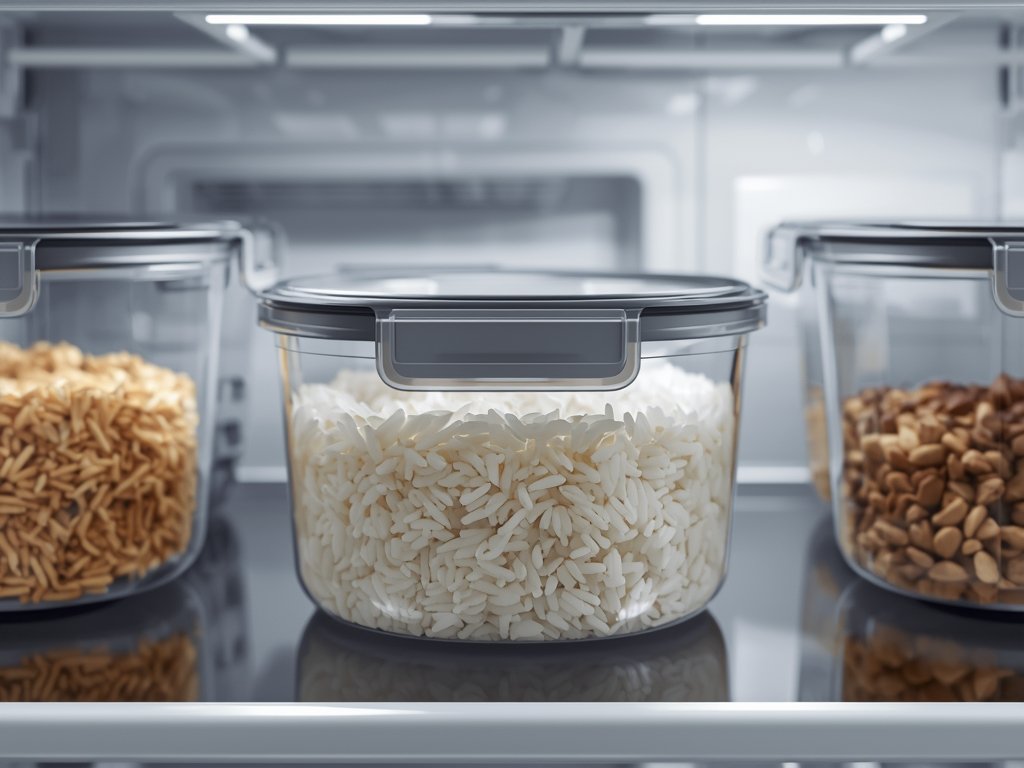
Fried rice lives or dies on the rice, and day-old rice is the whole secret. Rice cooked the day before and chilled in the fridge has dried out slightly overnight: the grains have firmed up, the surface moisture has evaporated, and each grain is separate. In a hot pan, that rice fries — the grains toast, crisp at the edges, and take on the sauce without sticking together. Freshly cooked rice is the opposite: it is soft, wet, and steamy, and in a hot pan it clumps into a sticky mass that steams instead of frying. The result is a porridge with soy sauce, not fried rice.
The turkey follows the same logic as the rice: it should be cold, diced or shredded into bite-size pieces, and ready to go before the pan gets hot. White meat and dark meat both work, and dark meat stays a little juicier in the pan. Two cups of cooked turkey is the right amount for four cups of rice — enough that every spoonful has turkey in it, not so much that the pan is crowded and the rice steams. If the turkey is in large slices, dice it before you start cooking; a stir-fry moves too fast to cut meat mid-cook. And the turkey’s age matters: it should be leftover turkey from the last three to four days, stored properly in the fridge. A turkey cooked on Thursday is perfect for fried rice on Friday or Saturday. For the storage rules that decide whether the turkey is still good, see our guide to freezing cooked turkey, and for the fridge window, our guide on how to reheat leftover turkey.
What You Need (Turkey, Rice, Eggs, Vegetables, Sauce)
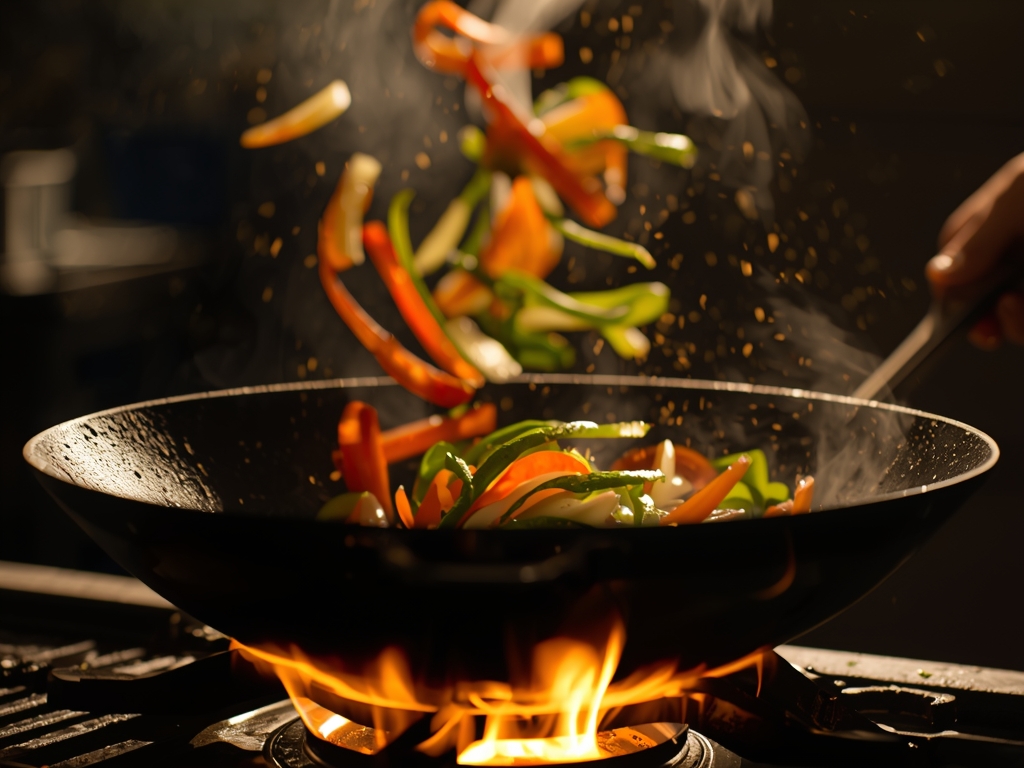
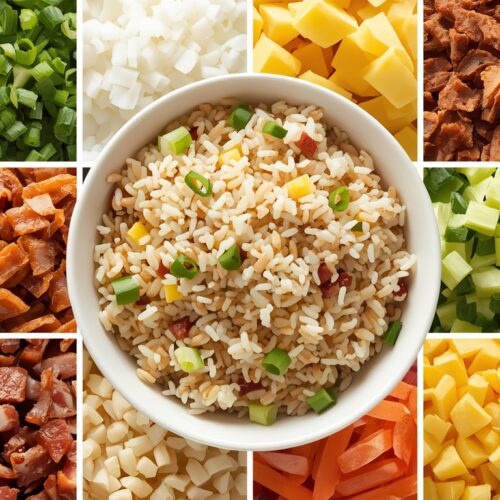
You need two cups of cooked turkey, diced or shredded, and four cups of cold cooked rice — day-old jasmine or long-grain white rice, chilled in the fridge overnight. You need three large eggs, beaten, and three tablespoons of neutral oil, divided: vegetable, canola or peanut oil, anything that handles high heat without smoking. Olive oil is the wrong choice here, because it smokes at the temperature a wok needs. You need one small yellow onion, diced, three cloves of garlic, minced, and one tablespoon of minced ginger. The ginger is not optional — it is the flavour that makes the dish taste like fried rice instead of turkey with rice. You need one cup of frozen peas and carrots, straight from the freezer with no need to thaw; they cook through in a couple of minutes in the hot pan. For the sauce, you need three tablespoons of low-sodium soy sauce and one tablespoon of oyster sauce, which is optional but adds a savoury depth and a little gloss. Finish with two teaspoons of sesame oil and three green onions, sliced. The sesame oil goes in at the end, off the heat, because it burns if it cooks — a little goes a long way, and it is the smell that tells everyone dinner is ready.
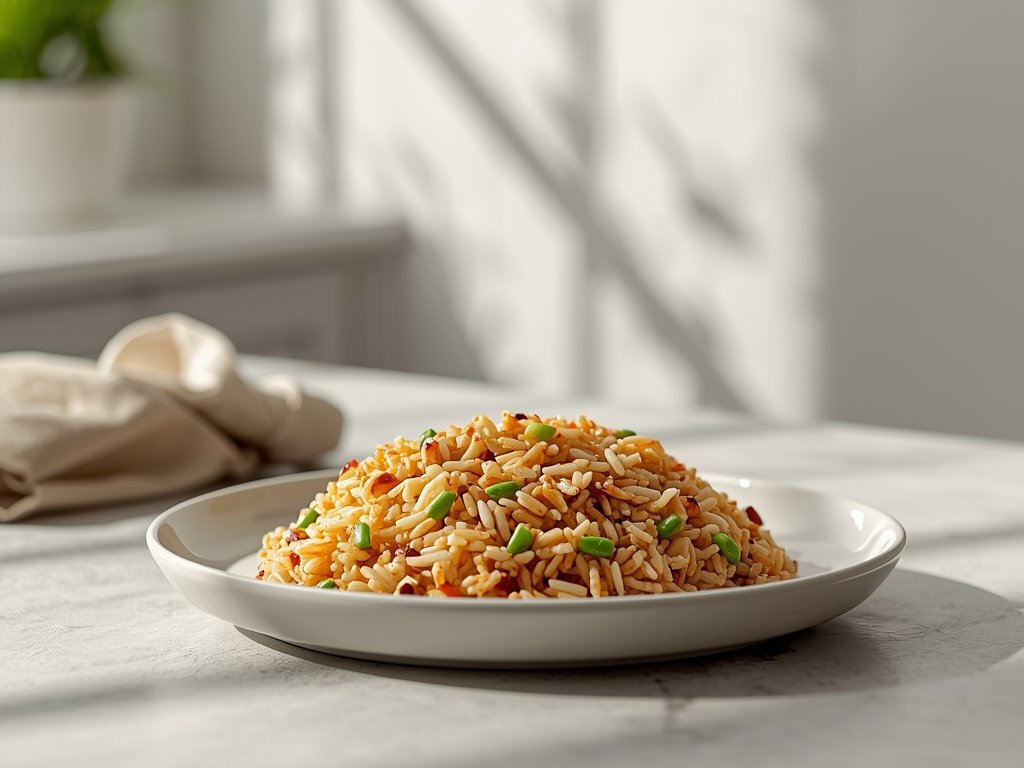
For equipment, you need a wok or a twelve-inch skillet, a spatula or a wooden spoon, and a small bowl for the sauce. A wok is better if you have one, because its shape lets you push the food up the sides and keep the hottest spot in the middle, but a wide skillet works just as well as long as it is large enough that the rice sits in a thin layer rather than a deep pile. A crowded pan is the second most common fried rice failure, after fresh rice: too much food in the pan drops the temperature, and the rice steams. If your skillet is small, cook the rice in two batches rather than one crowded one. An instant-read thermometer is worth having on hand, because it confirms the rice and turkey reach 165°F — both are leftovers, and both need to be reheated thoroughly. The photo at this section shows a plate of fried rice, and it is a good picture of the target: separate grains, flecked with green onion, glossy with sauce, and hot enough to steam.
How to Make Leftover Turkey Fried Rice Step by Step
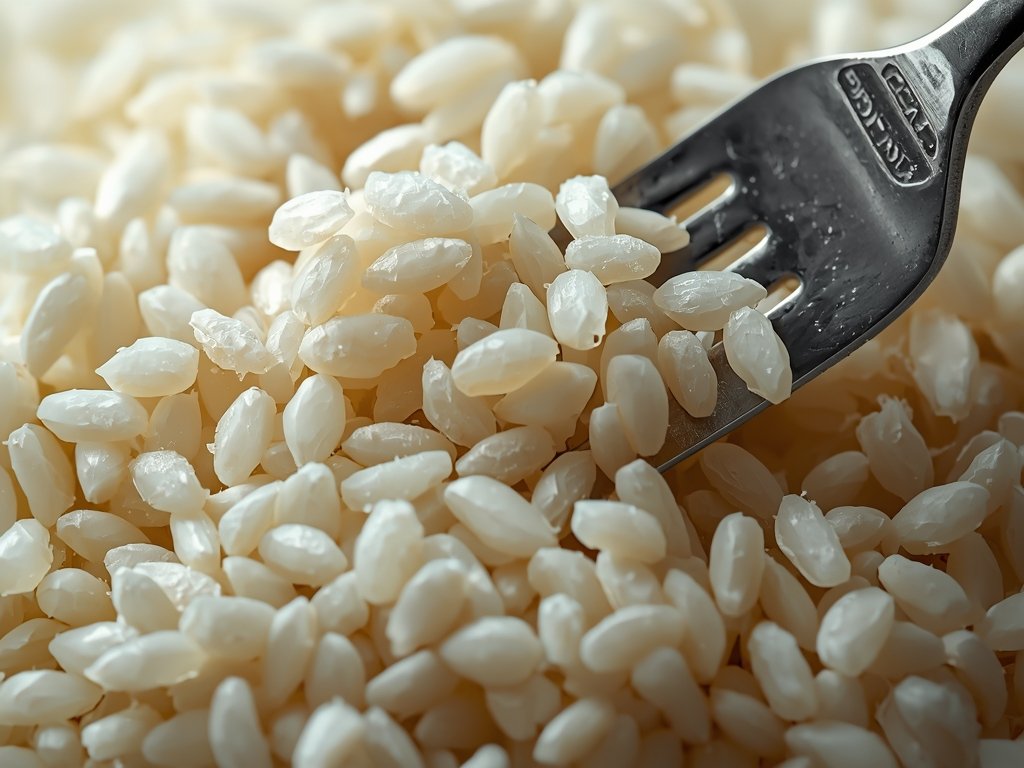
Mix the sauce first. Stir together the three tablespoons of soy sauce, the tablespoon of oyster sauce, and a pinch of white pepper if you have it, in a small bowl, and set it aside. Break up any clumps in the cold rice with your hands so every grain is separate before it meets the pan — cold rice clumps in the fridge, and clumps that go into the pan stay clumps. Heat one tablespoon of oil in the wok or large skillet over high heat. Add the beaten eggs and scramble them until just set, about one minute, then transfer them to a plate. The eggs should be soft and barely set, not browned — they will cook a little more when they go back into the rice, and overcooked eggs turn rubbery. Wipe the pan if the eggs left residue, and add another tablespoon of oil.
Add the diced onion and the white parts of the green onions, and stir-fry for two minutes until the onion is soft and sweet. Add the garlic and ginger and cook for thirty seconds, until fragrant — garlic burns fast at high heat, so thirty seconds is enough, and the smell will tell you when it is ready. Add the peas and carrots and the turkey, and stir-fry for two minutes, until the turkey is hot and the vegetables are cooked through. Push everything to the side of the pan, add the remaining oil and the rice, and spread the rice out in a thin layer. Let it sit for one minute without touching it, so the grains in contact with the pan toast and crisp, then toss for two to three minutes until the rice is hot and slightly crisp at the edges. Pour in the sauce and toss to coat every grain, then fold in the scrambled eggs, the green onion greens, and the sesame oil. Check that the dish is steaming hot, at least 165°F in the thickest part, and serve right away in warm bowls. The Gordon Ramsay Eats fried rice recipe follows the same shape — cold rice, eggs scrambled first, sauce mixed ahead, twenty minutes total — and its quantities match the card in this guide.
The Egg Question: Scramble First or in the Pan?
There are two ways to put egg in fried rice, and the choice changes the dish. The method in this guide scrambles the eggs first, sets them aside, and folds them back in at the end. The eggs stay in soft, distinct ribbons, they stay tender, and they do not coat the rice. The other method, used by the New York Times recipe, makes a well in the middle of the rice, pours the beaten eggs into it, lets them set for twenty to thirty seconds, and then breaks them up and folds them through the rice while tossing. The eggs coat the grains lightly and bind the dish together, and the result is richer and a little creamier. Both work, and the difference is texture: scrambled-first gives you visible egg; in-the-pan gives you egg as a coating. For a first attempt, scramble first — it is more forgiving, because the eggs cannot overcook while the rice is still frying, and you can see exactly what you are doing. For a second attempt, try the well method, and see which you prefer. Either way, the eggs must be fully cooked: runny egg in fried rice is a food-safety problem as well as a texture problem, because the eggs are the one ingredient that starts raw. Cook them until they are set, and check that the finished dish is steaming hot.
Variations: Swap the Vegetables, the Protein, the Sauce
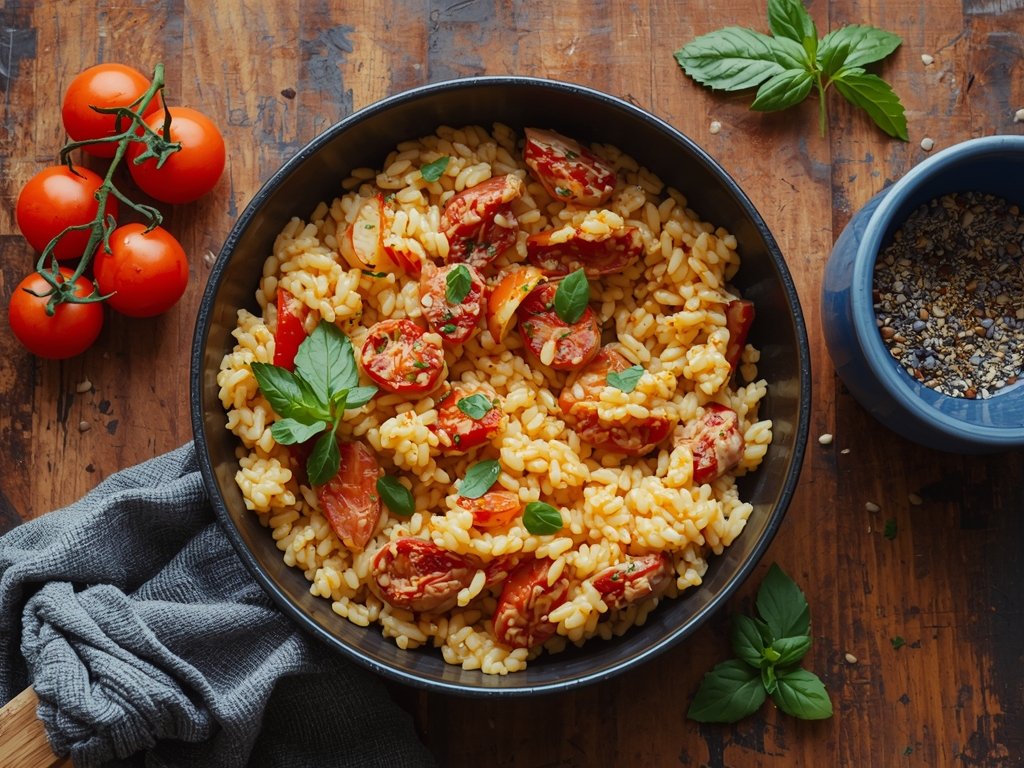
Fried rice is a template, not a fixed recipe, and the turkey is only the starting point. The vegetables can be anything you have: frozen mixed vegetables, diced carrots and corn, sliced mushrooms, shredded cabbage, or the leftover roasted vegetables from Thursday’s table. A cup of vegetables is the right amount for four cups of rice, and frozen vegetables go straight into the pan without thawing. The protein can change too: leftover ham, shredded chicken, or a fried egg on top all work, and a vegetarian version with extra vegetables and a handful of cashews is a complete meal on its own. The sauce can change as well: a tablespoon of fish sauce adds a deeper savoury note, a teaspoon of chilli sauce adds heat, and a squeeze of lime at the end brightens the whole dish. Keep the soy sauce at three tablespoons — more than that makes the rice salty and dark, and the low-sodium version is the right choice because the turkey is already seasoned.
How to Store and Reheat Leftover Fried Rice
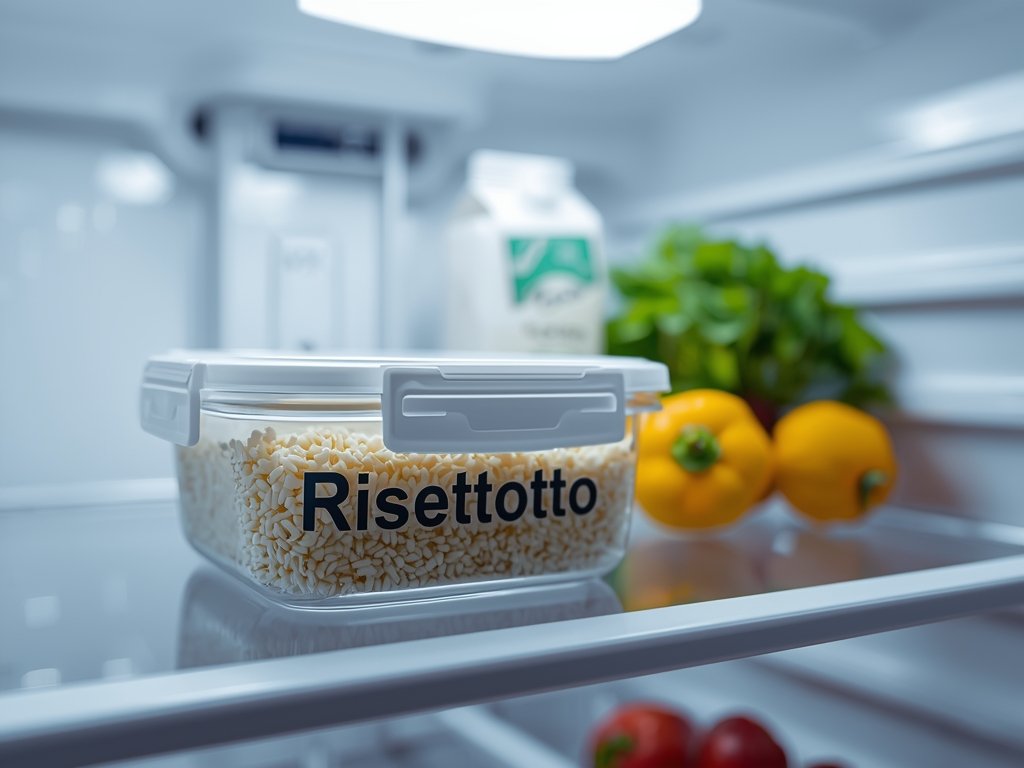
Leftover fried rice keeps for up to three days in an airtight container in the fridge, which is a day shorter than the general leftover window because rice has its own rule. Cooked rice can carry Bacillus cereus, a bacterium whose spores survive cooking and can grow if the rice sits at room temperature — so cool the fried rice quickly, within two hours of cooking, and refrigerate it in a shallow container. Do not leave fried rice on the counter while you eat, and do not pack it into a deep container that cools slowly. The same two-hour rule that covers the turkey covers the rice, and the danger zone is the same 40°F to 140°F. In the freezer, fried rice keeps for up to three months in airtight containers or bags, portioned flat so it thaws quickly. Freeze it in the portions you will actually reheat — one or two servings per bag — and label each bag with the date.
Reheat fried rice in a skillet over medium heat for the best results, with a splash of water or broth to rehydrate the grains, stirring often until it is steaming hot all the way through — 165°F again, checked with a thermometer. The microwave works for a single portion: heat in short intervals, stir between them, and check the temperature in several places, because microwaves heat rice unevenly and cold spots are exactly where bacteria survive. The FoodSafety.gov cold food storage chart gives cooked turkey three to four days in the fridge and two to six months in the freezer, and the same chart’s rice guidance is the reason this dish gets three days, not four. A pot of fried rice made on Friday is lunch on Saturday and Sunday, and by Monday it should be gone or in the freezer.
What to Serve With Turkey Fried Rice
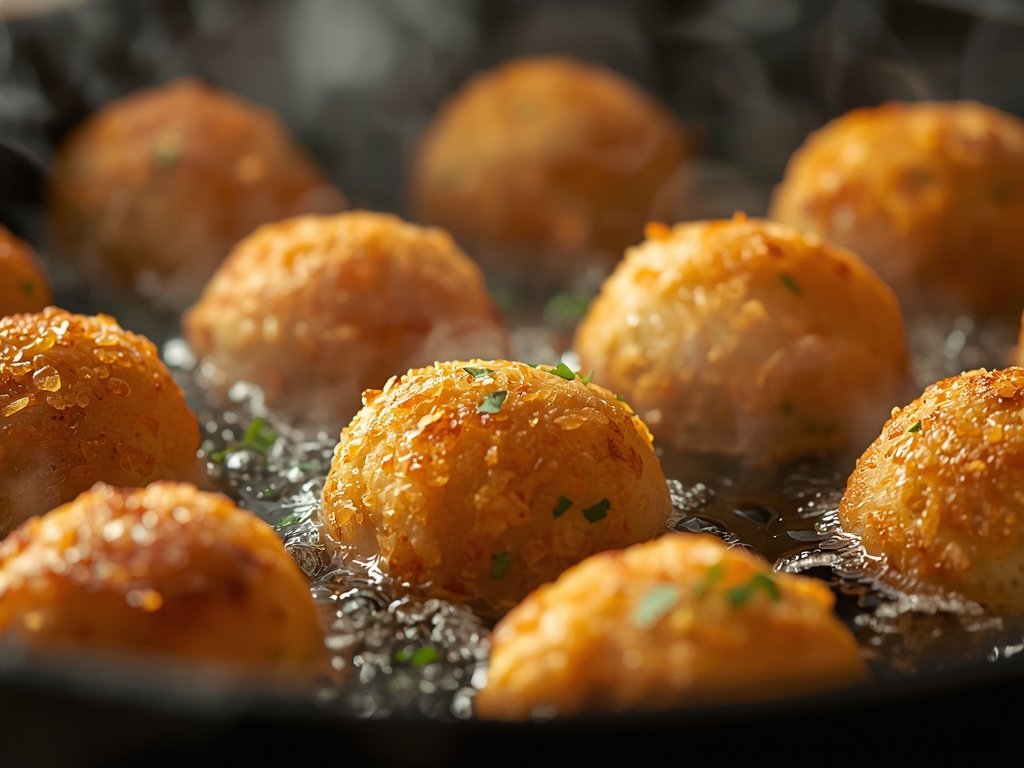
Turkey fried rice is a complete meal on its own — protein, grain, vegetables and egg in one bowl — but a small side makes it feel like dinner rather than a fridge clean-out. A simple cucumber salad, sliced cucumber with rice vinegar and a pinch of sugar, cuts through the richness of the soy sauce and the oil. A bowl of egg drop soup, made with the turkey stock from Thursday’s carcass, turns the meal into a takeout spread. Pickled vegetables, kimchi, or a spoonful of chilli crisp on the side add heat and acid, which is what fried rice always wants. The dish is forgiving, and the sides are the place to be adventurous while the main stays simple. For the soup version of the same leftover problem, see our guide to leftover turkey soup, and for the pot pie version, our guide to leftover turkey pot pie.
The Bottom Line
Leftover turkey fried rice is the fastest answer to the Friday-night leftovers problem: two cups of cooked turkey, four cups of cold day-old rice, three eggs, and a hot pan, twenty minutes from fridge to table. Cold rice is the rule that matters most — fresh rice steams, day-old rice fries — and a pan hot enough to toast the grains is the second. Scramble the eggs first, stir-fry the aromatics, add the turkey and vegetables, fry the rice undisturbed for a minute, then sauce, eggs, green onions and sesame oil, and check 165°F before serving. It keeps for three days in the fridge and up to three months in the freezer, and it reheats best in a skillet with a splash of water. The turkey that tasted like Thursday on a plate tastes like takeout in a bowl, and that is the whole point of a leftover recipe: not to repeat the meal, but to replace it. Save the carcass when dinner is done, and turn it into stock with our guide to making turkey stock from the carcass — the stock is the base for the soup that follows this rice by a day.
Leftover Turkey Fried Rice
Ingredients
- 2 cups cooked turkey diced or shredded
- 4 cups cold cooked rice day-old
- 3 large eggs beaten
- 3 tablespoons neutral oil divided
- 1 small yellow onion diced
- 3 cloves garlic minced
- 1 tablespoon minced ginger
- 1 cup frozen peas and carrots
- 3 tablespoons low-sodium soy sauce
- 1 tablespoon oyster sauce optional
- 2 teaspoons sesame oil
- 3 green onions sliced
Instructions
- Mix the soy sauce and oyster sauce in a small bowl.
- Scramble the eggs in 1 tablespoon oil and set aside.
- Cook the onion 2 minutes, add garlic and ginger and cook 30 seconds.
- Add peas and carrots and turkey, stir-fry 2 minutes.
- Add remaining oil and rice, spread out, let it sit 1 minute, toss 2–3 minutes.
- Pour in the sauce, toss to coat, fold in the eggs, green onions and sesame oil.
- Check 165°F and serve.
Notes
Fridge 3 days; freezer up to 3 months. Reheat leftovers to 165°F.

Ghani is the founder of TwiceTasty and a passionate home cook who believes no meal should go to waste. What started as a personal mission to transform leftovers into exciting new dishes has grown into a community of food lovers who share the same philosophy.
