Follow Me On Social Media!

Reheating leftover turkey is where most Thanksgiving plates go wrong. The turkey was juicy on Thursday; by Saturday it is dry, grey at the edges, and chewy in the middle — and the usual fix, blasting it in the microwave until it is hot, is exactly what made it worse. The problem is not the turkey. It is the method: high heat drives moisture out of meat that has already been cooked once, and every minute past the safe temperature costs more moisture than the minute before it.
The fix is simple and it works for every method on this page: low heat, added moisture, and a thermometer. Slice the turkey first, add a splash of broth or stock, cover it so the steam stays in, and stop the moment the coldest piece reads 165°F. That is the whole system. What follows is how to run it in the oven, on the stove, in the microwave, and in the air fryer — and the two cases where you should not reheat the turkey at all, but turn it into something else instead.
The Short Answer: Low, Covered, and to 165°F
Reheat sliced turkey at a low oven temperature — 300 to 325°F — with a few tablespoons of broth or stock per portion, covered tightly with foil, until an instant-read thermometer reads 165°F in the thickest piece. That is the method every reliable source agrees on, and the differences between sources are small: some say 275°F, some say 350°F, but all of them say low, covered, with added liquid, and all of them say 165°F. The temperature is the USDA’s safe minimum for reheated leftovers, and it is also the point where the meat is hot through without having been cooked a second time.
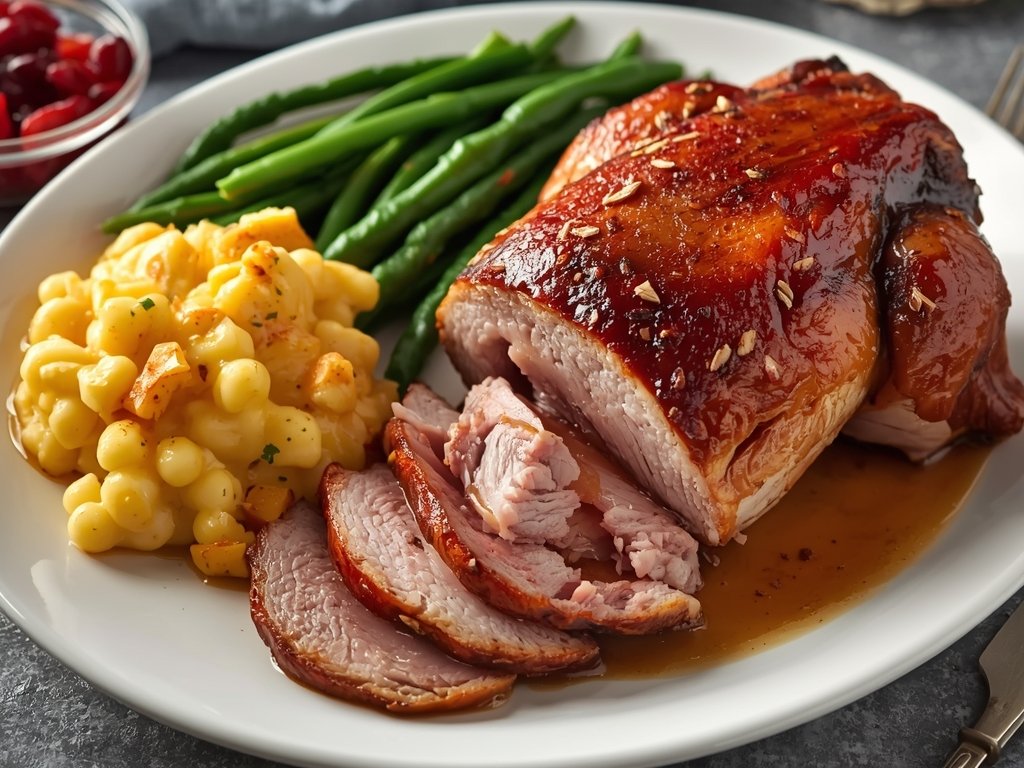
Three rules sit behind every method below. First, slice before you reheat: thin, even slices warm through in minutes, while a thick slab dries out on the outside before the centre is warm. Second, add moisture before you add heat: two to four tablespoons of turkey or chicken stock per pound of meat, or a knob of butter, or a spoonful of gravy. Third, reheat once only — turkey that has been reheated, cooled, and reheated again is dry and unsafe, and the USDA’s guidance is to reheat leftovers to 165°F and eat them, not to cycle them through the fridge again. For the storage side of the same question, our guide to how long leftovers last in the fridge covers the 3-to-4-day window.
Why Turkey Dries Out When You Reheat It
Cooked turkey is mostly water held inside muscle fibres, and reheating squeezes that water out. When meat is heated, its proteins contract, and the hotter and longer the heat, the harder they squeeze. A turkey breast that was cooked to 165°F on Thursday and then reheated to 180°F on Saturday has effectively been cooked twice, and the second cooking is the one that dries it out — the fibres have already given up their easy moisture, and what is left is bound tightly enough that only gentle heat can release it without loss.
White meat suffers first, because breast meat is lean: there is almost no fat inside it to replace the water that leaves. Dark meat — legs and thighs — holds up better, because it has more fat and more connective tissue, and the fat melts as it warms and bastes the meat from the inside. That is why the same reheating method that leaves breast slices dry can leave thigh meat perfectly juicy, and why the advice below splits by cut. The skin is a separate problem: it goes soft in the fridge and soggy under foil, and no reheating method restores it to the crisp skin of Thursday. That is covered under “The Skin Question” below, and the honest answer is to treat the skin as a garnish, not as the main event.
The Oven Method: The Best All-Round Reheat
The oven is the best method for anything more than a single serving, because it is the only one that heats gently and evenly. Preheat to 300 to 325°F — The Kitchn uses 350°F for about 30 minutes, and other guides go as low as 275°F; anywhere in that band works, and the lower end is kinder to breast meat. Slice the turkey into even pieces, about a quarter-inch thick, and arrange them in a single layer in a baking dish, overlapping slightly so the slices share moisture as they warm.

Add the liquid: two to four tablespoons of turkey or chicken stock per pound of meat, poured over the slices, plus a knob of butter if you have it. The Kitchn’s version uses stock and butter together, and the combination is the right one — the stock supplies water, the butter supplies fat, and together they replace what the fridge took away. Cover the dish tightly with foil, sealing the edges so the steam stays inside, and heat for 20 to 30 minutes for slices, longer for thicker pieces, until the thermometer reads 165°F in the thickest piece. Rest the dish, still covered, for five minutes before serving: the temperature evens out and the slices reabsorb a little of the liquid. If you want the skin crisp, pull the skin off before covering, crisp it separately in a hot skillet, and scatter it over the top at the end.
The Skillet Method: Fastest for Slices
The skillet is the fastest method for a small batch of slices, and it is the best one for skin-on pieces, because the direct heat can crisp the skin while the steam warms the meat. Put the slices in a cold skillet in a single layer, add a quarter to a half cup of chicken or turkey broth, and set the pan over medium heat with a lid on. The broth comes to a simmer, the steam warms the meat from above and below, and the slices are hot in five to six minutes — flip them once halfway through so both sides get the same treatment.

The skillet’s advantage is control: you can see and feel when the meat is hot, and you can pull the pan off the heat the moment it is done, which is the moment before it starts drying out. Its disadvantage is capacity — a crowded skillet steams unevenly, and slices piled on top of each other stay cold in the middle while the bottom ones overcook. Work in a single layer, in batches if you have to, and keep the heat at medium, not high: high heat boils the broth away before the meat is warm, and then you are frying dry turkey. For the same gentle-heat logic applied to a different meat, our guide to reheating steak without drying it out covers the same low-and-slow principle.
The Microwave Method: Single Servings Only
The microwave is the last resort, and it is only acceptable for a single serving, done carefully. Its problem is uneven heating: microwaves heat from the outside in and in hot spots, so one corner of the plate is steaming while another is still cold, and the hot spots are where the meat dries out. The fix is to slow it down. Slice the turkey, put it in a microwave-safe dish, and cover it with a damp paper towel — the towel supplies the steam the microwave would otherwise steal from the meat.

Heat at 50% power in one-minute intervals, checking and stirring or rearranging the slices between each interval, until the thermometer reads 165°F. Full power for three minutes straight is the method that produces rubber: the outside of each slice passes 180°F while the centre is still catching up. Two to six minutes total at half power is the usual range for a single plate, and the thermometer is not optional here — the microwave’s unevenness means you cannot judge by feel. If the turkey is going into a sandwich or a salad, the microwave is fine; if it is the centrepiece of the plate, use the oven.
The Air Fryer Method: Small Portions, Crisp Skin
The air fryer is a good method for small portions, and it is the only reheating method that can give you back something like crisp skin — but it is also the easiest to overdo, because the circulating hot air dries the surface fast. Preheat to 325°F, arrange the slices in a single layer with space between them, and brush or spray them lightly with broth or melted butter before they go in. Three to five minutes is enough for slices; legs and thighs take longer, about ten minutes per pound, flipped halfway through.

Keep the portions small and the temperature moderate. At 375°F and above, thin slices of breast dry out before they are warm through, and the air fryer’s speed becomes a liability rather than an advantage. Covering the slices loosely with foil for the first half of the cook, then uncovering them for the last minute, gives you the best of both: steam first, crisp second. And do not crowd the basket — a single layer with air gaps is the rule for everything in an air fryer, and turkey is no exception. Our air fryer reheat chart covers the same method across every leftover, and the turkey row follows the same numbers.
What About a Whole Bird?
Do not reheat a whole cooked turkey. It is the one case where every source agrees, and the reason is heat transfer: a whole bird is a dense mass, and by the time the centre is hot enough to be safe, the outside has been cooked a second time and dried out completely. The outside also spends too long in the danger zone — between 40°F and 140°F — while the centre catches up, which is a food-safety problem as well as a quality one.
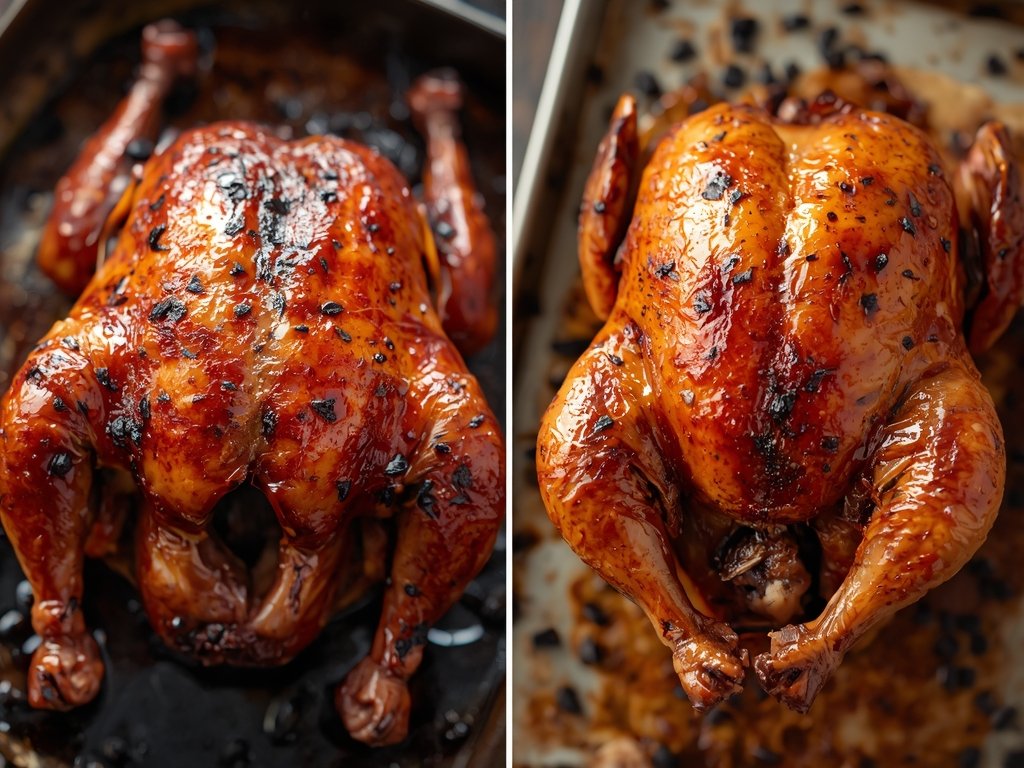
Carve first, always. Take the bird apart into breasts, legs, thighs, and wings, slice the breast meat, and reheat the pieces by the methods above. If the turkey is still whole in the fridge, carve it cold — cold meat slices more cleanly than warm meat — and store the slices in shallow containers with a little broth or gravy poured over them. The carcass goes to stock, not to the bin: simmer it with the roasted vegetables and you have the base for soup, and our guide to what to do with leftover turkey covers the second lives that start from a carved bird.
The Skin Question: Crisp It or Skip It
Turkey skin does not survive the fridge. It goes soft and slightly rubbery overnight, and no reheating method restores it to the crackling skin of the first serving — the fat has already rendered out of it, and what is left is mostly collagen and water. Under foil in the oven it stays soft; in the microwave it goes soggy; in the air fryer it can crisp a little, but only if it is separated from the meat first.

You have two honest options. The first is to accept it: pull the skin off before reheating, and eat the meat without it — the meat is the meal, and the skin was a garnish. The second is to crisp it separately: lay the skin flat on a baking sheet or in a hot skillet, skin-side down, and cook it until it crackles, then crumble it over the reheated meat like a garnish. It will not be the skin of Thursday, but it will be crisp, salty, and worth eating. What does not work is leaving the skin on the meat and hoping the reheat will fix it — it will not, and the steam that saves the meat is the steam that ruins the skin.
Frequently Asked Questions
How many times can I reheat leftover turkey? Once. Reheat it to 165°F, eat it, and do not put reheated turkey back in the fridge for a second round. Each cycle dries it further and gives bacteria another window.
Can I reheat turkey straight from the freezer? Not well. Thaw it in the fridge overnight first — frozen slices reheated directly go from frozen to dry with almost no juicy middle, because the outside overcooks while the centre thaws. For the freezing side, our guide to freezing cooked chicken covers the same portioning and thawing rules, and they apply to turkey piece for piece.
Does gravy help? Yes — a spoonful of warm gravy over reheated slices replaces moisture and flavour at the same time, and it is the fastest rescue for turkey that came out a little dry. Warm the gravy separately to a rolling boil, then pour it over, rather than reheating the meat in the gravy, which overcooks the slices.
How long does leftover turkey keep? Three to four days in the fridge, counted from the day it was cooked, and three to four months in the freezer for best quality. The FoodSafety.gov cold food storage chart gives the same windows, and the 2-hour rule — into the fridge within two hours of serving — is what those windows assume.

Ghani is the founder of TwiceTasty and a passionate home cook who believes no meal should go to waste. What started as a personal mission to transform leftovers into exciting new dishes has grown into a community of food lovers who share the same philosophy.

← Previous
How to Reheat Leftover Salmon Without Drying It Out
Next →
How to Reheat Meatballs Without Drying Them Out