Follow Me On Social Media!

Meatballs are the leftover that punishes impatience. They were juicy on Sunday — browned outside, tender inside, held together by breadcrumbs and egg — and by Tuesday they are the densest thing in the fridge, waiting for a reheating method that will finish what the fridge started. The usual method, three minutes in the microwave at full power, is the worst one: the outside of each ball passes 180°F while the centre is still catching up, and the meat comes out rubbery and dry. The fix is the same one that governs every reheated leftover on this site: low heat, added moisture, and a thermometer.
The first decision is not the method but the sauce. Meatballs in sauce and meatballs without sauce are two different reheating jobs, and the method follows the sauce. With sauce, the stovetop wins: the sauce is the moisture, the pan is the heat, and ten minutes on low does the whole job. Without sauce, the oven wins: a covered dish at 300°F warms the balls through without drying their surface. The microwave and the air fryer have their places too — small portions, and crispness — but they are the second choices, not the first.
The Short Answer: Low Heat, Covered, to 165°F
With sauce, reheat meatballs on the stovetop in their sauce over low heat for ten to fifteen minutes, stirring now and then, until they are hot through. Without sauce, reheat them in the oven at 300°F in a covered dish for fifteen to thirty minutes, depending on size and number. Either way the target is 165°F in the centre of the largest ball — that is the safe temperature for reheated leftovers — and the rule is to warm them, not to cook them again. A meatball that was cooked to 160°F on Sunday and reheated to 180°F on Tuesday has been cooked twice, and the second cooking is the one that dries it out.
Three rules sit behind every method below. First, take the chill off: let the meatballs sit at room temperature for twenty to thirty minutes before reheating, so they are not starting from ice-cold — a cold ball needs longer heat, and longer heat is what dries the outside. Second, add moisture before you add heat: a splash of sauce, broth, or water in the pan or the dish, and a lid or a foil cover to hold the steam in. Third, reheat once only, and eat them within three to four days of cooking.
In Sauce on the Stove: The Best Method

If the meatballs are in sauce, the stovetop is the best method by a clear margin, and it is the one The Kitchn recommends: combine the meatballs and their sauce in a pan and cook over low heat until they are warmed through. Put the meatballs and the sauce in a saucepan or a skillet, add a few tablespoons of water if the sauce has thickened in the fridge, cover with a lid, and set the pan over low to medium-low heat. Ten minutes is enough for a small batch; a large batch takes twenty to thirty, stirred gently now and then so the balls heat evenly and the sauce does not catch on the bottom.
The sauce does two jobs at once: it carries heat into the meatballs gently, and it replaces the moisture the fridge took away. A dry meatball simmered in sauce for ten minutes comes back noticeably juicier than the same ball reheated dry, because the sauce is mostly water and the meat reabsorbs some of it as it warms. Keep the heat low — the sauce should barely simmer, with a bubble breaking the surface now and then, not a rolling boil. Boiling sauce tightens the meatballs and can break them apart, and a ball that has fallen apart in the sauce is still edible but no longer a meatball.
In the Oven Without Sauce: The Best Dry Method

Without sauce, the oven is the best method, and the temperature is the whole trick: 300°F, covered with foil, for fifteen to thirty minutes. Preheat the oven to 300°F — not 350°F, not 400°F — and arrange the meatballs in a single layer in a baking dish or on a baking sheet, with space between them so the hot air can reach every side. Add a splash of water or broth to the bottom of the dish, about two tablespoons, and cover the dish tightly with foil. The water turns to steam under the foil, and the steam is what keeps the surface of the meatballs from drying while the heat works its way to the centre.
The time depends on size and number: small balls in a single layer take about fifteen minutes; large balls, or a dish crowded with two dozen, take twenty-five to thirty. Check the largest ball with a thermometer — 165°F in the centre is the target — and give the dish five more minutes if it is not there yet. The low temperature is not a suggestion: at 350°F the outside of each ball dries before the centre is warm, and at 300°F the whole ball warms evenly. Uncover for the last two minutes if you want the surface firmer — but not for the whole cook, or the oven dries them out.
In the Microwave: Single Servings Only
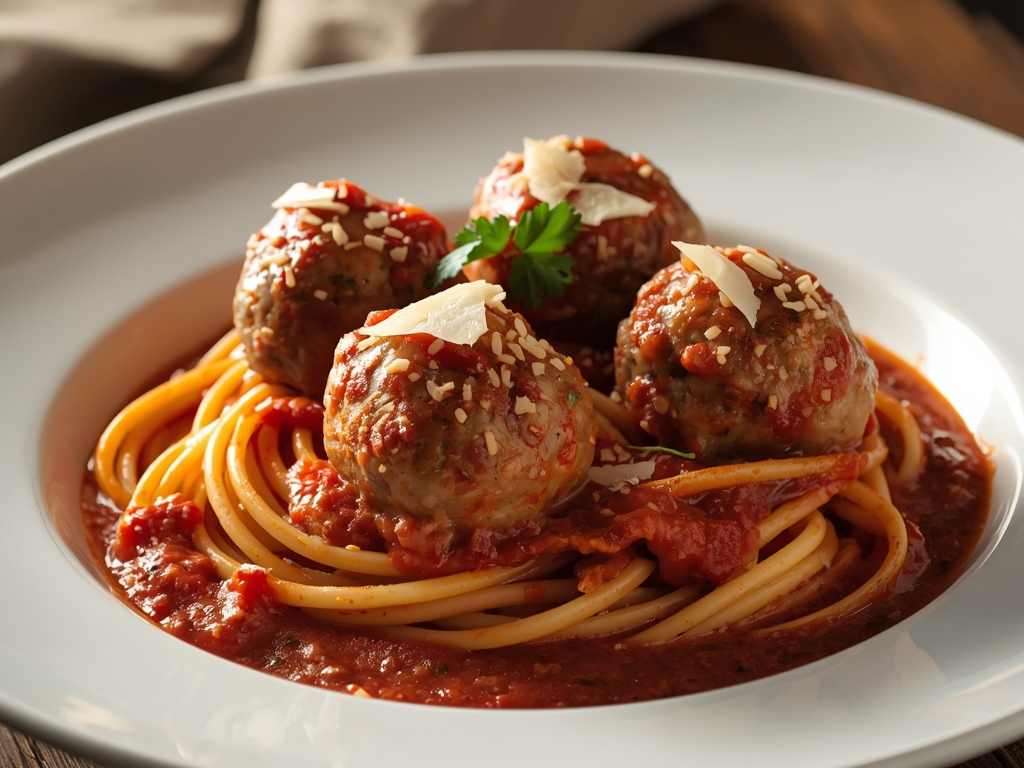
The microwave is the last resort, and it is only acceptable for a single serving, done carefully. Its problem is uneven heating: microwaves heat from the outside in and in hot spots, so one side of a meatball is steaming while the other is still cold, and the hot spots are where the meat dries out and turns rubbery. The fix is to slow it down. Put three or four meatballs in a microwave-safe dish, add a splash of water or sauce, and cover the dish with a damp paper towel or a microwave-safe lid — the cover supplies the steam the microwave would otherwise steal from the meat.
Heat at 50% power in one-minute intervals, checking and turning the meatballs between each interval, until the thermometer reads 165°F in the centre of the largest ball. Two to four minutes total at half power is the usual range for a single plate. Full power for three minutes straight is the method that produces rubber: the outside of each ball passes 180°F while the centre is still catching up. If they are going into a sub or over pasta, the microwave is fine; if they are the centrepiece, use the oven or the stove.
In the Air Fryer: For a Crisp Outside
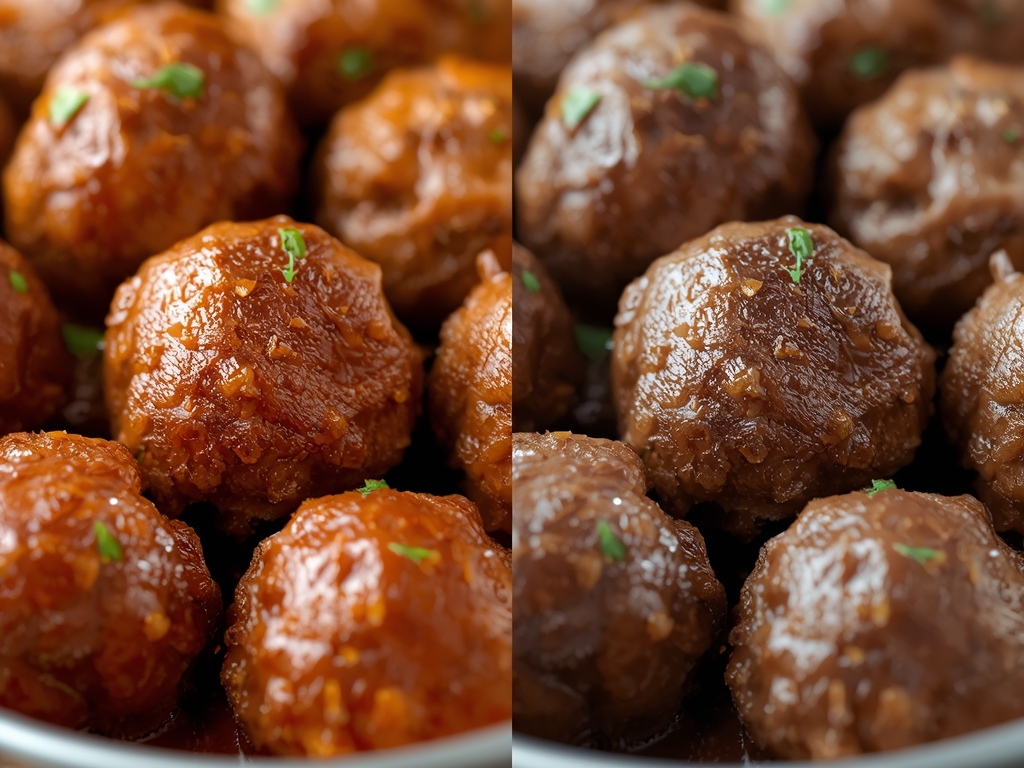
The air fryer is the best method when you want the outside back — a meatball that is crisp on the surface and tender inside, like a fresh one. Preheat the air fryer to 350°F, arrange the meatballs in a single layer in the basket with space between them, and brush or spray them very lightly with oil. Three to five minutes is enough for refrigerated meatballs; frozen ones take eight to ten. Shake the basket once halfway through so every side gets the hot air, and check the largest ball with a thermometer — 165°F is the target, same as every other method.
The air fryer’s advantage is the crust: circulating hot air crisps the browned surface that the fridge softened, and no other reheating method does that. Its disadvantage is the same as its advantage — the hot air dries the surface fast, so the window is short. At 400°F, thin meatballs dry out before they are warm through, and the air fryer’s speed becomes a liability. Keep the temperature at 350°F, keep the portions small, and do not crowd the basket: a single layer with air gaps is the rule for everything in an air fryer, and meatballs are no exception. Our air fryer reheat chart covers the same method across every leftover, and the meatball row follows the same numbers.
Reheating Frozen Meatballs: Thaw First, Mostly

Frozen meatballs reheat better than most frozen leftovers, because they are small and round — heat reaches the centre fast — but they still reheat best thawed. Thaw them overnight in the fridge, then reheat them by any of the methods above as if they were refrigerated. Thawing in the fridge is the safe route, and the texture comes back closest to fresh.
You can also reheat them straight from frozen, and for meatballs in sauce this works well: put the frozen balls in their sauce in a pan, cover, and simmer on low for twenty to twenty-five minutes, stirring now and then. The sauce carries the heat in gently, and the extra time is the only cost. Straight from frozen in the oven works too — same 300°F, same foil cover, thirty to forty minutes — but the microwave from frozen is the one method to avoid: the outside overcooks badly before the centre thaws, and the result is rubber outside and ice inside. Our guide to big-batch meatballs covers the freezing side — portioned, sauced, and labelled — and the reheating rules here are the second half of the same system.
What Not to Do: The Four Ways to Ruin Them
Four mistakes dry meatballs out, and all four are common. The first is high heat: a 400°F oven or a microwave at full power cooks the outside twice while the centre catches up. The second is no cover: an uncovered dish in the oven loses its steam in the first five minutes, and the surface of every ball dries. The third is no added moisture: meatballs reheated dry, with no sauce, no broth, and no water in the dish, have nothing to reabsorb, and the fridge has already taken moisture they cannot replace on their own. The fourth is reheating twice: a meatball that has been reheated, cooled, and reheated again is dry and unsafe, and the safe rule is to reheat once, to 165°F, and eat them.
There is a fifth mistake, quieter than the rest: cutting them in half to speed the reheating. It works — halves warm faster than whole balls — but it changes the dish: a halved meatball is no longer a meatball on the plate, and the cut surface dries faster than the browned outside does. If speed is the problem, use the stovetop in sauce instead, which is faster than the oven anyway. And if the meatballs are already dry from the fridge, the sauce method is the rescue: ten minutes simmering in sauce restores more moisture than any dry method can, and a dry ball in sauce is a better dinner than a dry ball on a plate.
How Long They Keep: Fridge and Freezer

Meatballs keep three to four days in the refrigerator, counted from the day they were cooked, in an airtight container — in their sauce if they have one, because the sauce protects them from drying. The FoodSafety.gov cold food storage chart gives the same three-to-four-day window for all cooked leftovers, and meatballs follow it exactly. If they will not be eaten in that window, freeze them: portioned in sauce in freezer bags, laid flat, they keep two to three months at best quality, and they thaw overnight in the fridge.
The storage decision is part of the reheating decision, because a meatball stored in sauce reheats better than one stored dry — the sauce is already there, and the stovetop method needs nothing added. Store them the way you will reheat them: sauced balls in their sauce, dry balls with a spoonful of broth in the container. And label the container with the date: a meatball on day four is a dinner, and a meatball on day six is a bin job, and the only difference between them is the label. Our guide to how long leftovers last in the fridge covers the same windows for every leftover on this site.
Frequently Asked Questions
What is the best way to reheat meatballs? In their sauce, on the stovetop, over low heat for ten to fifteen minutes. Without sauce, in the oven at 300°F, covered with foil, for fifteen to thirty minutes. Both to 165°F in the centre.
Can I reheat meatballs in the microwave? Yes, for a single serving: 50% power, one-minute intervals, covered with a damp paper towel, with a splash of water or sauce. Full power makes them rubbery.
Can I reheat frozen meatballs without thawing? Yes, in sauce on the stovetop — twenty to twenty-five minutes on low, covered. In the oven, thirty to forty minutes at 300°F covered. Avoid the microwave from frozen.
How many times can I reheat meatballs? Once. Reheat them to 165°F, eat them, and do not put reheated meatballs back in the fridge for a second round.

Ghani is the founder of TwiceTasty and a passionate home cook who believes no meal should go to waste. What started as a personal mission to transform leftovers into exciting new dishes has grown into a community of food lovers who share the same philosophy.
