Follow Me On Social Media!

An air fryer is the best reheating tool most kitchens own, and it is also the one that comes with the fewest instructions. Every leftover has its own temperature and its own time, and the difference between crisp and dried out is usually two minutes and twenty-five degrees. This chart puts every common leftover in one place: the temperature, the time, and the one tip that makes each one work. Print it, bookmark it, or tape it inside a cupboard door — and treat the times as starting points, because every air fryer model runs a little differently, and the last section explains how to adjust.
This is a reference chart, not a set of recipes. For the full method behind any single leftover — how to keep the crust crisp, how to stop the fish drying out, how to keep pasta from going rubbery — the links in this chart go to our single-food guides, which cover each one in detail. The chart tells you the numbers; the guides tell you the technique. The one number that applies to every row is not in the chart at all, because it is a safety rule, not a time: reheat leftovers to 165°F inside, measured with a food thermometer, as the USDA requires.
The 3 Rules That Sit Behind the Whole Chart
Three rules explain why the numbers in the chart are what they are. The first is the default: 350°F is the standard reheating temperature, and most leftovers in the chart sit at or near it. The second rule is the split: use a lower temperature for delicate foods, and a higher one to re-crisp something fried. Fish, bread, and anything with a soft centre want 300 to 325°F so they warm through without drying out; fried chicken and fries want 375°F, because it is the high heat that re-crisps the coating. The third rule is the one that matters most and gets ignored most: a single layer, and do not crowd the basket. Hot air has to circulate around the food, and a basket piled two layers deep blocks it — the top layer cooks, the bottom layer steams, and the middle stays cold. Spread the food out, reheat in two batches rather than one crowded one, and flip the pieces halfway through.
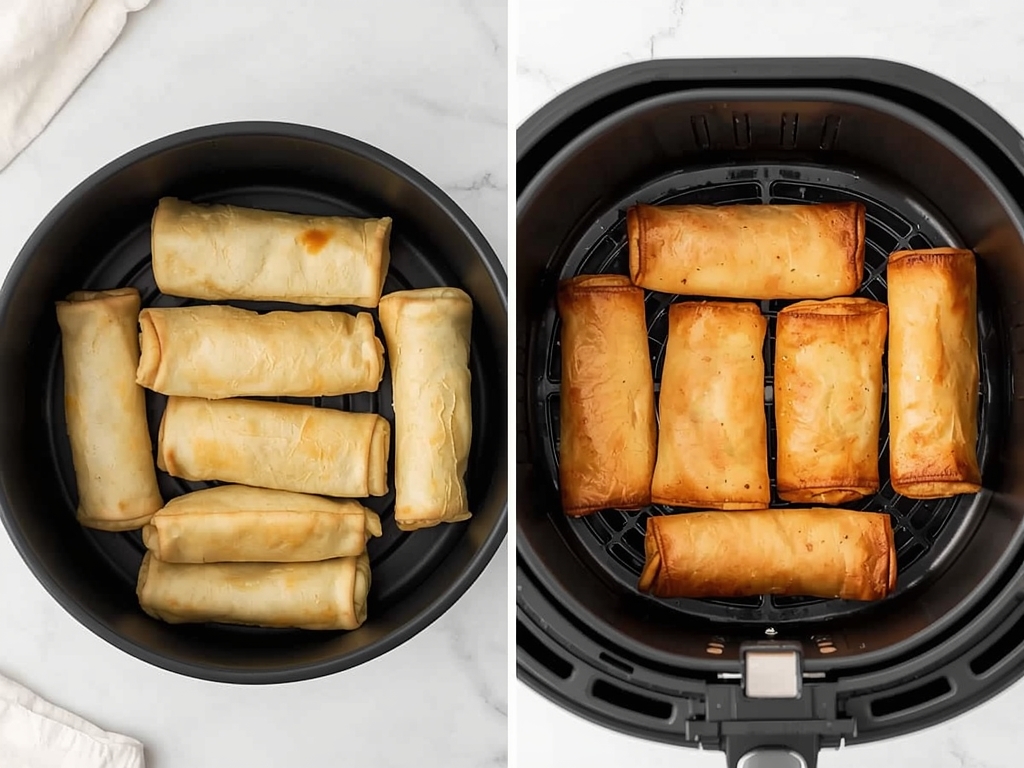
The Chart: Air Fryer Reheat Times for Every Leftover
| Food | Temp | Time | Tip |
|---|---|---|---|
| Pizza slices | 350°F | 3–5 min | Put a small oven-safe dish of water in the basket or a few drops under the slice to stop the crust drying out; check the cheese, not the crust. |
| French fries | 375°F | 3–5 min | Shake the basket halfway; a light spray of oil helps if they were already soft. |
| Fried chicken | 350–375°F | 4–7 min | Single layer, skin side up; higher heat re-crisps the coating. |
| Chicken breast | 350°F | 4–6 min | Slice thick pieces in half first; cover loosely with foil if the outside browns too fast. |
| Steak | 325°F | 3–5 min | Low and gentle to avoid overcooking; a dab of butter on top helps. |
| Salmon or fish fillets | 300–325°F | 3–5 min | Low heat protects the delicate flesh; brush lightly with oil first. |
| Roast vegetables | 350°F | 3–4 min | Spread in a single layer; toss halfway so all sides crisp. |
| Rice, pasta, and casseroles | 320°F | 5–7 min | Cover with foil for the first half, then uncover to crisp the top; add a splash of water to rice first. |
| Bread and rolls | 300°F | 2–3 min | Short and gentle; wrap in foil if they are already dry. |
| Rotisserie chicken pieces | 325°F | 3–5 min | Skin side up; foil over the pieces if the skin is already dark. |

Read the chart with two cautions. First, the times assume food that came from the fridge, not the freezer — frozen leftovers need roughly 2 to 4 minutes more, which the frozen-versus-fridge section covers. Second, the times assume a preheated air fryer: preheat for three minutes at the temperature you are going to use, then put the food in, and start the timer when the food goes in, not when the basket closes.
Pizza, Fries, and Fried Chicken: The Re-Crisp Foods
Pizza goes in at 350°F for 3 to 5 minutes, and the tell is the cheese: when the cheese is bubbling and the crust is firm underneath, it is done. A small dish of water in the basket keeps the crust from drying out, and the full method is in our guide to the best way to reheat pizza without a soggy crust, which also covers the oven and the pan for when you have more than a few slices.

French fries want the highest temperature in the chart, 375°F for 3 to 5 minutes, because re-crisping is the whole point and a lower temperature will warm them without ever crisping them. Shake the basket halfway, and a light spray of oil helps if they were soft before they went in. Fried chicken sits in the middle, 350 to 375°F for 4 to 7 minutes, skin side up in a single layer, and the higher end of that range is for thick pieces with a heavy coating. Our guide on how to reheat fried chicken crispy covers the whole method, including what to do when the coating is already soggy and the pieces are large.
Chicken Breast, Steak, and Salmon: The Dry-Out Foods
Chicken breast, steak, and salmon are the opposite problem: they do not need re-crisping, they need not to dry out, and a minute too long at too high a heat is the difference between a good leftover and a ruined one. Chicken breast goes in at 350°F for 4 to 6 minutes, and the best preparation is to slice thick pieces in half before they go in, so they heat evenly; a loose cover of foil will stop the outside browning while the inside is still catching up. Steak wants less heat, 325°F for 3 to 5 minutes, because a steak that was cooked to medium-rare the first time will go to well-done in a hot air fryer before the centre is warm. Our guide on how to reheat steak without drying it out covers thicker cuts, the resting step, and when the air fryer is the wrong tool for the job.
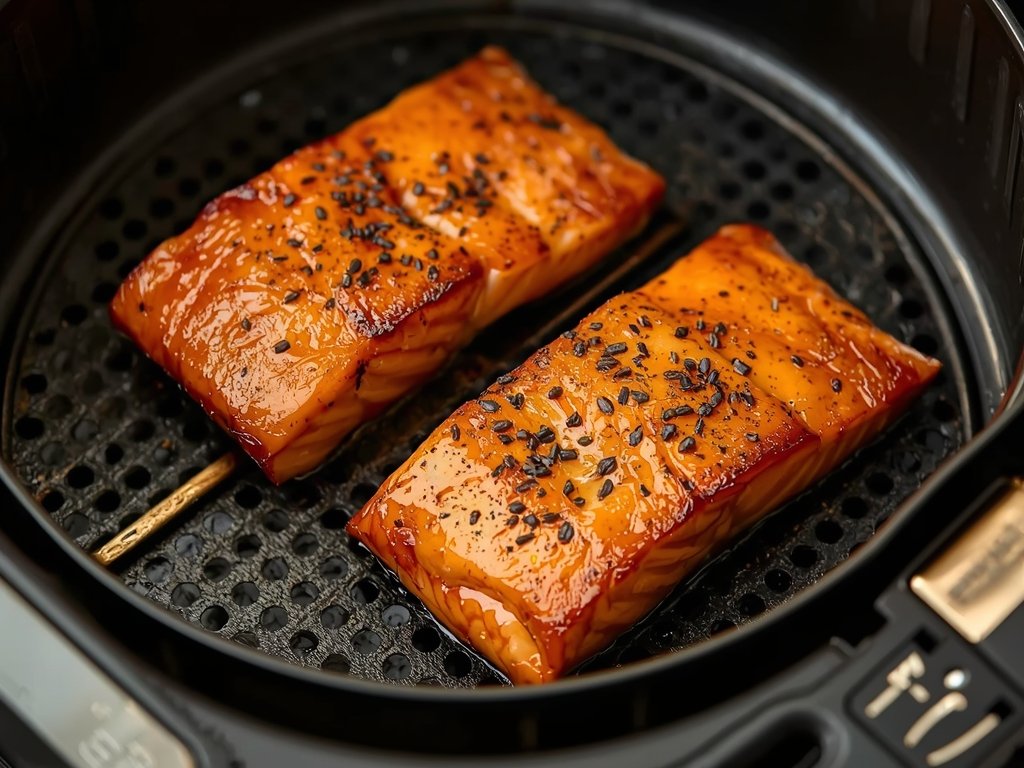
Salmon and fish fillets want the gentlest heat in the chart, 300 to 325°F for 3 to 5 minutes, because fish dries out faster than any other leftover. Brush the fish lightly with oil before it goes in, and err on the low side: a fillet that is warm through and still moist is done, and one that has gone flaky and dry is overdone, with no way back. Our guide on reheating leftover salmon covers the full method, including the foil-packet trick and how to handle thicker pieces.
Rice, Pasta, and Casseroles: The Cover-First Foods
Rice, pasta, and casseroles are the foods that dry out in the air fryer, and the fix is to cover them first. They go in at 320°F for 5 to 7 minutes, covered with foil for the first half of the time, and then uncovered for the second half so the top can crisp. The foil traps the steam and warms the food through without drying it; taking it off at the end gives you the crisp top a casserole should have. Our guide on how to reheat pasta without drying it out covers the same trick for pasta, including the sauce-to-pasta balance and what to do when the pasta has absorbed all the sauce overnight.

The one exception in this group is roast vegetables, which want no cover at all: 350°F for 3 to 4 minutes, spread in a single layer, tossed halfway so all sides crisp.
The 165°F Rule: The Number That Applies to Every Row
None of the times in the chart means anything without the thermometer. The USDA’s rule for reheating leftovers is clear: reheat them to 165°F, measured with a food thermometer, and that applies to every leftover, in every appliance, in every chart. A pizza that looks hot is not necessarily hot inside; a thick piece of fried chicken can be crisp outside and cool in the middle. The thermometer is the only check that tells you the truth, and it is a cheap one — a basic food thermometer costs less than a single wasted meal.

The USDA’s leftovers and food safety page gives the full rule: leftovers keep 3 to 4 days in the fridge and 3 to 4 months in the freezer, they should be refrigerated within 2 hours of cooking — 1 hour if it is above 90°F outside — and they should be reheated to 165°F, with sauces, soups, and gravies brought to a rolling boil. The FoodSafety.gov cold food storage chart gives the same 3-to-4-day fridge window and the freezer figures for each type of food.
Frozen vs Fridge: Add 2 to 4 Minutes
The chart assumes food that came out of the fridge. Food that came out of the freezer needs more time and a slightly different approach. The rule of thumb is to add 2 to 4 minutes to the chart time, and to use the lower end of the temperature range for that food, so the outside does not burn while the centre is still frozen. The best results come from thawing the food in the fridge overnight first — the USDA’s recommended method, because it keeps the food cold the whole time it thaws — and then reheating by the chart. If you are reheating from frozen, spread the pieces out, flip them halfway, and check the temperature in the centre of the thickest piece, because frozen food reheats unevenly and the outside will always run hot before the inside catches up.

What Never Goes in the Air Fryer
Some leftovers do not belong in an air fryer at all. Wet batter is the classic example: the batter drips through the basket before it sets, makes a mess, and never crisps. Leafy greens are the other one — a handful of spinach or lettuce in a hot air fryer will blow around, burn, and coat the heating element, which is both a mess and a fire risk. A whole roast that does not fit in the basket is not an air fryer job; cut it into pieces first, or use the oven. And anything saucy — a stew, a pasta bake with a lot of sauce, a curry — needs a container before it goes in, because the sauce will drip through the basket, burn on the element, and give the food a scorched taste that no amount of reheating will fix. Anything with a loose topping that can blow off is the same story: if the topping is not attached to the food, the fan will move it.
Model Variance: Why Your Times Will Differ
The times in this chart are starting points, not guarantees, because air fryers are not a single machine. Basket air fryers, oven-style air fryers, and toaster-oven models with an air-fryer setting all circulate air differently, and two basket models from different makers can run twenty-five degrees apart at the same dial setting. A small, crowded basket heats faster than a large, empty one; a model with a powerful fan crisps faster than a model with a gentle one. There is no way to list times that are exact for every model, and a chart that pretends otherwise is lying.
The practical method is to use the chart’s time as a starting point and check early. Start checking two minutes before the chart time, with a thermometer, and stop when the food reaches 165°F inside and looks right outside. Bookmark this page, or print the chart and keep it near the air fryer: when you have a leftover to reheat, find its row, note the temperature and the time, preheat the air fryer, spread the food in a single layer, and check it early. The chart is the quick answer; the guides are the full one. Between them, every leftover has a reheating plan, and the air fryer finally has its instructions.

Ghani is the founder of TwiceTasty and a passionate home cook who believes no meal should go to waste. What started as a personal mission to transform leftovers into exciting new dishes has grown into a community of food lovers who share the same philosophy.

← Previous
Air Fryer Won’t Turn On? Causes and Fixes
Next →
Air Fryer Thanksgiving Leftovers: Times and Temps