Follow Me On Social Media!

The air fryer is the best tool in the kitchen for Thanksgiving leftovers, and the worst tool for Thanksgiving leftovers, and the difference is what you put in it. It re-crisps turkey skin, stuffing, and mashed potato cakes better than any other appliance, because the circulating hot air dries the surface while it warms the centre — and it ruins gravy, cranberry sauce, and thin slices of breast meat, because the same hot air dries out anything that has no crust to protect it. The chart below gives the times and temperatures for every Thanksgiving leftover that belongs in the air fryer, and the section after it gives the list of the ones that do not.
This guide covers the short answer, the chart, the turkey rows, the stuffing rows, the potato and casserole rows, the rolls, what never goes in the air fryer, and the model variance that makes your times differ from the chart. The times are starting points, not lab facts — sources disagree on the exact temperature for each dish, and your air fryer will differ from the one the chart was written for. The one number that does not vary is 165°F, measured with a thermometer, for every row.
The Short Answer: Small Batches, 325°F, and 165°F

Reheat Thanksgiving leftovers in the air fryer in small batches, in a single layer, at 325°F by default, until the food is steaming hot and the thickest part reads 165°F. That is the whole system, and the three parts matter equally: small batches, because a crowded basket steams instead of crisping; a single layer, because food piled on top of food stays cold in the middle; and 325°F, because it is hot enough to crisp and gentle enough not to dry out the meat before it is warm through.
Three rules sit behind the whole chart. First, brush or spray the food lightly with broth, melted butter, or oil before it goes in — the air fryer dries the surface, and a little moisture or fat on the surface keeps it from going leathery. Second, flip or shake the food halfway through, so both sides get the same heat. Third, check the temperature with a thermometer rather than by time: the chart gives minutes, but your air fryer, your portion size, and your starting temperature all change the minutes. For the same chart across every leftover, not just Thanksgiving, our air fryer reheat times chart covers pizza, fries, chicken, steak, salmon, pasta, and more, and the Thanksgiving rows below follow the same rules.
The Chart: Air Fryer Times for Every Thanksgiving Leftover

The chart below is the reference for the whole guide. The temperatures are the starting points the most consistent sources agree on, and the times are for a single layer in a preheated basket unless the row says otherwise. Check the temperature in the thickest part, and add a minute or two if the food went in cold from the fridge — the chart assumes food that sat out for ten minutes to take the chill off.
| Leftover | Temp | Time | Notes |
|---|---|---|---|
| Turkey slices | 325°F | 3 to 5 min | Brush with broth; single layer |
| Turkey legs / thighs | 325°F | 10 min per lb | Flip halfway; cover skin if browning |
| Stuffing patties | 370°F | 5 to 7 min | Press cold stuffing into patties first |
| Mashed potato cakes | 375°F | 8 to 10 min | Flip once; crisp outside, soft inside |
| Sweet potato casserole | 325°F | 5 to 10 min | Small dish; cover topping if browning |
| Green bean casserole | 325°F | 5 to 8 min | Small dish; stir once halfway |
| Dinner rolls | 320°F | 8 to 10 min | Brush with butter; warm, not brown |
| Roasted vegetables | 375°F | 5 to 7 min | Single layer; shake halfway |
| Turkey pot pie slice | 300°F | 5 to 7 min | Cover edges with foil if browning |
| Cranberry sauce | — | Do not air-fry | Liquid; serve cold or warm in a pan |
Turkey: Slices, Legs, and Skin

Turkey is the row that needs the most care, because breast meat is lean and the air fryer is a drying machine. Slices go in at 325°F for three to five minutes, brushed with broth or melted butter, in a single layer with space between them. That is enough to warm them through without drying them out, and the thermometer is the judge: pull them the moment the thickest slice reads 165°F, not a minute later. Legs and thighs are more forgiving, because the dark meat has fat to protect it, and they take about ten minutes per pound at the same temperature, flipped halfway through, with the skin covered in foil for the second half if it looks like it might burn.
The skin is the air fryer’s one real advantage for turkey. A slice of breast with the skin on can come out with the skin crisp again — something the oven and the microwave cannot do — but only if the skin is on top, so the hot air hits it directly. If the skin is underneath, it steams and goes soggy. And thin, lean slices are the one turkey form the air fryer ruins: a thin slice of breast, unbreaded and unprotected, dries out in minutes at any temperature, and the oven is the better tool for it. For the oven method, our guide to what to do with leftover turkey covers the second lives, and the air fryer rows here are for the portions that want crisping, not just warming.
Stuffing: Patties, Not Piles

Stuffing does not go into the air fryer as a pile. A mound of stuffing in the basket heats unevenly — the outside crisps while the centre stays cold — and it falls apart when you try to move it. Press the cold stuffing into patties first: mix it with an egg if it is dry, shape it into patties half an inch thick, and put the patties in the basket in a single layer at 370°F for five to seven minutes, flipped once. The outside goes golden and crisp, the inside stays soft and savoury, and the patty holds its shape on the plate.
The patty is the form that makes stuffing work in the air fryer, and it is the same form that works in the skillet. Cold stuffing holds its shape; warm stuffing falls apart, so shape the patties from fridge-cold stuffing and put them straight into the preheated basket. A drizzle of gravy over the top after they come out — not before, or the gravy steams the crust soft — and a fried egg beside them, and the patty is a breakfast.
Mashed Potatoes and Sweet Potato Casserole

Mashed potatoes go into the air fryer as cakes, not as a scoop. A scoop of mashed potatoes in the basket dries on the outside and stays cold in the middle, and it is impossible to flip. Shape the cold mashed potatoes into cakes, about half an inch thick, and air-fry them at 375°F for eight to ten minutes, flipped once, until the outside is golden and crisp and the inside is soft. The cake is the form that makes the air fryer work for mashed potatoes, and it is the same idea as the stuffing patty: a flat shape with a large surface area, crisp outside and soft inside.
Sweet potato casserole goes in as a small portion in an air-fryer-safe baking dish, at 325°F for five to ten minutes, covered loosely with foil if the topping is already browned. Do not put the casserole directly into the basket: the filling is soft, it will run through, and the cleanup is worse than the reheating is good. A small dish keeps the filling contained, and the foil keeps the marshmallow or pecan topping from burning — marshmallow browns very quickly in an air fryer, and a topping that was golden on Thursday can be black in three minutes on Friday. The casserole is done when the middle reads 165°F, not when the top looks done.
Rolls and Bread
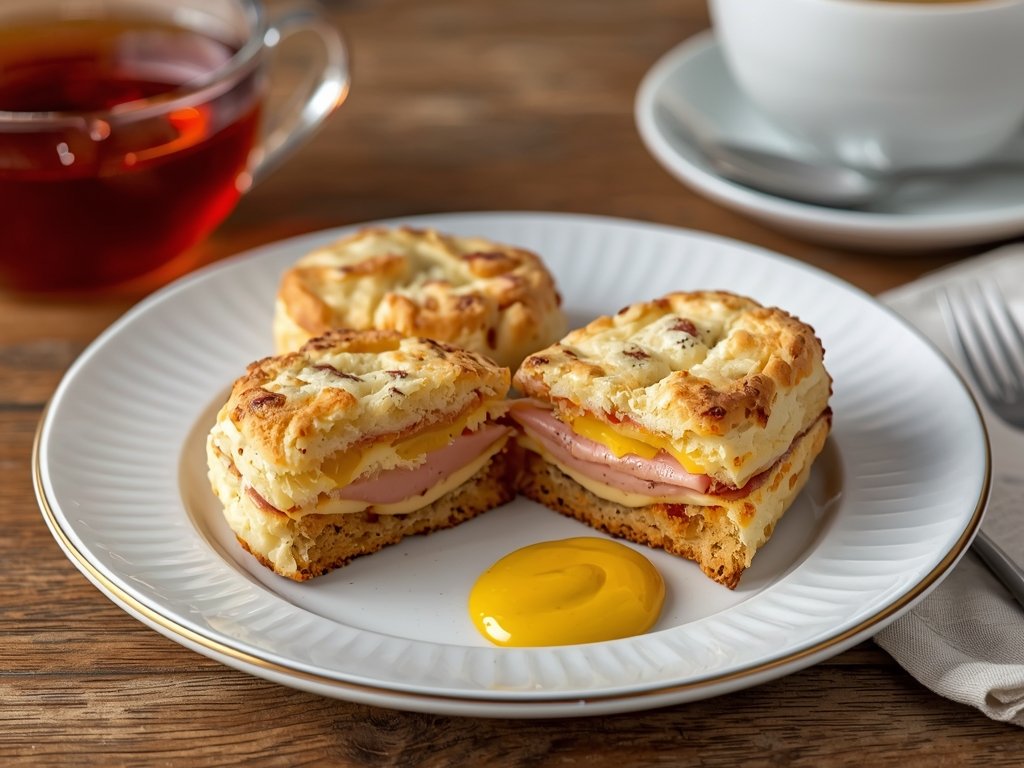
Dinner rolls reheat in the air fryer at 320°F for eight to ten minutes, brushed with melted butter, and they come out warm and golden with a slightly crisp crust — better than the microwave, which makes them soft and chewy, and faster than the oven, which takes fifteen minutes to preheat for a job that takes eight. The temperature is lower than the other rows for a reason: bread browns fast in an air fryer, and 375°F will brown a roll before the centre is warm.
Brush the rolls with butter before they go in, and do not crowd the basket: rolls need space for the hot air to circulate, and rolls touching each other stay cold where they touch. If the rolls are already sliced, put them cut-side up so the cut surface crisps. And do not reheat a whole loaf in the air fryer: a loaf does not fit, and a loaf reheated in pieces is rolls, not a loaf. The same method works for biscuits, cornbread, and any bread that wants warming rather than cooking.
What Never Goes in the Air Fryer
Some Thanksgiving leftovers never belong in the air fryer, and the list is short enough to memorise. Gravy never goes in: it is a liquid, it will run through the basket, and it reheats in a saucepan to a rolling boil in the same time. Cranberry sauce never goes in, for the same reason — it is a liquid, it serves cold or warmed in a pan, and the air fryer adds nothing to it. Creamy pasta never goes in: the sauce dries out, the pasta goes hard at the edges, and the microwave or the oven is the better tool. Thin, lean meats never go in unprotected: a thin slice of breast, a boneless chop, a piece of fish — the air fryer dries them out in minutes, and the oven is kinder.
Thanksgiving sandwiches are the hardest case, and the honest answer is not to reheat them at all. A thick sandwich needs to be open face-up to reheat, and the exposed sides go crisp while the inside stays cold; if the sandwich is thick and packed, the tops and sides can burn before the inside warms through. Eat the sandwich cold, or take it apart and reheat the components separately — the turkey in the air fryer, the stuffing as a patty, the bread toasted — and rebuild it. Mashed’s guide to leftovers that should not be reheated in the air fryer makes the same points: the air fryer is for food with a surface to crisp, and it is the wrong tool for food that is liquid, creamy, or thin.
The Model Variance: Why Your Times Will Differ
Your air fryer is not the air fryer the chart was written for, and your times will differ. Basket air fryers run hotter than oven-style ones; small baskets cook faster than large ones, because the food is closer to the element. The chart’s times are starting points, and the thermometer is the correction: check the food a minute before the chart says it is done, and add a minute at a time until it reads 165°F.
Two habits make the variance manageable. First, preheat the basket: a cold basket adds two minutes to every row, and the food steams before it crisps. Second, do not trust the air fryer’s own temperature display: budget models can run twenty degrees hot or cold, and an oven thermometer in the basket will tell you the truth in a minute. The chart gives minutes, the thermometer gives safety, and the food is done when it is steaming hot and reads 165°F in the thickest part, not when the timer goes off. For the same method across every leftover, our guide to reheating fried chicken crispy covers the crisping in detail, and our guide to reheating steak without drying it out covers the same low-and-slow logic for a different meat.
Frequently Asked Questions
Can I reheat a whole Thanksgiving plate in the air fryer? No — reheat the components separately. The turkey, the stuffing patty, the potato cake, and the roll all want different temperatures and times, and a plate reheated as one unit comes out with some parts burnt and some parts cold.
Do I need to preheat the air fryer? Yes. A preheated basket crisps the food from the moment it goes in; a cold basket steams it first, and the food is soggy before it is crisp.
Can I put foil in the air fryer? Yes, for covering food — a loose foil tent over a casserole keeps the topping from burning, and a foil sling under a small dish makes it easier to lift out. Do not line the basket floor with foil: it blocks the airflow, and the food underneath stays cold.
How do I know the food is safe? A food thermometer, in the thickest part, reading 165°F. The FoodSafety.gov cold food storage chart gives the storage times, and the reheating rule is the same for every row: 165°F, every time, and reheat once only.

Ghani is the founder of TwiceTasty and a passionate home cook who believes no meal should go to waste. What started as a personal mission to transform leftovers into exciting new dishes has grown into a community of food lovers who share the same philosophy.

← Previous
Air Fryer Reheat Times Chart: Every Leftover, One Place
Next →
Air Fryer Won’t Heat Up? Causes and Fixes