Follow Me On Social Media!

You press start, the display lights up, the fan hums — and ten minutes later the food is still cold. An air fryer that powers on but does not heat looks alive while doing nothing at all. The good news is that most cases are not a broken appliance: a loose basket, the wrong setting, or a safety cutoff doing its job accounts for far more of these than a burned-out part. Work through the checks in order, and stop the moment heat comes back.
The checks here are ranked from the most common and easiest to the least common and hardest, and they are all things you can do without opening the appliance. Nothing here claims a lab-tested repair outcome, and nothing here asks you to open a housing or test a live circuit.
The Short Answer: Check Power, Basket, and Settings First
If your air fryer turns on but does not heat, check three things first: the power, the basket, and the settings. Push the plug fully into the wall socket, test the outlet with another appliance, and push the basket or drawer all the way in until it clicks. Then check the temperature and the timer: set a temperature above 104°F (40°C), pick a cooking mode rather than a keep-warm or dehydrate setting, press start, and make sure the unit is not paused.
If none of that brings the heat back, unplug the air fryer for ten minutes and let it cool completely — a safety cutoff that tripped after overheating often resets itself once the unit is cold — then try again at the highest temperature setting for a few minutes. If the fan runs and the display works but the air stays cold after all of that, the problem is inside the appliance.
Safety First: Unplug and Cool Down

Before you touch anything inside the basket or near the heating element, unplug the air fryer and let it cool down. The heating element sits at the top of the cooking chamber and stays hot long after the fan stops. Twenty to thirty minutes is enough for most units to cool, and the wait also does useful work: many air fryers have a thermal safety cutoff that trips when the unit overheats, and it resets only once the appliance has cooled down and been unplugged for a few minutes.
There are two hard rules for the rest of this article. The first is never to work on a plugged-in appliance: every check that involves the basket, the element, or the vents is done with the plug out of the wall. The second is never to open the housing. The casing hides live mains wiring, and opening it voids the warranty and risks an electric shock. Everything below is reachable from the outside — the plug, the basket, the controls, the vents, and the visible face of the heating element.
Cause 1: No Power — Outlet, Cord, and Breaker

The most common cause of all is the least interesting: the air fryer is not getting power. Start with the plug. Push it all the way into the wall socket — a plug that looks seated but is a millimetre short is a classic cause. Then test the outlet: plug in a phone charger or a lamp and see whether it works. If it does not, the outlet is dead, and the problem is the house, not the fryer.
Next, check the breaker. Air fryers draw a lot of power — many models pull around 1,500 watts — and a shared circuit with a kettle or a toaster can trip a breaker or a GFCI outlet. Check the breaker panel for a tripped switch, and whether the outlet is a GFCI with a reset button. Plug the air fryer directly into a wall outlet, not into a power strip or an extension lead. If the display never lights up at all, the fault is here: the plug, the outlet, the breaker, or the cord. Inspect the cord for damage while you are here — a cut, a kink, or a scorched plug means stop, unplug, and replace the appliance.
Cause 2: Basket or Drawer Not Seated
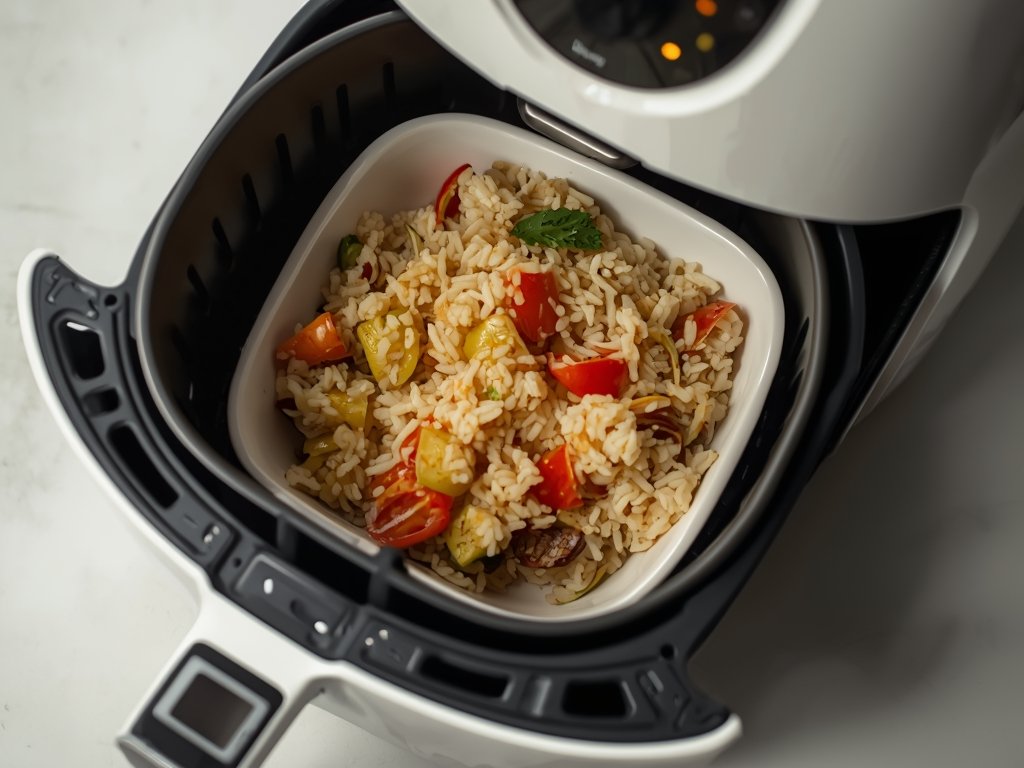
Almost every basket-style air fryer has a safety switch in the rail or the drawer, and when the basket is not seated, the switch cuts the heating element. The display still works, the fan may still run, but the element never fires, because the appliance thinks the drawer is open. The fix takes five seconds: pull the basket out completely and push it back in firmly until you hear or feel a click. If the basket has a separate inner tray or crisper plate, make sure that is seated too.
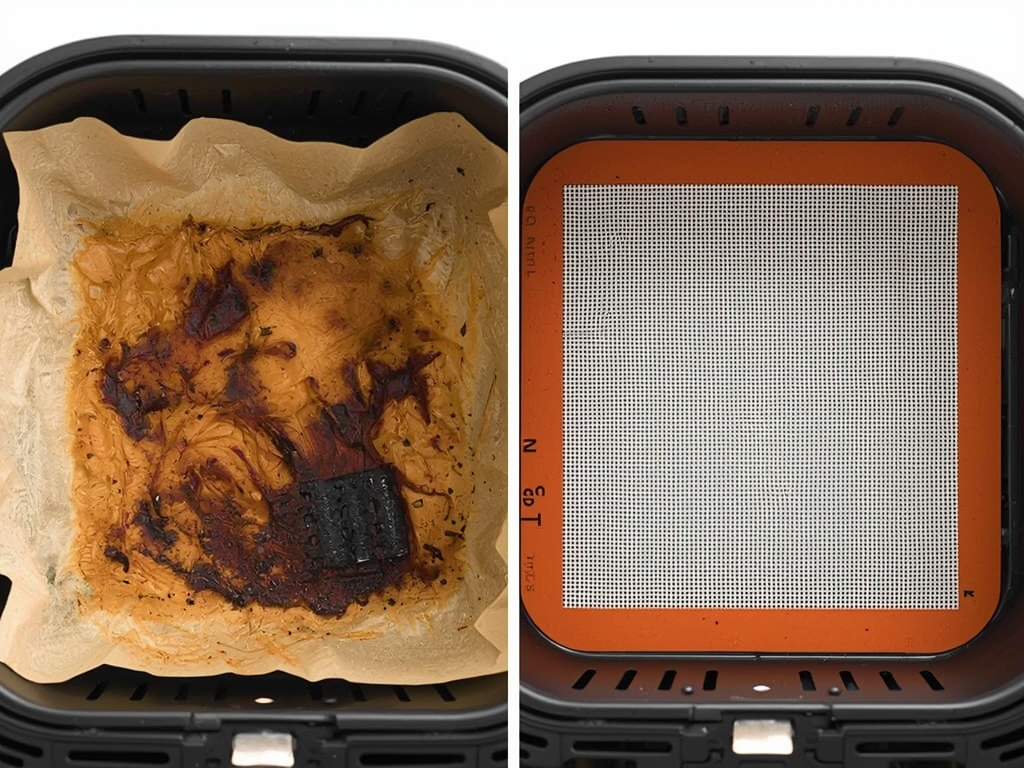
The same logic applies to lid-style and oven-style air fryers, where the sensor is in the door or the lid. Open the door fully and close it firmly, and check that nothing is caught in the seal — a crumb, a piece of foil, or a warped tray can hold the door a millimetre open, which is enough. On some Philips models, a drawer that is not fully closed cuts both the heating element and the fan, and on others the fan runs while the heat stays off, so a running fan does not prove the basket is seated. If the basket looks right but the heat is still missing, take the basket out, look at the rails for food debris, and wipe it clean. Our guide to silicone mats versus parchment paper in the air fryer covers what should and should not go under the basket, and a mat that has shifted can hold the drawer open in exactly this way.
Cause 3: Temperature or Timer Not Set

On many air fryers, the heating element does not start until you have set a temperature, a time, and pressed start, and a unit left in standby with a temperature on the display is not heating at all. Press start and watch the display: a timer counting down is the sign that the cooking cycle has actually begun. If the unit is paused, press start again.
Two settings in particular cause false alarms. The first is a temperature set too low: on Philips models, a setting of 40°C (104°F) or lower can make it seem the appliance is not heating, especially in a warm room. The second is the cooking mode: a keep-warm mode, a dehydrate mode, or a reheat preset may run the fan without firing the element at full power. On analogue models with a dial timer, the timer must be turned past zero — a timer that has not been set is a unit that will not heat. If the display shows an error code, look it up in the manual.
Cause 4: Grease, Blocked Vents, and a Dirty Element
Grease on the heating element is one of the most overlooked causes of poor heating, and it builds up slowly enough that the failure feels sudden. The element sits at the top of the cooking chamber, directly above the food, and every fatty cook spatters a little grease onto it. Over time the grease bakes into a dark, insulating layer that stops the element from radiating heat properly. With the appliance unplugged and cool, look up into the chamber: if the element is coated in dark, sticky grease, clean it with a soft cloth dampened with hot water and a little dish soap, and wipe it dry. Never use a metal scourer or an oven cleaner on the element.
Blocked vents are the second half of this cause. An air fryer works by moving hot air, and it needs somewhere to take in cool air and somewhere to let hot air out. If the vents at the back or the sides are blocked — pushed against a wall, covered by a tea towel, or clogged with grease and dust — the air cannot circulate, the inside overheats, and the thermal safety cutoff trips and kills the heat. Leave at least six inches of free space around the appliance. Our guide to cleaning the air fryer coil covers the element and the chamber in detail. Our guide to the best containers for reheating food in the air fryer is the other side of the same problem — the wrong container can block the airflow the element depends on.
Cause 5: Heating Element, Thermal Fuse, and Control Board

If the power, the basket, the settings, and the cleaning are all right and the air fryer still does not heat, the fault is inside the appliance: the heating element, the thermal fuse, or the control board. The heating element is the coil or loop at the top of the chamber that turns electricity into heat. Over time — especially with heavy use, grease buildup, or a power surge — the wire inside it can break, and a broken element produces no heat at all while everything else works. You can sometimes see the damage, with the appliance unplugged and cool: a visible break, a dark spot, or a section that looks different from the rest of the coil.
The thermal fuse is a one-time safety device wired into the heating circuit. When the air fryer overheats — because the vents were blocked, the thermostat failed, or the unit ran back-to-back long cooks — the fuse melts and permanently breaks the circuit, so the element never fires again. Unlike a resettable thermostat, a blown thermal fuse cannot be reset; it must be replaced, which means opening the housing and testing with a multimeter, and that is not a job for this article. The control board reads your inputs, watches the temperature sensor, and sends power to the element through a relay. If the logic chip glitches or a solder joint cracks from heat, the board can fail to fire the element even though every other part works. The troubleshooting guides that rank these causes put a blown thermal fuse first, a failed element next, and a failed board last — and all three need a repair shop or a replacement, not a home fix.
When to Stop and Replace It

The line between a fix and a replacement is simple: if the fault is outside the housing, fix it; if it is inside, stop. A loose plug, an unseated basket, a wrong setting, a dirty element, and a blocked vent are all outside the housing, and they are all free or cheap to fix. A failed element, a blown thermal fuse, and a failed control board are all inside the housing, and opening it voids the warranty and risks an electric shock. If the repair would cost more than half the price of a new air fryer, replacing it is the better choice.
Stop immediately, whatever the cause, if you smell burning that does not clear after cleaning, if you see scorch marks or melted plastic, if the cord or the plug is damaged, or if the appliance trips the breaker every time you plug it in. Those are signs of a fault that could be a fire risk, and the appliance should be unplugged and not used again. Prevention is cheaper than repair or replacement: clean the element and the chamber regularly, leave space around the vents, do not run long cooks back to back without a cooling gap, and do not overload the basket — an overcrowded basket blocks the airflow and makes the element work harder for worse results. Our guide to the causes and fixes for a plastic smell in an air fryer covers the burn-in run and the cleaning routine that keeps a new unit healthy. Our guide to air fryer versus toaster oven reheating covers when the toaster oven is the better choice.
Frequently Asked Questions
Why does my air fryer turn on but not heat up? The most common causes are a basket that is not fully seated, a low temperature or a cool mode like reheat, or a safety cutoff that tripped after overheating. Grease on the element and blocked vents are close behind. A failed element, thermostat, or thermal fuse is less common and needs a repair or a replacement.
Can a blown thermal fuse be reset? No. A thermal fuse is a one-time safety part that cannot be reset — once it blows, it must be replaced, which means opening the housing. If the fuse has blown, the appliance needs a repair shop or a replacement.
How do I know if the heating element is broken? With the appliance unplugged and cool, look at the element for a visible break, a dark spot, or a section that looks different from the rest of the coil. If the fan and display work but the element never gets hot after all the outside checks, the element or the fuse is the likely fault.
Is it worth repairing an air fryer that will not heat? Usually not. If the repair would cost more than half the price of a new air fryer, replacing it is the better choice — and for most basket air fryers, an element or board replacement clears that bar.

Ghani is the founder of TwiceTasty and a passionate home cook who believes no meal should go to waste. What started as a personal mission to transform leftovers into exciting new dishes has grown into a community of food lovers who share the same philosophy.
