Follow Me On Social Media!


How to Reheat Steak Without Drying It Out
Learn how to reheat steak so it stays juicy: the low oven and sear method, air fryer, stovetop and microwave, plus the 165°F safety rule to follow.
Ingredients
- Leftover cooked steak
- A little oil or a knob of butter
Instructions
- Take the steak out of the fridge 20 to 30 minutes before you start, so it loses its chill, and pat it dry with paper towels.
- Warm it gently in a low oven on a wire rack set over a baking tray, until it is warmed through and approaching 165°F in the thickest part.
- Heat a skillet over high heat, add a little oil, and sear the steak for 30 to 60 seconds per side, just long enough to rebuild a browned crust.
- Rest the reheated steak for a few minutes before slicing, so the moisture settles back through the meat.
- Check the temperature with a food thermometer — reheat leftovers to 165°F in the thickest part.
Notes
A reheated steak will not stay rare — 165°F is well past medium-rare, and there is no safe way around that. If that bothers you, slice the steak thin and use it as an ingredient instead: in a sandwich, a salad, a stir-fry, or a soup topping.
Reheating steak sounds simple and goes wrong fast: a steak that was juicy last night comes out of the microwave grey, tough and dry. The problem is the heat. Steak dries out when reheated too fast and too hot, because the muscle fibres tighten, squeeze out their moisture, and never give it back.
Leftover steak reheats well if you treat it gently: warm it slowly and evenly, and add high heat only at the very end, for a few seconds, to bring back the crust. This guide covers the four ways to do it — low oven and sear, air fryer, stovetop, and microwave as a last resort — plus the safety rule that decides whether the steak is worth reheating at all.
The Short Answer: Reheat Low and Slow, Then Sear
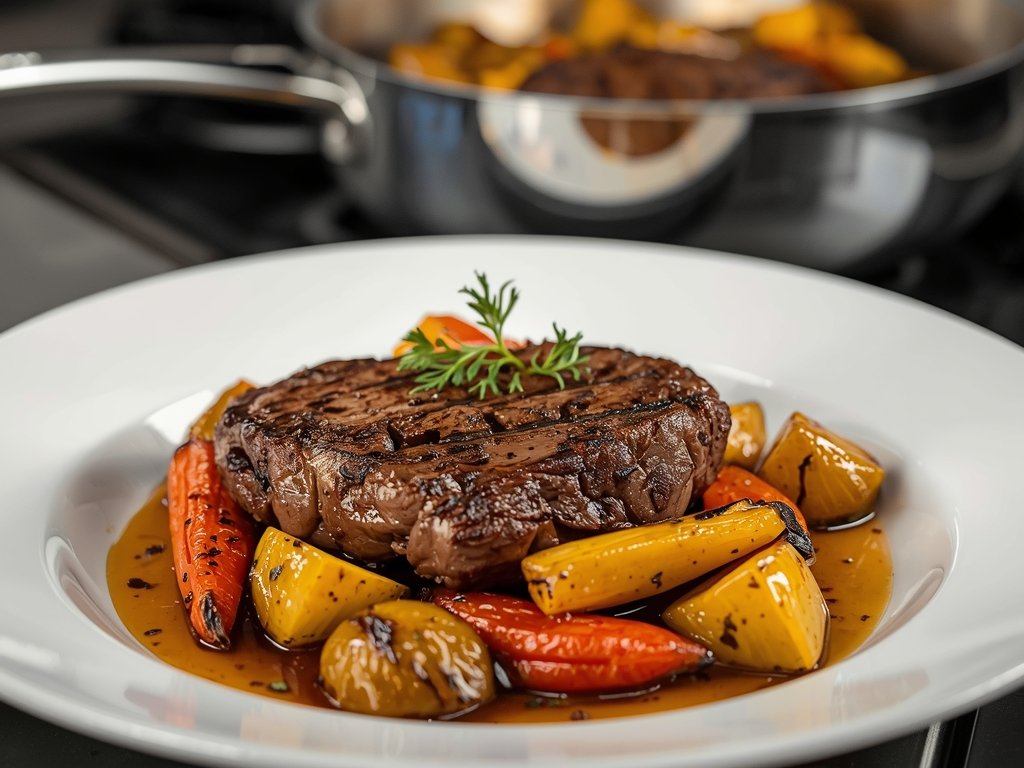
If you only remember one thing, make it this: warm the steak gently first, then sear it hot and fast at the end. Gentle heat brings the inside up to temperature without squeezing the moisture out, and a short, fierce sear rebuilds the browned crust. Blast it with high heat from cold and the outside overcooks long before the middle is warm.
Take the steak out of the fridge 20 to 30 minutes before you start, so it loses its chill — a fridge-cold steak reheats unevenly, and the outside overcooks while the middle catches up. Pat it dry with paper towels, so the surface can brown instead of steaming.
Before you reheat anything, check the steak is still good. Cooked steak keeps in the fridge for 3 to 4 days, refrigerated within 2 hours of cooking. If it smells off, feels slimy, or has been in the fridge longer than 4 days, throw it out — no reheating method makes unsafe steak safe. Our guide to whether cooked steak has gone bad walks through the three signs to check first.
The Honest Truth About Reheating Steak and Doneness

Here is the part most reheating guides skip: a reheated steak will not stay rare. The USDA rule for leftovers is clear — reheat all leftovers to 165°F internal temperature, measured with a food thermometer in the thickest part. That rule covers every leftover, steak included, and a steak at 165°F is well past medium-rare. There is no safe way around that.
That does not mean reheated steak has to be ruined. A steak taken to 165°F gently, in a low oven, stays far juicier than the same steak blasted in a microwave to the same temperature. Slow, even heating keeps the moisture inside the meat, while fast, uneven heating drives it out. The goal is to reach 165°F safely while keeping as much juiciness as possible.
If that trade-off bothers you, slice the steak thin and use it as an ingredient rather than a main — in a sandwich, a salad, a stir-fry, or a soup topping. Thin slices warm through in seconds and stay tender. Our leftover steak French onion soup topping is exactly that kind of rescue: the steak is sliced, warmed in the soup, and served as a luxury topping.
Method 1: Low Oven, Then a Quick Sear (Best Results)
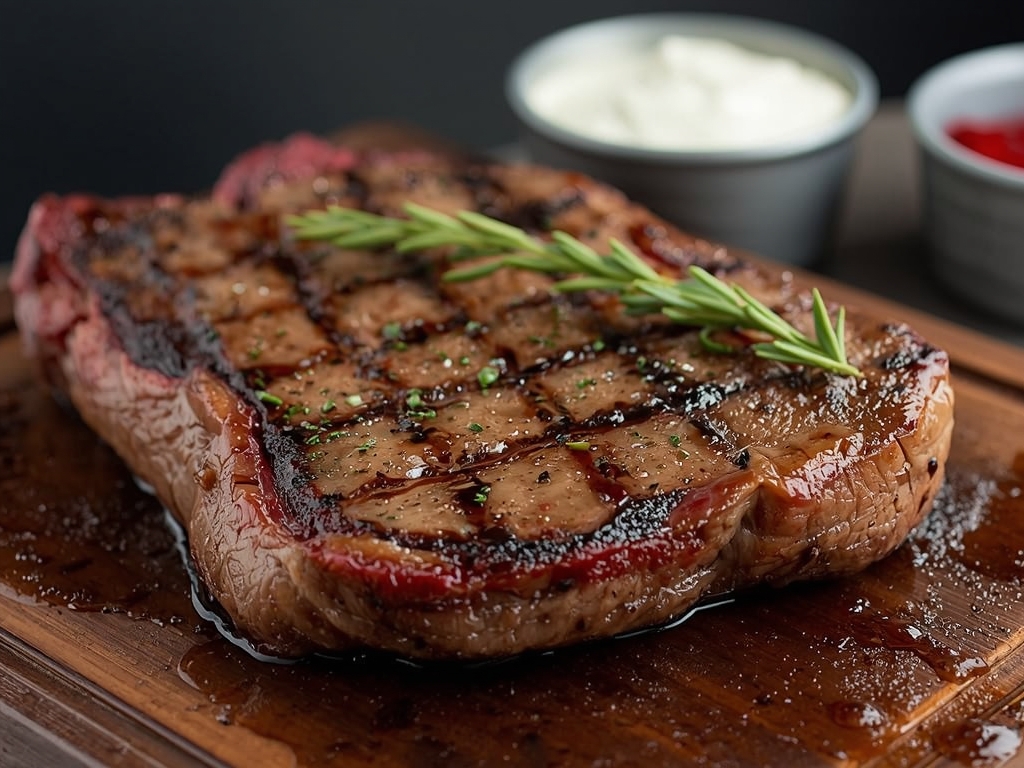
Heat your oven low. Put the steak on a wire rack set over a baking tray, so hot air circulates underneath as well as on top — a steak sitting flat on a tray steams underneath and dries on top. Leave it in the oven until it is warmed through and approaching 165°F in the thickest part, checking with a food thermometer rather than watching the clock; the time depends on the steak’s thickness.
Now the sear. Heat a skillet — cast iron if you have it — over high heat, add a little oil, and sear the steak for 30 to 60 seconds per side, just long enough to rebuild a browned crust. The steak is already hot; the sear is only about the surface. For which pan gives the better crust, our guide to cast iron vs stainless steel for the perfect sear compares the two side by side.
Rest the reheated steak for a few minutes before slicing, so the moisture settles back through the meat instead of running onto the cutting board. Slice against the grain, thinly, and serve straight away. A reheated steak does not hold well — eat it while it is hot, and do not reheat it a second time.
Method 2: Air Fryer
The air fryer is the fastest good method, and the best choice when you are reheating a single steak for one person. Hot air circulates around the steak the same way a low oven does, but the smaller space heats up faster and the fan keeps the air moving, which helps the surface stay dry enough to crisp.
Let the steak reach room temperature for 20 to 30 minutes first, and pat it dry. Brush or spray it lightly with oil — this helps the surface brown and keeps it from drying out in the moving air. Put it in the basket in a single layer, with space around it so the air can circulate. Do not stack steaks or crowd the basket; steaks touching each other steam instead of reheating.
Cook at a moderate heat, not the highest setting — high heat dries the surface before the middle is warm. Check with a food thermometer after a few minutes; thin steaks warm through quickly, so start early. You are aiming for 165°F in the thickest part. If the steak needs more colour, turn the heat up for the last minute to crisp the outside. Rest, slice and serve. The air fryer suits steaks that are not too thick — a very thick steak is better in the low oven.
Method 3: Stovetop Skillet
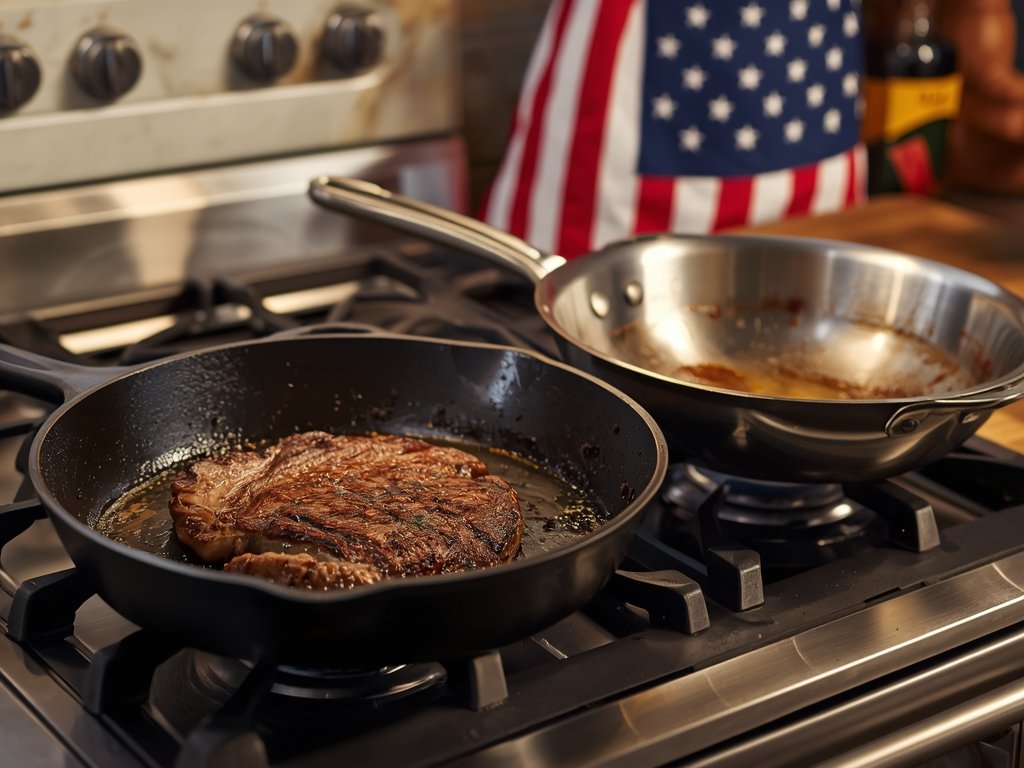
Start with the steak at room temperature, patted dry. Put a skillet over low to medium-low heat with a knob of butter or a splash of oil. When the fat is warm, lay the steak in the pan and cover it with a lid or foil — the lid traps steam and gentle heat, warming the steak through without drying the surface. Turn it every couple of minutes so both sides warm evenly, and add a splash of water or stock if the pan looks dry; a little moisture protects the steak far better than more heat does.
Check the temperature as the steak warms. Once it is approaching 165°F in the thickest part, take the lid off, turn the heat up high, and sear each side for 30 to 60 seconds to rebuild the crust, spooning melted butter over it if you used butter. The skillet suits steaks that are not too thick, and nights when you do not want to heat the whole oven for one piece of meat. Its weakness is unevenness: the side touching the pan always cooks faster, which is why turning often and keeping the heat low matter so much.
Method 4: Microwave (Last Resort)
The microwave is the worst method for reheating steak, and it is worth saying so plainly. Microwaves heat unevenly — they create hot spots and cold spots in the same piece of meat — and they drive moisture out of the surface fast. A steak microwaved on full power comes out rubbery on the edges and cold in the middle, which is the worst of both worlds.
But sometimes the microwave is the only option, and there are ways to make it less bad. First, slice the steak thin — thin slices warm evenly, solving the microwave’s biggest problem — and lay them in a single layer on a microwave-safe plate. Second, use around half power, in short bursts of 30 seconds, checking between bursts; lower power gives the heat time to spread instead of blasting the outside. Third, cover the plate loosely with a damp paper towel or vented microwave-safe wrap, so the moisture steams gently around the steak.
Finally, check the temperature with a food thermometer. The microwave’s cold spots mean part of the steak can be under temperature even when another part is steaming, so check the thickest slice in a couple of places. You are still aiming for 165°F throughout — a thermometer is the only way to know you have reached it.
How to Tell When Reheated Steak Is Done
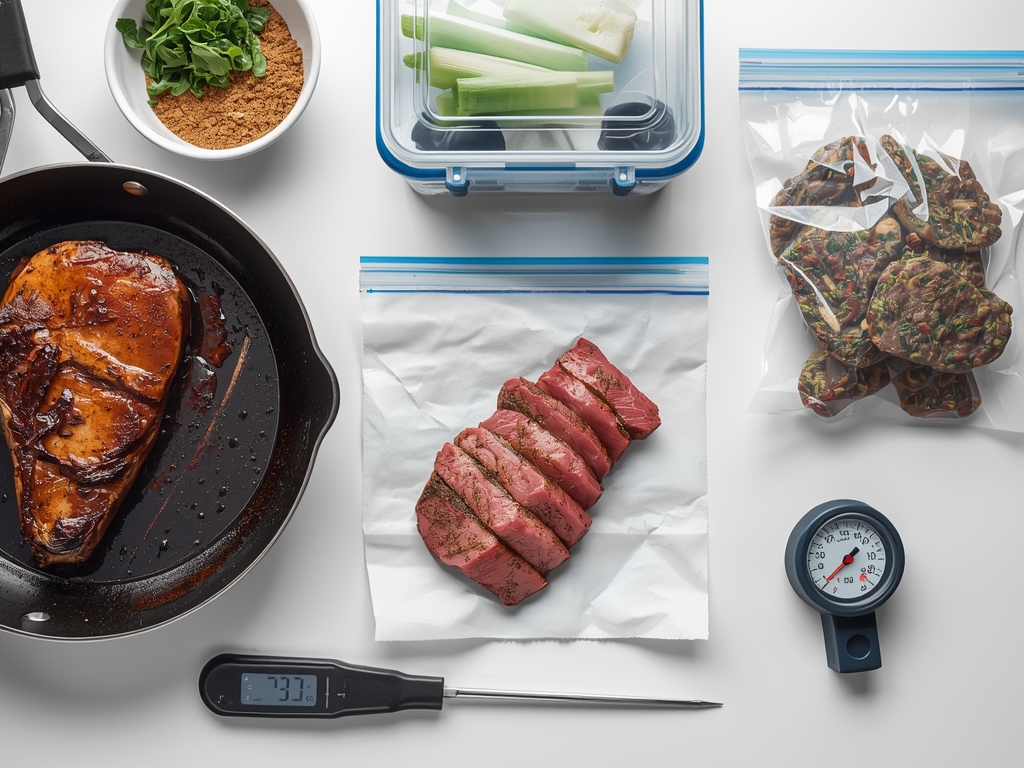
A food thermometer is the only reliable way to know reheated steak is done. Colour is not a guide — reheated steak can look brown outside and still be cool in the middle, or look pink and already be past 165°F. Touch is not a guide either, because a steak cooked once feels different from a raw one. The USDA is explicit: reheat leftovers to 165°F as measured with a food thermometer, in the thickest part. Its leftovers and food safety guidance sets out the full rule, including the 2-hour refrigeration limit and bringing sauces, soups and gravies to a rolling boil.
Check the thickest part of the steak, away from fat or bone, which heat differently from the meat around them. Give the thermometer a few seconds to settle, and check more than one spot if the steak is uneven in thickness. Do not rely on time alone: two steaks of the same cut can reheat at different speeds depending on thickness, starting temperature, and how your oven or air fryer actually runs.
Mistakes That Dry Steak Out

Reheating from fridge-cold. A steak straight from the fridge reheats unevenly, and the outside overcooks while the middle catches up. Twenty to 30 minutes on the counter before you start fixes this completely.
Too much heat, too fast. High heat is for searing, not for reheating. Warm the steak gently first, and save the fierce heat for the last 30 to 60 seconds.
No thermometer. Without one, you either underheat the steak and eat it cold in the middle, or overheat it to be safe and dry it out. A thermometer lets you stop at exactly 165°F instead of guessing past it.
Skipping the rest. Cutting into a reheated steak the second it comes out of the pan lets the juices run straight onto the board. A few minutes of rest keeps them in the meat.
Reheating more than once. Every reheat drives more moisture out. Reheat only the portion you are going to eat, and eat it straight away.
Storing it badly in the first place. Steak left out for hours, or stored uncovered, is already drying out before you reheat it. Refrigerate leftovers within 2 hours of cooking, airtight or tightly wrapped, and use them within 3 to 4 days — the window the FoodSafety.gov cold food storage chart lists for cooked meat leftovers.
What to Do With Steak That Is Past Its Best

Slice it thin, against the grain, and warm it briefly in the dish itself rather than reheating it separately. A few seconds in hot soup, a quick toss in a hot pan with vegetables, or a minute under a warm sandwich press is enough — the steak warms through without the long exposure that dries it out, and the sauce or broth adds back moisture. A steak sandwich, a quick stir-fry, or steak sliced over a salad all work the same way. If the steak fails the freshness check — an off smell, a slimy surface, or more than 4 days in the fridge — do not try to rescue it. Throw it out.
Reheating steak well comes down to patience: warm it slowly, sear it fast at the end, check it with a thermometer, and rest it before you cut. Do that, and last night’s steak is worth eating tonight.

Ghani is the founder of TwiceTasty and a passionate home cook who believes no meal should go to waste. What started as a personal mission to transform leftovers into exciting new dishes has grown into a community of food lovers who share the same philosophy.

← Previous
Reheating Baklava: How to Keep the Fillo Pastry Extra Crispy.
Next →
How to Reheat Fried Chicken So It Stays Crispy
Rate This Recipe
Tried this recipe? Share your experience and help others!