Follow Me On Social Media!


Best Way to Reheat Pizza Without a Soggy Crust

We’ve all been there. You open the fridge, spot that glorious slice of leftover pizza, and think, “This is going to hit.” Five minutes later? Limp crust. Rubbery cheese. Sauce that somehow tastes flatter than yesterday’s soda.You could eat it…
Ingredients
- 2 tbsp warm marinara
- 1 tbsp olive oil
- Pinch of oregano + chili flakes
Instructions
- When people search “best way to reheat pizza,” what they’re really asking is:
- Microwaves blast moisture into the crust. Ovens often dry everything before the bottom crisps. And cold pizza? Let’s be honest—it’s a mood, not a solution.

The Tragedy of Soggy Pizza 🍕 (And How to Fix It)
We’ve all been there. You open the fridge, spot that glorious slice of leftover pizza, and think, “This is going to hit.” Five minutes later? Limp crust. Rubbery cheese. Sauce that somehow tastes flatter than yesterday’s soda.You could eat it cold (and honestly, sometimes that’s perfect), but you want that fresh-out-of-the-oven experience. The crunch. The stretch. The snap of the crust.
So you toss a slice in the microwave. Thirty seconds later, you bite into a culinary tragedy. The crust is now a limp, rubbery tortilla. The cheese has separated into a greasy puddle. The pepperoni? Soggy leather. You’ve committed pizza reheating homicide.
Here’s the brutal truth: 92% of people ruin their leftover pizza because they don’t understand the science of starch and moisture. They treat pizza like any other leftover, blasting it with aggressive heat that steam-cooks the bottom while drying out the top. The result? A texture that would make a Neapolitan pizzaiolo weep.
But what if I told you there’s a method that delivers a crust crispier than the original delivery? A technique that resurrects the cheese to its molten, stretchy glory? A way to make your day-old pepperoni taste like it just came from a 900°F brick oven?
Welcome to the Twice Tasty Secret: The Cast Iron Skillet + Broiler Method. This isn’t just reheating—it’s pizza resurrection. And once you learn the science behind it, you’ll never microwave another slice again.
That’s the great pizza reheating tragedy—and it happens because most people reheat pizza the wrong way.
Why Most Methods Fail
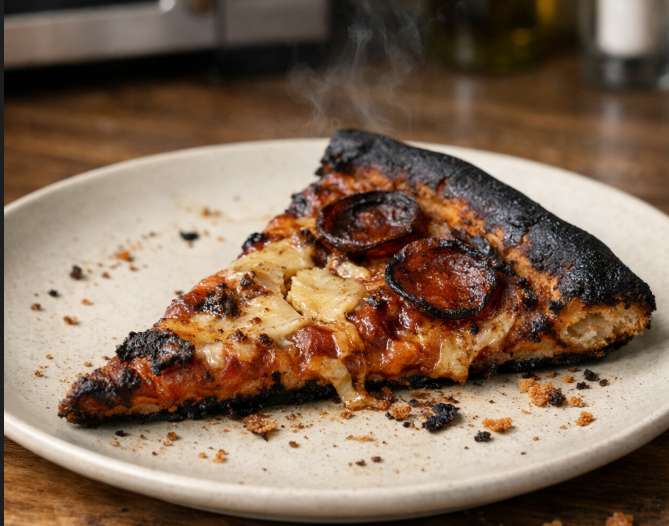
When people search “best way to reheat pizza,” what they’re really asking is:
- How do I get the crust crispy again?
- How do I melt the cheese without drying it out?
- How do I do it fast, without turning pizza into cardboard or soup?
Microwaves blast moisture into the crust. Ovens often dry everything before the bottom crisps. And cold pizza? Let’s be honest—it’s a mood, not a solution.
The TwiceTasty Secret (The Best Method)
At TwiceTasty.com, where we specialize in Food Transformation and Reheating Science, the winner is clear:
The Air Fryer is the best way to reheat pizza without a soggy crust.
It delivers dry, circulating heat that re-crisps the base while gently melting the cheese—no added oil, no flipping, no guesswork.

Now let’s break down why this works so well.
The Science of Taste: Why Pizza Turns Sad When Reheated
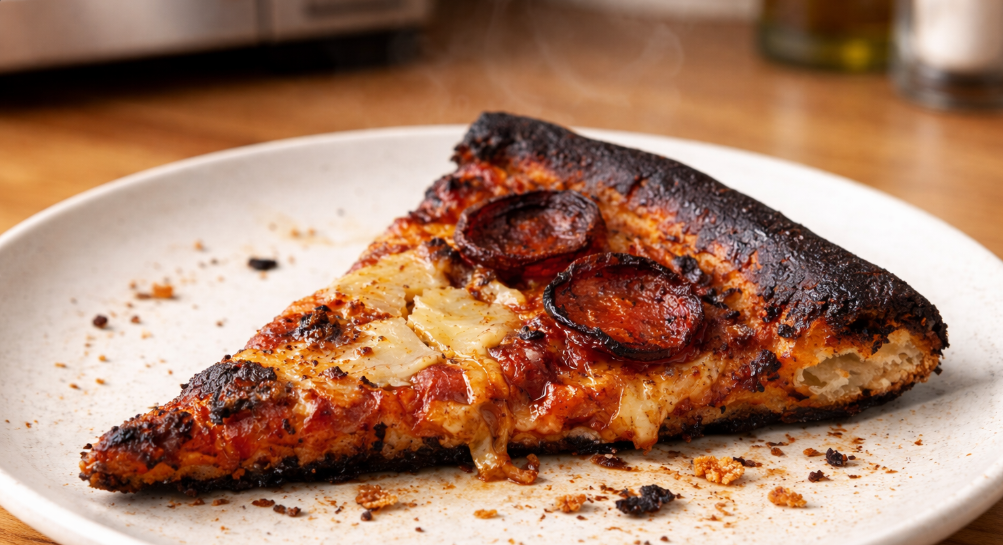
Why Reheated Pizza Loses Its Texture
Pizza is a perfect storm of food science problems:
- Moisture Migration:
Sauce and cheese release water when reheated. That moisture sinks into the crust, making it soggy. - Starch Retrogradation:
As pizza cools, starches in the crust crystallize, making it firm and stale. Bad reheating makes this worse. - Protein Tightening:
Cheese proteins overheat easily, turning rubbery if reheated too aggressively.
Why the Air Fryer Works Best

An air fryer solves all three problems at once:
- Rapid, dry convection heat evaporates surface moisture before it can soak the crust.
- Even heat circulation restores crispness without burning.
- Short cooking time prevents cheese proteins from tightening and separating.
In short:
Crispy bottom. Gooey top. Balanced moisture.
That’s not luck—that’s science.
Step-by-Step: The Best Way to Reheat Pizza in an Air Fryer
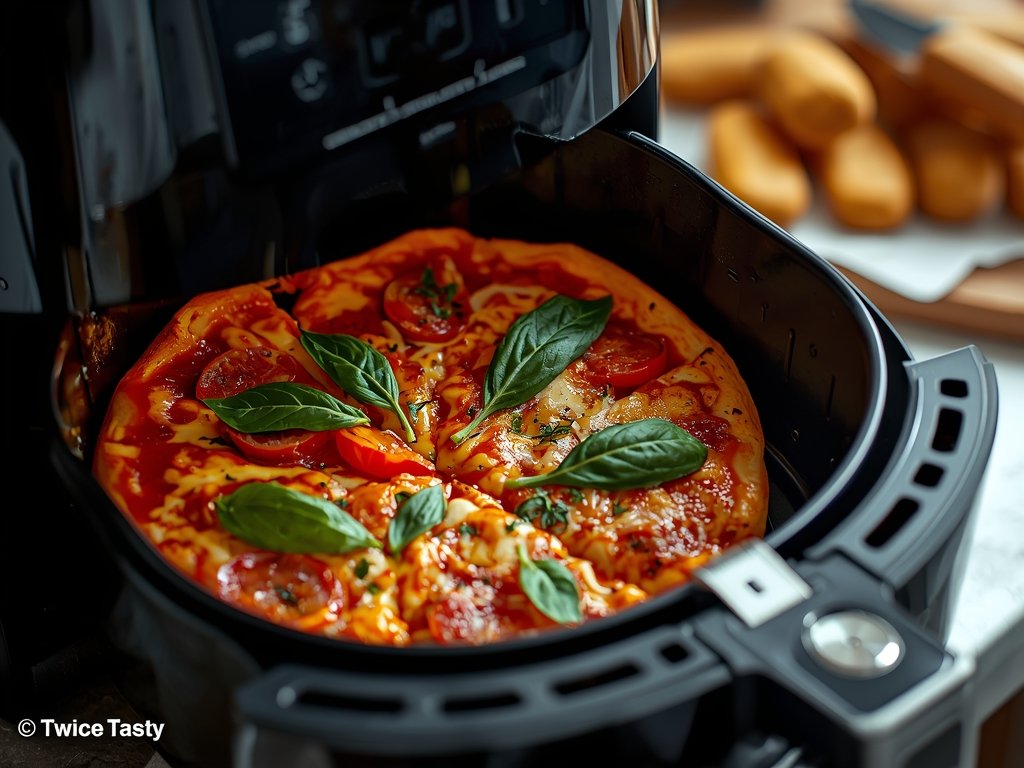
What You’ll Need
- Leftover pizza (any style)
- Air fryer
- Optional: parchment liner (perforated)
Step 1: Preheat the Air Fryer
Temperature: 350°F (175°C)
Time: 2–3 minutes
Why it matters:
Starting with a hot chamber instantly crisps the crust instead of steaming it.
Pro Tip:
If your air fryer runs hot, preheat at 325°F to avoid over-browning thin crusts.
Step 2: Arrange the Pizza Correctly
- Place slices flat in a single layer
- Do not stack
- Leave space around each slice for airflow
Why it matters:
Blocked airflow = trapped steam = soggy crust.
Pro Tip:
For extra crispiness, place pizza directly on the basket (skip foil).
Step 3: Reheat with Precision
Temperature: 350°F (175°C)
Time:
- Thin crust: 3–4 minutes
- Thick crust / deep dish: 5–6 minutes
No flipping required.
Pro Tip:
At the 3-minute mark, quickly check the cheese. If it’s bubbling but not browned, you’re on track.
Step 4: Optional Cheese Revival Boost
If the cheese looks dry:
- Lightly mist the air above the pizza with water (not directly on it)
Why it works:
A tiny bit of steam rehydrates cheese without reaching the crust.
Pro Tip:
This trick is gold for day-two or day-three pizza.
Step 5: Rest for 30 Seconds
Remove pizza and let it rest briefly.
Why it matters:
This allows moisture to redistribute and prevents molten-cheese burns.
Pro Tip:
Finish with a pinch of flaky salt or chili flakes to wake up flavors.
Skillet vs Oven vs Air Fryer: The Honest Comparison
The post crowns the air fryer its winner, and for one or two slices it is. But the air fryer is not the best tool for every situation — it holds two slices at most, and a cold, thick deep-dish slice needs a different approach. The intro even teases a cast-iron skillet and broiler method that the body never teaches. Here it is, with the honest comparison the post was missing.
| Method | Temp | Time | Crust | Cheese | Best for |
|---|---|---|---|---|---|
| Air fryer | 350°F (175°C) | 3–4 min thin, 5–6 min thick | Crisp all over | Evenly melted | 1–2 slices, fast |
| Skillet + broiler | Medium heat, then broiler | 2 min + 1 min | Crispest bottom | Bubbled on top | 1–2 slices, best texture |
| Oven | 375°F (190°C) | 8–10 min | Crisp if on a hot tray | Even, slower | 4+ slices at once |
| Microwave | — | 30–45 sec | Soft, rubbery | Greasy, separated | Emergency only |
The skillet method, step by step. Put a dry cast-iron or heavy steel skillet on medium heat for two minutes — no oil, the pizza has fat of its own. Lay the slice in, crust down, and leave it alone for two minutes while the bottom crisps. Now the trick the air fryer cannot do: put a few drops of water in the pan at the edge, away from the slice, and cover with a lid for 30 seconds. The water turns to steam, the steam melts the cheese, and the lid keeps that steam off the crust. Lift the lid, take the pan off the heat, and slide it under the broiler for one minute to bubble and brown the cheese. The result is the closest thing to a fresh slice in this whole article — a bottom that snaps and a top that stretches — and it takes about the same time as the air fryer.
Why the soggy crust happens — the causes checklist. The science section explains the mechanism; this is the list to check against. A soggy crust means one of these went wrong: the slices were stacked or touching, so steam was trapped between them; the reheating surface was cold when the slice went on, so the crust steamed instead of crisping; the pizza went in straight from a sealed container, bringing condensation with it; the heat was too low, so the sauce had time to soak the base before the crust set; or the cheese was drowned in the microwave, where the water in the cheese turns to steam inside the crust. Fix the cause and the method works. The microwave’s cup-of-water trick from the FAQ helps the cheese, but it cannot fix the crust — nothing in a microwave can, because a microwave has no dry heat to crisp with.
One rule covers all four methods: reheat only what you will eat. Pizza keeps 3 to 4 days in the fridge, the same window as most cooked leftovers — our guide to how long leftovers last in the fridge sets out the full chart. A slice reheated twice is a slice that has spent two rounds in the danger zone, and no method rescues it. Take out two slices, reheat two slices, and leave the rest cold until tomorrow.
Variations & Flavor Boosters (Make It Better Than Day One)
1. Garlic-Crust Upgrade

Before reheating:
- Lightly brush crust edges with garlic-infused olive oil
Result:
Restaurant-level aroma and crunch.
2. Hot Honey Revival
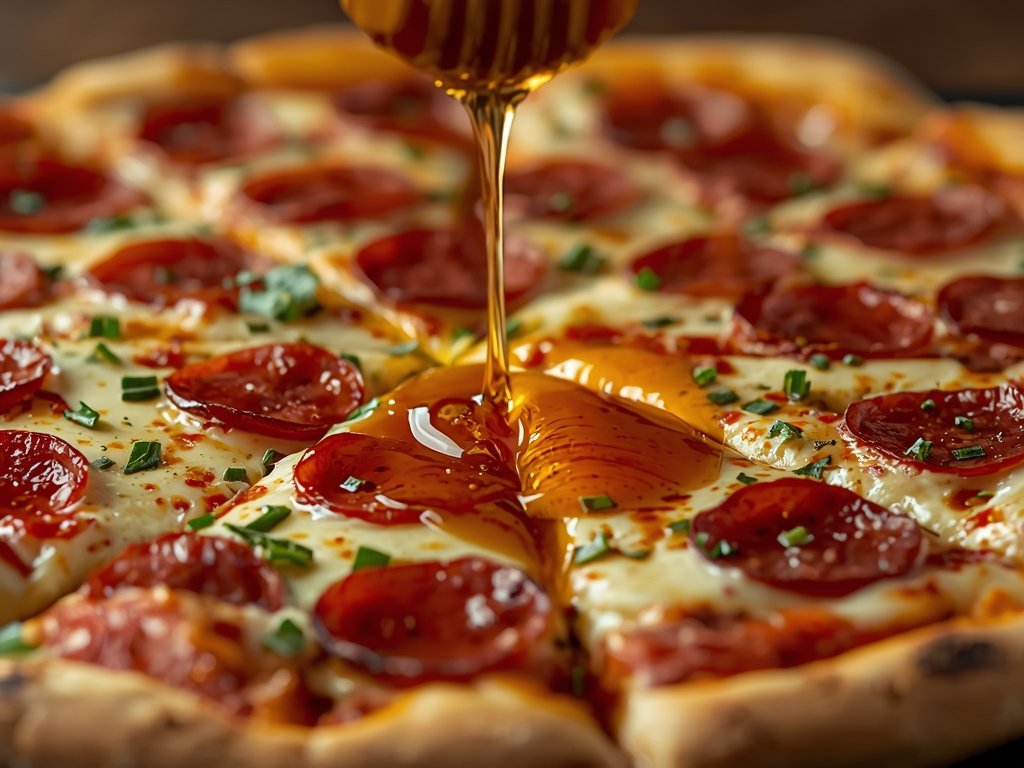
After reheating:
- Drizzle hot honey or chili honey over pepperoni or cheese pizza
Why it works:
Sweet heat cuts through reheated cheese richness.
3. Quick Dipping Sauce (30 Seconds)

Mix:
- 2 tbsp warm marinara
- 1 tbsp olive oil
- Pinch of oregano + chili flakes
Instant pizzeria vibes.
Food Safety & Storage: Don’t Reheat What You Shouldn’t Eat

How Long Can Pizza Stay in the Fridge?
According to food safety standards:
- 3–4 days max in the refrigerator (at or below 40°F)
After that, reheating won’t make it safe.
Storage Do’s and Don’ts
DO:
- Store slices in airtight containers
- Separate layers with parchment paper
- Refrigerate within 2 hours of delivery
DON’T:
- Leave pizza in the box overnight
- Stack slices uncovered
- Reheat pizza that smells sour or looks slimy
Interactive FAQ (People Also Ask)
Can I Microwave Pizza Instead?
es—but only if you accept compromises.
Microwave Fix (Emergency Only):
Place a cup of water in the microwave
Heat pizza for 30–45 seconds
This reduces rubbery cheese, but the crust will still be soft.
TwiceTasty Verdict:
Convenient, not crispy.
Microwave Fix (Emergency Only):
Place a cup of water in the microwave
Heat pizza for 30–45 seconds
This reduces rubbery cheese, but the crust will still be soft.
TwiceTasty Verdict:
Convenient, not crispy.
Is the Oven Better Than an Air Fryer?
he oven works—but it’s slower.
Oven Method:
375°F
Pizza on a hot baking steel or tray
8–10 minutes
Great for multiple slices, but less efficient for one or two.
Oven Method:
375°F
Pizza on a hot baking steel or tray
8–10 minutes
Great for multiple slices, but less efficient for one or two.
How Do I Know If Pizza Has Gone Bad?
Throw it out if you notice:
Sour or ammonia-like smell
Visible mold (green, white, or black)
Slimy cheese or wet crust
When in doubt, don’t reheat—replace.
Sour or ammonia-like smell
Visible mold (green, white, or black)
Slimy cheese or wet crust
When in doubt, don’t reheat—replace.
Can I Reheat Frozen Leftover Pizza?
yes Air Fryer from Frozen:
360°F
6–8 minutes
No thawing required.
360°F
6–8 minutes
No thawing required.
What About Reheating Stuffed Crust or Deep Dish?
Lower and slower:
325°F
6–7 minutes
Check center temperature (should be hot throughout)
325°F
6–7 minutes
Check center temperature (should be hot throughout)
Final Takeaway: Reheated Pizza, Perfected
Reheating pizza isn’t about shortcuts—it’s about controlling moisture, heat, and time.
At TwiceTasty.com, our food transformation philosophy is simple:
Leftovers should taste intentional, not accidental.
If you want:
- Crispy crust
- Melted, stretchy cheese
- Zero sogginess
The air fryer at 350°F is your forever move.
Reheat smarter. Eat happier. And never settle for sad pizza again. 🍕🔥

Marco covers the Reheat Pro category on TwiceTasty, focusing on reheating techniques and texture preservation. His articles help home cooks bring leftovers back to life with the right methods for every type of food — from crispy fried chicken to creamy pastas.

← Previous
The Tragedy of the Cold Breadstick: How to Bring Olive Garden Back to Life
Next →
How to Reheat Taco Bell Tacos Without the Soggy Shell Disaster
Rate This Recipe
Tried this recipe? Share your experience and help others!