Follow Me On Social Media!

You press the button, and nothing happens. No light, no fan, no heat — just a silent basket of raw dinner and a clock ticking towards takeaway. An air fryer that will not turn on is one of the most annoying kitchen failures, because it usually strikes at the moment you need it most.
Most of the time, the problem is not the air fryer at all. It is the outlet, the basket not sitting quite right, a timer that was never set, or a safety cut-out doing its job after the fryer got too hot. This guide works through the causes in order, from the simplest check to the hardest, so you find the fault without taking anything apart — and know when the fryer has reached the end of its life.
The Short Answer: Check Power First, Then the Basket
Before you assume the air fryer is broken, check two things. First, is it getting power? Plug it into a different outlet you know works. Second, is the basket or drawer pushed fully home? Most air fryers have a safety switch that stops the fryer running unless the basket is seated properly, so a basket a few millimetres out leaves the fryer completely dead.

Those two checks fix a large share of “won’t turn on” complaints, and they take about a minute. If both check out and the fryer is still silent, work down the list below in order. Do not skip ahead to the heating element or the cord until you have ruled out the simple causes, and do not open the housing at any point. Unplug the fryer and let it sit a few minutes first.
1. Is It Getting Power? Check the Outlet, Plug, and Breaker
Start at the wall, not at the fryer. Plug another small appliance — a kettle, a phone charger, a lamp — into the same outlet and see if it works. If it does not, the problem is the outlet or the circuit, not the air fryer. Try the air fryer in a different outlet on a different wall, one you have just confirmed is live.

Check the plug itself: is it pushed fully into the socket? A plug that has worked loose, or a socket slack with age, can break the connection just enough that the fryer gets no power. If your outlet has a switch, check it is on. Next, check the breaker or fuse box: if another appliance on the same circuit has also stopped, a breaker may have tripped. Reset it once. If it trips again straight away, stop and leave the fryer unplugged — a breaker that trips repeatedly is reporting a fault.
2. Is the Basket or Drawer Fully Seated?
This is the single most common cause of an air fryer that will not turn on, and the easiest to miss. Air fryers have a safety switch — sometimes called a door switch or interlock — that prevents the heating element and fan from running unless the basket or drawer is fully closed. It is there for a good reason, since the heating element sits just above the basket. But it means a basket that is almost closed is the same, to the fryer, as a basket that is wide open.
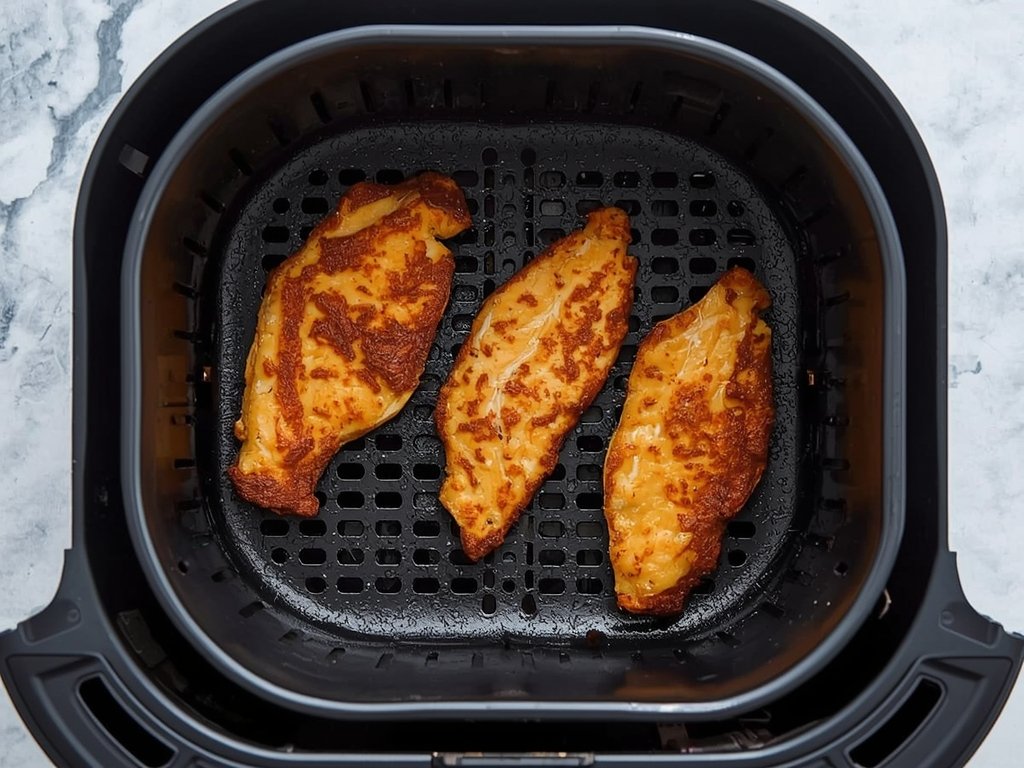
Pull the basket out completely, then push it back in firmly and straight until it sits flush, listening for the click as it seats. Check that nothing is stopping it: a crisper plate sitting crooked, food wedged at the back, grease on the rails, or a drawer pushed in at an angle. Wipe the rails clean, check the plate is sitting flat, and try again. If the fryer starts now, the fault was seating, not electronics. A basket that feels loose or no longer clicks home may have a worn latch or bent rail.
3. Is the Timer or Temperature Actually Set?
Many air fryers will not start until you have set a cooking time and temperature and then pressed start. Some models look ready — the display is lit, the temperature is showing — but nothing happens until you confirm the settings. If your fryer has a digital panel, check whether the display is waiting for you to press start.

On dial models, the same trap appears in reverse: a timer dial not turned far enough, or a temperature dial at its lowest mark, can leave the fryer apparently dead. Turn the temperature up to a normal cooking temperature and the timer to at least a few minutes, then listen for the fan. Digital panels have their own quirks. A panel that lights up but does not respond may be locked — look for a lock symbol, and check the instructions for how to release it, usually by holding one button for a few seconds. A damp or greasy panel can also fail to register touches, so wipe it dry and try again. If the display is blank, go back to the power checks. If it shows an error code, write it down before unplugging — a repair shop will ask for it first.
4. Did It Overheat? The Safety Cut-Out and Blocked Vents
Every air fryer has a safety cut-out — a thermal switch that shuts it down if the temperature climbs past a safe point. If your fryer stopped mid-cook, or worked yesterday and will not start today, overheating is a strong suspect. The cut-out is doing its job: it stopped the fryer before the heat could damage it.

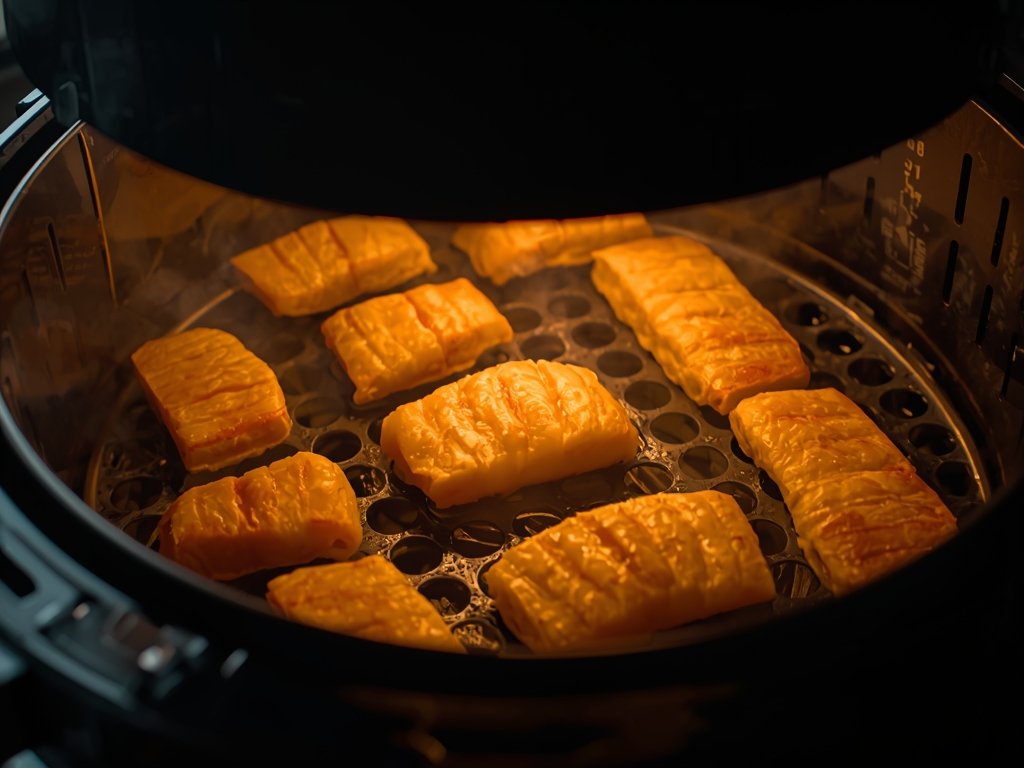
Unplug the fryer and let it cool completely — at least thirty minutes in a clear space, longer after a long, hot cook. Do not restart it while it is still hot to the touch; many cut-outs reset themselves once the fryer has cooled. Then ask why it overheated. The most common reason is blocked air vents: a fryer pushed against a wall, tucked under a low cupboard, or sitting on a tea towel cannot breathe, so heat builds up and the cut-out trips. Give it clear space, especially at the back and on top. An overfull basket is the other common cause — food piled above the rim blocks the air path, and foil or paper covering the holes in the crisper plate does the same. Cook in a single layer with space for air to circulate. If it overheats again with clear vents and a normally filled basket, stop using it: a cut-out that trips repeatedly is a warning, not an inconvenience.
5. Is a Dirty Heating Element Tripping the Thermal Fuse?
Grease is the slow killer of air fryers. Every cook sends a little fat and a few crumbs upwards towards the heating element, which sits directly above the food. Over time that grease builds into a sticky layer, and it can make the fryer smell — and make the element overheat, because the grease insulates it and traps heat against it. If your fryer has been smoking, the element may be overdue for a clean: our guide to why your air fryer is smoking covers that in detail.

Clean the element only with the fryer unplugged and completely cool — never while it is plugged in or still hot. Wipe it gently with a damp cloth or a soft sponge: no scouring pads, no metal tools, and no cleaner sprayed directly onto it. Our air fryer coil cleaning guide walks through the process, including baked-on grease. A light brown film is normal wear and will wipe off, but thick, black, carbonised grease that will not shift, or an element warped in one spot, is beyond a wipe-down — do not scrape it with a knife or wire brush, or you will damage the coating. If the fryer still will not start after a careful clean and a full cool-down, the thermal fuse may have blown. That fuse is a one-time safety device: once it trips it does not reset, and replacing it is a repair-shop job, not a home fix.
6. Is the Power Cord or Plug Damaged?
A damaged cord is the most serious cause on this list, and the one where the right response is always to stop. Unplug the fryer and look at the whole length of the cord, from the plug to where it enters the fryer body. Look for cuts, nicks, flattened sections where the cord has been trapped, melted patches, and any place where the inner wires are visible. Check the plug too: cracked casing, loose prongs, burn marks, or a plug that feels hot after use are all warning signs.
If you find any damage at all, do not use the fryer again. Do not wrap the damaged section in tape and carry on, and do not try to repair the cord yourself — a taped cord is a fire risk, and a home repair can fail again without warning. The US Fire Administration’s guidance is blunt: damaged electrical equipment is a fire risk in the home, and the safe response is to stop using it — see the USFA fire-safety pictograph for the plain version. Cord damage is often caused by storage: a cord wrapped tightly around a hot fryer, pulled sharply, or trapped against the wall wears through its insulation over time. Let the fryer cool before winding the cord and leave a little slack. If cord and plug look perfect but the fryer is still dead, the fault may be inside — a broken internal wire or a dead control board — and you should not open the fryer to look.
Stay Safe: Unplug Before You Inspect or Clean Anything
Every inspection and every clean in this guide starts the same way: unplug the fryer, and let it cool completely. Do not inspect the basket, wipe the element, or check the vents while the fryer is plugged in or still hot. An air fryer holds heat for a long time, and the element stays hot enough to burn you well after the fan has stopped.
Never open the housing. The casing is not a user-serviceable part, and there is nothing inside it you can safely fix with household tools. Opening it voids any warranty, exposes live electrical parts, and can damage the safety switches. Never use the fryer if the cord is frayed, the plug is cracked or scorched, or it smells of burning plastic. A plastic smell from an air fryer is sometimes just a new fryer curing, but a burning-plastic smell from one that used to smell normal — especially combined with one that will not start — is a stop signal: unplug it and do not try it again. Do not run the fryer unattended after a fault, either: if it stopped once and started again, stay in the kitchen while it cooks the first few times. And if food has sat in a dead fryer at room temperature while you troubleshoot, remember the food-safety rules — the USDA’s leftovers and food safety guidance is the reference, and our guide to how long leftovers last in the fridge covers the 2-hour rule and the 3-to-4-day window.
When It Is Actually Dead: Repair or Replace?
After working through the list, there are three possible outcomes. The first is the happy one: the fryer starts, and the cause was a loose plug, a half-seated basket, an unset timer, or a cut-out that reset after cooling. Note what fixed it — and fix the habit that caused it, whether that is clearing the vents, seating the basket firmly, or not overfilling it.
The second outcome is a repairable fault: a blown thermal fuse, a failed safety switch, a worn basket latch, or a dead control board in an otherwise young fryer. Whether repair is worth it depends on the fryer’s age and cost. One a few months old and under warranty should go back to the seller or the manufacturer — do not open it and void the warranty. An older fryer with a single failed part may be worth a repair-shop quote, but get the quote first: if the repair costs more than half of a replacement, the numbers rarely favour it.
The third outcome is a dead fryer. If it is several years old, has already had one repair, smells of burning, or has cord damage, replacement is the right call. That is not a failure on your part — air fryers are hard-working appliances, and they wear out. Before the old fryer goes, check the warranty and returns policy once more; some faults are covered even outside the headline warranty period. When the new fryer arrives, give it the habits that would have saved the old one: clear vents, a firmly seated basket, a clean element, a loosely stored cord, and a cooling-down period after every long cook.

Ghani is the founder of TwiceTasty and a passionate home cook who believes no meal should go to waste. What started as a personal mission to transform leftovers into exciting new dishes has grown into a community of food lovers who share the same philosophy.

← Previous
Why Is My Air Fryer Smoking? Causes and Fixes
Next →
Air Fryer Reheat Times Chart: Every Leftover, One Place