Follow Me On Social Media!

There is always more cooked chicken than the meal needed. A whole roast chicken, a tray of thighs, a batch of breasts cooked for the week — and by day three in the fridge, the clock is running out. The fridge gives cooked chicken 3 to 4 days. The freezer gives it months.
Yes, you can freeze cooked chicken, and it freezes better than most cooked food — if you freeze the right cuts, in the right portions, with the air pressed out. This guide covers the freezer times, the best and worst cuts, the freezing method, safe thawing, reheating, and what to cook with thawed chicken.
The Short Answer: Yes — But Use It Within 2 to 3 Months
Yes, you can freeze cooked chicken. Freeze it while it is still fresh — on day one or two after cooking, not on day four when the fridge window is about to close — and use it within 2 to 3 months for the best results. That is the shortest credible freezer figure among the sources below. Plain chicken should go no later than 4 months, the USDA’s figure for best quality.

The fridge comes first. Cooked chicken keeps 3 to 4 days in the fridge — our guide to how long cooked chicken is actually safe in the fridge covers that window, and our guide to how long leftovers last in the fridge covers the rules behind it. If you know on day one that you will not eat it within 4 days, freeze it on day one: freezing does not rescue chicken already past its best. Freezing stops bacteria growing; what changes over months is quality, not safety.
How Long Does Cooked Chicken Last in the Freezer? The Sources Disagree
The trusted sources do not agree on how long cooked chicken keeps its best quality in the freezer. This is the same disagreement we flagged in our guide to whether you can freeze mashed potatoes. It is not a mistake in any one source — freezer times are judgements about quality, and different authorities draw the line in different places.

The USDA’s Food Safety and Inspection Service, in “Chicken from Farm to Table”, gives plain cooked chicken 4 months frozen for best quality, and pieces covered with broth or gravy 6 months — the liquid protects the meat from drying out. North Dakota State University Extension, in its Food Storage Guide (FN579), is more cautious: plain pieces 2 to 3 months frozen, and pieces in broth 1 to 2 months. FoodSafety.gov’s Cold Food Storage Chart gives the broadest range: cooked meat or poultry 2 to 6 months in the freezer, 3 to 4 days in the fridge.
| Food | Fridge (40°F / 4°C or below) | Freezer (0°F / -18°C or below) |
|---|---|---|
| Plain cooked chicken (USDA FSIS) | 3 to 4 days | 4 months |
| Cooked chicken in broth or gravy (USDA FSIS) | 3 to 4 days | 6 months |
| Plain cooked chicken pieces (NDSU Extension) | 3 to 4 days | 2 to 3 months |
| Cooked chicken pieces in broth (NDSU Extension) | 3 to 4 days | 1 to 2 months |
| Cooked meat or poultry (FoodSafety.gov) | 3 to 4 days | 2 to 6 months |
The full FoodSafety.gov chart is on the cold food storage chart page, and the USDA’s guidance is in its freezing and food safety guidance. This guide follows the shortest credible figure: use frozen cooked chicken within 2 to 3 months, and no later than 4 months for plain chicken. That keeps you inside the NDSU window, the FoodSafety.gov range, and the USDA’s best-quality figure at once.
Quality, Not Safety: What Freezer Times Really Mean
Every freezer time in the table above is a quality window, not a safety cut-off. Food held continuously at 0°F (-18°C) stays safe indefinitely — only flavour and texture decline. That is the USDA’s own position: the freezer has no deadline after which food becomes dangerous, only a slow slide from good to mediocre, and the slide is about eating pleasure, not illness.
What happens to chicken over months in the freezer is drying out. The cold air pulls moisture from the surface, the fibres tighten, and the flavour fades. Freezer burn — dry, pale, leathery patches — is the visible form of that loss. It is not dangerous, but it tastes like nothing, and no reheating brings the flavour back. Packing decides how fast the slide happens: chicken frozen with the air pressed out dries far more slowly than chicken frozen loose in a bag full of air. Temperature matters too: all these times assume a freezer at 0°F (-18°C) or below.
Which Chicken Freezes Best — and Which Dries Out First
Best: thighs and drumsticks. Dark meat freezes best, because it has more fat and connective tissue. The fat protects it from drying out, and the tissue softens rather than toughening.

Good: chicken in sauce, broth, or gravy. Chicken frozen under liquid keeps its quality longer than plain pieces, because the liquid shields the meat from the air and replaces the moisture the freezer would pull out.
Good: shredded chicken. Shredded chicken freezes well and thaws fast, because the small pieces freeze and reheat evenly with no thick centre to dry out. It goes straight into tacos, sandwiches, soups, and pasta. Shred it before freezing, while it is still warm and tender.
Worst: plain chicken breast. Boneless, skinless breast dries out first, because it is lean with very little fat to protect it. If breast is what you have, freeze it in broth or sauce, slice it before freezing so it reheats fast, or use it shredded in a saucy dish rather than served whole.
Worst: chicken with crispy skin or coating. Fried chicken and roast chicken with crisp skin do not survive the freezer with their texture intact — the skin goes soft and chewy, and the coating turns soggy. The meat underneath is still fine; it just needs a different fate. Take the skin off before freezing, and use the meat in a dish where the coating does not matter. A whole roast chicken is better broken down before freezing than frozen whole: the thickest parts thaw unevenly, and you cannot take out one portion without thawing the lot.
How to Freeze Cooked Chicken Step by Step
Step 1: Cool it fast, within 2 hours. Cooked chicken must be refrigerated within 2 hours of cooking — or within 1 hour if the room is above 90°F. Do not leave a whole roast chicken cooling on the counter; the middle stays warm for hours in the danger zone between 40°F and 140°F, where bacteria multiply fast. Cut it into pieces, spread them in a shallow container, and get them into the fridge while you clear the table — the fridge should be at 40°F (4°C) or below.

Step 2: Portion before you pack. Freeze chicken in the portions you will actually use: one or two breasts for a weeknight dinner, a cup of shredded chicken for tacos. Freezing one large bag means thawing the whole bag to use half of it, and refreezing thawed chicken is a bad idea — every thaw adds danger-zone time, and the texture suffers a second freeze. Small portions freeze and thaw faster, too.
Step 3: Remove bones and skin if you can. Bones take up space and slow freezing and thawing. Skin goes soft in the freezer and is better removed now than picked off a cold piece later.
Step 4: Pack tight and squeeze the air out. Use freezer bags or airtight containers, not thin sandwich bags that tear and let air in. Add a little cooking liquid or broth if you have it, press the air out before sealing, or press plastic wrap directly onto the chicken’s surface before putting the lid on.
Step 5: Label with contents and date. Masking tape and a pen are enough: “chicken thighs, 2 portions” and the date. Without a label every bag is a mystery, and mysteries get thrown away or eaten past their best.
How to Thaw Cooked Chicken Safely
The best way to thaw cooked chicken is in the fridge, overnight. Move the bag from the freezer to the fridge the night before you need it, and let it thaw slowly and safely. Fridge thawing takes the longest, but the chicken stays safe the whole time because it never enters the danger zone. After thawing this way, use the chicken within 3 to 4 days — the same window as freshly cooked chicken.
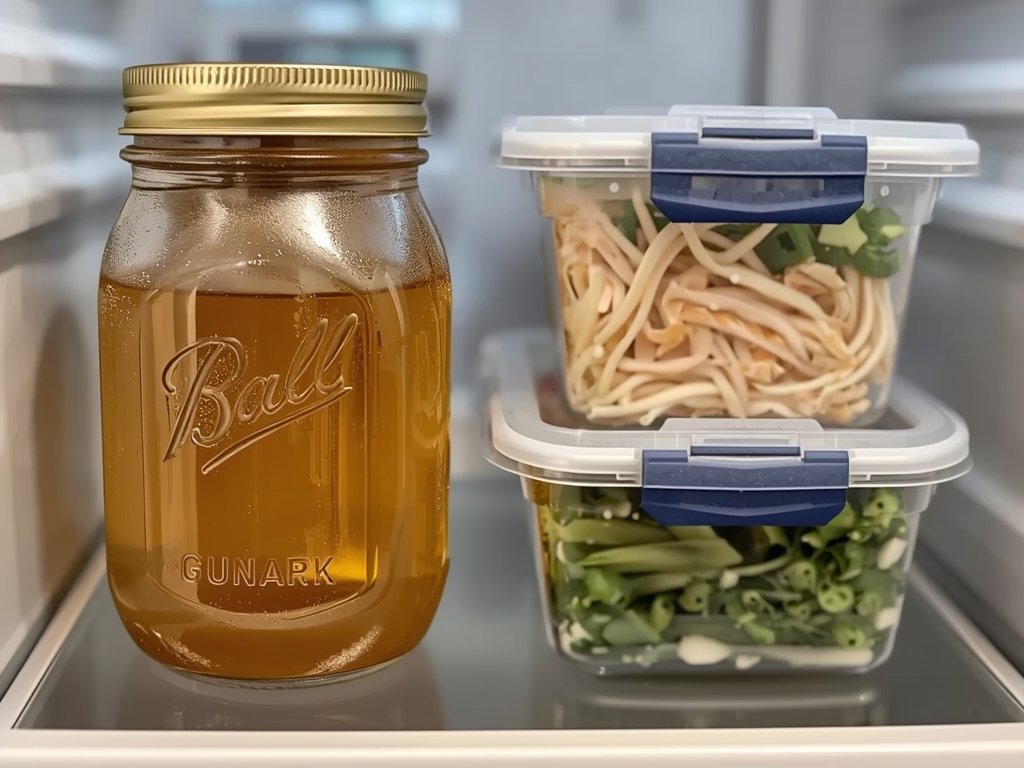
The cold-water method is faster when you forgot the overnight thaw. Put the chicken in a leak-proof bag — a sealed freezer bag inside a second bag is safer than one with a weak seal — and submerge it in cold tap water, changing the water every 30 minutes so it stays cold. Cook the chicken as soon as it has thawed; small portions take about an hour. The microwave is fastest: use the defrost setting, turn the chicken regularly, and cook it immediately after thawing. Never thaw cooked chicken on the counter — food left at room temperature for more than 2 hours enters the danger zone, and the outside warms up long before the middle does.
How to Reheat Thawed Chicken to 165°F
Reheating is not just about making chicken hot — it is about making it hot enough all the way through. The USDA’s rule: reheat all leftovers to 165°F internal temperature, measured with a food thermometer in the thickest part. Not “until it feels hot” — 165°F, measured.

The gentlest method is the oven or stovetop, with liquid. Put the thawed chicken in a covered dish with a splash of broth, stock, or water, and heat it at a moderate temperature until the centre reaches 165°F. The cover traps steam, the liquid replaces some of the moisture the freezer took, and moderate heat gives the centre time to catch up. The microwave works for small portions: cover the dish, turn the chicken halfway through, and check the temperature in several places, because microwaves have cold spots. One mistake to avoid: reheating the same chicken twice. Reheat what you will eat, and eat it — each cycle adds danger-zone time, and chicken already reheated once should not go back into the fridge for another round.
What to Do With Thawed Chicken (Soups and Casseroles Hide the Texture Loss)
Thawed chicken is rarely as good served plain as it was fresh, and the smartest move is not to pretend otherwise. A thawed breast sliced and served on its own shows every bit of drying the freezer caused. The same breast shredded into a soup or folded into a casserole tastes as good as fresh.

Soups are the best home for thawed chicken. The broth rehydrates the meat, and the chicken’s job is flavour and protein rather than tenderness. Add it near the end of cooking, just long enough to heat through to 165°F — simmering it for an hour dries it out again. Casseroles, pasta bakes, and curries are the second-best home: the sauce surrounds the chicken and the oven heat is gentle and even. Our five genius recipes for leftover rotisserie chicken were written for fresh rotisserie chicken, but every one works with thawed frozen chicken, since they are dishes where the chicken is an ingredient, not the star. The same thinking behind our guide to freezing mashed potatoes applies here: freeze the right thing, in the right portion, and use it where texture is forgiven.
When Not to Freeze Cooked Chicken
Freezing is not always the right call. Do not freeze chicken already at the end of its fridge life. If it is on day four, smells even slightly off, or has been sitting out for more than 2 hours, the freezer will not save it — freezing preserves what is there, including the bacteria, and thawing just restarts the clock where it stopped. When in doubt, throw it out.
Do not freeze a small amount you will eat tomorrow anyway — two spoonfuls of shredded chicken cost more freezer space and effort than they save, and small leftovers are better eaten within 3 to 4 days in the fridge. Do not freeze chicken that was already reheated once, either: it has been through the danger zone twice, and freezing adds a third journey on thawing. Eat reheated chicken the same day, or throw it away. Freeze the chicken you will shred into a soup, fold into a casserole, or toss into a pasta bake, and keep centrepiece meals for fresh chicken. The freezer is for ingredients, not showpieces — use it that way, within 2 to 3 months, and the chicken that comes out is worth cooking with.

Ghani is the founder of TwiceTasty and a passionate home cook who believes no meal should go to waste. What started as a personal mission to transform leftovers into exciting new dishes has grown into a community of food lovers who share the same philosophy.
