Follow Me On Social Media!

How to Freeze Mashed Potatoes
Can you freeze mashed potatoes? Yes — with the right method they keep 1-2 months. Portioning, fat, thawing and reheating steps for creamy results.
Ingredients
- Mashed potatoes
- Butter, cream, sour cream or cream cheese
Instructions
- Cool the mash fast: spread it in a shallow dish and refrigerate until cold.
- Stir in a little extra butter or cream cheese if the mash is lean.
- Portion flat — half-inch thick patties, or spread in a freezer bag and flatten into a thin slab.
- Tray-freeze patties on a cookie sheet, then pack into containers or freezer bags; press out the air, seal, and label with the contents and the date.
- Use within 1 month for the best results, and no later than 2 months.
- Thaw overnight in the fridge, or reheat from frozen — reheat covered in the oven at 350°F until the centre reaches 165°F, then stir in warm milk and butter.
Notes
Frozen food kept at 0°F stays safe indefinitely — the freezer times are about quality, not safety. If the mash looks watery after thawing, stir it back in over low heat; if it is grainy, gentle heat and a splash of warm cream usually smooth it out.
There is always too much mashed potato. You make a big pot for a family dinner or a holiday table, everyone eats their fill, and half the bowl is still sitting there. The fridge gives you 3 to 4 days to finish it. The freezer is the obvious answer — but mashed potatoes have a reputation for going grainy, watery and sad after freezing, and that reputation is partly earned.
The short answer is yes, you can freeze mashed potatoes, and they freeze better than most people expect — if the mash is right and the method is right. A rich, buttery mash frozen in flat portions thaws back close to the original. A thin, watery mash frozen in one big tub does not. This guide explains how long frozen mashed potatoes last, which mash freezes best, the step-by-step method, and how to thaw and reheat them so they come back creamy.
The Short Answer: Yes, and Fat Is Your Friend
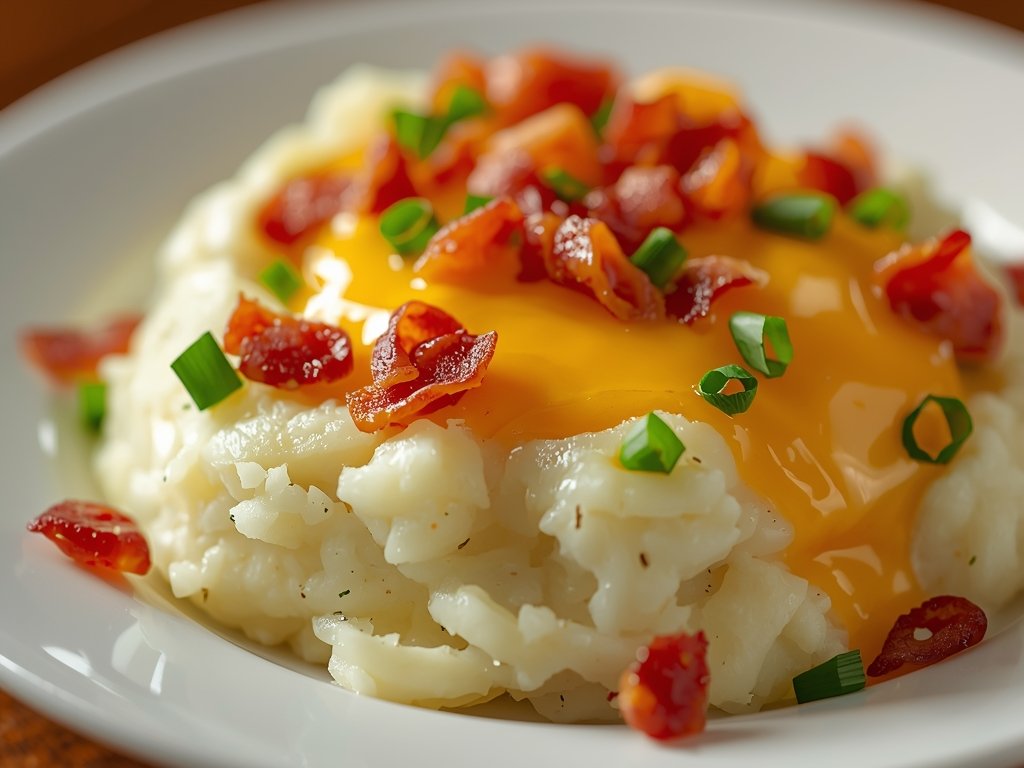
Mashed potatoes freeze well when they are made with enough fat. Butter, cream, sour cream or cream cheese protects the texture during freezing — the direct advice from Penn State Extension’s freezing-potatoes guide, which says adding butter, cream, sour cream or cream cheese provides fat that helps frozen mashed potatoes maintain their texture. The fat coats the starch and stops it from going grainy when the water in the mash freezes and separates.
The reason frozen mash goes wrong is water. When potatoes freeze, the water inside them separates from the starch, and the reheated potatoes come out watery. A lean mash — potatoes mashed with a little milk and not much else — has more free water and less fat to protect it, so it suffers more. A thick mash that holds its shape on a spoon freezes better than a thin, loose one: there is simply less water to separate.
How Long Do Frozen Mashed Potatoes Last?

Frozen mashed potatoes keep their best quality for 1 to 2 months, according to the USDA FoodKeeper database, which lists leftovers without meat — the category mashed potatoes fall under — at 3 to 4 days in the fridge and 1 to 2 months in the freezer. Plan around that number: use them within a month for the best results, and within two months at the outside.
Two honest caveats: the sources do not all say the same thing. First, Penn State Extension is more cautious: prepared cooked potatoes tend to lose flavour rapidly when frozen and should be stored for only a few weeks. Second, FoodKeeper’s separate potatoes entry lists cooked and mashed potatoes at 10 to 12 months — much longer than the leftovers entry. The difference is about quality, not safety: a rich, well-packed mash keeps longer than a lean one in a loose container.
The safe course is to follow the shorter window: plan to use frozen mashed potatoes within a month, and no later than two months. That lines up with the FoodKeeper leftovers figure and stays inside the cautious Penn State advice. If a bag has been in the freezer for six months, it is not dangerous — frozen food kept at 0°F stays safe indefinitely, and the freezer times are about quality only, as FoodSafety.gov states on its cold food storage chart. But after two months, expect the texture and flavour to have faded.
None of this matters if the freezer is not cold enough. All of these times assume a freezer at 0°F (-18°C) or below. A freezer that runs warmer, or a fridge-freezer compartment opened constantly that never quite reaches 0°F, shortens every storage time. If you freeze mashed potatoes often, a cheap freezer thermometer tells you whether your 1 to 2 months is real or optimistic.
Which Mashed Potatoes Freeze Best?
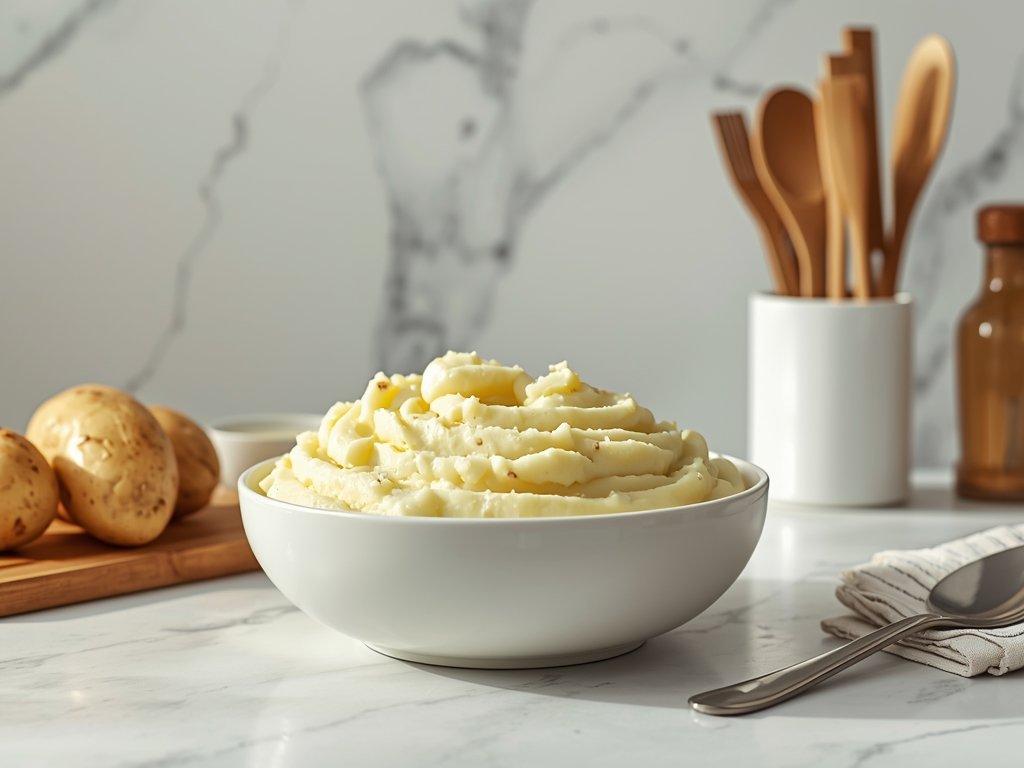
Best: rich, buttery mash. Potatoes mashed with butter and warm milk or cream, thick enough to hold their shape, freeze the best. The fat protects the starch, and the thick texture means less water to separate.
Good: mash with sour cream or cream cheese. These add fat and a little tang, and Penn State Extension names them specifically as fats that help frozen mash keep its texture. The thawed mash may look slightly separated at first, but it smooths out with gentle reheating.
Poor: thin, watery mash. Mash that is loose and wet, made with a lot of milk and little fat, is the worst freezer candidate — there is too much free water, and it separates badly on thawing. If the mash is already watery, do not freeze it. Use it within 3 to 4 days in the fridge, or turn it into something else: our guide to crispy pancakes from leftover mashed potatoes suits mash too loose to freeze, and our leftover mashed potato focaccia puts it to work as a bread dough instead.
How to Freeze Mashed Potatoes Step by Step
Step 1: Cool them fast. Spread the hot mash in a shallow dish so it cools quickly, and refrigerate it until it is cold. This matters for safety as well as texture: leftovers must be refrigerated within 2 hours of cooking, or 1 hour if the room is above 90°F, and the fridge needs to bring the potatoes to 40°F or below. A deep tub of hot mash cools slowly in the middle, spending too long in the danger zone between 40°F and 140°F.
Step 2: Add a little extra fat if the mash is lean. If the mash was made light, stir in an extra knob of butter or a spoonful of cream cheese before freezing. The fat you add now protects the texture through the freeze and gives you something to stir back in when you reheat.
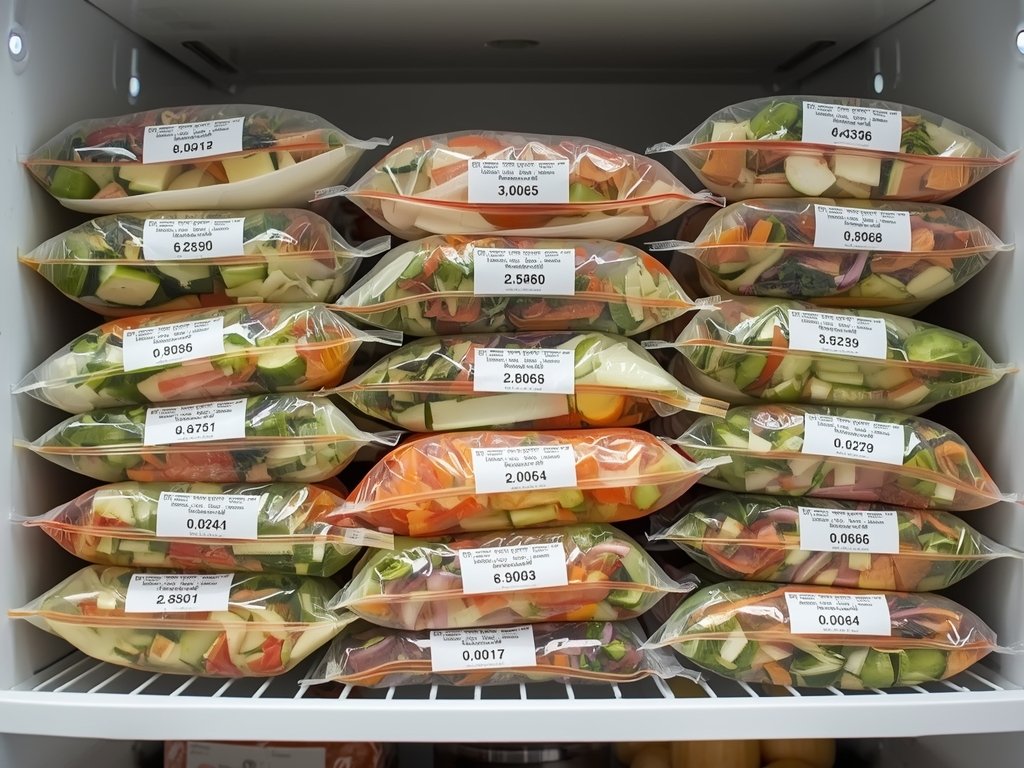
Step 3: Portion them flat. Penn State Extension recommends forming the cooled mash into half-inch thick patties, or packing it as a mass. Flat portions freeze and thaw faster than one thick block, and they let you take out exactly what you need instead of thawing the whole container. Good sizes are single scoops for quick lunches, one-cup mounds for side dishes, or larger portions matched to your casserole dish. You can also spread the mash in a freezer bag and flatten it into a thin slab — it stacks neatly and thaws fast.
Step 4: Tray-freeze patties before bagging. If you formed patties, freeze them on a cookie sheet first, then pack them into containers or freezer bags once they are firm. Tray-freezing stops the portions freezing into one solid lump, so you can pull out two patties without thawing the rest.
Step 5: Press out the air, seal, and label. Air is the enemy in the freezer: it causes freezer burn, dries out the surface, and dulls the flavour. Press the air out of the bag before sealing, or press plastic wrap directly onto the surface of the mash before putting the lid on. Label every bag with the contents and the date, so you know when the 1 to 2 month window ends. Undated freezer bags are how mashed potatoes end up forgotten for a year.
How to Thaw Frozen Mashed Potatoes

The best way to thaw frozen mashed potatoes is in the fridge, overnight. Move the bag or container from the freezer to the fridge the night before you need it, and let it thaw slowly and safely. Fridge thawing takes the longest, but the potatoes stay safe the whole time — the USDA notes in its leftovers and food safety guidance that refrigerator thawing is the safest method, because the food never enters the danger zone. After thawing, use the potatoes within 3 to 4 days.
You can also skip thawing altogether. Penn State Extension notes that larger portions can be reheated from frozen in the oven, and patties can be fried in butter until brown or defrosted in the microwave. Reheating from frozen takes longer, but it is safe — the USDA confirms it is safe to reheat frozen leftovers without thawing, in the oven or the microwave, as long as the food reaches 165°F. Allow extra time, and check the temperature in the centre, the last part to heat through. Do not thaw mashed potatoes on the counter: food left at room temperature for more than 2 hours enters the danger zone, and the outside of a thawing block warms up long before the middle does.
How to Reheat Frozen Mashed Potatoes So They Stay Creamy
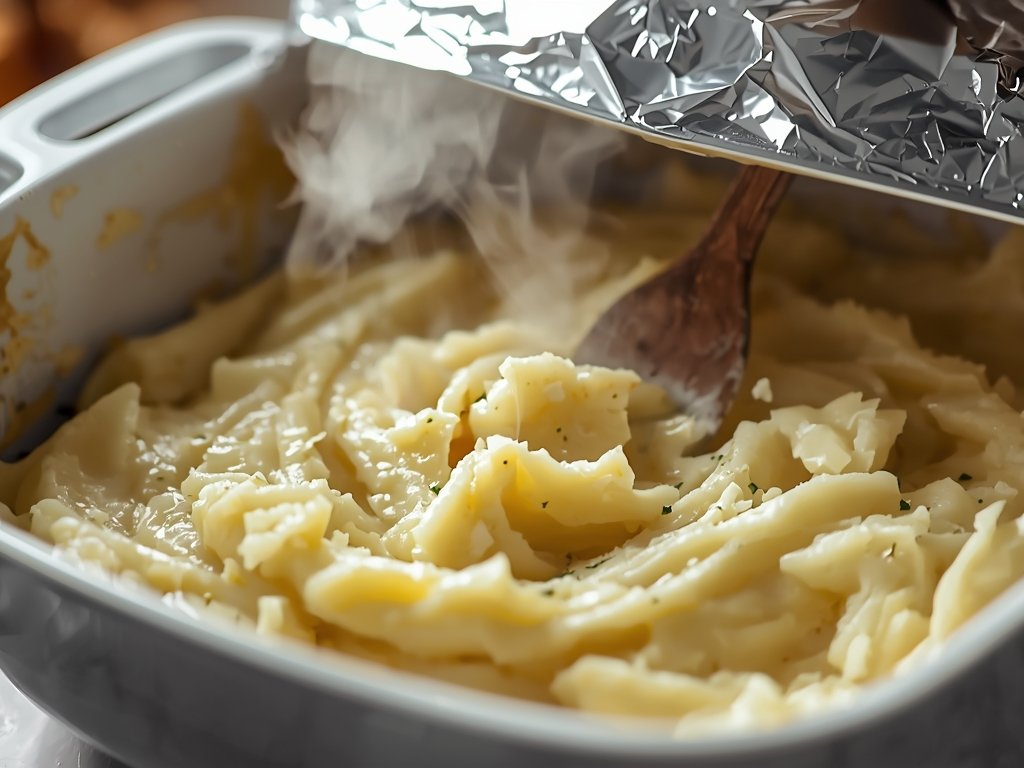
The oven is the best reheating method for a large portion. Penn State Extension recommends reheating larger portions in an oven at 350°F until the centre reaches at least 165°F. Put the thawed mash in a covered casserole or baking dish, so the moisture stays in, and stir it halfway through if you can. Once it is hot, stir in a splash of warm milk or cream and a knob of butter until it is smooth again.
The microwave works well for smaller portions. Penn State Extension recommends reheating in a covered casserole in the microwave on 50% power, covering and stirring occasionally. Half power gives the heat time to spread evenly instead of blasting the outside, and the cover traps steam that keeps the surface moist. Stir every minute or so, adding a splash of warm milk if the mash looks dry.
The stovetop is the third option, and the best one when you want control. Warm the thawed mash in a saucepan over low heat, with a lid on, stirring often. Low heat is essential — high heat scorches the bottom before the middle is warm. Add warm milk or cream a little at a time until the texture is right, and finish with butter. If the mash is still grainy, a vigorous whisk will usually smooth it out. Whatever method you use, the target is the same: 165°F internal temperature, measured with a food thermometer. That is the USDA rule for reheating all leftovers. Our guide to how to reheat mashed potatoes so they stay creamy covers the same techniques for mash that was never frozen, and most of it applies here too.
Fixing Texture Problems After Thawing
Watery mash. Liquid pooling on the surface is the water that separated from the starch during freezing. Stir it back in while the mash is hot, over low heat, and let the excess steam off with the lid ajar for a minute or two. If the mash is still too loose, stir in a spoonful of cream cheese — it binds the extra moisture without changing the flavour much.
Grainy mash. Graininess comes from starch that tightened up during freezing. Gentle heat, a splash of warm cream, and vigorous stirring usually relax it — but do not over-mix, or the mash turns gluey.
Freezer burn. Dry, discoloured patches are freezer burn — moisture lost to the air in the freezer. Small patches can be scraped off before reheating. If the whole surface is affected, the mash will taste flat and dry no matter what you add; use it in a dish where other ingredients carry the flavour, like the pancakes or focaccia linked above, rather than serving it on its own.
Flat flavour. Frozen potatoes lose flavour faster than they lose safety — Penn State Extension warns that prepared potatoes tend to lose flavour rapidly when frozen, which is why the storage window is short. A pinch of salt, a knob of butter, a spoonful of cream cheese, or a little roasted garlic stirred in at reheating time brings the flavour back. Taste before you serve and season again: the salt you added before freezing fades with the rest of the flavour.
When Freezing Mashed Potatoes Is Worth It — and When It Is Not

Freezing mashed potatoes is worth it when you have a genuine surplus: a holiday batch, a double recipe, or a big pot made for a crowd that did not finish it. It turns food that would be thrown away after 4 days into a side dish you can serve a month later. For a Thanksgiving table — Thanksgiving falls on 2026-11-26, thirteen days after this article’s publication — making the mash ahead and freezing it is one of the simplest ways to take pressure off the day itself.
It is not worth it for a small amount. Freezing two spoonfuls of mash costs more effort than it saves, and the texture loss is the same whether the portion is large or small. Small leftovers are better used within 3 to 4 days in the fridge, or turned into pancakes or focaccia the next day. And it is not worth freezing mash that was already thin, watery or poorly seasoned — freezing preserves what is there, including the flaws.
The verdict is simple. Yes, you can freeze mashed potatoes. Make them rich, cool them fast, freeze them flat in portions, use them within a month or two, and reheat them gently with a little extra butter and warm milk. Do that, and the bowl that comes out of the freezer is worth serving.

Ghani is the founder of TwiceTasty and a passionate home cook who believes no meal should go to waste. What started as a personal mission to transform leftovers into exciting new dishes has grown into a community of food lovers who share the same philosophy.

← Previous
Artisan Sourdough with Whipped Salted Butter Recipe
Next →
Can You Freeze Cooked Chicken?
Rate This Recipe
Tried this recipe? Share your experience and help others!