Follow Me On Social Media!

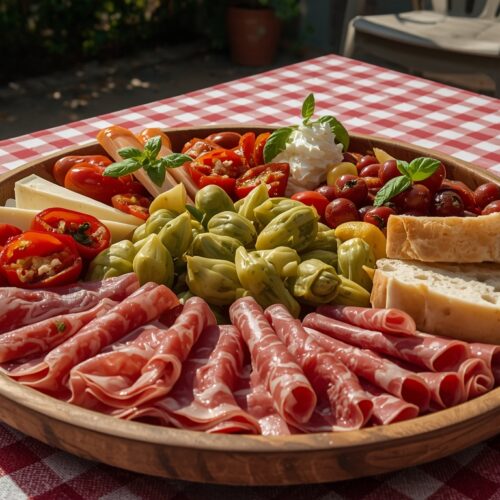
Roasted Pepper Antipasto Platter
Ingredients
- 2 jars (about 340 g / 12 oz each), drained, or 4 large red peppers, roasted at home Roasted peppers
- 225 g (8 oz) sliced salami, 115 g (4 oz) sliced prosciutto, 115 g (4 oz) coppa or soppressata Cured meats
- 225 g (8 oz) fresh mozzarella, torn into pieces, or burrata, 2 balls Cheese 1, soft
- 170 g (6 oz) aged provolone or fontina, sliced or cubed Cheese 2, semi-hard
- 115 g (4 oz) Parmigiano-Reggiano or pecorino, shaved or in chunks Cheese 3, hard
- 200 g (about 1 cup) mixed olives, drained Olives
- 1 jar (about 340 g / 12 oz), drained and halved Artichoke hearts
- 115 g (about 1/2 cup) pickled pepperoncini, drained Pepperoncini
- 1 baguette, sliced and toasted into crostini, or 1 loaf of crusty bread, sliced Bread
- 60 g (about 1/2 cup) marcona almonds or walnuts, a small bunch of fresh basil, extra-virgin olive oil, flaky salt, black pepper Extras
Instructions
- Place the small bowls — one for olives, one for pepperoncini, one for marcona almonds — spread out so each anchors a different corner of the board.
- Place the cheeses — soft mozzarella or burrata near the centre, provolone slices fanned in a loose row, Parmigiano chunks in a small pile, with space between them.
- Fold and place the meats — salami folded into rosettes, prosciutto draped in soft folds, coppa in overlapping rows, in three groups around the board.
- Lay the peppers — long loose folds like ribbons in the spaces between the meats and cheeses, tucked under cheese and over meat.
- Fill the gaps — artichoke hearts, olives and almonds into the bare patches, crostini around the edges, basil leaves, a drizzle of olive oil, flaky salt and black pepper.
Notes
Keep the board out for no more than two hours (one hour above 90°F / 32°C).
A roasted pepper antipasto platter is the easiest crowd food there is: a big board, a jar of roasted peppers, some cured meat and cheese, and twenty minutes of arranging. There is no cooking, no recipe to follow in the usual sense, and no oven to watch. You set out the components, you build the board in a sensible order, and you put it in the middle of the table. It looks generous, it feeds eight people as a starter or a light grazing meal, and it disappears fast.
This is not a dip. We already have a roasted pepper dip on this site — our roasted red peppers antipasto dip recipes — and this platter is a different format. In the dip, the peppers are blended into something spoonable. Here, the peppers stay whole: long, glossy strips of roasted pepper, laid out in folds and ribbons across the board, their sweet, smoky flavour standing on its own next to salami, cheese, olives, and bread. The pepper is the centrepiece of the board, not an ingredient inside something else.
The whole build takes about twenty minutes, and most of that is unwrapping cheese and draining jars. If you roast your own peppers, add thirty minutes of mostly hands-off roasting and cooling time — or simply buy a good jar and skip it entirely. Both routes work, and the honest difference between them is smaller than most recipes admit. A good jar of roasted peppers, drained and seasoned well, beats a mediocre home-roasted batch every time.
The Short Answer
A roasted pepper antipasto platter is a composed board built around roasted peppers, served at room temperature for a crowd. Start with the peppers — about two large jars, or four large peppers roasted at home — then add cured meats, three cheeses, olives, artichoke hearts, pepperoncini, and bread or crostini. Put small bowls on the board first, arrange the meats and cheeses around them, lay the pepper strips in folds, and fill the gaps with olives and nuts. Serve eight people from one large board, and keep the board out for no more than two hours.
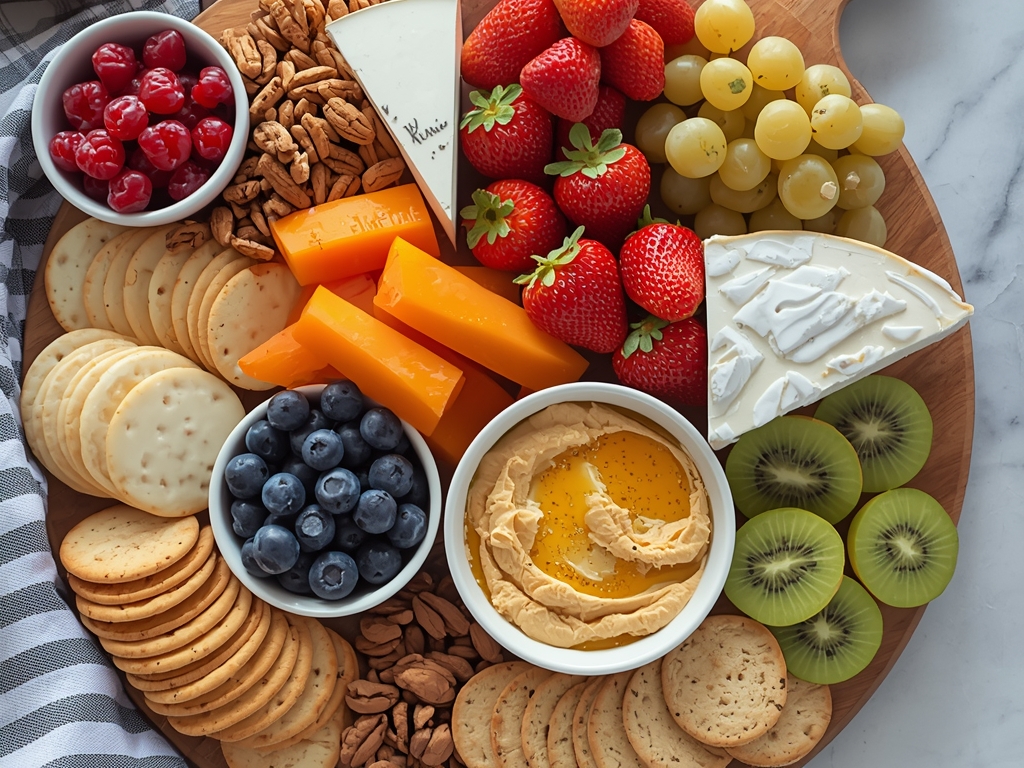
Components: What to Buy for 8 People
This list serves eight people as a generous starter, or four as a light grazing supper with bread and a salad. The amounts are deliberately specific, because a platter built on guesswork either runs out of the good things first or leaves you with a board that is half empty. Buy the amounts below and you will have a full board with a little of everything left at the end, which is exactly how a platter should finish.
-
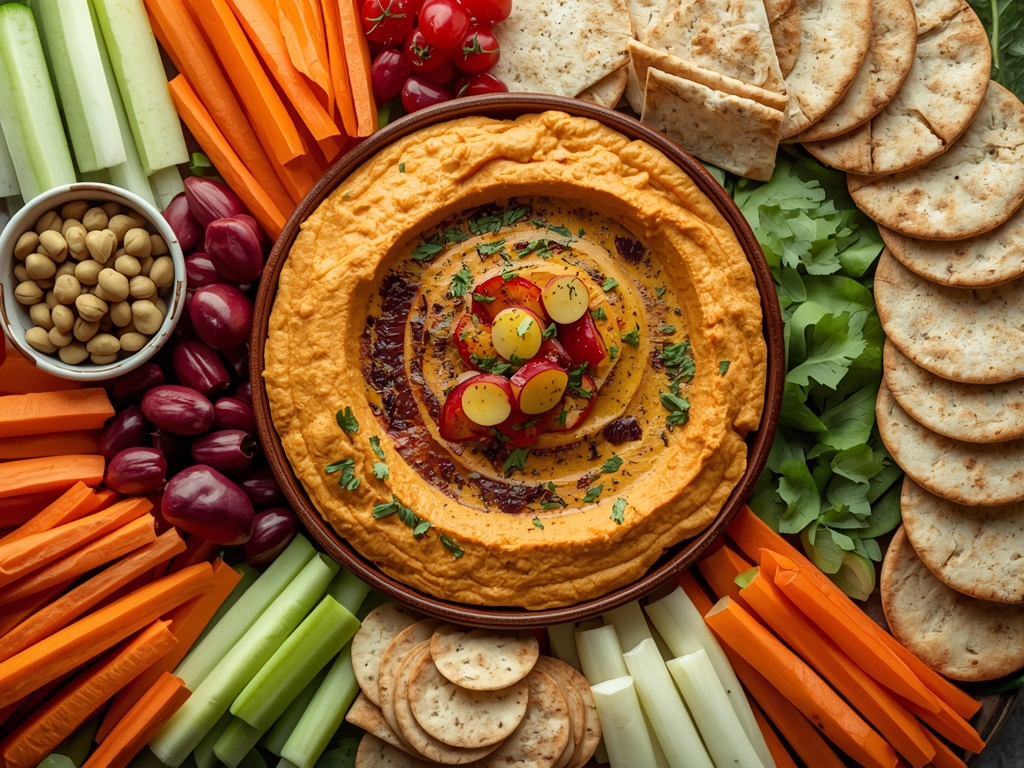 Roasted peppers: 2 jars (about 340 g / 12 oz each), drained, or 4 large red peppers, roasted at home
- Cured meats: 225 g (8 oz) sliced salami, 115 g (4 oz) sliced prosciutto, 115 g (4 oz) coppa or soppressata
- Cheese 1, soft: 225 g (8 oz) fresh mozzarella, torn into pieces, or burrata, 2 balls
- Cheese 2, semi-hard: 170 g (6 oz) aged provolone or fontina, sliced or cubed
- Cheese 3, hard: 115 g (4 oz) Parmigiano-Reggiano or pecorino, shaved or in chunks
- Olives: 200 g (about 1 cup) mixed olives, drained — Castelvetrano and Kalamata work well together
- Artichoke hearts: 1 jar (about 340 g / 12 oz), drained and halved
- Pepperoncini: 115 g (about 1/2 cup) pickled pepperoncini, drained
- Bread: 1 baguette, sliced and toasted into crostini, or 1 loaf of crusty bread, sliced
- Extras: 60 g (about 1/2 cup) marcona almonds or walnuts, a small bunch of fresh basil, extra-virgin olive oil, flaky salt, black pepper
The three cheeses are not decoration — they are the structure of the board. The soft cheese gives creaminess, the semi-hard cheese gives slices people can pick up easily, and the hard cheese gives salty, crumbly bites that need no knife. If you only buy one cheese, the board feels thin, however much meat you add. If you buy three, the board feels complete even with modest amounts of each.
Roast Your Own Peppers, or Use a Jar?
Both work. The jar is faster, the home-roasted pepper tastes better, and the gap between them is narrower than the effort suggests. Here is the honest comparison, so you can choose based on the evening you are having rather than a rule.

Jarred roasted peppers are ready in two minutes: drain, pat dry, season. Look for peppers packed in water or light brine rather than heavy oil, and read the label — the ingredient list should be short: peppers, water, salt, maybe a little citric acid. Taste one before you build the board. If it tastes flat, a drizzle of good olive oil, a pinch of flaky salt, and a few drops of red wine vinegar wake it up. If it tastes smoky and sweet already, leave it alone.
Home-roasted peppers take about thirty minutes, most of it hands-off. Heat the oven to 230°C (450°F), or use a gas flame or grill. Put four large red peppers on a baking tray and roast for 25 to 30 minutes, turning once, until the skins are blackened and blistered all over. Transfer them to a bowl, cover tightly with cling film or a plate, and leave them for 15 minutes — the steam loosens the skins. Peel the skins off, pull out the stems and seeds, and tear the flesh into wide strips. Season with olive oil, salt, and a splash of red wine vinegar while the peppers are still slightly warm, so they absorb the flavour.
One practical note: whichever route you choose, drain the peppers properly and pat them dry with kitchen paper before they go on the board. Peppers sitting in their own liquid will weep across the board within minutes, and the crostini will go soft.
The Build Order: Bowls First, Then Meat, Then Cheese, Then Gaps
Start with the board itself. You need a large board or a flat tray — at least 45 cm (18 inches) across for eight people. A wooden board looks warm and rustic; a marble slab stays cool and suits the cheese. If you do not have a board big enough, use a rimmed baking tray lined with baking paper, or two smaller boards side by side. Wash and dry everything before you start, and set the board where people will actually eat from it — the middle of the table, not the kitchen counter.

Step one: place the small bowls. Put two or three small bowls on the board first — one for the olives, one for the pepperoncini, one for the marcona almonds. Small, wet, or loose items need a container, and once the bowls are placed, the rest of the board is built around them. Spread the bowls out, not clustered together, so each one anchors a different corner of the board.
Step two: place the cheeses. The soft mozzarella or burrata goes near the centre, where it will not be knocked about. The provolone slices fan out in a loose row, and the Parmigiano chunks sit in a small pile, where people can take a piece without a knife. Leave space between the cheeses — do not pack them together, or the board looks cramped before you have added anything else.
Step three: fold and place the meats. Fold the salami slices in half, then in half again, and tuck them into loose rosettes. Drape the prosciutto in soft folds rather than laying it flat — flat prosciutto sticks to the board and tears when someone tries to take it. Arrange the coppa slices in overlapping rows. Place the meat in three separate groups around the board, not in one pile, so people on every side can reach it.
Step four: lay the peppers. This is the moment the board becomes a roasted pepper platter rather than a generic cheese board. Take the pepper strips and lay them in long, loose folds — like ribbons — in the spaces between the meats and cheeses. Let them curve and overlap. Tuck a few strips under the edge of a cheese pile, and let a few spill over the edge of a meat rosette. The red of the peppers against the pale cheese and pink meat is what makes the board look striking.
Step five: fill the gaps. Add the drained artichoke hearts, tucking them into the spaces between the larger items. Scatter the olives and almonds into any remaining bare patches, and place the crostini around the edges of the board, or in a basket beside it. Tuck in a few basil leaves for colour, drizzle a little olive oil over the peppers and the mozzarella, and finish with flaky salt and black pepper over the cheese. Step back and look: if you can still see bare board, fill it. A full board looks generous; a half-empty board looks unfinished.
Make-Ahead and Serving
This platter is a make-ahead dish in the best sense: almost everything can be prepared the day before, and the board itself can be built an hour ahead. Slice the cheeses, drain the olives, artichokes, and pepperoncini, and store each item in its own covered container in the fridge. Roast and peel the peppers the day before if you are roasting at home — they keep well for two to three days in the fridge in their own seasoned oil. Toast the crostini the morning of the party and keep them in a paper bag so they stay crisp.

Build the board about an hour before guests arrive, cover it loosely with cling film, and keep it in the fridge. Take it out thirty minutes before serving, so the cheese and meat come up to room temperature — cold cheese has no flavour, and cold prosciutto is stiff and unappealing. Taste a pepper strip before you set the board out, and adjust the salt and vinegar if it needs it. Add the basil leaves and the final drizzle of olive oil at the last minute, so the leaves stay bright.
Serve with the crostini on the board or in a basket beside it, and put out small plates and napkins. If you already have a batch of our big batch caramelized onions in the fridge, a small bowl of them is a sweet, savoury extra that sits happily on the board.
The 2-Hour Rule: How Long the Board Can Sit Out
Meat and cheese are perishable, and the two-hour rule is the one safety rule this platter needs. FoodSafety.gov’s guidance is that perishable food should not sit at room temperature for more than two hours — or more than one hour when the temperature is above 90°F (32°C). After that, it should go back in the fridge or be thrown away. That clock starts when the board leaves the fridge, not when the first guest arrives, so plan accordingly.
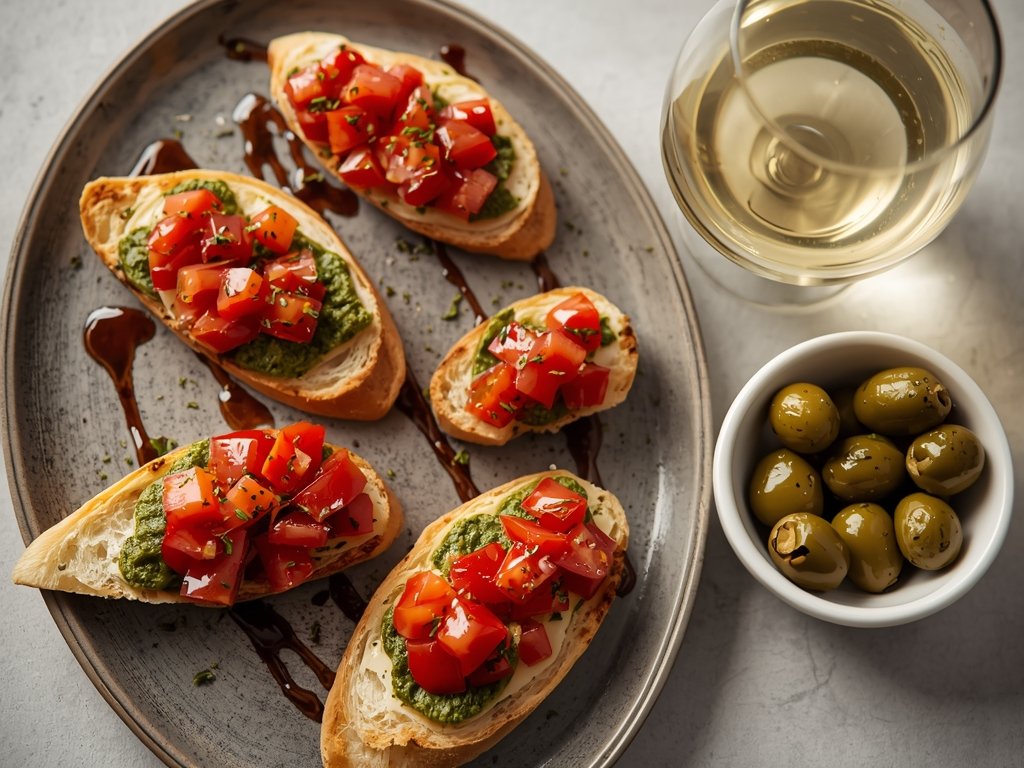
In practice, that means: build the board an hour before serving, take it out thirty minutes before guests arrive, and let people eat for two hours. If the party runs longer, put the board back in the fridge after two hours and bring out a fresh small plate later, rather than leaving the same meat and cheese out all evening. The peppers, olives, and artichokes are more forgiving than the meat and cheese, but they share the board, so the clock applies to the whole platter.
Leftovers keep for three to four days in the fridge, which is the standard window for cooked meat and prepared salads on the FoodSafety.gov cold food storage chart. Pack the meat and cheese separately from the vegetables, in covered containers, and keep the crostini separate so they stay crisp. Leftover peppers are excellent the next day — chop them into pasta, fold them into an omelette, or pile them onto toast with a fried egg. For more ways to use up what is already in the fridge, our crispy black bean burgers show how a leftover can become the main event rather than an afterthought, and our ten-minute pickled onions are a sharp, bright addition to any board.
Frequently Asked Questions
Can I make this vegetarian? Yes — leave out the cured meats and add a second soft cheese, more olives, and a bowl of marinated mushrooms or white beans dressed in olive oil and lemon. The peppers, cheeses, and bread carry the board on their own.


Ghani is the founder of TwiceTasty and a passionate home cook who believes no meal should go to waste. What started as a personal mission to transform leftovers into exciting new dishes has grown into a community of food lovers who share the same philosophy.

Rate This Recipe
Tried this recipe? Share your experience and help others!