Follow Me On Social Media!

Leftover risotto has a problem that looks like a failure and is actually an advantage. Fresh risotto is loose, creamy, and flowing. The next day it is a stiff, cold block in its container, and it looks like something has gone wrong. Nothing has. The rice has simply set as it cooled, and that stiff, cold block is exactly what the best leftover-risotto dishes need. The stiffness that makes it unappealing on a plate is the same stiffness that lets it hold its shape in a ball, a cake, or a pepper.
So do not fight the texture, and do not try to return the risotto to the way it was. The reheating guide on this site — our how to reheat leftover risotto without it turning into mush — covers reviving a portion as risotto, and it works well when that is what you want. But most of the time, the better move is to turn the cold risotto into a new dish that wants it cold and firm. These five ideas do exactly that.
Why Cold Risotto Works: The Starch Has Set
Risotto rice — usually arborio or carnaroli — is rich in a starch called amylopectin, and that starch is the whole story. When the rice cooks, the starch swells and leaks into the cooking liquid, which is what makes a risotto creamy. When the risotto cools, the starch sets again, and the grains bond together into a firm mass. Reheat it gently with a splash of stock and the creaminess comes back; leave it cold and you have a mixture that can be shaped, sliced, and fried.
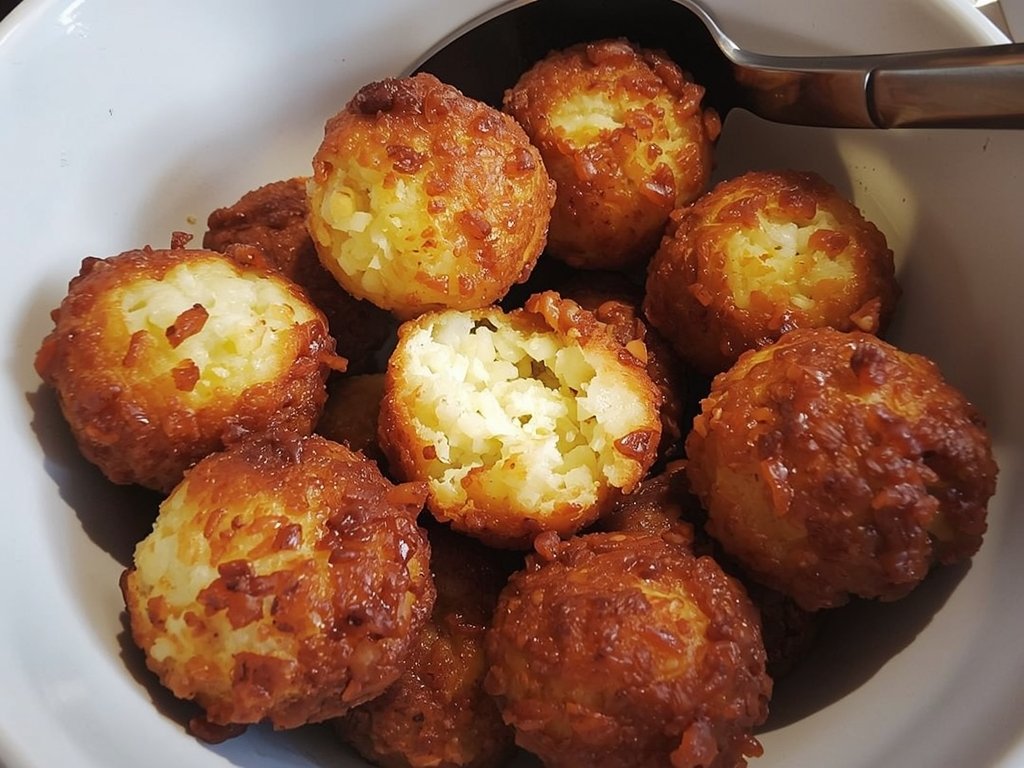
That is why arancini, the great Sicilian answer to leftover risotto, is never made from fresh risotto. Fresh risotto is too loose to hold a ball; it slides apart in your hands and falls apart in the oil. Cold risotto holds together with almost no help, and the cheese in the centre melts as the outside crisps. The same logic applies to the cakes, the stuffed peppers, and the frittata below. Each of them uses the set texture as a building material, not as a defect to be corrected.
One practical note applies to all five ideas: work with the risotto cold, straight from the fridge. Warm it up and it loosens, and you lose the advantage. Break it up with a fork only as much as the dish needs — for arancini, you want it just loose enough to shape; for soup, you want it broken down completely. And taste it first: a mushroom risotto becomes a mushroom arancini, and a saffron risotto becomes a golden, fragrant cake.
1. Arancini: The Classic, With a Melting Centre
Arancini are the first idea for a reason: they are the best thing cold risotto can become, and they are the dish the texture was made for. Take a handful of cold risotto, press it flat in your palm, put a small cube of mozzarella in the centre, and close the rice around it, shaping it into a ball about the size of a golf ball. Roll the ball in beaten egg, then in fine breadcrumbs, and chill the shaped balls for thirty minutes before frying — cold balls hold their shape in hot oil, warm ones do not.

Fry in hot oil, in small batches, until the outside is deep golden and crisp, about three to four minutes. Drain on a rack, not on paper towels, so the bottoms stay crisp. Serve hot, as a starter or a snack, and warn people about the first bite — the cheese inside is molten. Our full recipe, leftover risotto arancini with mozzarella filling, walks through the shaping step by step, including how much filling to use and how to keep the balls from cracking open in the oil.
Keep the rice cold until you shape it. Keep the mozzarella cube small — a large cube melts out and leaves a hollow. Use fine breadcrumbs rather than coarse ones, because fine crumbs coat evenly and seal the ball. And do not crowd the pan: too many balls at once drops the oil temperature and the balls go greasy.
2. Crispy Risotto Cakes: The Weeknight Version
If arancini feels like a weekend project, risotto cakes are the weeknight version of the same idea. They are faster, they use a pan rather than a fryer, and they turn a container of cold risotto into dinner in fifteen minutes. Mix the cold risotto with one beaten egg and a handful of grated Parmesan, shape it into flat patties about eight centimetres across, and coat the outside in breadcrumbs or plain flour. Fry in a shallow layer of oil, in a wide pan, for three to four minutes a side, until both sides are golden and crisp.

The egg is the binder here, and it matters because a risotto cake is thinner than a ball and has more surface to hold together. One egg for about two cups of cold risotto is the usual proportion, and a spoonful of grated Parmesan in the mix adds flavour and helps the outside crisp. Do not add breadcrumbs to the mix itself — that makes the cakes heavy. The coating goes on the outside only, where it can crisp in the oil.
Serve the cakes hot, two per person, with a salad and a spoonful of tomato sauce, or with a fried egg on top for a fuller meal. A lemon wedge is worth adding: the richness of the risotto and the Parmesan needs a little acid, and a squeeze of lemon over the hot cakes does the job better than any sauce.
3. Creamy Soup: Thin With Stock, Not Water
The gentlest idea is also the simplest: turn the risotto into soup. Break the cold risotto into a pot with hot stock — chicken, vegetable, or mushroom, to match the flavour of the original dish — and simmer it gently, stirring often, until the grains soften and the mixture turns thick and creamy. The risotto is already seasoned and already rich, so the soup needs little more than the stock and a few minutes.

Use stock, not water. Water dilutes the flavour the risotto already has; stock adds to it. About two cups of stock to one cup of cold risotto is a good starting point, and you can add more if the soup is too thick. Keep the heat low and stir often, because the starch that made the risotto creamy will also make it catch on the bottom of the pot if it is left alone. The same cold-rice logic is behind our leftover rice ideas roundup, where rice soup and congee do the same job for plain rice.
This is the best idea for risotto that has been in the fridge for a couple of days and has gone a little dry, because the stock puts the moisture back. A mushroom risotto becomes a mushroom soup with almost no extra work. A plain risotto becomes a base you can flavour: a spoonful of pesto stirred in at the end, a handful of peas, or a scattering of herbs.
4. Stuffed Peppers: Risotto as the Filling
Stuffed peppers are the most complete of the five ideas — a main course, not a snack — and they need nothing the risotto does not already provide. Cut the tops off bell peppers, scoop out the seeds and white ribs, and fill them with cold risotto, pressing it in firmly but not packing it so hard it turns solid. Top each pepper with grated cheese, stand them upright in a baking dish with a splash of water in the bottom, cover with foil, and bake at 190°C (375°F) for about forty minutes, until the peppers are tender. Uncover for the last ten minutes so the cheese browns.

The trick is the same as it is for stuffed peppers made with plain rice: season the filling generously before it goes in. The pepper adds almost no flavour of its own, and the heat of the oven will not fix an under-seasoned filling. Taste the risotto before you stuff it — it should taste a little too strong, because the pepper and the cooking will soften it. If the risotto is plain, stir in a spoonful of tomato paste, some chopped herbs, or a handful of grated cheese before filling. If it is already rich, leave it alone.
One pepper per person is a light lunch; two, with a green salad, is dinner. The peppers reheat well, and they are one of the few dishes here that taste just as good cold the next day, sliced and eaten at room temperature.
5. Frittata: The Pan That Uses Everything
The frittata is the most forgiving idea here, because it takes whatever risotto you have, in whatever amount, and turns it into a meal with eggs. Beat six eggs in a bowl with a pinch of salt and a handful of grated Parmesan. Stir in about two cups of cold risotto, broken up with a fork, and any extras you have — peas, chopped herbs, a little cooked sausage, or the last of a bag of spinach, wilted first. Heat a little oil or butter in an ovenproof frying pan, pour the mixture in, and cook over a medium heat for five minutes, until the edges set. Then slide the pan under the grill for three to four minutes, until the top is set and golden.

The risotto does two jobs in a frittata. It gives the eggs body, so the frittata slices cleanly and holds its shape when it cools, and it gives the dish its flavour, so a mushroom risotto becomes a mushroom frittata with almost no extra seasoning. If the risotto is very cheesy already, use less Parmesan; if it is plain, use more.
Serve the frittata warm or at room temperature, in wedges, with a salad. It keeps for two days in the fridge, and it is one of the best packed lunches in this roundup, because it does not need reheating and does not go soggy. Eat it cold, straight from the container, and it still tastes like a proper meal — which is more than can be said for most leftover dishes on day two.
How Long Leftover Risotto Keeps
Risotto follows the standard leftover window. FoodSafety.gov’s cold food storage chart gives cooked meat and poultry leftovers three to four days in the fridge, and the same three-to-four-day window applies to cooked rice dishes. That is the honest answer: three to four days, in a covered container, in a fridge at 40°F (4°C) or below. Some food writers say risotto keeps for up to five days, and one well-known food publication puts it at five days unless the risotto contains meat, in which case the window shortens. The safe rule — and the one this site uses everywhere — is three to four days.
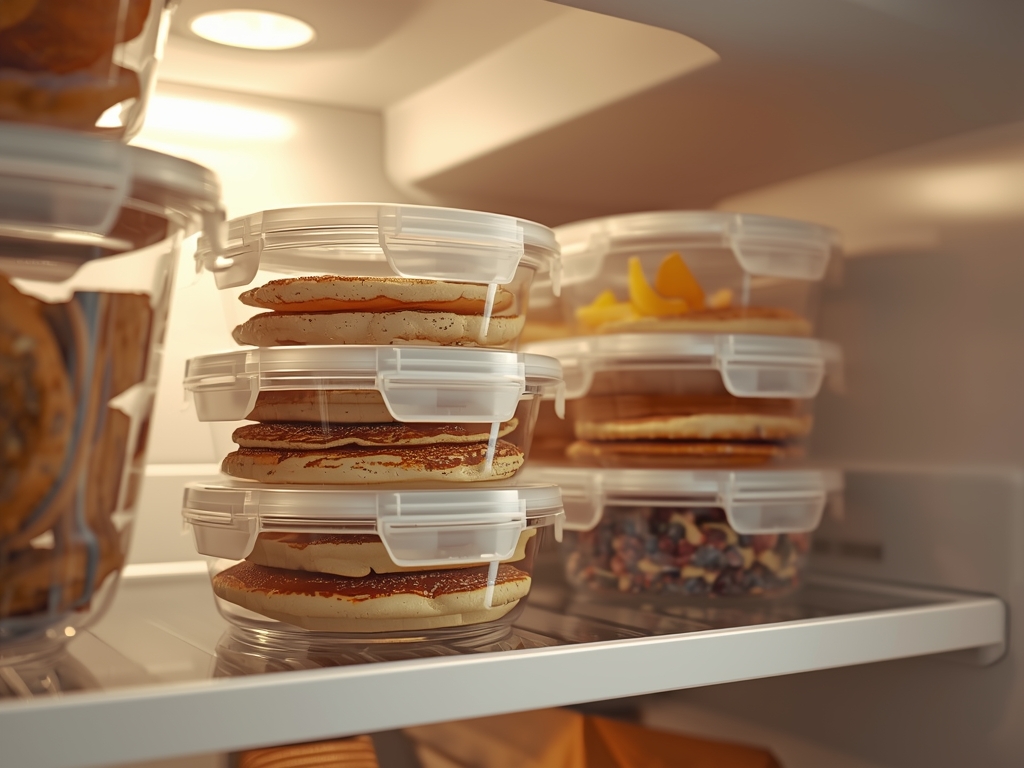
Cool the risotto quickly after dinner. Spread it in a shallow container rather than leaving it in a deep pot, so it cools fast, and get it into the fridge within two hours of cooking — within one hour if the kitchen is above 90°F (32°C). Do not leave rice dishes sitting out overnight, and do not reheat the same batch more than once. Reheat only the portion you are going to eat, until it is steaming hot all the way through, and the usual guidance is to bring leftovers to 165°F (74°C). Our guide to how long leftovers last in the fridge brings all of those rules together in one place.
Freezing is possible, though the texture suffers: frozen and thawed risotto is softer and less distinct than fresh, which matters less for soup and frittata than it does for arancini. If you freeze it, use a shallow container, label it with the date, and use it within two to three months for best quality. Thaw in the fridge overnight, never on the counter, and reheat only once.
Frequently Asked Questions
Why is my leftover risotto so stiff? The starch has set as the rice cooled, which is normal. It is not a sign that the risotto has gone bad. The stiffness is what makes cold risotto so useful for shaping into balls and cakes — and if you want it creamy again, reheat it gently with a splash of stock, following our reheating guide.

Ghani is the founder of TwiceTasty and a passionate home cook who believes no meal should go to waste. What started as a personal mission to transform leftovers into exciting new dishes has grown into a community of food lovers who share the same philosophy.

← Previous
Roasted Pepper Antipasto Platter: How to Build It in 20 Minutes
Next →
What to Do With Leftover Roast Beef: 7 Ideas