Follow Me On Social Media!

Leftover roast beef is the leftover most kitchens waste, and it is the one they should waste least. A roast is expensive, it is the centrepiece of a Sunday meal, and the slices left over on Monday are still good meat — but they are meat that has already been cooked once, and if it is cooked a second time the same way, it dries out and turns grey and tough. That waste is avoidable, and the seven ideas below avoid it by following one rule.
The rule is this: leftover roast beef is already cooked, so you never cook it again — you only warm it, gently, in liquid, at the very end. Slice it thin, against the grain, add it at the last minute, and let the heat of the dish warm it through. Treat it like that, and it stays tender. Treat it like raw meat that needs cooking, and it turns to leather.
The Golden Rule: Gentle Moist Heat Only
Roast beef dries out for a simple reason: it has already lost moisture once, during the roast, and a second round of dry heat — a hot oven, a frying pan, a microwave on full power — takes out what is left. The proteins tighten, the juices leave, and the slices go grey and tough. The fix is moist heat, which arrives with liquid, and gentle heat, which stops as soon as the meat is warm.

In practice that means three habits. First, slice the beef thinly, and always against the grain — look for the lines running through the meat and cut across them, so each slice is short-fibred and tender to bite through rather than long-fibred and chewy. Second, add the beef at the end of cooking, never at the beginning: in a soup, a stew, or a stir-fry, the beef goes in for the last two or three minutes, just long enough to warm through. Third, reheat only once, and only the portion you will eat, until it is hot all the way through — the usual guidance is to bring leftovers to 165°F (74°C).
1. French Dip and Horseradish Sandwiches
The sandwich is the best first idea, because it asks the least of the meat and gives back the most. Slice the beef thinly, against the grain, and pile it generously onto a crusty roll — a baguette, a ciabatta, or a good white roll that can hold its shape. For a French dip, serve it with a small bowl of hot beef stock or leftover gravy for dipping, and let the bread soak up the jus with each bite. The stock does the work the meat cannot do on its own: it puts moisture back, and it carries flavour into the bread.

For a horseradish sandwich, spread the bread generously with horseradish sauce — horseradish mixed with a little sour cream or mayonnaise, so it is sharp but not fiery — and add watercress or rocket for peppery bite. The horseradish is not a garnish here; it is the reason the sandwich works. Roast beef is rich and fatty, and the sharpness of horseradish cuts through it in a way that plain mayonnaise cannot. Add sliced pickled onion if you have it, but do not add tomato — a slice of tomato makes the bread soggy within minutes.
Cut the sandwiches in half and serve them with a salad or crisps. There is no reheating involved, which is the point: the beef is eaten the way it is, at room temperature or lightly warmed. If you have a lot of beef left, sandwiches are also the idea that uses it fastest.
2. Beef Stroganoff: The Rich, Creamy Second Life
Stroganoff is the dish for the beef that is a little too dry to enjoy cold, because its sauce does what the meat cannot. Slice the beef thinly, and set it aside. Cook sliced mushrooms and onions in butter until they are golden, add a spoonful of paprika and a splash of stock, and simmer until the liquid has reduced by half. Stir in sour cream off the heat — never let the sauce boil after the sour cream goes in, or it splits — and then fold the beef slices through the sauce for two minutes, just until they are warm.
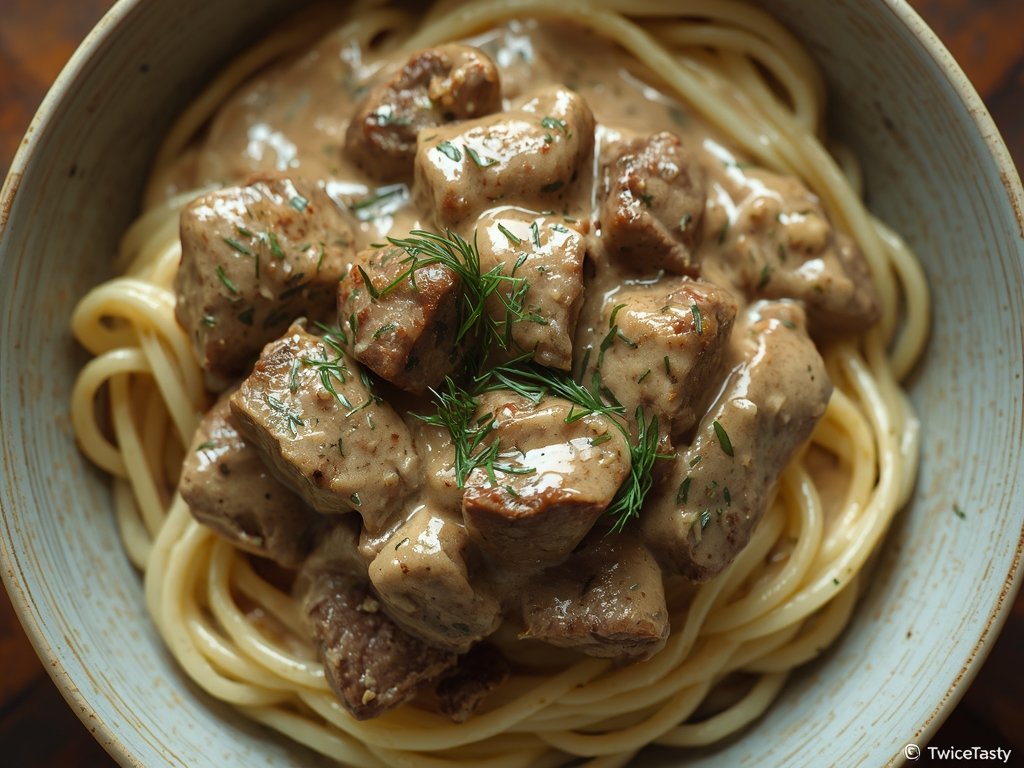
Serve it with egg noodles, rice, or mashed potatoes, and a spoonful of chopped parsley on top. The key detail is the timing: the beef goes in last, and it goes in for two minutes. If the beef simmers in the sauce for ten minutes, it will be tender-looking but tough to eat, because the sauce is as hot as an oven and does the same damage.
3. Breakfast Hash: The Morning After, Done Properly
Breakfast hash is the idea for the morning after a roast, and it is the one that uses the most of what is already in the fridge. Dice the beef into small cubes — not slices, cubes, so each piece has the same amount of surface in the pan. Dice a potato the same size, and fry the potato first, in a little oil, until it is golden and crisp at the edges. Then add a diced onion and a diced pepper, cook until they soften, and stir in the beef cubes for two or three minutes, until just warm through. Push the hash aside, fry an egg in the space, and break the runny yolk over the top — it is the sauce.

4. Stir-Fry: Fast, Hot, and Brief
A stir-fry is the most dangerous idea on this list, because it is the one where the beef is most likely to be overcooked. The rule that saves it is timing: the beef goes in last, and it stays in for two minutes at most. Get everything else ready first — the sauce mixed, the vegetables chopped, the rice cooked — and then the stir-fry itself takes five minutes. Heat the wok until it is properly hot, fry the vegetables for three minutes, and then add the sliced beef and the sauce together, tossing for two minutes until the beef is warm and the sauce has glazed the vegetables.

Use a sauce that is strong enough to matter. A simple mix of soy sauce, oyster sauce, a little brown sugar, garlic, and ginger is enough, and a splash of rice vinegar at the end lifts it. The beef should be sliced thin, across the grain, and roughly the same size as the vegetables, so it heats through evenly. Serve immediately, over rice or noodles, and do not leave the pan on the heat while you serve — the residual heat keeps cooking the beef.
5. Tacos: Roast Beef With Quick Pickled Onions
Tacos are the idea that suits a cold kitchen and a warm evening, because they need almost no cooking at all. Slice the beef thinly, warm the tortillas in a dry pan for thirty seconds a side, and build the tacos with beef, a spoonful of quick pickled onions, a little sour cream or crumbled cheese, and a scattering of chopped cilantro. Our leftover roast beef tacos with quick pickled onions recipe gives the full method, and the pickled onions are the key to it: their sharpness and crunch make a taco built on leftover meat taste deliberate rather than improvised.

The flavour logic is the same as the horseradish sandwich. Roast beef is rich and fatty, and it needs something sharp and bright alongside it. Pickled onions are that thing, and they take ten minutes to make. Do not overload the tortillas: two or three slices of beef each, a small spoonful of onions, a drizzle of sour cream. A taco that is overfilled falls apart in the hand.
6. Soup and Stew: Add the Beef at the End, Never Boil It
Soup and stew are where leftover roast beef goes to die, if the beef goes in at the beginning. A pot of soup simmering for an hour will take a piece of cooked beef and turn it into grey, stringy fibres with no flavour left. The right way is the opposite: make the soup first — a vegetable barley soup, or onions, carrots, potatoes, and stock — simmer until everything is tender, then slice the beef thinly, stir it in, and take the pot off the heat after two to three minutes.
Never let the beef boil. Boiling is a rolling, violent heat, and cooked beef cannot survive it. If the soup is still bubbling hard, take the pot off the heat and let it calm before the beef goes in. Our roast beef pho recipe shows the same principle in a different cuisine: the beef slices go into the hot broth at the table and warm in seconds.
7. Pho: The Hot Broth That Warms the Beef in Seconds
Pho is the most elegant idea on this list, and it is also the one that best demonstrates the golden rule. A pho is a hot, aromatic broth — beef stock, star anise, cinnamon, cloves, fish sauce — poured over rice noodles in a bowl, with thinly sliced beef laid on top. The broth, at a rolling boil, warms the beef in seconds, and the slices stay pink in the centre and tender because they were barely heated at all.
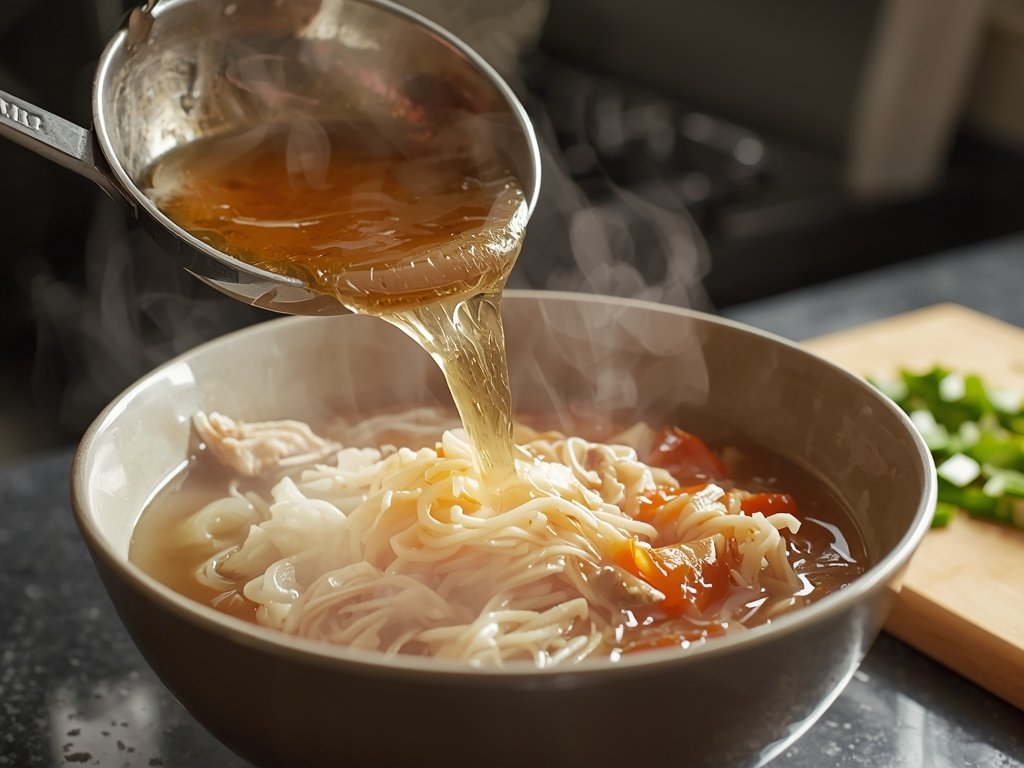
For leftover roast beef, slice it as thinly as you can — thinner than for a sandwich — and lay the slices on top of the noodles in the bowl. Ladle the boiling broth over them, so it covers the meat completely, and let it sit for a minute. Add bean sprouts, herbs, lime, and chilli at the table, so each person finishes their own bowl.
Our roast beef pho recipe gives the full method, including the spice mix for the broth. It is a weekend dish rather than a weeknight one, because the broth takes time to build — but the beef itself takes seconds, and that is the point.
The 3–4 Day Rule and the Freezer
Leftover roast beef keeps for three to four days in the fridge, in a covered container or wrapped tightly, at 40°F (4°C) or below. That is the figure on the FoodSafety.gov cold food storage chart, which gives cooked meat and poultry leftovers three to four days, and it is the same figure our guide to how long leftovers last in the fridge uses throughout the site. On day four, use it or throw it away.
Store the beef as a piece, not as slices, if you can. A whole piece of leftover roast dries out more slowly than slices, because less surface is exposed to the air. Slice it when you are about to use it, not when you put it away. Wrap it tightly in cling film or aluminium foil, or in a sealed container, and keep it in the coldest part of the fridge, not in the door.
The freezer is the escape route when you cannot use the beef within four days. Wrap it tightly, label it with the date, and freeze it. The chart gives cooked meat leftovers two to six months in the freezer, and for best quality, use the beef within two to three months — it is safe after that at 0°F (–18°C), but the texture and flavour decline. Thaw it in the fridge overnight, never on the counter, use it the same day, and reheat only once. Our can you freeze cooked chicken guide covers the same freezing principles for cooked poultry, and they apply here too.
One final safety note, because it is the one that gets missed: the two-hour rule. Roast beef that has sat out at room temperature for more than two hours — or more than one hour above 90°F (32°C) — should be thrown away, not put back in the fridge.
Frequently Asked Questions
How long does leftover roast beef last in the fridge? Three to four days, in a covered container at 40°F (4°C) or below.
How do I reheat roast beef without drying it out? Use gentle moist heat, and add the beef at the end. Warm thin slices in sauce or broth for two to three minutes, or in a low oven wrapped in foil with a splash of stock. Never microwave it on full power.
Can I freeze leftover roast beef? Yes. Wrap it tightly, label it with the date, and use it within two to three months for best quality. Thaw in the fridge overnight, use the same day, and reheat only once, gently, in liquid or sauce.
Why is my leftover roast beef tough? Almost always because it was sliced with the grain rather than against it, or because it was cooked a second time rather than warmed gently. Slice thin, across the grain, add at the last minute, and stop as soon as it is warm.

Ghani is the founder of TwiceTasty and a passionate home cook who believes no meal should go to waste. What started as a personal mission to transform leftovers into exciting new dishes has grown into a community of food lovers who share the same philosophy.

← Previous
Leftover Risotto: 5 Ways to Use It Up
Next →
What to Do With Leftover Ham: 7 Ideas (Beyond the Sandwich)