Follow Me On Social Media!

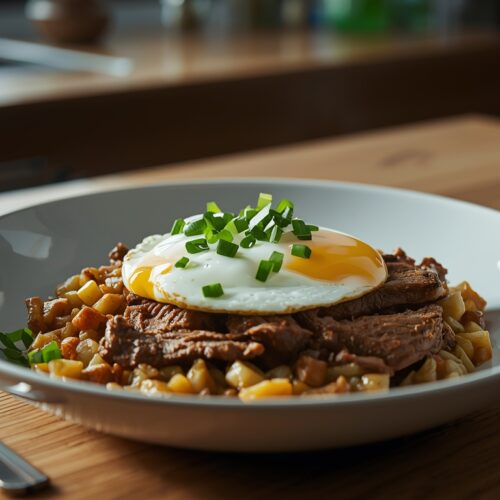
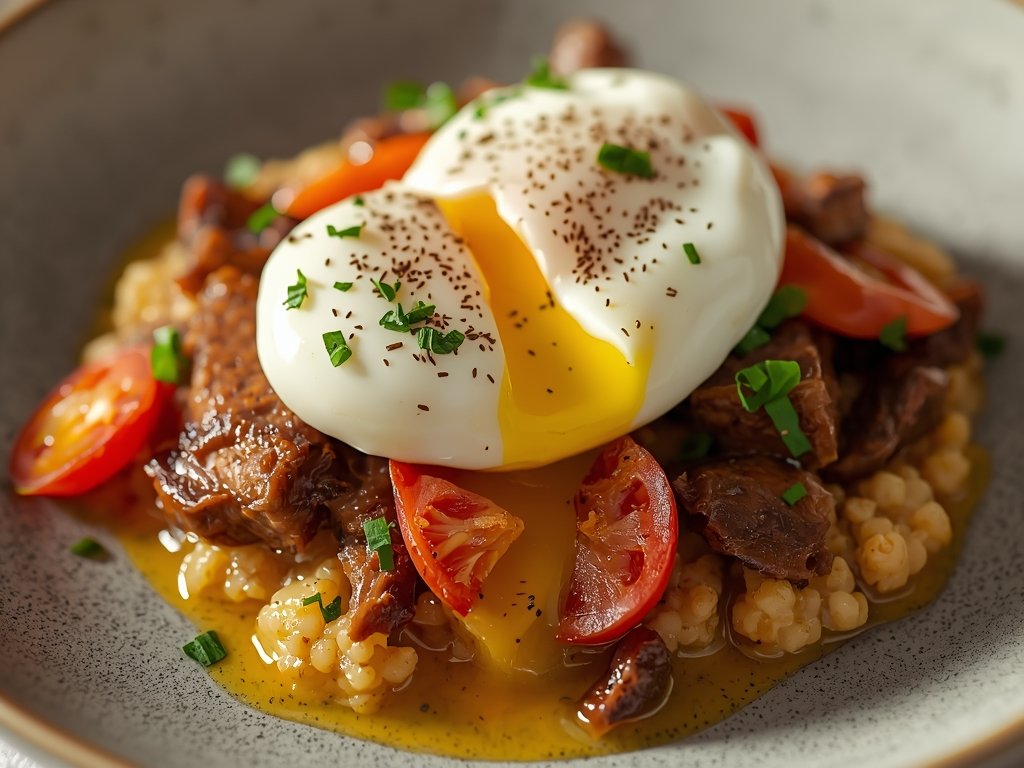
Leftover Brisket Breakfast Hash with Poached Eggs

Leftover brisket is a blessing… until morning.
Ingredients
- 1½–2 cups leftover brisket, diced
- 2 cups cooked potatoes, cubed roasted or boiled
- 1 tablespoon neutral oil
- 1 small onion, diced
- Salt & black pepper
- 2–4 eggs for poaching
- Optional: smoked paprika, scallions
Instructions
- Heat a large skillet over medium-high heat (375°F / 190°C) with oil.
- Pro Tip: Pan must be hot before potatoes go in—this prevents sticking and steaming.
- Add potatoes in a single layer. Cook 4–5 minutes, flipping once.
- Pro Tip: Don’t stir constantly—crust forms only with contact time.
- Stir in onion and cook 2 minutes until softened.
- Pro Tip: Onion moisture deglazes the pan naturally.
- Add brisket and spread evenly. Cook 2–3 minutes just to warm and crisp edges.
- Pro Tip: Brisket is already cooked—overheating makes it dry.
1. Catchy Introduction – Problem & Solution
Leftover brisket is a blessing… until morning.
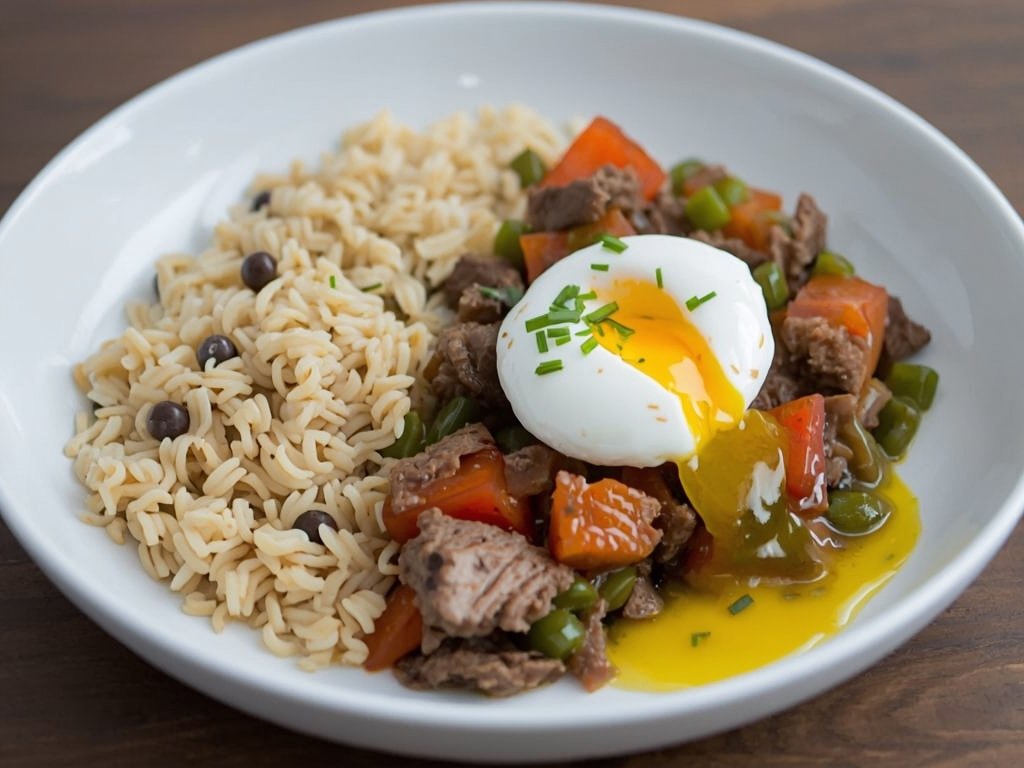
Cold, congealed fat. Dense fibers. That smoky richness that tasted incredible last night now feels heavy and awkward at breakfast. Reheat it wrong, and the brisket tightens, the fat turns greasy, and suddenly your “luxury leftover” feels like a mistake before 9 a.m.
Most people assume brisket is dinner-only meat. That’s the trap.
Brisket doesn’t fail the next day—it just needs a new role. Breakfast hash is the perfect reset: hot pan, crisp potatoes, controlled rendering of fat, and a soft poached egg that brings everything back into balance.
This is the TwiceTasty rule: rich leftovers need contrast, not more intensity.
Turn yesterday’s brisket into a breakfast that feels deliberate, comforting, and honestly better than the original meal.
2. The Science of Taste (Why Brisket Works for Breakfast)
Brisket is loaded with connective tissue and rendered fat—great for long cooks, tricky for reheating.
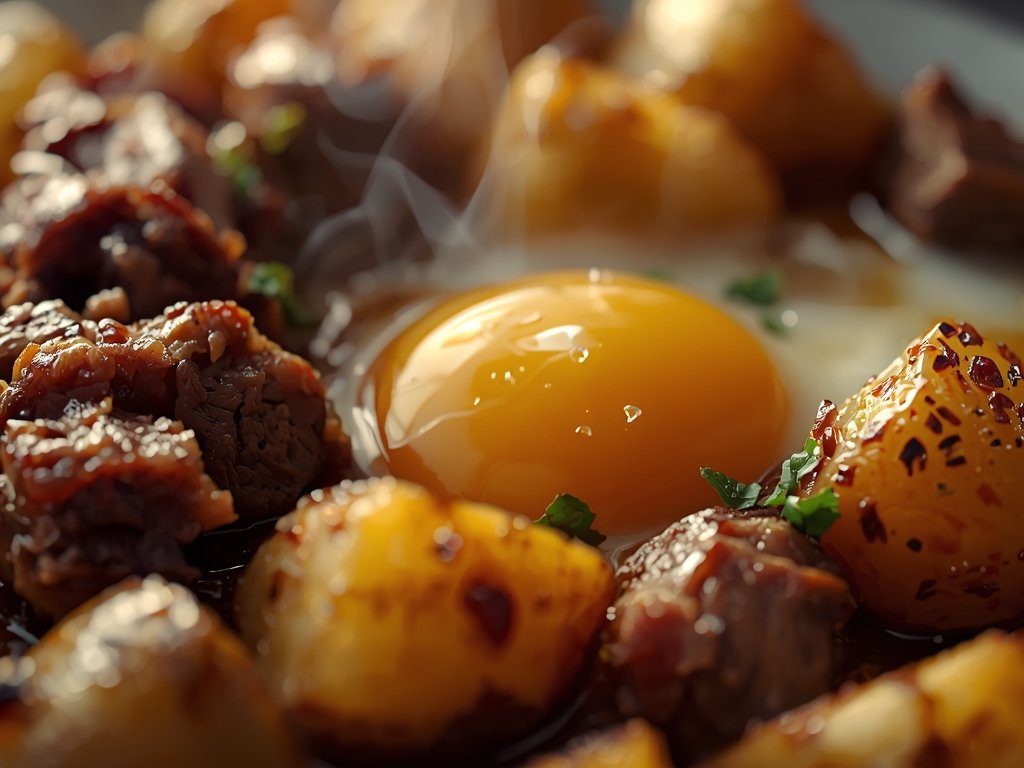
What Goes Wrong When You Reheat Brisket Plain
- Protein fibers tighten, pushing out moisture
- Rendered fat solidifies, then melts unevenly
- Smoke and salt dominate without freshness
Why Hash Fixes Everything
Breakfast hash changes the heat dynamics completely:
- Diced brisket reheats indirectly, protected by potatoes
- Fat renders slowly and coats vegetables instead of pooling
- Crisp starch adds texture contrast
- A poached egg adds moisture, richness, and temperature control
Egg yolk is the secret weapon here. It emulsifies rendered fat and softens smoke, making brisket taste juicy again without adding more grease.
This isn’t indulgence—it’s balance through structure.
3. Step-by-Step Method (Crispy, Rich, Controlled)
Ingredients
- 1½–2 cups leftover brisket, diced
- 2 cups cooked potatoes, cubed (roasted or boiled)
- 1 tablespoon neutral oil
- 1 small onion, diced
- Salt & black pepper
- 2–4 eggs (for poaching)
- Optional: smoked paprika, scallions
Step 1: Preheat the Pan Properly
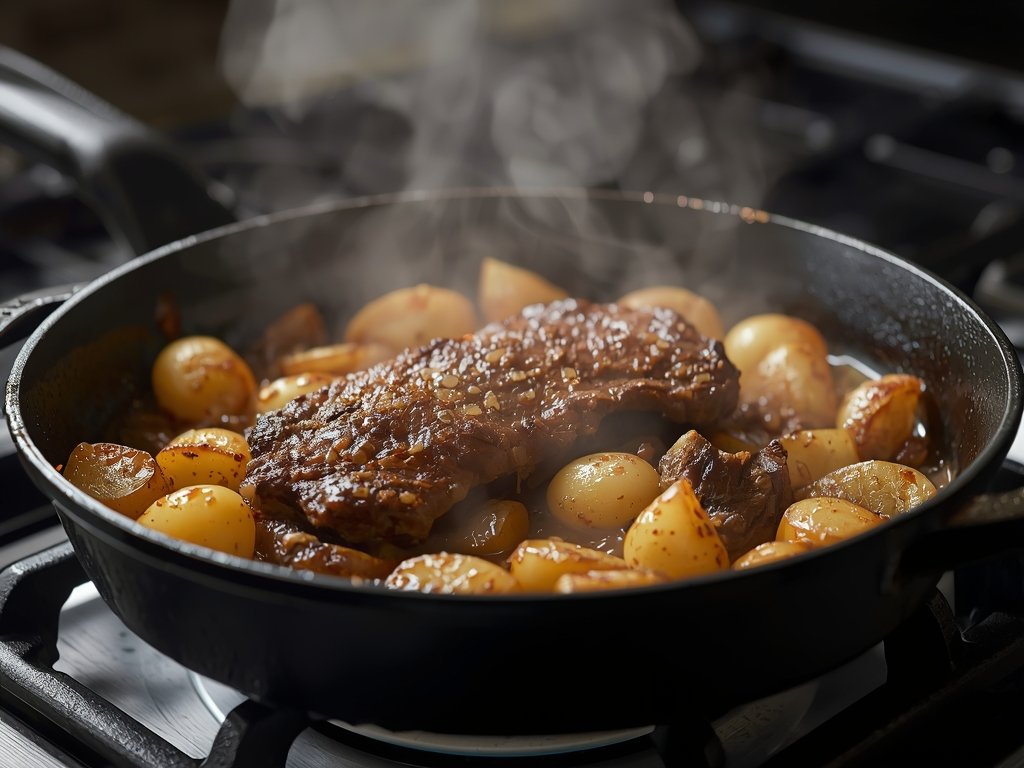
Heat a large skillet over medium-high heat (375°F / 190°C) with oil.
Pro Tip: Pan must be hot before potatoes go in—this prevents sticking and steaming.
Step 2: Crisp the Potatoes First
Add potatoes in a single layer. Cook 4–5 minutes, flipping once.
Pro Tip: Don’t stir constantly—crust forms only with contact time.
Step 3: Add Onion for Sweetness
Stir in onion and cook 2 minutes until softened.
Pro Tip: Onion moisture deglazes the pan naturally.
Step 4: Add Brisket Gently
Add brisket and spread evenly. Cook 2–3 minutes just to warm and crisp edges.
Pro Tip: Brisket is already cooked—overheating makes it dry.
Step 5: Season at the End
Add salt, pepper, and optional smoked paprika.
Pro Tip: Brisket carries salt—taste before adding more.
Step 6: Poach the Eggs Separately
Simmer water at 180–190°F (82–88°C). Poach eggs 2½–3 minutes.
Pro Tip: Gentle simmer keeps whites tender, not ragged.
Step 7: Assemble Immediately
Serve hash hot, top with poached eggs.
Pro Tip: Breaking the yolk tableside keeps potatoes crisp underneath.
Poaching Eggs for the Hash: Timing by Size and Keeping the Yolk Runny
The recipe card gives one timing — 2½ to 3 minutes — and it is right for a standard large egg. But eggs come in sizes, and size changes the time: a small egg sets in about 2 minutes, a jumbo needs about 4. Poach a jumbo by the large-egg clock and the white is barely holding together when you lift it out. The timings below are for eggs straight from the fridge, dropped into water at the same gentle simmer Step 6 describes — 180–190°F — never a rolling boil, which tears the whites into wisps.
Small — about 2 minutes. The white sets fast, so watch the clock.
Medium — about 2½ minutes. A good fit for one serving.
Large — about 3 minutes. The recipe card timing, for standard large eggs.
Extra-large — about 3½ minutes. The extra white needs the extra half-minute.
Jumbo — about 4 minutes. The yolk is still runny; the white finally holds its shape.
All five timings aim for the same result: a white that is fully set and a yolk that is still liquid. Check by lifting the egg with a slotted spoon and giving it the gentlest jiggle: the white should hold its shape and the yolk should wobble inside it. If the white trails off in wisps, it needs another 30 seconds. If the yolk feels firm, it has gone past runny.
Poach last, and plate the hash first. A poached egg on a hot hash in a hot skillet keeps cooking, so every extra minute pushes the yolk toward firm. The hash waits for the eggs, never the other way round: cook the hash fully, spoon it onto plates, take the pan off the heat, and only then drop the eggs in. Rest each egg on top of the plated hash and carry it to the table straight away. Step 7 already says breaking the yolk tableside keeps the potatoes crisp underneath, and that same moment does double duty — the yolk runs over the hot potatoes and brisket instead of setting in the pan.
The vinegar question. A teaspoon of white vinegar in the poaching water helps the white hold together, and it is most useful for eggs a week or so old, whose whites spread wide. It is optional — and it costs a faint tang that can dull the egg’s clean flavour. The alternative is the swirl method: stir the simmering water into a gentle whirlpool, drop the egg into the centre, and the moving water wraps the white around the yolk. Use vinegar for older eggs or spreading whites; use the swirl for the cleanest flavour.
Make-ahead: the hash yes, the eggs never. The hash base reheats well — a hot skillet, 3–4 minutes, stirring once or twice until the edges crisp again. Reheat it only once, and use the brisket within its 3–4 day fridge window. The eggs, though, are always poached fresh, at the last minute. Never poach ahead and reheat: a reheated poached egg is a rubbery white and a set yolk, and poaching takes about 3 minutes, so there is no time saved worth the trade.
4. Variations & Flavor Boosters
Simple tweaks, big payoff.
Tex-Mex Brisket Hash
Add cumin, chili powder, and finish with salsa verde.
Why it works: Acid and spice cut brisket richness instantly.
Veggie-Forward Balance
Add bell peppers or spinach at the end.
Why it works: Fresh vegetables lighten smoke-heavy flavors.
Cheesy Comfort Hash
Finish with grated sharp cheddar or Monterey Jack.
Why it works: Melted cheese bridges crisp potatoes and beef fat.
5. Food Safety & Storage (Brisket Rules Still Apply)
Even great leftovers have limits.
Safe Storage Time
- Cooked brisket in fridge (≤40°F / 4°C): 3–4 days
If it smells sour, metallic, or overly smoky—discard.
Do’s and Don’ts
DO:
- Store brisket airtight
- Refrigerate within 2 hours
- Reheat only once
DON’T:
- Leave brisket at room temperature overnight
- Reheat multiple times
- Mix old brisket with fresh eggs
Breakfast should be comforting, not risky.
6. FAQ – People Also Ask
Can I use fatty brisket?
Yes—just render gently and drain excess fat if needed.
Why is my hash greasy?
Pan was too cool or brisket added too early.
Can I fry eggs instead of poach?
Absolutely. Sunny-side works well.
Can I freeze leftover brisket?
Yes—freeze tightly wrapped up to 2 months.
Is brisket hash heavy for breakfast?
Balanced properly with potatoes and eggs, it’s satisfying—not overwhelming.
Leftover brisket doesn’t belong hidden in sandwiches forever. When you respect its fat, control the heat, and pair it with crisp starch and soft eggs, it becomes the kind of breakfast that feels slow-cooked—without the wait. This isn’t reheating. It’s redeployment.

Amara writes for the Tasty Remakes category, turning everyday leftovers into creative new dishes. Her recipes focus on practical transformations that save time and reduce food waste — proving that yesterday’s dinner can become today’s best meal.

← Previous
Turning Leftover Pizza into Gourmet Salad Croutons
Next →
Leftover Taco Meat Cheesy Nachos: The Ultimate Snack
Rate This Recipe
Tried this recipe? Share your experience and help others!