Follow Me On Social Media!

Thanksgiving is over, the ham has been carved, and the fridge holds a plate of slices that looked wonderful yesterday and will look sad by tomorrow if they are reheated the wrong way. Ham is the leftover most likely to be ruined on its second heating: a minute too long, or a minute uncovered, and the slices that were juicy at the table turn grey, curled, and dry. The fix is simple and the same for every method here: low heat, a cover, and a little added liquid.
This guide covers the four ways to reheat ham — oven, microwave, air fryer, and stovetop skillet — for both sliced ham and a whole or spiral-cut ham, plus how to refresh a tired glaze, how long the ham keeps, and what to do with the slices that are already too dry to serve on their own. Thanksgiving 2026 falls on November 26, so the methods below are sized for a crowd as well as for a single plate. The rule that runs through all of them is the same: ham is already cooked, so reheating is about warming it through gently, not cooking it again.
The Short Answer: Low, Slow, Covered, With Liquid
Reheat sliced ham in a 325°F oven, wrapped in foil with a spoonful or two of liquid — water, chicken broth, or leftover glaze — for 10 to 15 minutes, until it reaches 140°F in the thickest part. A whole or spiral-cut ham goes in the same way, covered in foil at 325°F, and takes roughly 10 to 15 minutes per pound; the thermometer, not the clock, decides when it is done. The USDA gives 140°F for reheating fully cooked ham, and The Kitchn’s tested method uses the same number: heat gently until the centre reads 140°F, then stop.
The three rules matter more than the method. Low heat gives the moisture time to stay in the meat instead of steaming out of it. A cover — foil, a lid, or a damp paper towel — traps that moisture around the ham instead of letting it escape into the oven or microwave. Added liquid replaces what the first cooking already drove out and gives the heat something to work with besides the meat itself. Break any one of the three and the ham dries out; keep all three and almost any method works.
Why Ham Dries Out When You Reheat It
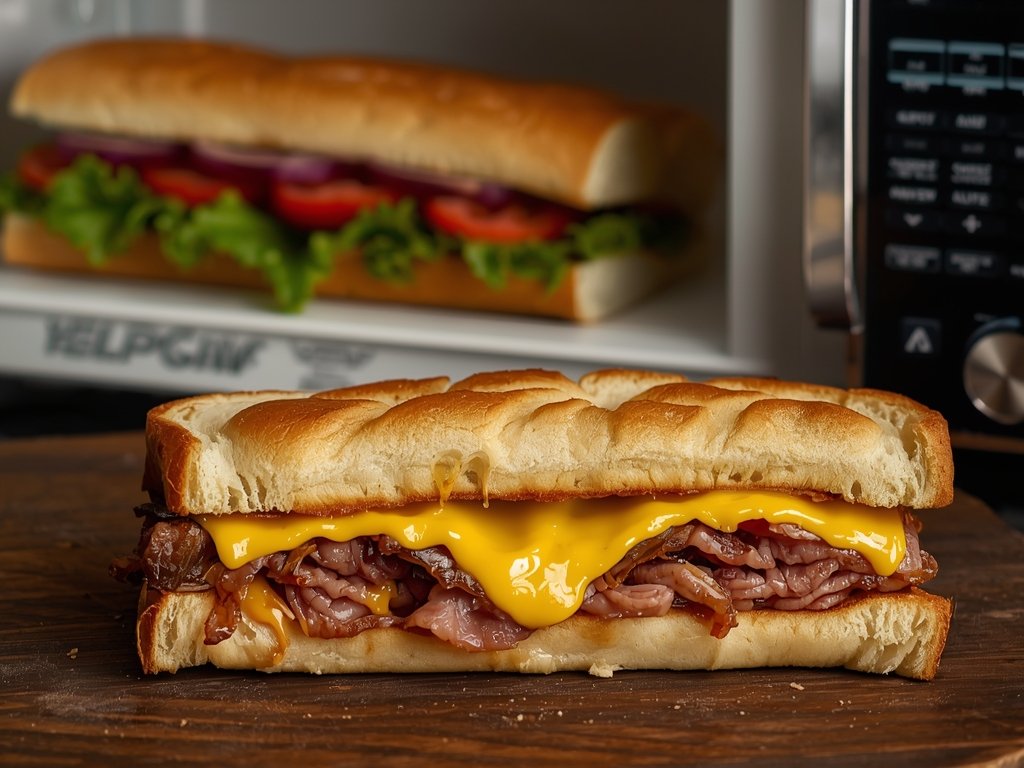
Ham dries out for a simple reason: it has already been cooked once, and every minute of heat after that drives more water out of the meat. Curing and smoking also make ham salty, and salt pulls water out of muscle fibres as they heat, which is why ham can go from juicy to leathery faster than an uncured roast. Thin slices are the worst case: they have a huge surface area for their weight, so the moisture escapes in minutes and the edges curl as they shrink.
The second problem is uneven heat. A microwave heats in hot spots, so one edge of a slice can be steaming while the other is still cold, and the natural response — heating it longer — overcooks the hot edge. An uncovered oven does the same thing more slowly. Our guide to reheating steak covers the same low-and-slow, covered logic for beef. With ham there is one extra trap: the glaze. A sugary glaze left on during a long reheat can burn before the centre is warm, so glaze goes on at the end, never at the start.
The Oven Method: Sliced Ham

The oven is the best method for sliced ham when you are serving more than one person, because it heats evenly and the foil does the moisture work for you. Heat the oven to 325°F. Lay the slices in a single layer in a baking dish — overlapping is fine, but keep it to two layers at most, since a tall stack heats unevenly. Spoon two to three tablespoons of liquid over each serving of slices: water works, chicken broth adds flavour, and leftover glaze thinned with a little water is the best option of the three. Wrap the whole thing tightly in foil, sealing the edges so the steam stays in.
Bake for 10 to 15 minutes, then check the temperature in the thickest slice: 140°F means it is done. Very thin slices can overshoot fast, so check them at eight minutes. Serve straight from the foil, spooning the liquid in the bottom of the packet over the slices. The liquid in the packet is not waste — it is the difference between ham that tastes reheated and ham that tastes freshly carved.
The Oven Method: A Whole or Spiral-Cut Ham

A whole or spiral-cut ham needs the same treatment at a bigger scale, and the cut side is the part to protect. Place the ham cut-side down in a roasting pan, so the exposed cut face is shielded against the pan. Pour about a cup of water or broth into the bottom of the pan, cover the ham tightly with foil — or a roasting bag, which does the same job — and bake at 325°F. As a rough guide, allow 10 to 15 minutes per pound, but treat that as a planning number only: a dense ham heats slowly, and the only reliable test is a thermometer in the centre, away from the bone, reading 140°F.
Glaze the ham at the end, not the start. When the centre reads about 120°F, take the foil off, brush the glaze over the outside, and raise the oven to 425°F for about 10 minutes, glazing once more halfway through, until the outside is caramelised and the centre has reached 140°F. A sugary glaze cannot survive an hour in the oven without burning, which is why it goes on at the end. Once it is out, rest the ham covered for at least 10 minutes before carving: the temperature evens out, the juices redistribute, and the slices hold together instead of falling apart on the board.
The Microwave Method: For One or Two Servings

The microwave is the fastest way to reheat a plate of ham and the easiest way to ruin it, so it is a method for one or two servings, not for the whole ham. The trick is the same as everywhere else — liquid and a cover — plus one thing the other methods do not need: low power. Arrange the slices in a single layer on a microwave-safe plate, spoon a tablespoon or two of water or broth over them, and cover with a damp paper towel or a microwave-safe lid left slightly vented. Heat at 50 percent power in 30-second bursts until the slices are warm through — usually 60 to 90 seconds for a single serving.
Full power is the mistake. At full power the edges of the slices cook before the middle is warm, and by the time the middle catches up the edges are tough. The damp paper towel matters more than it looks: it creates a small steam pocket around the ham, which is the microwave version of the foil packet. Do not reheat the same slices twice — a second round dries out whatever moisture the first left.
The Air Fryer Method: Fast Slices With Crisp Edges

The air fryer is the best choice when you want slices with a little crispness at the edges — for a breakfast plate or a sandwich, for example — and it is fast enough to be worth it for a single serving. Heat the air fryer to 325°F. Lay the slices in a single layer in the basket, brush them lightly with leftover glaze or broth, and heat for three to five minutes, checking at three. The moving hot air heats slices evenly but will dry them out if they go in bare, so a light brush of liquid and a short cooking time are what keep the method working.
For a larger portion, wrap the slices in a loose foil packet with a spoonful of liquid: it reheats the same way as the oven method, in about 10 minutes. Our guide to reheating pasta uses the same principle — gentle heat, a cover, and moisture added back — because the physics of drying out is the same whatever the food is. The air fryer is not the method for a whole ham: it does not fit, and even if it did, the outside would be done long before the centre.
The Stovetop Skillet Method: For Glazed Slices

The skillet is the method for glazed slices, because it does two things at once: it warms the ham and it caramelises the glaze. Put the slices in a cold skillet in a single layer, add about a quarter cup of chicken broth or thinned glaze, and set the pan over medium-high heat with the lid on. The liquid simmers in a minute or two and steams the slices from below while the lid traps the steam above; The Kitchn’s stovetop test found three to four minutes was enough. Take the lid off for the last minute so the remaining liquid reduces into a sticky glaze on the slices, turning them once so both sides catch the heat.
The skillet method is fast, but it is a watching method, not a walk-away method: a quarter cup of liquid evaporates quickly, and a dry skillet at medium-high heat will scorch the glaze in under a minute. If the pan goes dry before the ham is warm, add another splash of broth rather than turning the heat up. This is also the best method for ham that is going straight into a cooked dish — fried rice, a hash, or a pasta sauce — because the slices come out of the pan already hot and already glazed, and they go straight into the pan with the other ingredients.
Refreshing the Glaze, Storage, and Freezing

A glaze that has gone dull in the fridge is easy to revive: warm it gently in a small pan over low heat until it loosens, adding a splash of water if it has thickened too much to brush, then brush it on during the last 10 minutes of reheating, as the oven method above describes. Never brush cold, thick glaze onto cold ham and hope the oven sorts it out — it will sit in lumps and burn in patches. And if the ham is already too dry to serve as slices, do not throw it away: dice it into ham and cheese scones, where the butter and cheese in the dough rescue the dryness, or simmer it in soup, where the broth does the same job.
For storage, the numbers depend on the form the ham is in. The USDA FoodKeeper database gives a whole cooked ham about one week in the fridge, and sliced cooked ham three to four days — the slices have more exposed surface, so they spoil faster. The FoodSafety.gov cold food storage chart gives cooked leftovers three to four days in the fridge generally, which lines up with the sliced figure. 247FoodCheck’s summary of the FoodKeeper figures puts the same numbers in one place: whole cooked ham one week, sliced three to four days, and one to two months in the freezer. Our guide to how long leftovers last in the fridge covers the same windows for the rest of the Thanksgiving table. Freeze ham you will not eat within its fridge window, while it is still fresh — freezing only pauses the clock.
Frequently Asked Questions
What temperature should reheated ham reach? 140°F in the thickest part, away from the bone. Ham is already fully cooked, so reheating is about warming it through — the USDA gives 140°F for reheating fully cooked ham. Use a thermometer rather than guessing, especially for a whole ham.
Can I reheat ham in the oven without foil? You can, but the slices will dry out: without foil the dry oven air pulls moisture off the surface for the whole cooking time. Use a lidded baking dish or a roasting bag instead.
Why did my spiral ham dry out? Spiral-cut ham has every cut face exposed, so it loses moisture far faster than an unsliced ham. Keep it cut-side down, keep it tightly foiled until the glazing stage, and do not leave it uncovered longer than the glaze needs.
Can I reheat ham twice? It is safe if the ham was stored properly and reheated to 140°F, but the texture suffers badly. Reheat only the portion you will eat.

Ghani is the founder of TwiceTasty and a passionate home cook who believes no meal should go to waste. What started as a personal mission to transform leftovers into exciting new dishes has grown into a community of food lovers who share the same philosophy.

← Previous
How to Reheat Meatballs Without Drying Them Out
Next →
How to Reheat Green Bean Casserole