Follow Me On Social Media!

Green bean casserole is the Thanksgiving side that suffers most on its second day. The beans are fine, the sauce is fine — but the fried-onion topping, the part that makes the dish, goes soft the moment it is reheated, and a casserole with a soggy top tastes like a casserole that has given up. The fix is simple once you know it: reheat the casserole without the topping, and put fresh fried onions on at the end. Everything else here is about getting the beans hot and the sauce bubbling without drying either out.
This guide covers all four reheating methods, the topping trick that saves the dish, and the storage and freezing rules that decide whether there is anything worth reheating in the first place. The target temperature is the same as for every reheated leftover: 165°F in the centre, measured with a thermometer, not guessed from the edge of the dish. Every method below ends the same way: fresh onions on top, served while they are still crisp.
The Short Answer: Oven at 350°F, Fresh Onions at the End
Reheat green bean casserole in a 350°F oven, covered with foil, for 20 to 25 minutes, until the centre reads 165°F — then uncover it for the last five minutes and scatter fresh fried onions over the top. That is the whole method in one sentence: gentle, covered heat for the casserole, and a fresh, crisp topping added after the reheating is done. A thermometer in the centre is the only test that matters — the edges of the dish heat faster than the middle, and a casserole that looks done at the edges can still be cool in the centre. The foil traps steam and stops the sauce drying out, and the last five uncovered minutes let the surface firm up.
The topping is the reason the order matters. Fried onions that go through a reheat come out soft, chewy, and greasy — they absorb moisture from the sauce and the steam, and no amount of uncovering at the end brings back the crunch. Fresh fried onions, scattered over a hot casserole and left for a minute, stay crisp because they never went through the steam at all. If the casserole went into the fridge with its topping on, scrape the old onions off before reheating: a handful of fresh onions costs almost nothing, so keep a spare can in the cupboard.
Why the Topping Goes Soggy (and the Sauce Splits)
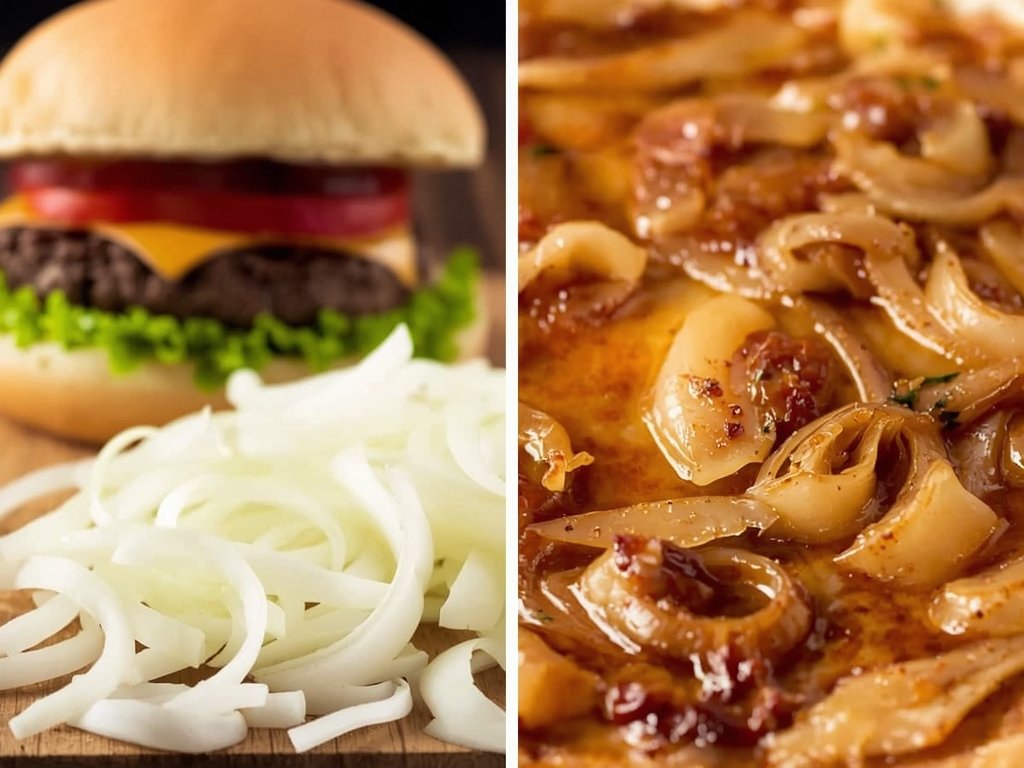
The topping goes soggy for a simple reason: fried onions are fried, and fried food absorbs moisture from anything wet that touches it. In the fridge, the onions sit on top of a damp sauce for hours, and by the next day they have drunk enough moisture to lose their crunch entirely. Reheating makes it worse: the steam rising off the hot sauce passes straight through the topping, and the onions end up steamed rather than crisp. The answer is the same as for any fried leftover: keep the crisp thing away from the steam until the last minute.
The sauce has its own problem. Green bean casserole sauce is usually cream of mushroom soup, sometimes with milk or cheese added, and cream sauces split when they are heated too fast or too hot — the fat separates out, the sauce goes grainy, and the dish looks broken even though it still tastes fine. The fix is gentle heat and a cover: 350°F covered, not 425°F uncovered, and no blasting in the microwave at full power. If the sauce does split, a spoonful of milk stirred in after reheating will usually bring it back together — our guide to fixing lumpy gravy covers the same rescue for the rest of the Thanksgiving table.
The Oven Method: The Best Way
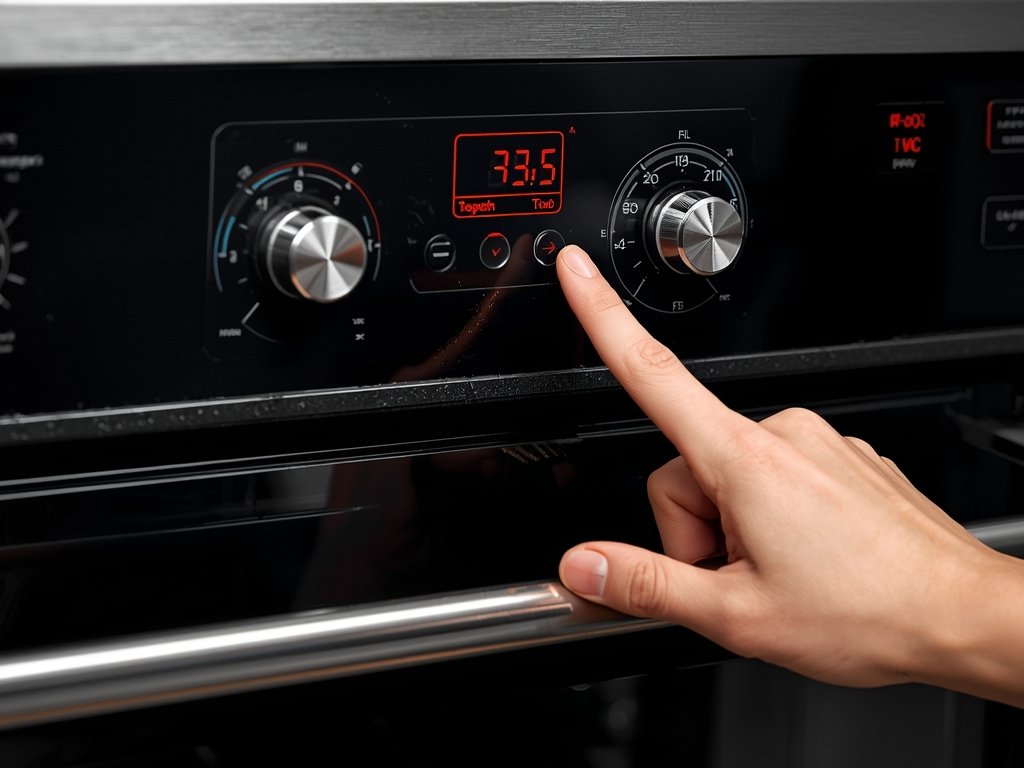
The oven is the best method for green bean casserole, because it heats the whole dish evenly and the foil does the moisture work. Heat the oven to 350°F. If the casserole is still in its baking dish, scrape off the old topping and cover the dish tightly with foil. If it has been transferred to a container, move it into an oven-safe dish first — a dish that is too deep heats unevenly, so spread the casserole in a layer no more than a couple of inches thick if you can. Bake for 20 to 25 minutes, covered, then check the centre with a thermometer: 165°F means it is done. HyChef’s guide to the dish gives the same numbers — 350°F, covered, about 20 to 30 minutes — and the same advice for frozen casserole: covered for 30 to 40 minutes, with the last 10 uncovered.
For the last five minutes, take the foil off and let the surface firm up — but do not add the fresh onions yet. The onions go on after the dish comes out of the oven, not before it goes back in: five minutes under a hot oven is enough to soften them, and the whole point is to keep them crisp. A full 9×13 pan needs 25 to 30 minutes covered, and check the temperature in two places — the corners heat faster than the centre.
The Microwave Method: For Single Servings
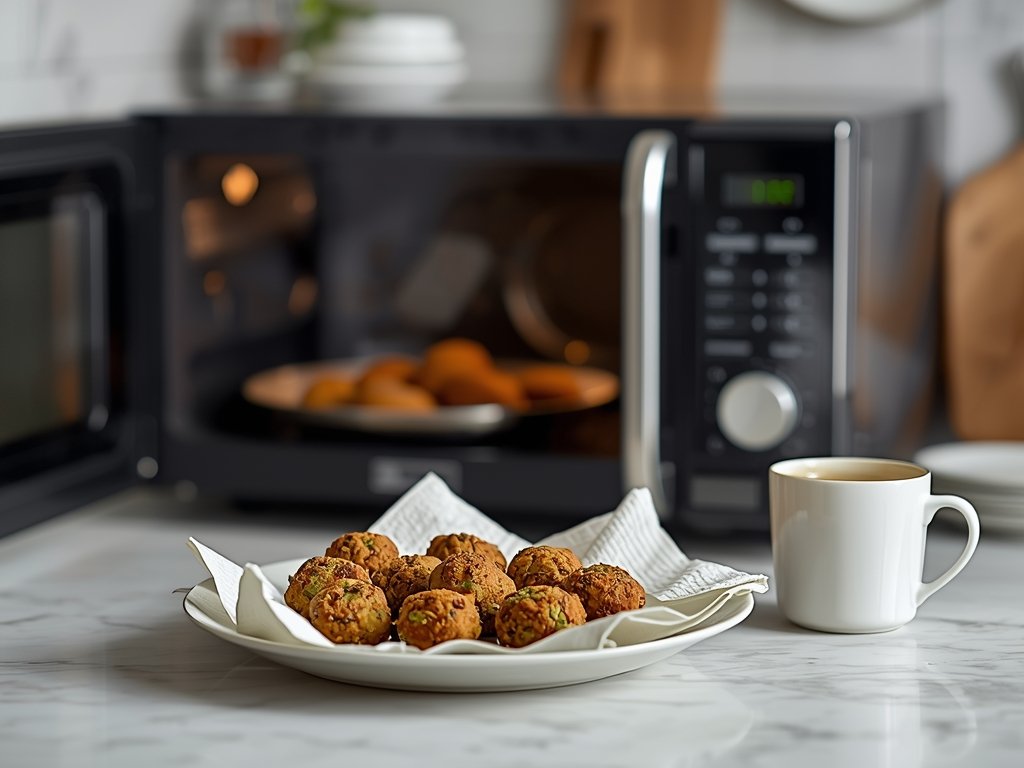
The microwave is the method for one plate, not for the pan, and it works well enough if you respect its limits. Put a single serving in a microwave-safe dish, cover it with a lid left slightly vented, and heat on medium power for two to three minutes, stirring halfway through. Stirring is not optional: microwaves heat in hot spots, and without a stir the edge can be boiling while the centre is still cold. Check the temperature after stirring, and continue in one-minute bursts until the centre reads 165°F.
Do not microwave the topping. The fried onions go on after, from the can, the same as in the oven method — a microwave will turn them soft in seconds, and there is no way to crisp them back up in there. Avoid full power: the sauce heats faster than the beans and can split or bubble over before the middle is warm. If the serving looks dry, stir in a spoonful of milk — it replaces the moisture the microwave drove off.
The Air Fryer Method: Small Portions, Crisp Top

The air fryer is the best choice for a small portion when you want the top crisp, because the moving hot air does what the oven does faster and in a smaller space. Heat the air fryer to 350°F. Put a single serving — or two, if they fit in one layer — in an oven-safe dish that fits the basket, cover it loosely with foil, and heat for eight to ten minutes, checking at eight. Take the foil off for the last two minutes, scatter fresh fried onions over the top, and give it one more minute so the onions warm through without softening. Our air fryer reheat times chart covers the same pattern for the rest of the leftovers: 350°F, covered first, uncovered at the end.
The air fryer is not the method for a whole pan — it does not fit, and even if it did, the outside would be done long before the centre. The topping needs the most watching here: the moving air can burn fried onions in a couple of minutes, so the onions go on at the very end, for one minute only. If the portion is deep, stir it halfway through — the air fryer heats from the top down. For a single serving, it is the fastest good method there is.
The Stovetop Method: When the Oven Is Busy
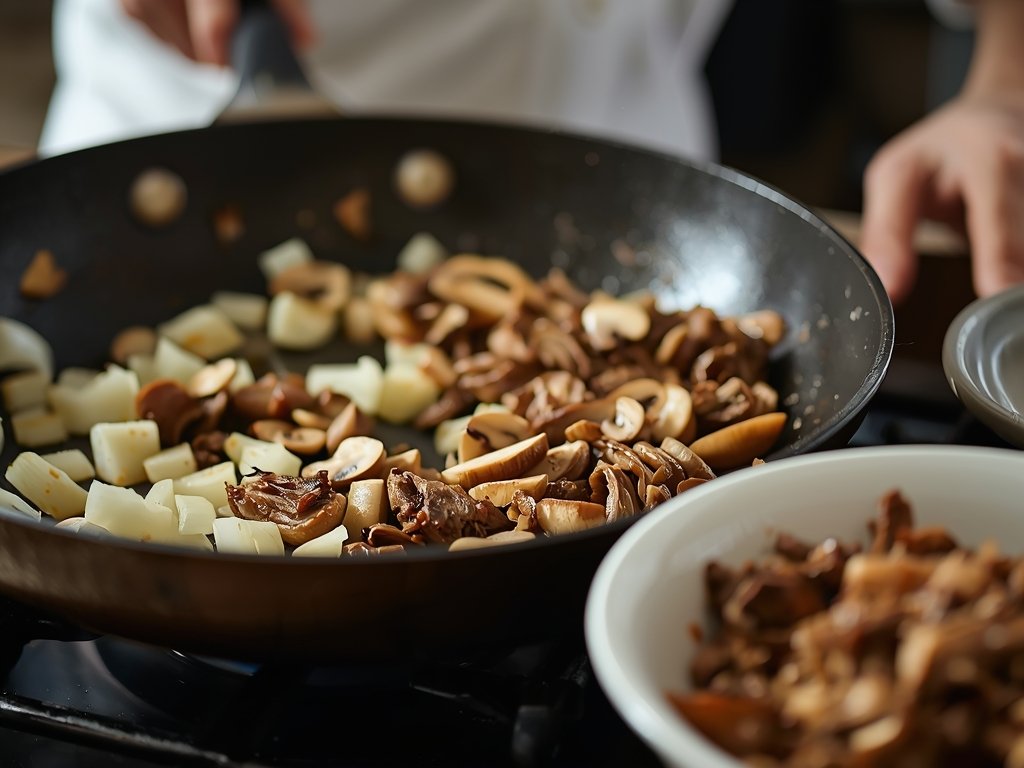
The stovetop is the method for the day the oven is full — which, on Thanksgiving and the days after it, is most days. Put the casserole in a skillet, add a spoonful or two of milk or broth to loosen the sauce, and heat over medium-low with the lid on, stirring every couple of minutes. The lid traps steam while the pan heats from below, and the stirring stops the sauce catching on the bottom. It takes about eight to ten minutes for a couple of servings, and the target is the same as everywhere else: 165°F in the centre.
Use medium-low, not medium-high: a cream sauce scorches easily, and a scorched sauce cannot be fixed. If the sauce starts to stick, turn the heat down and add another spoonful of milk. The topping goes on after, as always, from the can onto the hot casserole in the serving dish. The stovetop method is the least even of the four, because the heat comes from below only, so it is best for smaller portions that can be stirred properly — a whole pan belongs in the oven.
Refreshing the Topping: Fried Onions Done Right
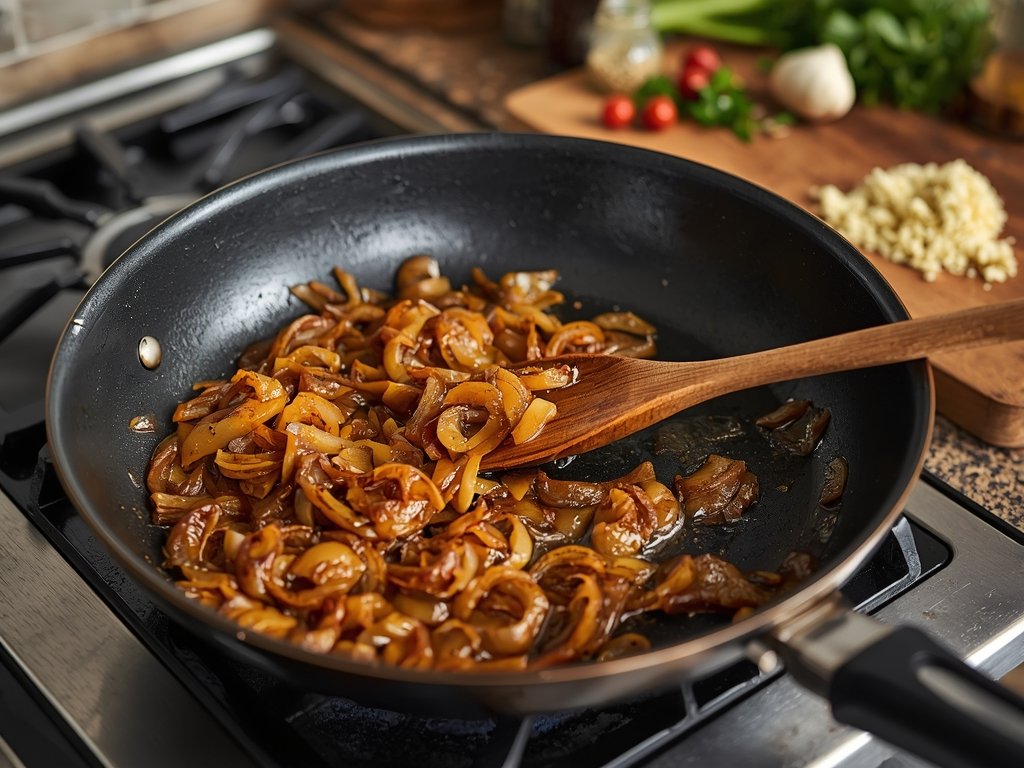
The topping is the whole dish, so it deserves its own method. The rule is simple: never reheat fried onions, always add fresh ones at the end. The old topping comes off before reheating — scrape it into the bin, not into the sauce — and fresh onions go on after the casserole is hot. A can of fried onions keeps for months in the cupboard, so buy a spare before Thanksgiving. If the can is empty, the substitute is breadcrumbs fried in butter with a pinch of salt until golden — not fried onions, but crisp, and crisp is the point.
For a crowd, put the onions on in a thick layer and serve immediately — they hold their crunch for about twenty minutes on a hot casserole. For a buffet, put the onions in a bowl beside the dish and let people scatter their own. Our guide to reheating mashed potatoes covers the same keep-the-crisp-part-separate logic.
Make-Ahead, Storage, and Freezing
Green bean casserole is a good make-ahead dish, and the make-ahead version is better than the reheated version, because the topping never goes through the fridge at all. Assemble the beans and sauce up to two days ahead, refrigerate, and bake fresh on the day, adding the onions only for the last five minutes. If the casserole is already baked and you are storing the leftovers, get it into the fridge within two hours of cooking, in an airtight container or covered tightly with foil, and use it within three to four days. The FoodSafety.gov cold food storage chart gives cooked leftovers three to four days in the fridge generally, and the casserole sits squarely inside that window. Our guide to leftover mashed potato ideas covers the same fridge window for the other big Thanksgiving side.
Freezing is possible but it is the weakest option for this dish. The beans and the sauce freeze fine for up to two months, but the topping does not freeze at all — freeze the casserole without the fried onions, thaw it overnight in the fridge, and bake it covered at 350°F for 30 to 40 minutes, adding fresh onions at the end. The beans will be softer after freezing, and the sauce may need a spoonful of milk stirred in, but the dish is still good. A better plan is usually to make a smaller pan and eat it within the fridge window. If the casserole is already in the freezer, the method above will bring it back, and the fresh onions at the end do most of the rescuing.
Frequently Asked Questions
Can I reheat green bean casserole the next day? Yes — it keeps three to four days in the fridge, and the oven method at 350°F covered for 20 to 25 minutes brings it back well. Scrape off the old topping before reheating and add fresh fried onions at the end.
Why did my topping go soggy? The fried onions absorbed moisture from the sauce in the fridge, and the steam from reheating finished the job. The fix is to add fresh onions after reheating, never to reheat the old ones.
Can I freeze green bean casserole? Yes, for up to two months, but freeze it without the topping. Thaw overnight in the fridge, bake covered at 350°F for 30 to 40 minutes, and add fresh onions at the end.
What temperature should reheated green bean casserole reach? 165°F in the centre, the same as for all reheated leftovers. Use a thermometer, because the edges of the dish heat faster than the middle.

Ghani is the founder of TwiceTasty and a passionate home cook who believes no meal should go to waste. What started as a personal mission to transform leftovers into exciting new dishes has grown into a community of food lovers who share the same philosophy.

← Previous
How to Reheat Leftover Ham Without Drying It Out
Next →
How to Reheat Rotisserie Chicken (Juicy, Crisp Skin)