Follow Me On Social Media!

Gravy is the dish that goes cold first and matters most. The turkey can wait under foil, the potatoes hold in their pot, but the gravy — poured over everything, the sauce that ties the plate together — loses its heat in minutes and forms a skin while you are still carving. Keeping it warm is a different job from reheating it, and confusing the two is the mistake that ruins it: a warmer holds hot gravy hot, and it cannot make cold gravy hot safely. This guide covers the slow cooker, the low oven, and the thermos, the 140°F rule that decides whether the gravy is safe, how to stop the skin, how long it can stay warm, and what to do when it cools down.
The Short Answer: Hold at 140°F or Above, Never Reheat in the Warmer
The short answer is that gravy stays warm in a small slow cooker set to Warm, or in a saucepan over the lowest heat, or in a preheated thermos — and in every case the gravy must already be hot, at 140°F or above, before it goes in. The Kristina Recipes guide to keeping gravy warm puts it exactly this way: move freshly cooked gravy to a small slow cooker or an electric warmer that can hold it hot, check the gravy itself with a food thermometer, and never use the warm setting to reheat cold gravy. A slow cooker’s Warm setting does not tell you the temperature of the food — only a thermometer does — and a gravy that drops below 140°F has entered the danger zone, where bacteria grow fastest. The rule for every method in this guide is the same: reheat the gravy first, to a boil and 165°F throughout, and only then move it to the warmer. The warmer holds; it does not heat.
The 140°F Rule: Why Warm Means Hot, Not Lukewarm

The danger zone is 40°F to 140°F, and bacteria in that range can double in as little as 20 minutes. That is why the holding temperature is 140°F or above, not “warm to the touch” — a gravy that feels warm to a finger can easily be 120°F, which is the middle of the danger zone, and a gravy held there for an afternoon is a gravy that should be thrown away. The FoodSafety.gov guidance is plain: hold cooked food at 140°F or above, reheat leftovers to 165°F, and do not leave food out for more than two hours — one hour if the room is above 90°F. Check the gravy with a clean thermometer, in more than one spot, without resting the probe against the pot, because the edges of a slow cooker run hotter than the middle.
The second half of the rule is the clock. A gravy that has been below 140°F for under two hours can be saved: reheat it promptly to a boil and 165°F throughout, then serve it or move it back to a warmer. A gravy that has been without temperature control for two hours or more, or a gravy where you cannot tell how long it has been cooling, must be discarded. When in doubt, throw it out — the rule is not cautious, it is the line between a sauce and a risk. The thermometer is the only way to know which side of the line you are on, and it costs less than the gravy it saves. For the potatoes that share the table, see our guide to keeping mashed potatoes warm, which follows the same 140°F rule.
Method 1: The Slow Cooker (Best for a Crowd)

Set a small slow cooker on a stable, heat-safe surface and check its instructions for preheating and minimum fill levels while you finish the gravy. Pour the fully cooked, hot gravy into the cooker, cover it, and select the setting intended to hold cooked food warm — Warm, not Low. Low continues to cook the gravy, thickening it and eventually scorching it; Warm holds it. Stir, then check the gravy with a food thermometer, in more than one spot. Keep the lid on between servings, and stir and check the temperature during the meal, especially if guests open the cooker often: every lift of the lid drops the temperature, and a cooker opened ten times an hour may not hold 140°F at all.
If the gravy thickens as it sits, whisk in a little warm broth or water and check its temperature again — never cold liquid, which drops the temperature and can pull the gravy into the danger zone. Stir every 15 to 30 minutes to distribute the heat evenly and prevent a skin from forming. Do not keep gravy in the slow cooker for longer than 2 to 3 hours: beyond that, the texture suffers and the safety margin narrows, even on Warm. And never, ever leave gravy in a slow cooker overnight, even on Warm — the temperature will not stay consistently above 140°F for that long, and an overnight gravy is a gravy to throw away. The slow cooker is the best method for a crowd because it holds a full batch at serving temperature without an oven, but it is a holder, not a cooker, and treating it as a cooker is the mistake.
Method 2: The Low Oven and Warming Tray
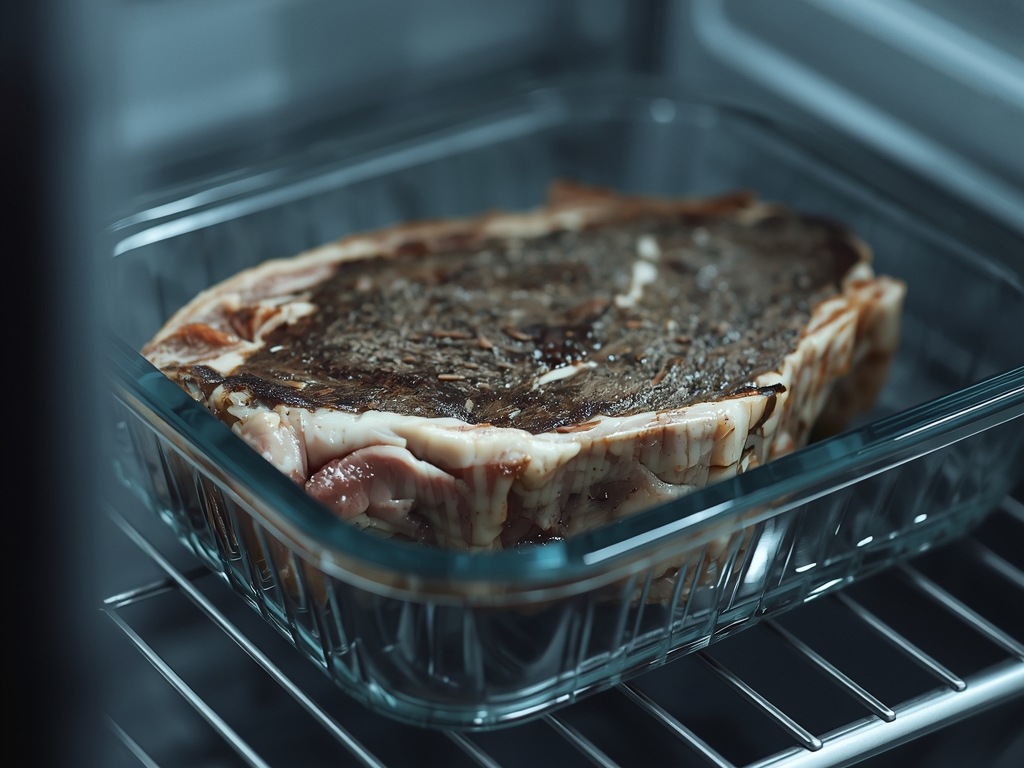
If the oven is free — or if it is holding at 170°F to 200°F for the hour before guests eat — a covered, oven-safe dish of gravy holds well in it. Pour the hot gravy into the dish, cover it tightly with foil or a lid, and place it in the low oven. Check the temperature with a thermometer before serving, because an oven set to 170°F does not guarantee the gravy is at 140°F: a shallow dish in a big oven loses heat to the air, and a dish crowded next to a cold turkey warms slower than one on its own. Stir before serving, and whisk in a little warm broth if it has thickened.
A warming tray or chafing dish works the same way, for a smaller amount near the table: the gravy sits in a dish over gentle heat, covered between servings, and the temperature is checked, not assumed. The advantage of the oven and the tray over the slow cooker is control — you can see the gravy, stir it, and adjust it — and the disadvantage is capacity and attention: an oven dish needs checking every half hour, and a chafing dish needs its fuel watched. Both are good for a meal that lasts an hour or two. Neither is good for a buffet that runs all afternoon, and neither should be used to reheat cold gravy: the gravy must be hot before it goes in, at 165°F and boiling, or the warmer is just a slow way to grow bacteria. For the meat the gravy goes on, see our guide to reheating prime rib.
Method 3: The Thermos (for the Trip to the Table)

A thermos is the best method for moving gravy — to the table, to another room, or to another house — because it holds heat without any power at all. Preheat the thermos first: fill it with boiling water, lid it, and leave it for 5 minutes, then pour the water out. The preheating matters, because a cold thermos steals the first 20 degrees from the gravy before the lid is even on. Pour the boiling-hot gravy in, filling the thermos as full as you can — a full thermos holds heat far longer than a half-full one, because there is less air inside to cool it — and lid it tightly.
A preheated thermos holds gravy above 140°F for 2 to 4 hours, which covers a meal and the trip there. Do not open it to check the temperature every few minutes: every opening lets the heat out, and a thermos opened five times holds heat for half as long. When you serve, pour what you need and lid it again immediately. The thermos is not a method for a crowd — it holds a quart or two, not a gallon — but for a family dinner, or for taking gravy to a potluck, it is the simplest, safest holder in this guide. It is also the only method that works with no electricity, no oven, and no attention, which is why it is the one to use when the kitchen is chaos and the table is somewhere else.
How to Stop the Skin (and Fix Thick Gravy)
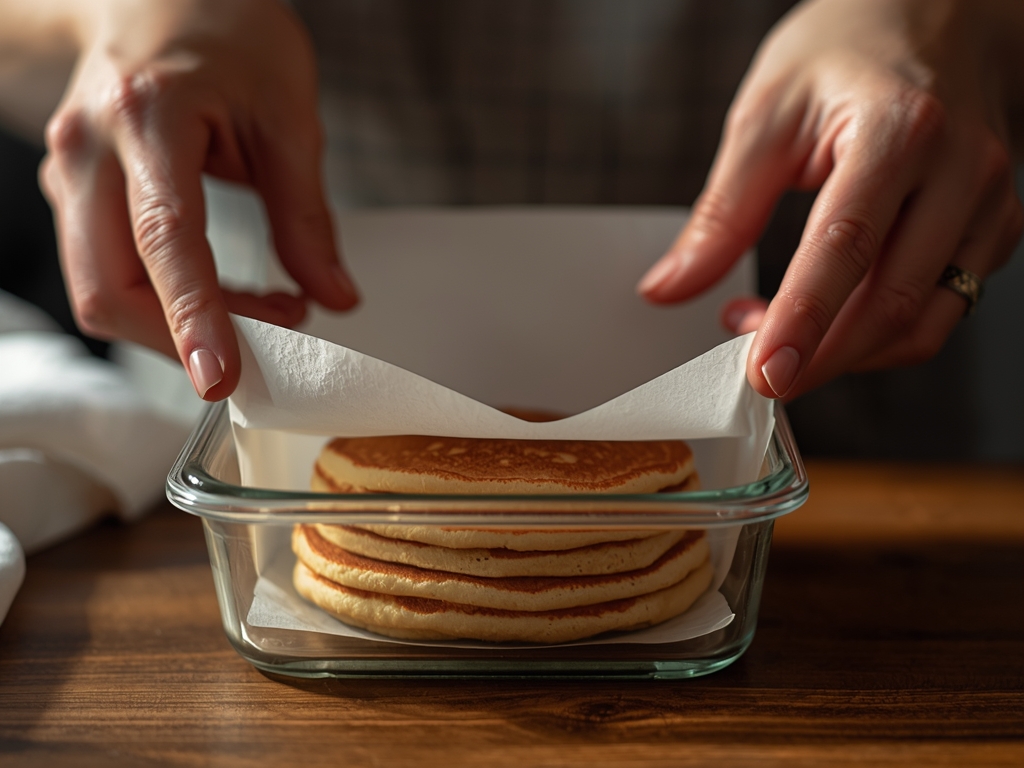
The skin on kept-warm gravy is dried starch and fat, forming on the surface where the gravy meets the air. It forms fastest when the gravy is held uncovered, stirred rarely, and kept just warm enough to steam — which is exactly how most people hold gravy. The fixes are simple and they all work the same way: keep the surface covered, and keep it moving. Keep the lid on between servings, and stir every 15 to 30 minutes. If you are holding gravy in a dish without a lid, press plastic wrap directly onto the surface of the gravy, touching it all over: the wrap keeps the air off the surface, and no air means no skin. A pat of butter melted on top does the same job, and adds richness when it is stirred in at serving.
If the gravy has already thickened, whisk in warm broth or water a little at a time, and check the temperature again after each addition — cold liquid drops the temperature, and a gravy that drops below 140°F while you fix it has traded one problem for a worse one. If the gravy has already formed a skin, lift the skin off with a spoon and whisk the gravy smooth; the skin is not spoiled, it is just dry, and the gravy underneath is fine. If the gravy has split — grease on top, water underneath — whisk it hard and add a splash of warm liquid, which helps the emulsion reform. And if the gravy smells sour or has sat below 140°F for two hours, do not fix it: throw it away.
How Long It Can Stay Warm (2 Hours, Then Decide)
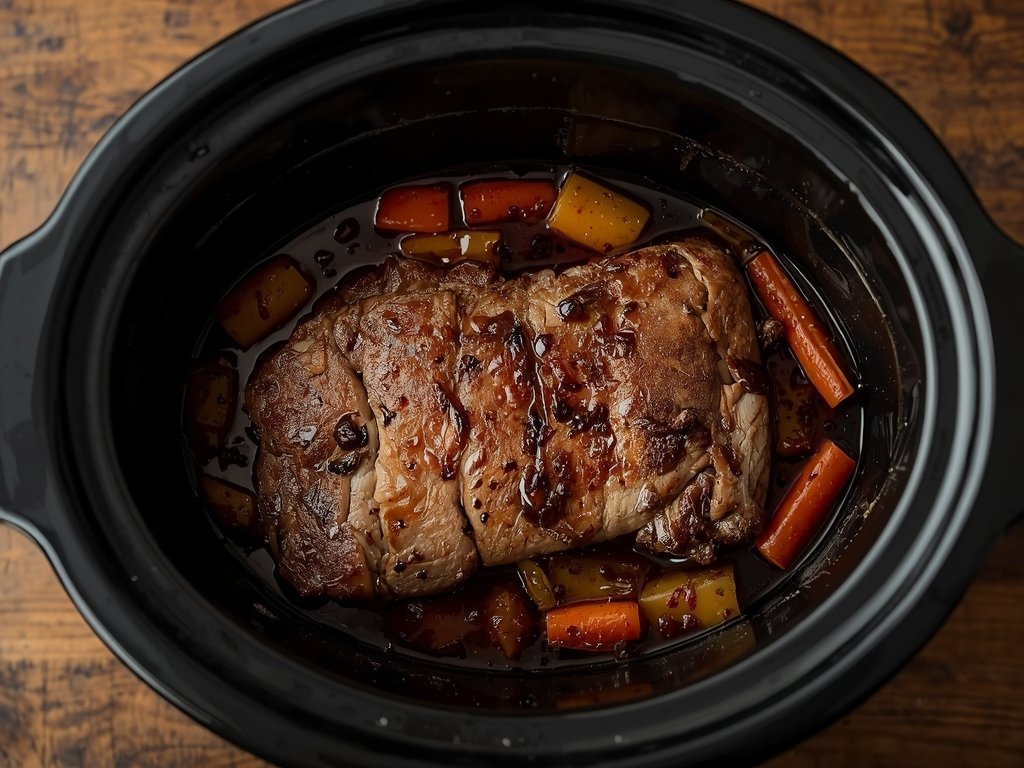
The honest answer is two hours. Food held below 140°F must be eaten, reheated, or thrown away within two hours, and the clock starts the moment the gravy drops below 140°F — not the moment it was made, and not the moment it was put in the warmer. A gravy held properly, above 140°F the whole time, can stay in the warmer for 2 to 3 hours before the texture suffers enough to notice, and that is the practical limit for a meal: a slow cooker of gravy that has been holding since noon is not the gravy you want at three o’clock, even if the thermometer says it is safe.
After two hours below 140°F, the decision is made for you: discard it. After two to three hours above 140°F, the decision is about quality: the gravy will have thickened, darkened, and lost its shine, and a fresh batch — or a reheated one — will taste better. The way to avoid the decision entirely is to hold only what you need: keep half the gravy in the warmer for the meal, and keep the other half in the fridge, reheating it fresh for the second serving. A gravy reheated to a boil and 165°F tastes like it was just made, and a gravy held for four hours tastes like it has been held for four hours. For the turkey that shares the clock, see our guide to reheating leftover turkey.
What to Do When the Gravy Cools Down
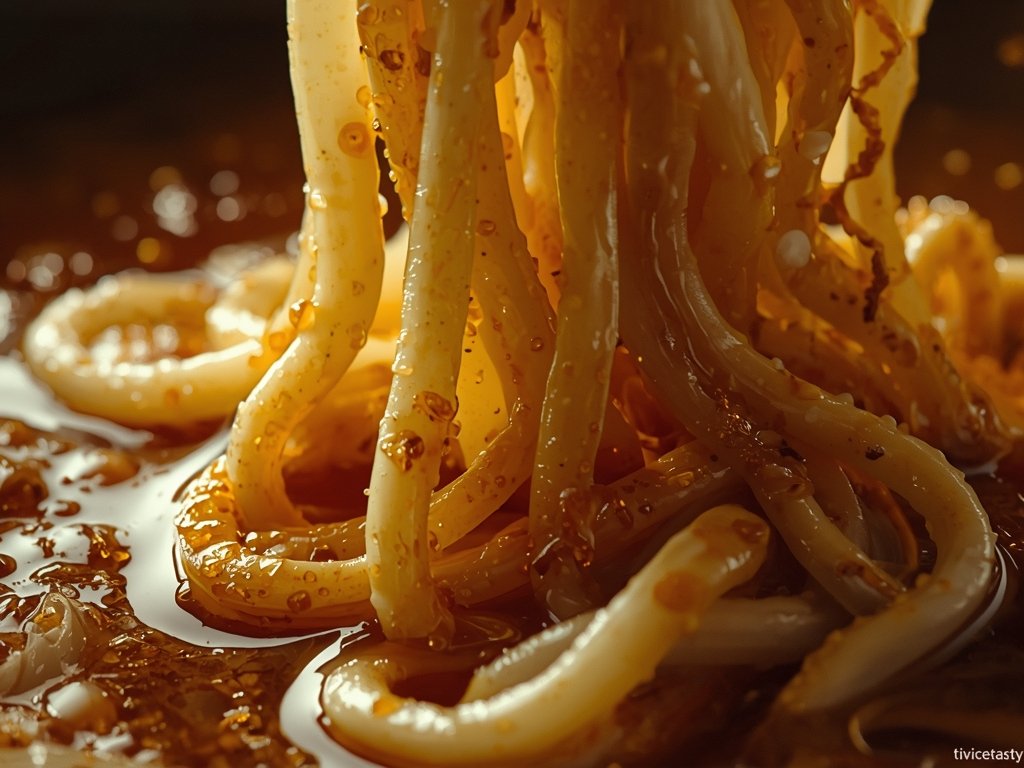
When the gravy cools, the first question is how long it has been cool. If it has been below 140°F for under two hours, reheat it: pour it into a saucepan, bring it to a rolling boil over low heat, whisking constantly, and check that it reaches 165°F throughout. Then serve it immediately, or move it back to a preheated warmer. If it has been below 140°F for two hours or more, or if you cannot tell how long it has been cooling, throw it away — no reheating makes it safe, and no amount of boiling undoes two hours in the danger zone. The two-hour rule is the line, and it does not bend because the gravy looks fine: bacteria do not change the look of a sauce until long after it is unsafe.
If the gravy cooled in the fridge overnight, it is a different case: refrigerated within two hours of cooking, it is safe for 3 to 4 days, and reheating it to a boil is the normal, safe routine. The danger is only the gravy that cooled on the counter, in the warmer, or on the table — the gravy that spent its afternoon at room temperature. The way to keep the distinction clear is to label the gravy when it goes into the fridge, with the date and the time, so the next day’s decision is a fact and not a guess. For the casserole that shares the table, see our guide to reheating sweet potato casserole, and for the storage rules, see our guide to storing leftover turkey safely.
The Bottom Line
Keep gravy warm at 140°F or above, in a slow cooker on Warm, in a low oven, or in a preheated thermos — and in every case, reheat the gravy to a boil and 165°F first, because a warmer holds hot gravy hot and cannot make cold gravy hot safely. Check the temperature with a thermometer, in more than one spot, instead of trusting the setting. Stir every 15 to 30 minutes, keep the lid on, and press plastic wrap onto the surface if there is no lid, to stop the skin. Hold it for 2 to 3 hours at most, and if it drops below 140°F, you have two hours to reheat it to a boil or throw it away. Gravy held that way pours hot, smooth and glossy from the first serving to the last — and gravy held any other way is a risk dressed as a sauce.

Ghani is the founder of TwiceTasty and a passionate home cook who believes no meal should go to waste. What started as a personal mission to transform leftovers into exciting new dishes has grown into a community of food lovers who share the same philosophy.