Follow Me On Social Media!

The pot made too much pasta again. It always does — a pound of dry pasta feeds six, and there were four at the table, and the fridge now holds a container of cooked spaghetti that will be eaten tomorrow or not at all. The question is whether the freezer can save it, and the answer is yes, with a condition that every guide agrees on: freezing works, but the clock is about texture, not safety. Cooked pasta frozen at 0°F stays safe indefinitely, because bacteria cannot grow at that temperature. What fades is the texture — and the difference between pasta that thaws back to al dente and pasta that thaws to mush is decided before it ever goes into the freezer, by how it was cooked and how it was packed.
This guide covers the numbers, the fridge window, the freezing steps for plain and sauced pasta, which shapes survive, how to thaw without mush, and the numbers that disagree.
The Short Answer: Yes, 1 to 2 Months at Best Quality
Yes, you can freeze cooked pasta. The USDA’s FoodKeeper puts cooked pasta at one to two months in the freezer for best quality, and at 0°F it stays safe indefinitely — the limit is texture, not safety. In the fridge, plain cooked pasta keeps three to four days, and pasta with sauce keeps three to four. Freeze the pasta within a couple of days of cooking if you will not eat it, and freeze it slightly undercooked — a minute or two short of al dente — because the pasta finishes cooking when you reheat it, and pasta that was fully soft before freezing comes back mushy.
Two rules sit behind the whole guide. First, cool it fast and get it into the fridge or freezer within two hours of cooking — cooked pasta, like rice, can carry Bacillus cereus spores, and the two-hour rule is what keeps them from growing. Second, pack it airtight and flat: air is what causes freezer burn, and a flat bag freezes and thaws faster than a deep container.
The Fridge First: 3 to 4 Days Before You Decide
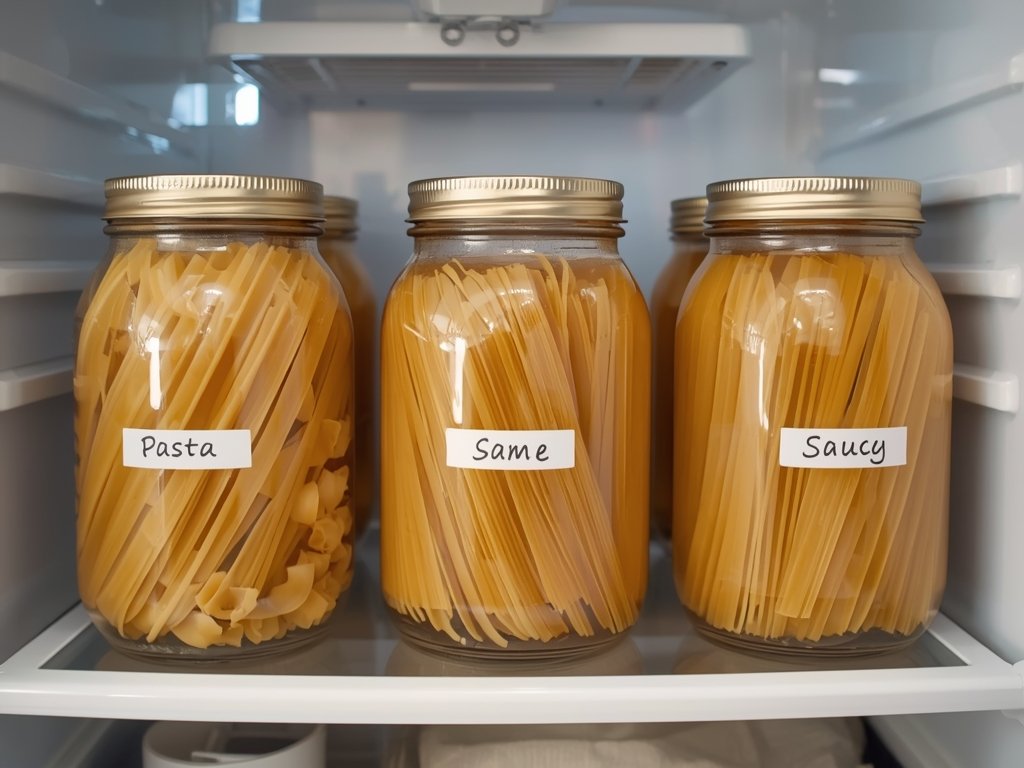
Before the freezer, the fridge: plain cooked pasta keeps three to four days in the refrigerator, in an airtight container, at or below 40°F. Pasta tossed in sauce keeps three to four days — the shorter end, because the sauce spoils faster than the pasta. Pasta with meat or dairy follows the three-to-four-day rule for cooked leftovers generally, and the FoodSafety.gov cold food storage chart gives the same windows. The fridge is the right place when the pasta will be eaten within the week; the freezer is the right place when it will not.
Store the pasta in the container it will be reheated from, with a light coating of oil — a teaspoon of olive oil tossed through each portion stops the strands and shapes sticking together into a solid block, and it is the single most useful step in pasta storage, fridge or freezer. And label the container with the day it was cooked, because cooked pasta on day two and cooked pasta on day five look identical, and the label is the only difference between them.
How to Freeze Plain Pasta, Step by Step
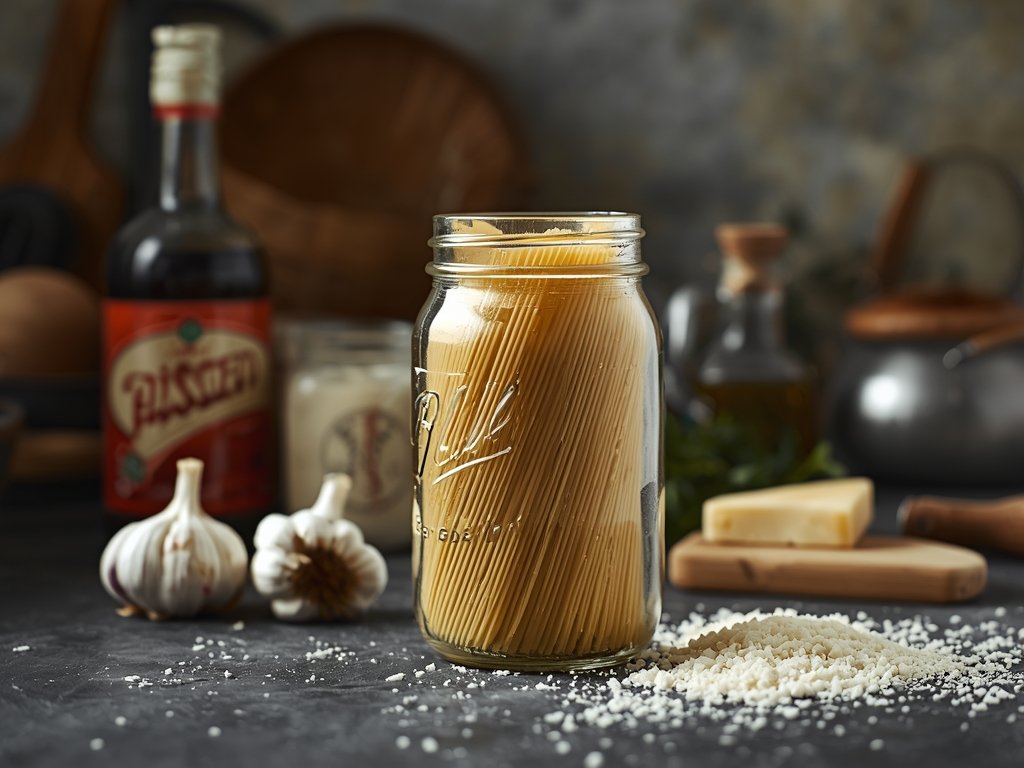
Step one: cook it short. If you know the pasta is for the freezer, pull it one to two minutes before al dente — it should still have a firm bite in the centre, almost too hard to eat. The pasta finishes cooking when you reheat it, and that unfinished centre is what survives the freezing. Step two: cool it fast. Drain it, rinse it briefly under cold water to stop the cooking, and spread it on a baking sheet in a thin layer for ten minutes. The rinse is the one case where rinsing pasta is right: it stops the cooking and washes off the surface starch that glues strands together.
Step three: toss it with oil. A tablespoon of olive oil per pound of pasta, tossed through while the pasta is still slightly damp, coats every piece and stops sticking. Step four: flat-freeze it. Spread the pasta on the baking sheet, freeze it for an hour until the pieces are firm, then tip it into freezer bags, press the air out, and label them with the contents and the date. Flat bags freeze fast, thaw fast, and stack — and a bag frozen flat thaws in half the time of a bag frozen as a lump. Step five: use it within one to two months. It stays safe longer, but the texture fades, and two months is the point where the pasta is still worth eating.
Sauced Pasta Freezes Better Than Plain

Sauced pasta freezes better than plain pasta, and the reason is the sauce: it coats every piece, protects it from freezer burn, and replaces the moisture the freezing takes away. Pasta tossed in tomato sauce keeps two to three months at best quality — a month longer than plain — because the sauce is mostly water and the pasta reabsorbs it as it thaws. Baked dishes — lasagne, baked ziti, pasta bakes — keep two to three months too, and they are the best use of the freezer, because they reheat in the oven straight from frozen with no thawing step at all.
Freeze sauced pasta the same way as plain, with two changes. First, freeze it in the portion it will be eaten in — a quart container per two servings — because sauced pasta does not flat-freeze as neatly as plain, and a container that is opened and half-eaten cannot go back. Second, leave a little headroom in the container, because the sauce expands as it freezes and a full container cracks its lid. Creamy sauces are the exception: they can separate on thawing, turning grainy — still good in a baked dish, less good on their own. Our guide to reheating pasta without drying it out covers the same sauce logic from the other side: sauce is what saves pasta from the heat, in the freezer and out of it.
Which Shapes Freeze Best — and Which Do Not

Short shapes freeze best: penne, fusilli, rigatoni, and farfalle hold their shape through freezing and thawing, because their thick walls and compact size resist the softening. They keep one to three months at best quality, and they are the shapes to freeze when you have a choice. Long noodles — spaghetti, linguine, fettuccine — freeze less well: they tangle, they break, and they go soft faster, keeping one to two months. They still freeze, and they are still worth saving, but they want a sauce to protect them, and they want to be thawed gently.
Filled pasta is the shape to think twice about: ravioli and tortellini freeze well when they are frozen raw, but cooked filled pasta can split on thawing, and the filling leaks into the sauce. Gluten-free pasta is the worst freezer candidate of all: it keeps up to one month, and it goes mushy faster than wheat pasta, because its starch structure is already fragile.
How to Thaw and Reheat Without Mush

Thaw the pasta in the fridge overnight — that is the safe route, and the gentle one. A bag thawed in the fridge keeps its shape; a bag thawed on the counter passes through the danger zone, and a bag thawed in the microwave cooks unevenly. Once thawed, reheat it the way you would reheat fresh pasta: drop it into boiling water for thirty seconds to a minute, or toss it in a hot pan with sauce for two to three minutes, until it is hot through at 165°F. The thirty-second boil is the best method for plain pasta — it rehydrates the surface without cooking the centre further — and the pan method is the best for sauced pasta, because the sauce and the pasta finish together.
Do not refreeze pasta that has been thawed and reheated: once it has been through the cycle, the texture is spent, and refreezing only makes it worse. Reheat only the portion you will eat, and throw away what is left of a reheated portion rather than putting it back. And do not overcook it on the reheat — the pasta was cooked short before freezing precisely so the reheat could finish it, and a reheat that boils it for five minutes undoes the whole plan. Our guide to the frozen pasta paradox explains why spaghetti turns to mush in the first place, and the freezing method here is the answer to it: cook short, freeze flat, thaw cold, reheat fast.
The Numbers That Disagree: 2 Weeks to 3 Months

The sources do not agree on how long frozen pasta keeps, and the disagreement is worth stating honestly rather than picking the most convenient number. The USDA’s FoodKeeper says one to two months for best quality. HelloFresh says two to three months. KitchPrep says up to three months for plain pasta. The UK’s Which? and Love Food Hate Waste say four weeks. Real Homes says two weeks. None of them says the pasta becomes unsafe — every one of them is talking about texture, and the spread is two weeks to three months for the same food.
The honest reading is that the number depends on the pasta and the packing. A short shape, cooked short, tossed in oil, frozen flat in an airtight bag, keeps two months easily. A long noodle, fully cooked, frozen in a half-full container with air in it, is mushy in two weeks. The USDA’s one to two months is the middle of the range and the number to plan around; the UK’s four weeks is the cautious end, and it is the number to use if the packing was hurried. What matters is not the exact week but the principle: frozen pasta stays safe indefinitely at 0°F, and the quality fades on a curve, not a cliff. Use it within two months, and judge it by its texture when it thaws — if it is still firm, it is still good.
What Not to Freeze

Three things should not go into the freezer as cooked pasta. The first is pasta in a watery sauce: thin, watery sauces separate on thawing, and the pasta comes back swimming in liquid that was once a sauce. Thicken the sauce before freezing, or freeze the pasta plain and make the sauce fresh. The second is pasta that has already been reheated: a portion that was cooked, cooled, reheated, and cooled again has used up its texture, and freezing it only preserves the mush. The third is pasta that sat out too long: pasta left at room temperature for more than two hours should be thrown away, not frozen — freezing stops bacterial growth but does not undo the toxin that may already have formed, and the freezer is not a rescue for bad storage.
And one more: do not freeze pasta in its cooking water, and do not freeze it in the pot it was cooked in. The pot is the slowest thing to freeze and the slowest to thaw, and the pasta in the middle of it spends hours passing through the danger zone on the way down and on the way up. Portion it, bag it, label it, and freeze it flat — the same routine as our guide to freezing cooked chicken, because the freezing rules are the same for every leftover: cool fast, pack airtight, label, and use within the window. Our guide to what to do with leftover spaghetti covers the uses for the pasta once it is saved, and the freezer is what makes the third and fourth uses possible.
Frequently Asked Questions
Can you freeze cooked pasta? Yes — for one to two months at best quality (USDA FoodKeeper), safe indefinitely at 0°F. Cook it a minute short of al dente, toss with oil, flat-freeze in bags, and thaw in the fridge.
How long does cooked pasta last in the fridge? Three to four days plain, three to four days with sauce, at or below 40°F in an airtight container. Freeze it within a couple of days if you will not eat it.
Can you freeze pasta with sauce? Yes — sauced pasta freezes better than plain, for two to three months, because the sauce protects it from freezer burn. Creamy sauces may separate on thawing; tomato sauces freeze best.
Can you refreeze thawed pasta? No. Once pasta has been thawed and reheated, the texture is spent — reheat only the portion you will eat.

Ghani is the founder of TwiceTasty and a passionate home cook who believes no meal should go to waste. What started as a personal mission to transform leftovers into exciting new dishes has grown into a community of food lovers who share the same philosophy.

← Previous
Can You Freeze Gravy? How Long It Keeps
Next →
How to Make Stock from a Leftover Chicken Carcass