Follow Me On Social Media!

Dinner rolls are the first thing to go stale and the last thing anyone thinks to save. They were soft and warm at dinner, and by the next morning they are firm, dry, and headed for the bin — a dozen of them, because the baker sold them by the dozen and the table ate eight. The waste is a habit, not a necessity: a stale roll is not a ruined roll, it is a different ingredient. Dry bread soaks up custard better than fresh bread, crisps better in the oven, and holds its shape in a stuffing where fresh bread turns to mush.
The ideas split by how stale the rolls are, and that is the first thing to check. Soft rolls, a day old, go to the ideas that want bread with some give left: garlic bread, sliders, and French toast. Firm rolls, two or three days old, go to the ideas that want dry bread: croutons, bread pudding, and stuffing. Voyo Eats’ seven creative ways to use leftover dinner rolls covers the same ground, and their pizza bites are the one idea this guide does not repeat. Rolls with mould go in the bin, whatever their age: mould on bread is not a spot to cut off, because the threads run through the loaf invisibly, and a roll with a green spot is a roll that is finished.
The Short Answer: Soft Rolls Get Butter, Stale Rolls Get Custard
Soft, day-old rolls become garlic bread, sliders, and French toast. Firm, two-to-three-day-old rolls become croutons, bread pudding, and stuffing. Hard rolls become breadcrumbs. Rolls keep two to three days at room temperature in an airtight container, and they freeze for three months — sliced and bagged, so you can take out what you need. The staleness is the ingredient: dry bread absorbs custard and broth better than fresh bread, and crisps better in the oven.
Before any of the ideas, check the rolls the way you would check any leftover. A roll that smells sour or sharp, feels damp rather than dry, or shows any mould goes in the bin — mould on bread spreads invisibly through the loaf, and cutting off the visible spot does not make the rest safe. A roll that is simply dry and firm is perfect for every idea below.
1. Garlic Bread Rolls: The Five-Minute Rescue

Garlic bread is the fastest idea in this list, and it is the one that saves rolls that are only a day old and still soft. Split the rolls in half, spread each cut side with garlic butter — softened butter mashed with a minced garlic clove, a pinch of salt, and a spoonful of chopped parsley — and bake them cut-side up at 400°F for five to seven minutes, until the edges are golden and the butter is bubbling. That is the whole recipe: five minutes, one bowl, and the rolls taste better than they did fresh.
The details are small and they matter. The butter should be soft, not melted — melted butter soaks into the bread and makes it soggy, while soft butter sits on the surface and browns. The garlic should be minced fine, not sliced: a slice of garlic burns in the oven, while minced garlic melts into the butter. And the rolls should be split, not sliced thin — a roll split in half has a cut surface big enough to hold the butter, and a roll sliced into rounds dries out before it browns. Our guide to air fryer reheat times covers the same rolls warmed in the basket, and the garlic-butter version here is the upgrade for the rolls that need more than warming.
2. Croutons: The Easiest Idea, and the Most Useful
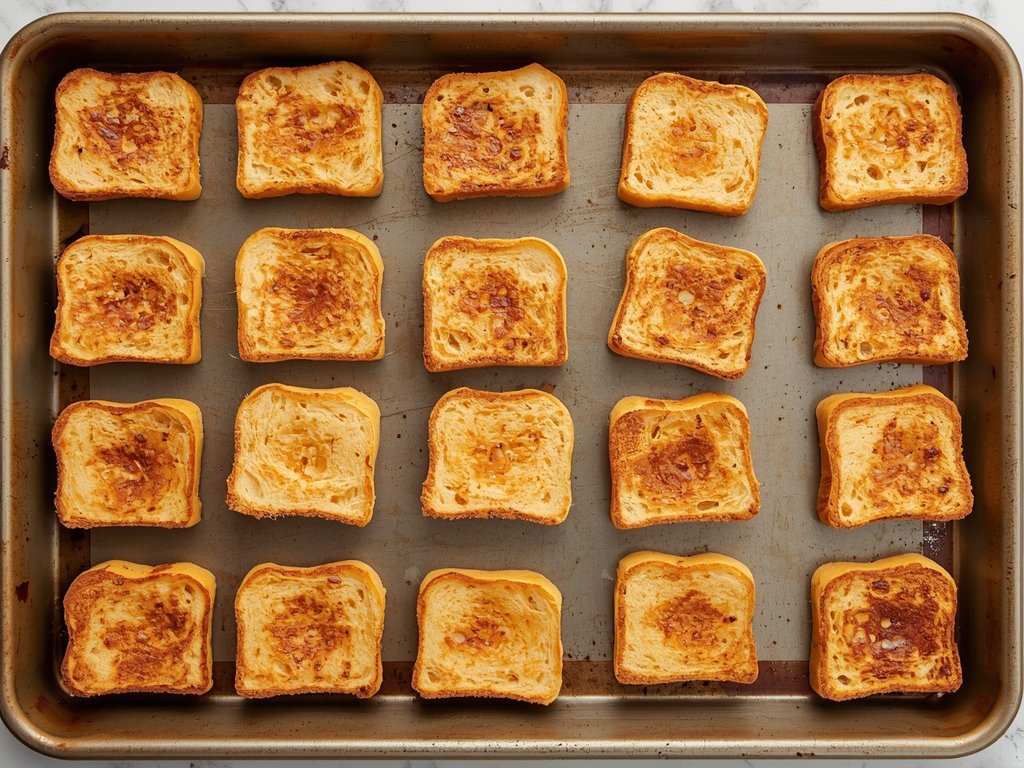
Croutons are the easiest idea in this list, and the most useful, because a jar of homemade croutons turns a plain salad or a bowl of soup into a meal. Cut the rolls into small cubes, about half an inch — stale rolls cut cleanly, while soft rolls tear — toss the cubes with a tablespoon of olive oil, a quarter teaspoon of garlic powder, and a pinch of salt and dried herbs, and bake them in a single layer at 375°F for ten to twelve minutes, stirring once halfway through, until they are golden and crisp all the way through. Cool them completely before they go into a jar: warm croutons sealed in a jar go soft again, and the whole point is the crunch.
The single layer is the rule, same as for the hash and the air fryer: cubes piled on top of each other steam instead of crisping, and a crouton that steams is just a warm cube of bread. Season them to match the dish they are going into — garlic and herbs for a Caesar salad, smoked paprika for a tomato soup, cinnamon and sugar for a dessert topping — because a crouton is a seasoning delivery system as much as it is a crunch. They keep two weeks in an airtight jar at room temperature.
3. Sliders: The Rolls Become the Meal
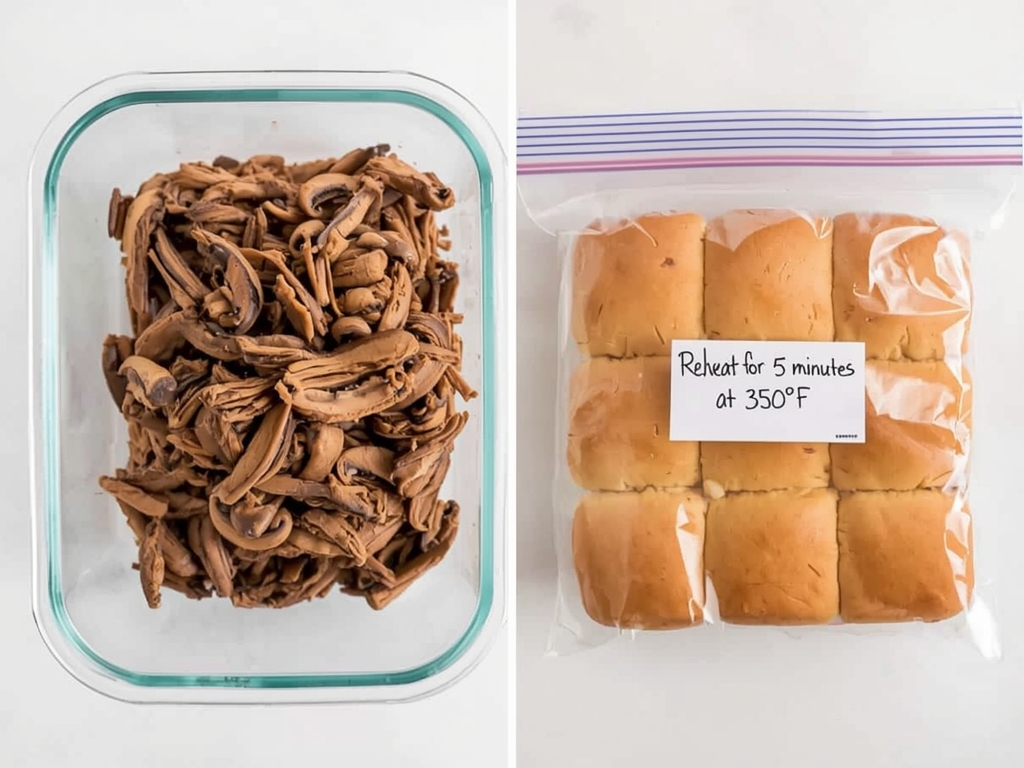
Sliders are the idea that uses the rolls as they are — a soft roll, split, filled, and eaten — and they are the best use for the rolls that are still soft enough to bite. Split the rolls in half and fill them with whatever the fridge holds: leftover ham and Swiss cheese, pulled pork, fried chicken, roast beef and horseradish, or a fried egg and bacon for breakfast. Warm the filled rolls in the oven at 350°F for eight to ten minutes, covered with foil for the first five so the cheese melts without the bread drying, then uncovered for the last three so the tops crisp.
The filling should be warm before it goes into the roll, and the roll should be warmed with it — a cold filling in a warm roll is a sandwich that is neither hot nor cold, and a warm filling in a cold roll goes cold in a minute. The foil cover is the trick: it holds the steam in while the cheese melts, and the uncovering at the end is what crisps the top. Our guide to leftover ham and cheese scones uses the same ham-and-cheese pairing in a different form.
4. French Toast: Stale Rolls, Custard, and a Hot Pan

French toast is the idea that wants stale bread, and the staler the better: dry bread soaks up custard without falling apart, while fresh bread goes soggy and tears. Split the rolls in half — or slice them into thick rounds if they are large — and soak them in a custard of two beaten eggs, half a cup of milk, a teaspoon of vanilla, and a pinch of cinnamon, for two to three minutes, turning once so both sides absorb evenly. Fry them in a buttered skillet over medium heat for two to three minutes a side, until they are golden and set, and serve with maple syrup and berries.
The soaking time is the technique: too short and the centre stays dry, too long and the roll falls apart in the pan. Two to three minutes is the window for a roll split in half; a whole roll needs four. A sweet roll — a Hawaiian-style roll, or a roll with honey in the dough — makes the best French toast, because the sweetness is already in the bread.
5. Bread Pudding: The Dessert That Needs Stale Bread

Bread pudding is the idea that proves staleness is an ingredient: it cannot be made well with fresh bread, because fresh bread turns to mush in custard, while stale bread holds its shape and drinks the custard slowly. Tear six to eight stale rolls into bite-sized pieces — about four cups — and put them in a buttered baking dish. Whisk together three eggs, one and a half cups of milk, half a cup of sugar, a teaspoon of vanilla, and a teaspoon of cinnamon, pour it over the bread, and press the pieces down so they are all soaked. Let it sit for thirty minutes, then bake at 350°F for thirty-five to forty minutes, until the top is golden and the centre is set but still soft.
The resting time is not optional: thirty minutes of soaking is what turns the bread from dry cubes into custard-filled pieces, and a pudding baked without it has dry spots and wet spots instead of a uniform texture. The variations are endless — chocolate chips, raisins, a spoonful of jam, a grating of nutmeg — because the pudding is a frame, not a recipe. Serve it warm, with cream or ice cream. The FoodSafety.gov cold food storage chart gives cooked bread pudding two to three days in the fridge, and it reheats in the oven, covered, at 300°F.
6. Stuffing: The Holiday Idea That Works All Year

Stuffing is the idea that closes the loop: the rolls that were served with the roast become the stuffing that is served with the next roast. Cube the stale rolls — four cups of cubes, about half an inch — and dry them further in the oven at 300°F for ten minutes, until they are crisp and light. Sauté a diced onion and two sliced celery stalks in butter until soft, add the bread cubes, a teaspoon of dried sage, a teaspoon of thyme, and a cup and a half of chicken or turkey stock, and toss until the cubes are damp but not soggy. Bake in a buttered dish at 350°F for twenty-five to thirty minutes, until the top is crisp and golden.
The stock is the variable: too little and the stuffing is dry, too much and it is soggy, and a cup and a half for four cups of cubes is the ratio that works for rolls — drier bread needs more stock, and the rolls here are already dry, so start with a cup and a quarter and add the rest if the cubes still look thirsty. The stuffing takes the same additions as any stuffing — sausage, apple, cranberries, chestnuts — and it is the same dish as our guide to what to do with leftover stuffing, made from rolls instead of leftover stuffing. It keeps three to four days in the fridge and freezes for a month, and it reheats in the oven, covered, at 300°F.
How Long They Keep: Room, Fridge, and Freezer
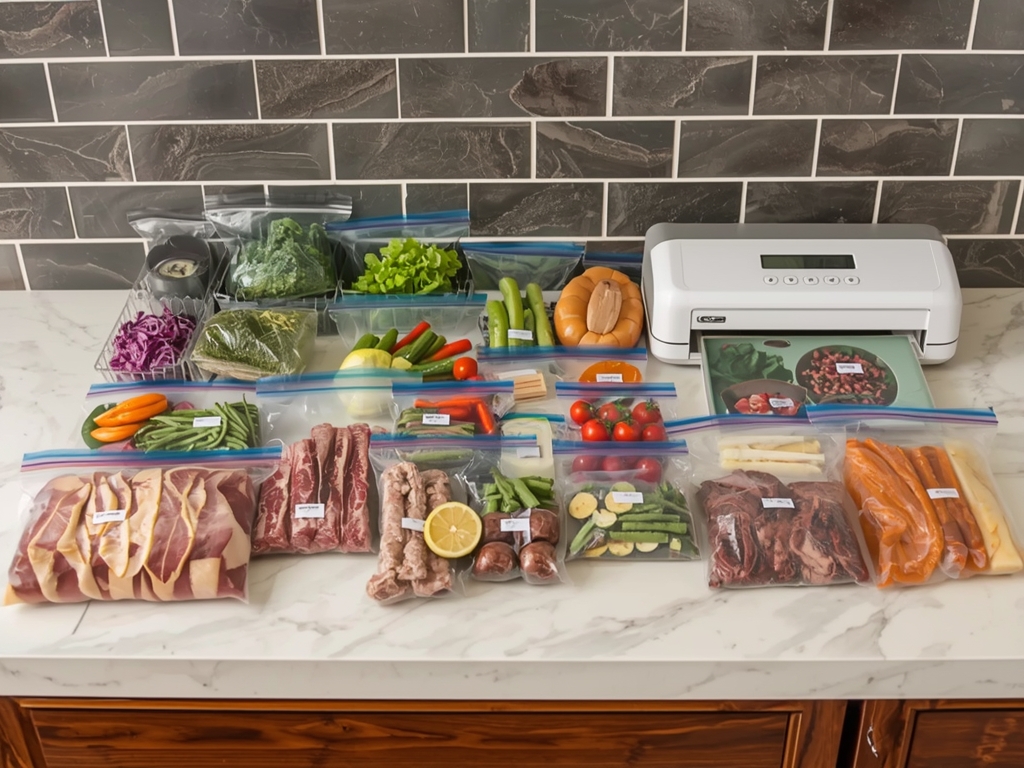
Dinner rolls keep two to three days at room temperature, in an airtight container or a bread bag — not in the fridge, where the cold stales them faster than the counter does. The fridge is the worst place for bread: the starch retrogrades fastest just above freezing, and a roll kept in the fridge goes stale in a day. The freezer is the long answer: sliced and bagged, with the air pressed out, rolls keep three months at best quality, and they thaw in an hour on the counter or in thirty seconds in the microwave.
Freeze the rolls before they go stale, not after: a roll frozen on day one thaws as a roll, and a roll frozen on day three thaws as a stale roll that still needs one of the ideas above. Slice them before freezing if they are large — a sliced roll thaws faster and goes straight into the toaster. Our guide to freezing bread covers the same routine in full, and the rolls follow it exactly: cool completely, bag airtight, label, and freeze flat so the bags stack.
Frequently Asked Questions
How long do dinner rolls last? Two to three days at room temperature in an airtight container. Never in the fridge — the cold stales bread faster than the counter does. Freeze them for three months instead.
Can you freeze leftover dinner rolls? Yes — sliced and bagged, air pressed out, for three months at best quality. Thaw an hour on the counter, or thirty seconds in the microwave.
What can I do with stale dinner rolls? Garlic bread, croutons, sliders, French toast, bread pudding, and stuffing — six ideas in this guide. The staler the roll, the better it works for custard and stuffing.
Can I eat rolls with mould on them? No. Mould on bread spreads invisibly through the loaf — cut off the visible spot and the rest is still not safe. Throw the roll away.

Ghani is the founder of TwiceTasty and a passionate home cook who believes no meal should go to waste. What started as a personal mission to transform leftovers into exciting new dishes has grown into a community of food lovers who share the same philosophy.
