Follow Me On Social Media!

Thanksgiving 2026 falls on Thursday, November 26, and the Brussels sprouts are the side dish most likely to be left behind. They were roasted until crisp at the table, and by Friday morning they are soft, cold, and sitting in a container at the back of the fridge — and the instinct is to throw them away. Do not. Leftover Brussels sprouts are one of the most useful things in the fridge after Thanksgiving: they reheat well if you use dry heat, and when they are too soft to serve as a side, they disappear happily into hashes, pastas, grain bowls, and frittatas.
This guide covers the whole job: how to store leftover Brussels sprouts so they keep for three to four days, the three reheating methods that bring back some crispness, six remakes that use them up, and whether freezing them is worth it. The rule that runs through all of it is simple — dry heat revives them, the microwave ruins them, and a sprout that has gone soft is not a lost sprout, it is an ingredient.
The Short Answer: Reheat Them Hot and Fast, and Use Them Up in 3–4 Days
Leftover Brussels sprouts keep three to four days in the fridge in an airtight container, matching the FoodSafety.gov cold food storage chart figure for cooked leftovers. To reheat them, spread them in a single layer on a baking sheet and put them in a 400°F oven for 8 to 10 minutes, or in the air fryer at around 370°F for three to four minutes — hot, dry heat is what brings back any crispness. The microwave is the method to avoid: it steams the sprouts and leaves them soft and rubbery. And if the sprouts have already gone too soft to serve as a side, chop them into a hash or a pasta instead of throwing them away.
The timing matters. Brussels sprouts are at their best as leftovers on the first two days; by day three or four they are still safe but noticeably softer, and they belong in a cooked dish rather than on a plate on their own. Plan the reheated side for Friday, and the remakes for the weekend, and nothing needs to go to waste.
Why Leftover Brussels Sprouts Go Soggy (and How to Stop It)

Roasted Brussels sprouts are crisp because the outside leaves have dried out and caramelised in hot oil, while the inside stays tender. That crispness is fragile: the moment the sprouts cool, moisture from the inside migrates outward, and the crisp outer leaves soften. Sealing warm sprouts in a container makes it worse, because the trapped steam condenses on the lid and drips back onto them. This is why a container of leftover sprouts never looks like the baking sheet they came off.
The fix starts at storage. Let the sprouts cool completely at room temperature before they go into a container — about 30 minutes on the counter, not straight from the oven into a lidded box. Line the container with a paper towel to absorb excess moisture, and lay the sprouts in a single layer if you can rather than piling them in a heap. Do not add any sauce, glaze, or dressing until serving time: a maple glaze or a balsamic drizzle poured over sprouts before storage will soak straight into them overnight, and the sprouts will be soggy by morning no matter how well you reheat them.
How to Store Leftover Brussels Sprouts
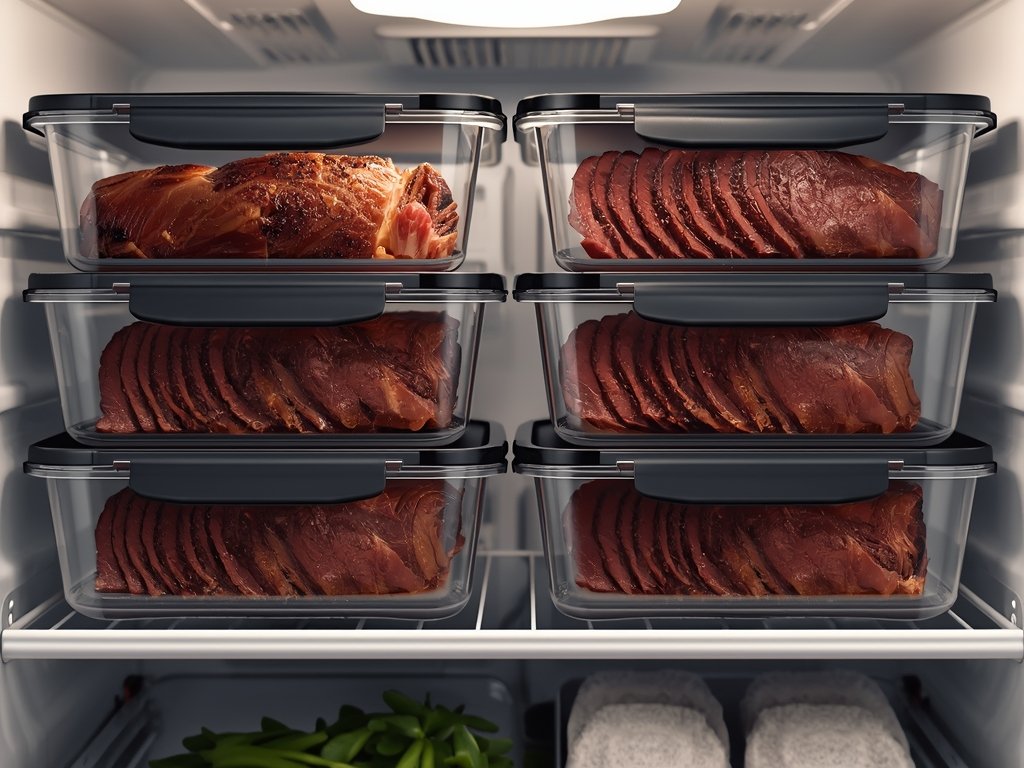
Cool the sprouts completely, then transfer them to an airtight container lined with a paper towel, and refrigerate. They keep for three to four days — our guide to how long leftovers last in the fridge gives the same window for the rest of the Thanksgiving table, and it is the number to plan around. Store any sauce or glaze separately, in its own small container, and add it fresh when you reheat.
Two storage mistakes are worth avoiding. The first is leaving the sprouts on the counter overnight: cooked vegetables are perishable food, and the two-hour rule applies — into the fridge within two hours of serving, or they go in the bin. The second is storing them in the roasting pan they were cooked in, uncovered, in the fridge. An uncovered pan dries the sprouts out and lets them pick up fridge smells; a sealed container with a paper towel keeps them as close to fresh as storage allows. If you roasted a big batch and know you will not eat it all within four days, set aside the extra portion for a remake on day two rather than letting it sit until day four, when it will be too soft for anything but soup.
The Oven Method: The Best Way to Reheat Brussels Sprouts

The oven is the best reheating method for leftover Brussels sprouts, because it does two things at once: it warms them through, and the dry heat re-crisps the outer leaves. Heat the oven to 400°F and spread the sprouts in a single layer on a baking sheet, cut-side down where possible, with space between them. Crowding the pan steams them, which is exactly what you are trying to avoid. A light drizzle of oil helps the leaves crisp again, and if the sprouts were glazed, hold the glaze back and add it fresh in the last couple of minutes.
Heat for 8 to 10 minutes, until the sprouts are hot through and the edges have crisped up again. Lynne Curry’s crispy sprouts guide uses 350°F for about 10 minutes, and that works too — the higher temperature is simply faster and gives a better crisp. The sprouts will not be as crisp as they were on Thanksgiving Day; reheated sprouts are always a little softer than fresh ones. That is normal, and it is the reason the remakes below exist: a sprout that has lost its crunch is still full of flavour, and it is better chopped into something than served as a side that disappoints.
The Air Fryer Method: Fastest Way Back to Crispy

The air fryer is the fastest way to reheat Brussels sprouts and the best choice for a single serving, because the moving hot air does the same job as the oven in a fraction of the time. Heat the air fryer to around 370°F, spread the sprouts in a single layer in the basket, and heat for three to four minutes, shaking the basket halfway through. Check them at three minutes — thin outer leaves can go from crisp to burnt quickly at this temperature.
The air fryer also works well for sprouts that were roasted with bacon or pancetta, since the fat renders again in the hot air and crisps the leaves. Our guide to reheating roasted vegetables in the air fryer covers the same single-layer, high-heat logic for the rest of the roast vegetable tray, and our air fryer reheat times chart is worth a look if you are reheating several Thanksgiving dishes in the same session. One warning: do not reheat sprouts in the air fryer with a wet glaze on them — the glaze burns before the sprouts warm through, so add it after.
The Skillet Method: For Small Batches

The skillet is the method for a small batch — a handful of sprouts for one plate — and it is the only method that lets you fix the texture as you go. Put a little oil or butter in a skillet over medium-high heat, add the sprouts cut-side down in a single layer, and leave them alone for two to three minutes until the cut faces brown. Then toss them, add a splash of water or broth, and put the lid on for a minute so the steam warms the centres through.
This method is also the best way to rescue sprouts that have gone soft, because you can chop them first and treat them as an ingredient rather than a side. Halved or quartered sprouts in a hot skillet with a little oil crisp at the edges in minutes, and from there they go straight into a hash or a pasta. The skillet is a watching method, not a walk-away method: a dry skillet at medium-high heat will scorch the outer leaves in under a minute, so keep the heat under control and add the liquid before the pan goes dry. If you are reheating a larger batch, use the oven instead — the skillet is for one or two servings, and crowding it steams the sprouts.
Six Ideas for Leftover Brussels Sprouts

When the sprouts are too soft to serve as a side, stop reheating them as a side and start cooking with them. First, a Brussels sprout hash: chop the sprouts, fry them in a skillet with diced potato and onion until crisp at the edges, and top with a fried egg. The potato gives the dish the crunch the sprouts have lost, and the egg yolk ties it together. Second, a pasta: slice the sprouts thin, toss them in a pan with garlic, olive oil, and chilli flakes, and fold through hot pasta with parmesan. The sprouts go soft in the pasta anyway, so their lost crispness does not matter.
Third, a grain bowl: quarter the sprouts, reheat them in the air fryer, and pile them over rice or quinoa with a tahini or mustard dressing — the dressing and the grain carry the dish, and the sprouts are a flavouring rather than the star. Fourth, a frittata: chop the sprouts, fold them into beaten eggs with cheese, and bake until set. Fifth, a soup: blend the sprouts with stock and a potato for a green, earthy soup, finished with cream and a squeeze of lemon. Sixth, a sandwich or wrap: slice the sprouts, warm them in a skillet, and tuck them into a wrap with leftover turkey and cranberry sauce — the sprouts add a bitter, savoury note that cuts through the richness of the turkey.
The pattern across all six is the same: pair the soft sprouts with something crisp or something creamy, so the texture they have lost is supplied by another ingredient. A sprout on its own needs to be crisp; a sprout inside a hash, a pasta, or a frittata does not.
Can You Freeze Leftover Brussels Sprouts?

Sources disagree on this one, and the honest answer is that you can freeze them, but you probably should not. Some guides say cooked Brussels sprouts freeze for two to three months in a freezer bag, and they do — frozen food kept at 0°F stays safe. Other guides say not to freeze them at all, because the freezing and thawing process breaks down the cell walls further and leaves the sprouts mushy and watery when reheated. Both are true: the sprouts are safe after freezing, and the texture is poor.
The practical advice is to freeze them only if the alternative is throwing them away, and only for use in a cooked dish afterwards — a soup, a hash, or a pasta, where mushiness does not matter. Spread them on a baking sheet in a single layer and freeze for about an hour before bagging, so they do not freeze into a solid block, and label the bag with the date. If you want to get ahead for next year instead, freeze the raw sprouts: trim and halve them, blanch them briefly, and freeze them in bags. Raw sprouts frozen this way roast well from frozen, which is a far better result than reheating a frozen cooked sprout. For the Thanksgiving table generally, reheating green bean casserole faces the same trade-off — some dishes are worth freezing, and some are worth eating within the fridge window instead.
Frequently Asked Questions
How long do leftover Brussels sprouts last in the fridge? Three to four days in an airtight container, matching the FoodSafety.gov cold food storage chart for cooked leftovers. Eat them as a reheated side on the first two days, and use them in a cooked dish on days three and four.
Why do reheated Brussels sprouts go soggy? Moisture migrates from the inside of the sprout to the crisp outer leaves as they cool, and the microwave makes it worse by steaming them. Reheat with dry heat — a 400°F oven or an air fryer — in a single layer, and hold any glaze until the end.
Can I reheat Brussels sprouts more than once? It is safe if they were stored properly and reheated until hot through, but the texture degrades badly with each round. Reheat only the portion you will eat, and use the rest in a cooked dish instead.
Can you freeze leftover Brussels sprouts? Yes, for two to three months, but the texture turns mushy when thawed, so frozen cooked sprouts are only worth using in soups, hashes, or pastas. If you want to freeze sprouts for roasting later, freeze them raw instead.

Ghani is the founder of TwiceTasty and a passionate home cook who believes no meal should go to waste. What started as a personal mission to transform leftovers into exciting new dishes has grown into a community of food lovers who share the same philosophy.

← Previous
Leftover Turkey Pot Pie: Easy Recipe from Thanksgiving Leftovers
Next →
Leftover Turkey Sandwich Ideas