Follow Me On Social Media!

The fridge looks clean. The shelves are clear, the light is bright, and nothing smells — until you pull out the crisper drawer and find a sticky patch where berries leaked, or a ring under the milk carton, or a raw-chicken spill that dried three days ago. A fridge that looks clean is not necessarily a clean fridge. Cold slows bacteria down, but it does not stop them, and one bacterium in particular — Listeria — keeps growing at refrigerator temperatures. That is why the method matters too: the shelves touch the food you eat, so whatever you clean them with ends up near that food.
The good news is you do not need a bottle of harsh chemicals to do the job properly. White vinegar, baking soda and hot water — the same three things this site already uses for produce and leftovers — handle a fridge shelf as well as anything sold in a spray bottle, and they leave nothing behind that you would not want on your food. This guide covers the full routine: emptying and sorting, the vinegar spray, the baking soda paste for stubborn spots, what lemon can and cannot do, the parts people always skip, and how often to repeat it.
The Short Answer: Yes — Vinegar, Baking Soda and Hot Water Do the Job
Yes. A spray of equal parts white vinegar and water, a paste of baking soda and water for anything that has dried on, and hot soapy water for the first pass will sanitize a refrigerator shelf properly — provided you do the steps in the right order. The order is the whole method: hot soapy water first to lift dirt and grease, then the vinegar spray to sanitize, then a clean-water wipe. Skip the soapy wash and the vinegar works on grease instead of the shelf; skip the final wipe and you leave residue that the next carton sits in.

One honest limit, stated up front: vinegar is a cleaner, not a registered disinfectant. White vinegar at the usual 5% acidity kills many common kitchen bacteria and moulds, and it is the standard recommendation for people who want to avoid bleach around food. It is not a hospital-grade sanitizer, and for a raw-meat spill the safest routine is hot soapy water first, vinegar spray second, and a clean-water wipe to finish. If you ever use bleach anywhere in the kitchen, never mix it with vinegar: together they make chlorine gas. Use one or the other, never both.
Empty It First, and Sort as You Go
A shelf cannot be cleaned with food still on it. Take everything out — every shelf you plan to clean, not just the one with the visible stain — and put it on the counter or the table. This is the step people skip, and it is the reason shelves stay dirty: cleaning around the jars only moves the dirt from the open patches to the covered ones.

Sort as you go. Anything past its use-by date goes in the bin. Anything that smells off, looks slimy, or has been open longer than the chart allows goes in the bin. The rule for all of it is the one the FDA states plainly on its refrigerator-safety page: “When in doubt, throw it out.” Cooked leftovers keep 3 to 4 days in the fridge — our guide to how long leftovers last in the fridge sets out the full chart — so anything older than that is not a sorting decision, it is rubbish. Put the food you are keeping in a cooler bag with an ice pack while you clean.
Lift the shelves and drawers out while you are at it. Most shelves slide out and most drawers lift out, and both are far easier to wash in the sink than in the fridge. Rinse them under hot water to soften anything dried on, then wash them in hot soapy water in the sink. The shelf that comes out is also the shelf you can actually see — and the stains hiding at the back edge are the ones that matter most.
The Vinegar Spray: Equal Parts Vinegar and Water
The spray is one part white vinegar to one part water in a clean spray bottle — the same 1:1 mix, kept in a bottle under the sink, ready for the next spill. White vinegar is the right choice; apple cider vinegar works too. This site already uses the same idea for produce — our berry vinegar bath uses one part vinegar to three parts water for fruit, because fruit is delicate and a shelf is not. Do not use flavoured vinegars, or cleaning vinegar above 5% on a food-touching shelf: stronger is only more residue to wipe off.
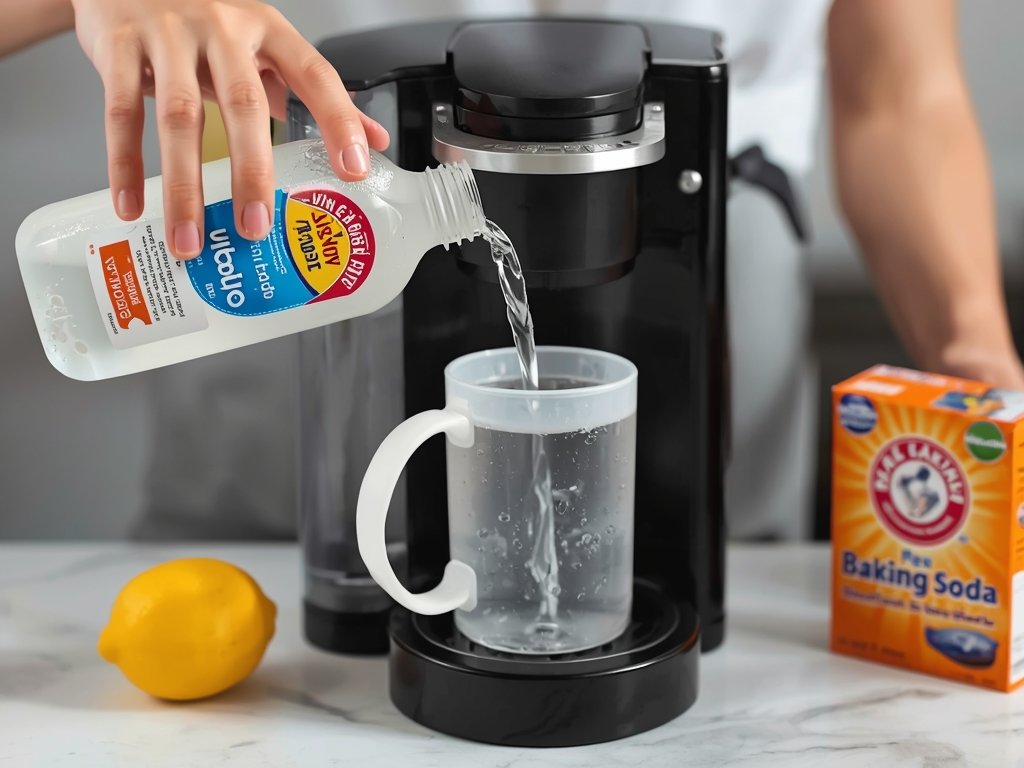
Spray the shelf generously after the soapy wash and the rinse, and let it sit for five minutes. The sitting is the sanitizing: vinegar needs contact time to work, and a spray that is wiped off at once is a rinse, not a sanitize. Five minutes on a shelf that has already been washed is enough. Then wipe it off with a clean, damp cloth — not the cloth you washed with, a fresh one — and dry the shelf with a second dry cloth or a paper towel. A shelf put back wet grows mould faster than a shelf put back dry — standing water is the one thing mould needs that the cold fridge cannot take away. Label the spray bottle, too: vinegar water looks exactly like plain water, and the next person to reach for it will not know the difference.
Baking Soda Paste for the Stubborn Spots
Some stains do not come off with a spray. A dried milk ring, a jam drip baked on by the cold, a sauce spot that has been there for a month — these need a paste, not a liquid. Mix three tablespoons of baking soda with one tablespoon of water until it holds together like toothpaste. Spread it over the stain with a spoon or an old toothbrush, and leave it for fifteen minutes. The paste is mildly abrasive, which is the point: it lifts the dried layer without scratching the glass or plastic underneath.
Work it in small circles with the toothbrush, then wipe it away with a damp cloth and follow with the vinegar spray, as above. Use them one after the other, never mixed together in a bowl — baking soda and vinegar fizz, and that fizz is the two cancelling each other out into salty water. The paste lifts the stain; the vinegar sanitizes what is underneath it. Do not use steel wool on any fridge surface: a scratched shelf holds bacteria in the scratches from now on.
Wipe, Don’t Scrub: The Microfiber Rule
The cloth matters as much as the cleaner. A microfiber cloth lifts grease and bacteria off a smooth shelf where a paper towel mostly pushes them around, without leaving lint behind. Use one cloth for the wash, a second clean one for the vinegar wipe, and a third — or a paper towel — for drying. Three cloths sounds fussy; it is the difference between cleaning a shelf and moving the dirt along it.

Wash the cloths in the hot cycle of the laundry after every fridge clean. A cloth left damp in the sink is a bacteria farm by the next morning, and a dirty cloth used on a “clean” shelf undoes the whole job. The FDA’s food-safety summary says the same thing: “If you use cloth towels, launder them often in the hot cycle.” If you would rather not keep three cloths, paper towels do the job — one for the wash, one for the wipe, one for the dry — and they go straight in the bin.
Lemon for Smells — and What It Can’t Do
Half a lemon, rubbed over the shelf after the vinegar wipe, takes the edge off a sour-milk smell and leaves the fridge smelling fresh. The acid cuts grease and the scent is pleasant, and the lemon costs nothing if you already have one. It is the most popular trick in this whole routine, and it is also the most oversold: lemon is a deodorizer, not a sanitizer. It does not kill bacteria, it does not kill mould, and a lemon rubbed over a shelf that has not been washed is a scented dirty shelf.
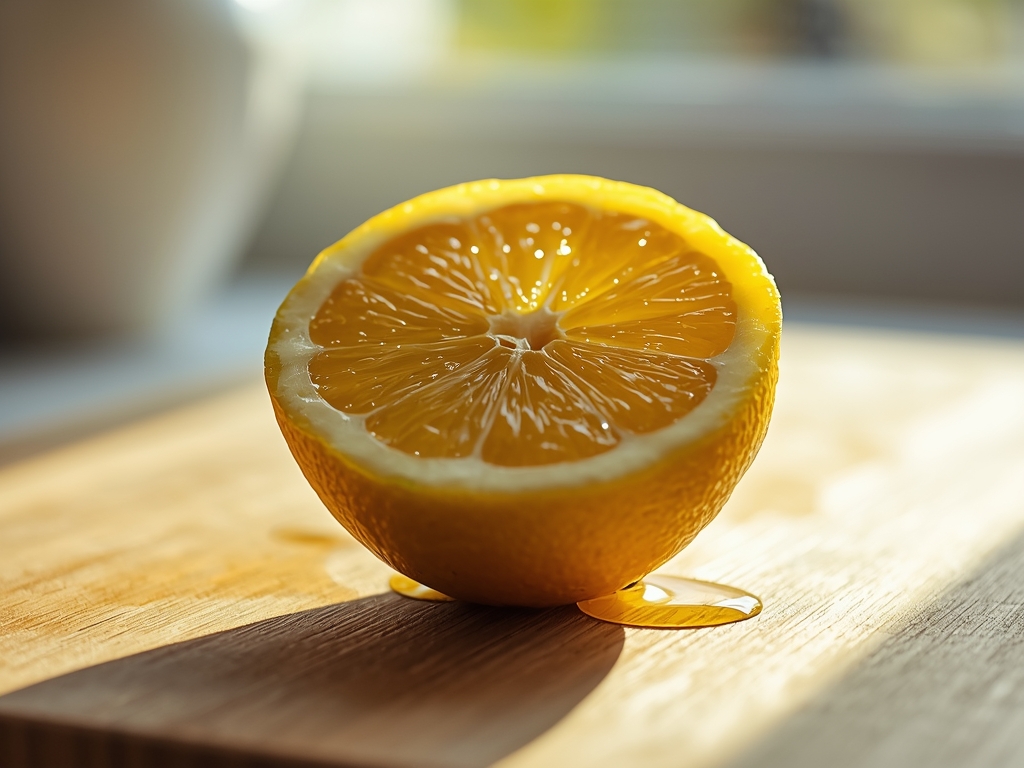
Use the lemon last, after the wash and after the vinegar wipe, as a finishing step — never instead of them. Use it fresh: a lemon half left in the fridge as an air freshener goes mouldy itself within a week and becomes the problem it was meant to solve. For a smell that survives the lemon, use an open box of baking soda on the back of the shelf instead: it absorbs odours for a month or two, and replace it when it is two months old, not when it stops working — by then it has been dead for weeks.
Drawers, Door and Drain Hole: The Parts People Skip
The shelves are the visible part. The parts people skip collect the most bacteria, because food and liquid run downhill and pool in them.

The crisper drawers. Pull them out, empty them, wash them in hot soapy water in the sink, and dry them before they go back. A drawer that has held a leaking bag of salad is a drawer with bacterial soup in its corners. Wipe the rails and the shelf underneath the drawer too — that hidden strip is always the dirtiest in the fridge.
The door shelves. Milk, sauces and condiments live here, and they leak here. Remove the door bins if they come out — most do — and wash them like the shelves. Check the condiments’ expiry dates while you are at it; a door shelf is where jars go to be forgotten.
The drain hole. At the back of the fridge, usually low down, there is a small drain hole that carries condensation away. When it clogs, water pools at the back of the fridge and the shelf above it grows mould. Push a cotton bud or a thin bottle brush gently into the hole to clear it, and wipe the channel around it. If water has been pooling, the shelf above the drain is the first place to check for mould, and the fix is the clog, not the shelf.
The rubber door seal. Run a damp cloth around the seal, opening the folds, and check for black spots — mould in the seal is the most common hidden mould in a kitchen. Mould washes off; a torn seal is a different problem, because it lets warm air in and makes the whole fridge work harder and spoil food faster. If the seal is torn, replace it: a cheap part, and a ten-minute job on most models.
Put It Back in Order — and How Often to Repeat It
Putting the food back is the last step, and it is a storage step, not a cleaning step. Raw meat goes on the lowest shelf, in a container, so nothing drips below it. Ready-to-eat food goes on the top shelves, where it is furthest from any drip. Leftovers go in covered containers or sealed bags — the FDA’s page says the same thing: “Store refrigerated foods in covered containers or sealed storage bags, and check leftovers daily for spoilage.” An airtight glass jar is the best container for cut onion and garlic — our container guide covers the comparison — and our guide to storing leftover soup covers the routine that keeps the fridge from getting dirty again in a week.

Check the temperature before you close the door. The fridge should be at 40°F (4°C) or below, and the freezer at 0°F (−18°C) or below — the FDA’s whole page is built around that number, and its advice is to buy a freestanding fridge thermometer, because “few refrigerator controls show actual temperatures.” A fridge that reads 45°F is a fridge in which food spoils twice as fast, and no amount of cleaning fixes that. The thermometer costs a few dollars and tells you the truth every time you open the door. If you want a cleaning product beyond vinegar and baking soda, the EPA’s Safer Choice label marks products that meet its safety standards.
How often? A full clean — shelves out, everything wiped, drawers washed, seal checked — every three to four months, or immediately after a raw-meat spill, a leaking bag, or anything that smells wrong. A quick wipe of the shelf fronts and door bins once a month, and a spill wiped up the moment it happens — the FDA’s rule is “Wipe up spills immediately,” both to slow Listeria and to stop one spill becoming the next clean’s stubborn stain. A fridge cleaned on that rhythm never needs a harsh chemical, because nothing in it ever gets bad enough to need one. Keep the vinegar bottle labelled, the baking soda box fresh, the thermometer checked, and the shelves dry — and the fridge takes care of the rest.

Ghani is the founder of TwiceTasty and a passionate home cook who believes no meal should go to waste. What started as a personal mission to transform leftovers into exciting new dishes has grown into a community of food lovers who share the same philosophy.
