Follow Me On Social Media!

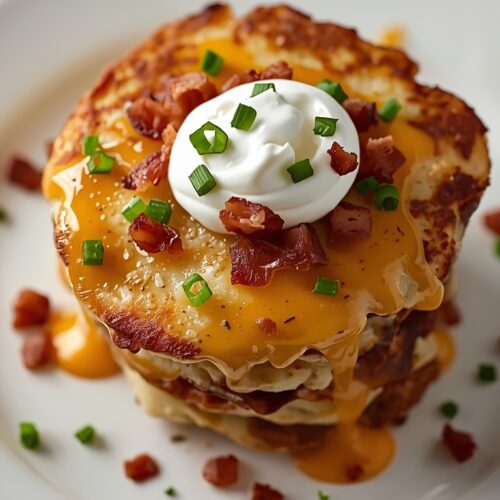
Leftover Mashed Potato Pancakes
Ingredients
- 2 cups cold leftover mashed potatoes
- 1 large egg
- 1/2 cup grated Parmesan cheese about 1 ounce
- 2 tablespoons chopped fresh chives
- 1/2 cup all-purpose flour divided
- 2 tablespoons olive oil divided
- sour cream for serving
Instructions
- Grate the Parmesan and chop the chives.
- Beat the egg lightly in a large bowl, add the mashed potatoes, Parmesan, chives and 1/4 cup of the flour and stir to combine.
- Refrigerate the mixture for 10 minutes.
- Divide into 8 portions of 1/4 cup, shape into patties about 3 inches across and dredge in the remaining 1/4 cup flour.
- Heat 1 tablespoon oil in a skillet over medium-high heat and fry 4 patties at a time, flipping once, until golden-brown and crisp, about 3 minutes a side.
- Repeat with the remaining oil and patties.
- Serve warm with sour cream.
Notes
Fridge 3 days.
Mashed potato pancakes are the best thing that can happen to leftover mashed potatoes. The mash that was fluffy and buttery on Thursday is dense and cold on Friday, and no amount of reheating brings back the first-day texture — but a hot skillet does something better. It turns the same mash into something new: crisp, golden-brown cakes with warm, fluffy insides, a crunchy crust, and a sour-cream dollop on top. Ten minutes of mixing, ten minutes of chilling, fifteen minutes of frying, and the side dish nobody wanted becomes the lunch everybody asks for. This guide gives you the recipe — 2 cups of cold mash, one egg, Parmesan, chives and flour — plus why cold mash works and fresh mash does not, the crisp question, the variations, and the storage rules.
The Short Answer: 2 Cups Cold Mash, 1 Egg, ½ Cup Flour, 3 Minutes a Side
The short answer is that leftover mashed potato pancakes need 2 cups of cold leftover mashed potatoes, 1 large egg, half a cup of grated Parmesan, 2 tablespoons of chopped fresh chives, and half a cup of all-purpose flour, divided. Beat the egg lightly in a large bowl, add the mashed potatoes, the Parmesan, the chives and a quarter-cup of the flour, and stir to combine. Refrigerate the mixture for 10 minutes. Divide it into 8 portions of a quarter-cup each, shape each one into a patty about 3 inches across, and dredge it in the remaining quarter-cup of flour. Heat a tablespoon of olive oil in a skillet over medium-high heat until shimmering, fry 4 patties at a time, flipping once, until golden-brown and crisp, about 3 minutes a side. Repeat with the remaining oil and patties, and serve warm with sour cream. Eight patties, four servings, 25 minutes in total — and the chilling step is not optional, because it is what lets the patties hold their shape in the pan. The Kitchn’s potato pancake recipe follows exactly this shape — the same quantities, the same 10-minute chill, the same 3 minutes a side — and its one tip is the one to remember: dredge the patties in flour before they hit the pan, and the results are crisp, golden-brown pancakes with warm and fluffy insides.
What You Need (Cold Mash, Cheddar, Chives, Egg, Flour)

You need 2 cups of cold leftover mashed potatoes, straight from the fridge. Cold matters, and the next section explains why — but the short version is that cold mash is firm, thick and shapeable, while warm mash is soft and loose. The potatoes should be leftover mash from the last three to four days, stored properly in the fridge: a mash made on Thursday is perfect for pancakes on Friday or Saturday. For the storage rules that decide whether the mash is still good, see our guide to freezing mashed potatoes.
The binder is 1 large egg and half a cup of flour, divided: a quarter-cup stirred into the mixture, and a quarter-cup in a shallow dish for dredging. The egg holds the patties together, the flour in the mix gives them structure, and the flour on the outside gives them their crust. The flavour is half a cup of grated Parmesan and 2 tablespoons of chopped fresh chives: the Parmesan adds salt and savouriness and helps the crust brown, and the chives add a mild onion note that keeps the pancakes from tasting flat. Salt and black pepper, to taste, finish it. The oil is 2 tablespoons of olive oil, divided between the two batches. That is the whole ingredient list, and it is worth making exactly as written the first time — the ratio of mash to egg to flour is the recipe, and changing one element before you have tasted it is how crisp pancakes become soggy ones.
How to Make Mashed Potato Pancakes Step by Step

Start with the mixture. Grate the Parmesan and chop the chives, then beat the egg lightly in a large bowl with a fork or a wooden spoon. Add the cold mashed potatoes, the Parmesan, the chives and a quarter-cup of the flour, and stir to combine — gently, not vigorously, because overmixing makes dense pancakes. The mixture should be thick, like biscuit dough, not loose or runny: if it looks wet, add a spoonful more flour, but no more than that, because extra flour makes heavy pancakes. Refrigerate the mixture for 10 minutes, which firms it up and makes the patties easier to shape.
Shape the patties next. Place the remaining quarter-cup of flour in a shallow dish. Divide the potato mixture into 8 portions of a quarter-cup each, working with one at a time, and shape each portion into a patty about 3 inches across and half an inch thick. Dredge each patty in the flour on both sides, shaking off the excess, and place it on a baking sheet or a large plate. Heat a tablespoon of the olive oil in a 10- or 12-inch cast-iron or nonstick skillet over medium-high heat until shimmering, tilt the pan so the oil coats the bottom, and use a wide, flat spatula to transfer 4 of the patties into the pan. Cook, flipping once, until golden-brown and crisp, about 3 minutes a side. Repeat with the remaining tablespoon of oil and the remaining 4 patties, and serve warm with sour cream. Do not press the patties down while they cook: pressing squeezes out moisture and flattens the crust you are trying to build.
Why Cold Mashed Potatoes Work (and Fresh Ones Don’t)

Cold mashed potatoes work because they have thickened as they chilled. As mash cools, its starches firm up — the same process that makes leftover mash stiff in the container — and that firmness is what lets the mixture hold a patty shape instead of slumping in the pan. Fresh, warm mash is soft and loose, and a patty made from it spreads, sticks, and falls apart when you try to flip it. The rule is simple: make the pancakes from fridge-cold mash, and chill the mixed patties for 10 minutes before they go in the pan, and the structure takes care of itself.
The second reason is moisture. Warm mash is wet, and wet mash steams in the pan instead of frying, which gives you a soft, pale cake instead of a crisp one. Cold mash has already given up its surface moisture in the fridge, so the outside of the patty fries and browns while the inside stays warm and fluffy. If your mash is very wet — a loose, buttery mash, or one made with a lot of cream — spread it on paper towels for 10 minutes before mixing, to absorb the excess moisture. And if the mixture still feels too sticky to handle, chill it in the fridge for 20 to 30 minutes instead of 10: the extra time firms it up, and a firm mixture is a fryable mixture. For the reheating rules that keep mash creamy when you do want it as mash, see our guide to reheating mashed potatoes.
The Crisp Question: Panko, Flour Dredge, or Nothing?
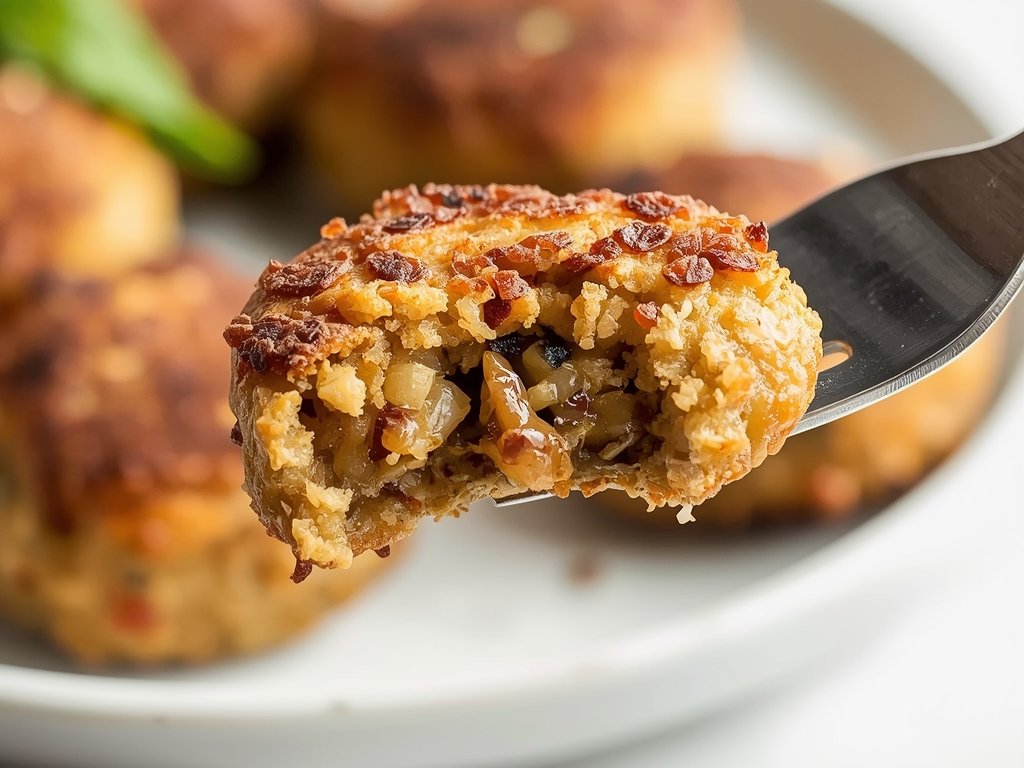
The flour dredge in this recipe is the middle option, and it is the right one for most cooks: it gives a thin, even crust that browns quickly and does not overpower the potato. But it is not the only option, and the coating you choose changes the pancake. A panko coating — the route some versions take, rolling the shaped patties in panko breadcrumbs before frying — gives a thicker, crunchier crust, more like a croquette, and it is the best choice if your mash is soft and needs the extra structure. No coating at all gives the softest result: the patty browns directly in the oil, the crust is thin and delicate, and the pancake is more likely to stick, so it needs a well-seasoned cast-iron pan or a good nonstick one.
The rule is to match the coating to the mash. Firm, cold mash with a good flour dredge is the default, and it works every time. Soft mash, or mash with a lot of butter and cream, wants panko for structure. And a mash that is already cheesy — a mash made with cheddar, or a mash with sour cream folded in — wants no coating at all, because the cheese in the mix browns on its own and the extra flour would only dull it. Whatever coating you use, do not crowd the pan: four patties at a time in a 12-inch skillet is the limit, because crowded patties steam instead of frying, and steamed patties are the opposite of what this recipe is for. For the fried-chicken version of the same crisp logic, see our guide to reheating fried chicken.
Variations: Cheese, Herbs, Bacon, Sweet Potato

Mashed potato pancakes are a template, and the mash will take almost any flavour you give it. The cheese variation swaps the Parmesan for a cup of grated cheddar, gouda or fontina, which melts into the patty and gives a gooey centre — the cheddar version is the most popular, and the one children ask for by name. The herb variation adds chopped parsley, dill or thyme alongside the chives, and a pinch of onion powder or garlic powder for depth. The bacon variation folds in crisp bacon crumbles and an extra spoonful of chives, which turns the pancakes into a full breakfast with a fried egg on top.
The sweet potato variation swaps the mash for leftover mashed sweet potatoes, which fry the same way but brown faster because of the sugar, so watch them and pull them a minute early. The loaded variation tops the finished pancakes like a baked potato: sour cream, chives, bacon and a little more cheese, served as a side instead of a snack. And the simplest variation of all is the plain one, with nothing but the mash, the egg, the flour and salt — which is the version to make first, because it teaches you the texture before the flavours complicate it. Seven ideas, one base recipe, and not one of them tastes like the mash it came from.
How to Store and Reheat Leftover Pancakes (3 Days, 350°F Oven)

Cooked mashed potato pancakes keep for 3 days in an airtight container in the fridge, and the FoodSafety.gov cold food storage chart gives cooked leftovers the same 3-to-4-day window — use the pancakes within 3 days to be safe, because the clock starts from when the mash was cooked, not from when the pancakes were fried. A mash cooked on Thursday, made into pancakes on Saturday, has one or two days left, not three. Store the pancakes in a single layer if you can, with parchment between layers if you must stack them, so the crusts do not stick together and go soggy.
Reheat them on a baking sheet in a preheated 350°F oven for about 10 minutes, until heated throughout and crispy on the outside again. The oven is the only reheating method worth using for these: the microwave makes them soft and the skillet is fiddly for a batch, while the oven restores the crust in one go. Do not freeze the finished pancakes if you can avoid it — the mash inside goes watery on thawing — but the raw mixture freezes well in portioned patties, separated by parchment, for up to a month, fried straight from frozen with an extra minute a side. For the warming rules that keep plain mash creamy, see our guide to keeping mashed potatoes warm.
What to Serve With Them

The best way to serve mashed potato pancakes is the way that suits the moment. For breakfast, serve them with a fried egg and bacon, or with sour cream and chives, as the starchy anchor of the plate. For lunch, serve them with a simple green salad and a dollop of sour cream, or in a bun as a vegetarian burger with lettuce and tomato. For dinner, serve them as the side dish instead of the mash they came from — alongside roast chicken, grilled salmon, or the turkey that is still in the fridge — with gravy poured over them instead of sour cream, which turns them into a proper plate of comfort food.
The pancakes are also the filling for wraps, the topping for a soup, and the base for a breakfast hash: crumble a couple over a skillet of fried onions and peppers, top with an egg, and the leftovers have become a new dish entirely. The one serving rule is temperature: serve them hot, straight from the pan, while the crust is still crisp, because a potato pancake that sits for ten minutes loses the crispness that is the whole point of it. The mash that fed the table on Thursday feeds it again on Friday, in a form nobody recognises — and that is exactly what a leftover recipe should do. For the fastest use of the same turkey, see our guide to leftover turkey fried rice.
The Bottom Line
Leftover mashed potato pancakes are the best second life for the mash: 2 cups of cold mashed potatoes, 1 large egg, half a cup of Parmesan, 2 tablespoons of chives and half a cup of flour, divided, chilled for 10 minutes, shaped into 8 patties, dredged in flour and fried 3 minutes a side until golden-brown and crisp. Serve them warm with sour cream, keep them for 3 days in the fridge, and reheat them in a 350°F oven for 10 minutes to bring the crust back. The variations are the point: cheddar, herbs, bacon, sweet potato, or loaded like a baked potato, all from the same base. The mash that tasted like Thursday as a side tastes like lunch as a pancake, and that is exactly what a leftover recipe should do.

Ghani is the founder of TwiceTasty and a passionate home cook who believes no meal should go to waste. What started as a personal mission to transform leftovers into exciting new dishes has grown into a community of food lovers who share the same philosophy.

Rate This Recipe
Tried this recipe? Share your experience and help others!