Follow Me On Social Media!

What actually works, what ruins texture, and what’s quietly unsafe

Why Your Air Fryer Reheats Some Foods Perfectly—and Others Terribly
You put leftovers in the air fryer expecting crispy edges and revived flavor. Instead, you get dry pasta, uneven heat, or food that tastes strangely flat. Most people blame the air fryer.
The real issue is the container.
Air fryers don’t behave like microwaves or ovens. They rely on high-speed hot air circulation, which means the material holding your food matters just as much as temperature or timing. The wrong container blocks airflow, traps steam, or overheats unevenly—undoing everything the air fryer is good at.
Choose the right container, and leftovers feel freshly cooked. Choose the wrong one, and reheating becomes guesswork.
How Air Fryers Interact With Containers (The Part Most Guides Skip)
Air fryers heat food in three ways at once:

- Direct hot air
- Reflected radiant heat
- Surface contact heat from the container
That means containers can either:
- Help crisp and evenly reheat
- Or trap moisture, block airflow, and overcook edges
The ideal air-fryer container must:
- Tolerate high heat (400°F / 205°C+)
- Allow air to move around food
- Transfer heat evenly without scorching
This is why “microwave-safe” means almost nothing here.
The Gold Standard: Oven-Safe Glass Containers
Glass is the safest, most predictable choice for reheating many leftovers.

Why glass works
- Non-reactive and chemical-free
- Even heat distribution
- Excellent for saucy or layered foods
Best uses
- Pasta and lasagna
- Rice, quinoa, grain bowls
- Leftover casseroles
- Reheating cooked vegetables
Temperature rule
Use only oven-safe glass (borosilicate or labeled Pyrex). Avoid sudden temperature shocks—don’t move straight from fridge to a fully preheated air fryer.
Pro Tip: Let glass containers sit at room temperature for 5–10 minutes before reheating to prevent cracking.
Ceramic & Stoneware: Gentle, Reliable, and Underrated
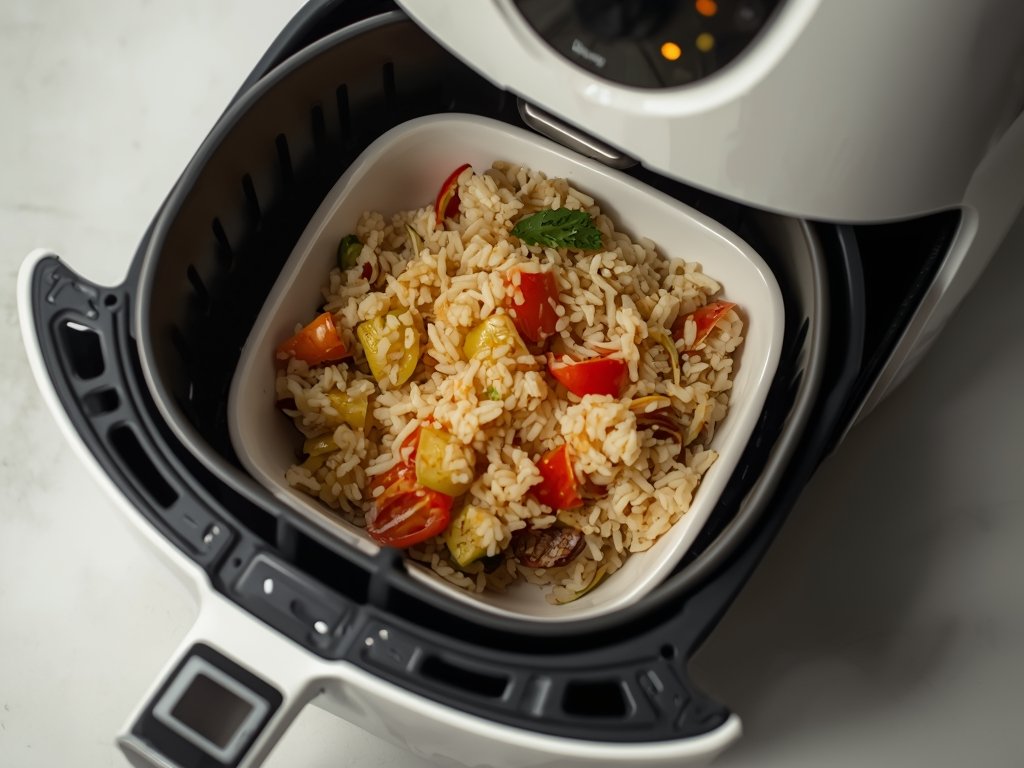
Ceramic containers are excellent for foods that need steady heat, not aggressive crisping.
Why ceramic works
- Retains heat evenly
- Prevents scorching
- Ideal for moisture-sensitive foods
Best uses
- Rice dishes
- Egg-based leftovers
- Stuffed vegetables
- Creamy or cheese-heavy meals
Watch out for
Only use ceramics marked oven-safe. Decorative or unglazed ceramics can crack under air fryer temperatures.
Pro Tip: Place ceramic containers into the air fryer before preheating so they warm gradually.
Stainless Steel & Air Fryer Trays: Maximum Crisp Factor
If crispness is the goal, metal wins.

Why metal excels
- Fast heat transfer
- Encourages browning
- No moisture retention
Best uses
- Roasted vegetables
- Meat leftovers
- Fried foods
- Pizza slices
- Potatoes
Best metal choices
- Stainless steel mini pans
- Air-fryer-specific trays
- Heavy-gauge aluminum (not thin foil)
Pro Tip: Lightly oil the container, not the food. This prevents sticking and improves browning.
Silicone Containers: Flexible, Not Universal
Silicone is convenient—but only when used correctly.

Why silicone can work
- Heat-resistant when properly rated
- Flexible for removal
- Easy cleanup
Best uses
- Egg bites
- Muffin-style foods
- Small portions or sauces
Limitations
Silicone does not promote crisping. It’s a holding vessel, not a browning tool.
Temperature rule: Silicone must be rated to 450°F / 230°C or higher.
Containers You Should Never Use in an Air Fryer
Some mistakes are common—and dangerous.
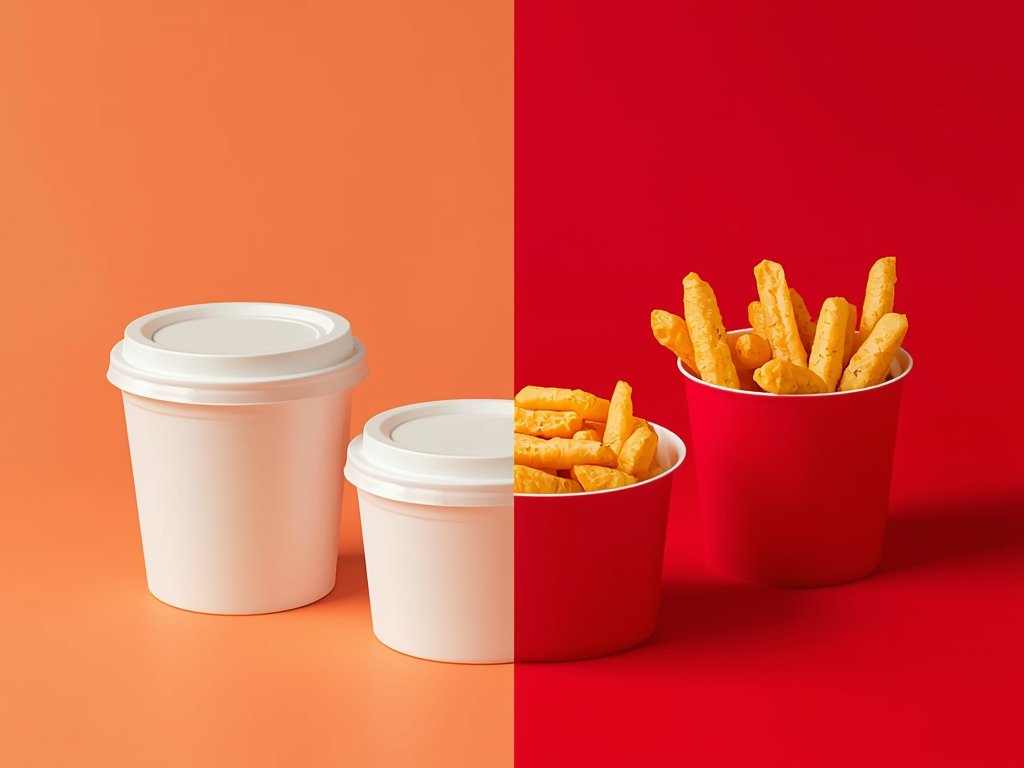
Avoid completely
- ❌ Plastic (even “microwave-safe”)
- ❌ Styrofoam or paper containers
- ❌ Non-oven-safe glass
- ❌ Decorative ceramics
- ❌ Thin, loose aluminum foil
These can melt, burn, crack, or release chemicals under air fryer conditions.
Matching Containers to Food Types (The Smart Way)

| Food | Best Container | Why |
|---|---|---|
| Pasta | Glass or ceramic | Prevents drying |
| Rice | Ceramic | Gentle reheating |
| Pizza | Metal tray | Crisp crust |
| Roasted veggies | Metal | Restores crunch |
| Casseroles | Glass | Even heat |
| Egg dishes | Silicone or ceramic | Shape + moisture control |
Air Fryer Reheating Rules That Actually Matter

1. Never seal containers
Steam must escape or food turns soggy.
2. Elevate when possible
Use racks to let hot air circulate underneath.
3. Add moisture intentionally
A tablespoon of broth revives pasta and rice without steaming them to death.
4. Reheat in stages
Short bursts beat long blasts.
5. Crisp last
For mixed foods, reheat gently first—then uncover and crisp.
Frequently Asked Questions (People Also Ask)

Can I put glass containers in an air fryer?
Yes—if they’re oven-safe and not exposed to sudden temperature shock.
Does container choice affect taste?
Absolutely. Metal restores crispness, glass preserves moisture, ceramic balances heat.
Can I reheat food in its takeout container?
No. Most takeout containers are unsafe at air fryer temperatures.
Why does my food dry out?
Wrong container + blocked airflow + no added moisture.
Is silicone better than glass?
Only for specific foods. Silicone holds shape; glass reheats evenly.
Final Thought
The air fryer isn’t just a reheating tool—it’s a texture recovery machine. But it only works when the container cooperates. Choose the right material, respect airflow, and leftovers stop tasting like compromises.

Lina leads the Fresh Hacks category, covering food storage tips, freshness preservation, and smart ways to extend the life of your groceries. Her guides help readers keep ingredients at peak quality for longer.
← Previous
How Long Is Cooked Chicken Actually Safe in the Fridge?
Next →
How to Store Leftover Soup for Maximum Freshness