Follow Me On Social Media!


There is a specific kind of “Carb Coma” that happens after a big holiday dinner or a Sunday roast. You’re standing in front of the refrigerator, staring at two distinct containers of leftovers. On one side, you have the savory, meaty remnants of a roast beef or lamb—maybe some peas, carrots, and gravy in a separate tub. On the other side, you have the heavy hitters: the scalloped potatoes. You know, the ones baked in cream and cheese, now congealed into a solid, yellow block of richness.
The traditional move is to reheat the potatoes separately and maybe make a sandwich with the meat. Or, if you’re feeling ambitious, you mash the potatoes and make a Shepherd’s Pie. But let’s be honest—reheated scalloped potatoes can be a bit greasy, and mashed potato Shepherd’s pie is often… soft. It’s a soft base with a soft top. It’s comfort food, sure, but it lacks texture. But what if we took that heavy, creamy potato block and used it to create a crust that is part lasagna, part potato chip, and entirely superior to the standard mash? This isn’t just a way to use up leftovers; it’s a structural upgrade that changes the entire eating experience.
Why Scalloped Potatoes Beat Mash Every Time

To understand why this hack works, we have to look at the physics of the two potato dishes. Mashed potatoes are a homogenized emulsion. You’ve broken down the cell walls of the potato and mixed them with fat and liquid. It’s uniform. When you put mashed potatoes on top of a pie and bake it, the moisture evaporates, but the structure remains a soft, dense pillow. It insulates the meat underneath but doesn’t offer much resistance to the tooth.
Scalloped potatoes are different. They are structural. They are whole slices of starch, layered with cream and cheese. They haven’t been pulverized; they still have their fibrous integrity. When you bake them the first time, the slices soften, but they retain their shape. When you re-use them as a crust, those layers act like shingles on a roof.
Because there are air gaps between the potato slices, the hot air from the oven can circulate between the layers. This means that while the inside of the potato slice stays creamy and soft (thanks to the retained starch and cream), the exposed edges of each slice have the potential to crisp up. You get this incredible mosaic of textures: the soft, cheesy interior of the potato, the savory meat and gravy underneath, and then these golden, fried-cheese edges on top that crunch. It’s a textural playground that mashed potatoes just can’t provide.
The Shingle Technique: Building the Crust
The trick to making this work isn’t just dumping the cold potatoes on top of the meat. If you do that, you’ll end up with a solid, heavy slab that slides off the pie in one piece. You need to treat the leftover potatoes like tiles.
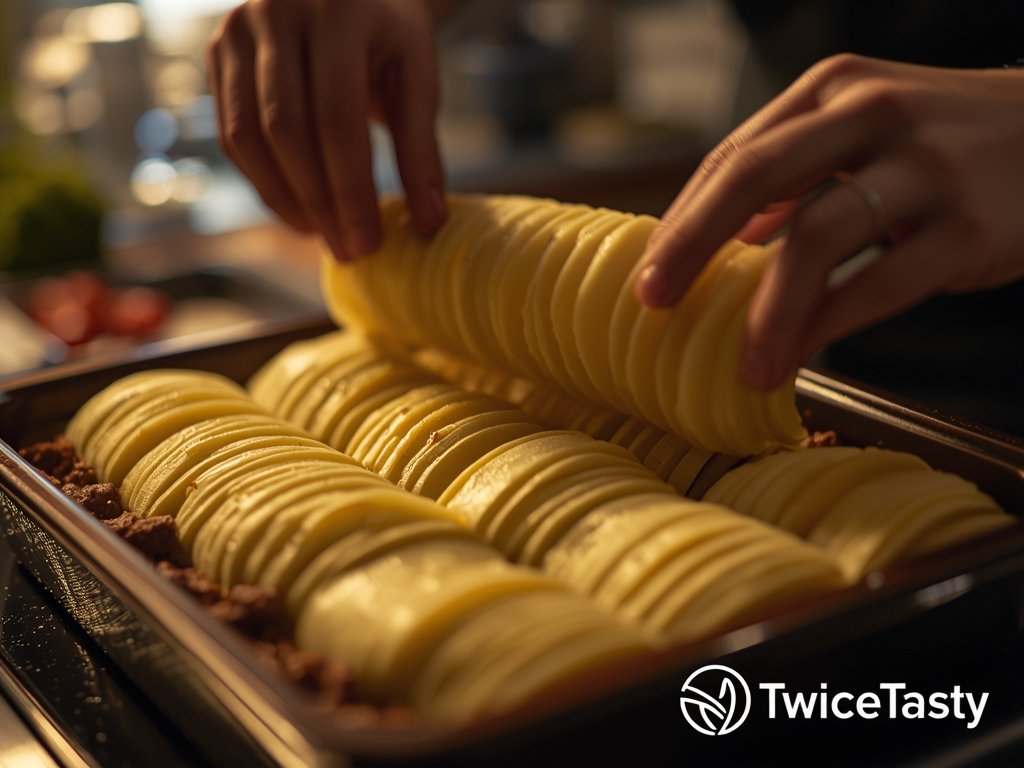
Start with your meat filling in the bottom of your baking dish. Make sure it’s hot and bubbly, perhaps with a little extra gravy or stock to loosen it up, because the potatoes are going to need some moisture from below to rehydrate without drying out.
Now, take your block of cold scalloped potatoes. Use a spatula to gently loosen them. You’re going to break the block apart into individual slices or small clumps of two or three slices stuck together. This is good—you want the chaos.
Lay the slices over the meat in overlapping rows, just like you would lay shingles on a roof. Start at the edge and work your way in. The points of the slices should point upward. This overlapping pattern is crucial. It creates little pockets of air between the potato and the meat, and between the potato slices themselves. As the dish bakes, the hot gravy and steam from the meat rise up through those pockets, keeping the potatoes moist, while the hot air in the oven hits the peaks of the “shingles,” turning the cheese and cream into a golden crust. It’s self-basting and self-crisping at the same time.
The Maillard Melting Pot
Now, slide the dish into a hot oven—around 400°F. You want high heat here. We aren’t gently warming this up; we’re creating a crust. What happens over the next 20 to 30 minutes is a battle between the cream and the heat.
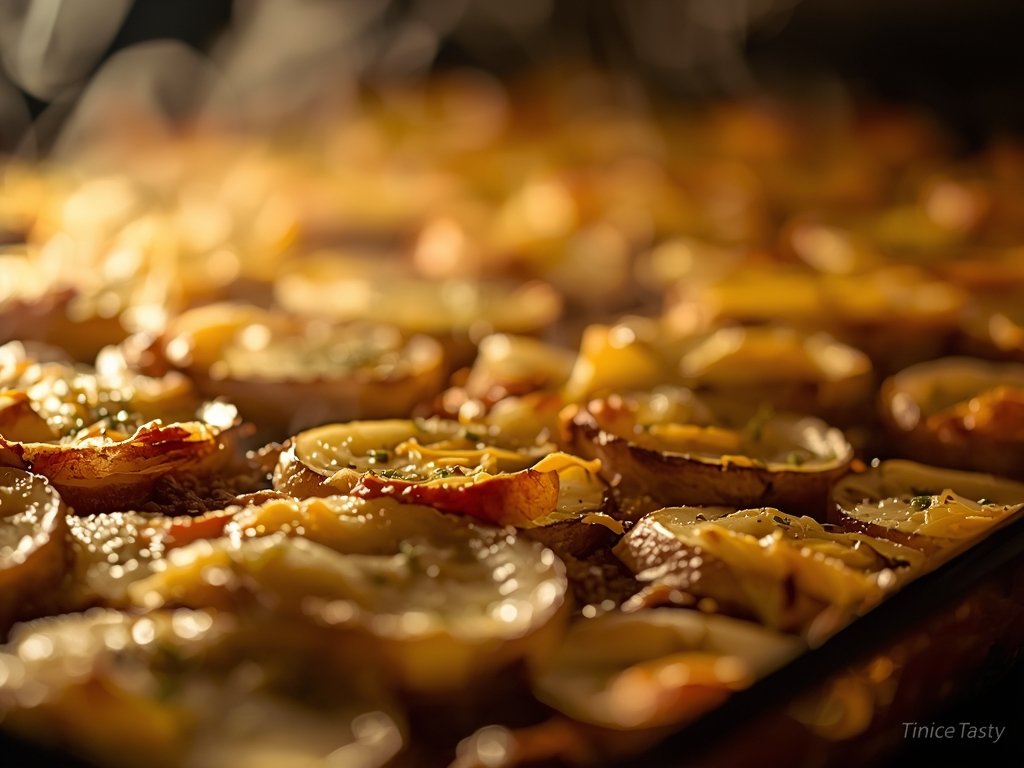
The cream and cheese in and around the potatoes are full of milk solids and proteins. As the heat intensifies, these proteins undergo the Maillard reaction—they brown. The moisture in the cream starts to evaporate, leaving behind concentrated pockets of salty, savory fat. The potato slices themselves, being so thin, heat through quickly.
Because they are sliced thin, they don’t need to cook for an hour like raw potatoes in a standard gratin. They just need to fuse back together. The cheese that was inside the layers melts and flows, acting as a glue that binds the shingle roof into a single, cohesive unit. But the edges? The edges that are exposed to the dry heat of the oven? They dehydrate. They become crispy, almost like a frico (cheese crisp) or a potato chip.
When you pull it out, the surface shouldn’t just be soft; it should be variegated. You want deep, dark brown spots on the cheese, and edges that look crinkled and crisp. It should smell intensely of toasted dairy and savory meat. It smells heavier than a normal Shepherd’s pie, richer, more decadent.
The “Herb Crust” Upgrade

We’ve built a texture that is miles ahead of mashed potatoes, but we can push the flavor even further. Since we are using leftovers, the potatoes might have lost a little bit of their fresh herb punch. The rosemary or thyme that was in there originally has faded. We need to wake up the aroma.
Before you put the dish in the oven, take a mixture of breadcrumbs (panko works great for extra crunch) and some fresh chopped parsley or thyme. Mix this with a little grated parmesan. Now, sprinkle this mixture over the potato shingles.
Don’t bury the potatoes; just dust them. The breadcrumbs will drop down into the crevices between the slices. As the dish bakes, the fat from the cream and cheese splashes up onto the breadcrumbs, toasting them. They form a savory, granular crust that adds a totally different texture—sandpaper-fine crunch against the soft potato slice.
When you serve it, you want to get a spoon that goes all the way to the bottom. You scoop up the juicy, meaty base, and as you pull it up, you drag through those layers of creamy potato and crispy cheese edges. It’s a lot of texture to navigate, but it works. The richness of the scalloped potatoes replaces the need for butter on the meat. The starch sops up the gravy. It’s a complete meal in a single spoonful, transforming two separate leftovers into a dish that feels entirely new and incredibly indulgent.
Frequently Asked Questions
Can I freeze this Shepherd’s Pie before baking?
Yes, but the texture of the potatoes will change slightly. Freezing and thawing can make the potato slices a bit more watery as the cell walls break down. To combat this, assemble the pie, wrap it tightly in plastic and foil, and freeze it unbaked. When you’re ready to eat, thaw it overnight in the fridge, then bake as directed. The extra baking time will help evaporate some of that excess moisture.
Do I need to add extra liquid to the meat base? Usually, yes. Scalloped potatoes are thirsty. If your meat filling is thick like a stew, add a splash of beef broth or even a little water before laying the potatoes on top. As the dish bakes, the potatoes will reabsorb some of that liquid, which keeps them from becoming dry or mealy.
Can I use Au Gratin potatoes (with the cheese crust) for this? Absolutely, and frankly, it’s even better. If your leftovers already have a cheese crust on them, just place them crust-side up. The existing crust will get even crunchier and merge with the new cheese and herbs you add. It’s essentially a double-crust hack.

Amara writes for the Tasty Remakes category, turning everyday leftovers into creative new dishes. Her recipes focus on practical transformations that save time and reduce food waste — proving that yesterday’s dinner can become today’s best meal.

← Previous
How to Turn Yesterday’s Veggie Tray into a Creamy Roasted Soup
Next →
5 Genius Recipes for Leftover Rotisserie Chicken