Follow Me On Social Media!

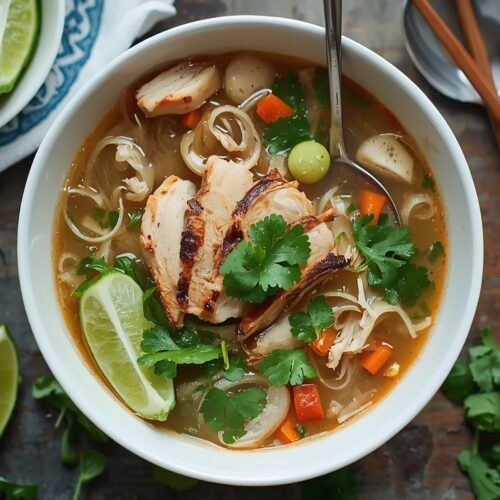
Leftover Rotisserie Chicken Vietnamese Pho-Style Soup

This clever recipe uses the seasoned chicken frame and charred aromatic spices to create a collagen-rich, golden broth that tastes like it simmered all day. It’s a healthy, budget-friendly hack that turns simple leftovers into a luxurious, steaming bowl of comfort food
Ingredients
- The Carcass: 1 leftover rotisserie chicken carcass (bones and skin).
- The Meat: 3-4 cups shredded rotisserie chicken meat (set aside).
- Broth Base: 8-10 cups water (or chicken stock/box broth for extra richness).
- Aromatics: 1 onion (quartered and charred), 3-inch piece of ginger (charred and smashed), 2 garlic cloves (smashed).
- Spices: 3 star anise, 1 cinnamon stick, 1 tsp coriander seeds, 3 cloves.
- Seasoning: 2 tbsp fish sauce (Nuoc Mam), 1 tbsp sugar (rock sugar or brown sugar), 1 tbsp salt.
- The Bowls: 8 oz dried rice noodles (Banh Pho), bean sprouts, lime wedges, Thai basil, cilantro, sliced jalapeño, hoisin sauce, Sriracha.
Instructions
- The Seasoned Foundation Store-bought rotisserie chickens are heavily seasoned with salt, pepper, garlic powder, and herbs. When you boil the carcass to make broth, those seasonings leach into the water, creating an instant flavor base that would usually take hours of simmering raw chicken to achieve.
- Speed and Texture Raw chicken Pho requires precise timing to ensure the meat isn’t rubbery. Since your leftover meat is already cooked, you simply need to warm it up in the hot broth. This means you can focus entirely on perfecting the broth and the texture of your noodles.
- Maximizing Yield A single rotisserie chicken usually provides about 3-4 cups of meat. Once you remove the meat for the soup, the backbone and rib cage are gold mines for flavor. Simmering these parts extracts every bit of goodness, ensuring nothing goes to waste.
- Char the Aromatics Turn your gas burner to high (or set your oven to broil). Using tongs, hold the onion and ginger directly over the flame until the skin is blackened and blistered. This takes about 3-5 minutes. Don’t wash the char off; the flavor is in the char.
- Toast the Spices In a small dry pan over medium heat, add the star anise, cinnamon, cloves, and coriander seeds. Toast for 2 minutes until fragrant. You can put these in a tea infuser or cheesecloth bag for easy removal, or just strain them later.
- The Broth In a large soup pot, add the chicken carcass, charred onion, ginger, garlic, toasted spices, and water (or stock). Bring to a boil, then reduce heat to low and simmer uncovered for 30 minutes. Skim any scum or fat that rises to the top.
- Season Add the fish sauce, sugar, and salt. Taste the broth. It should be savory, slightly sweet, and heavily aromatic. Simmer for another 10 minutes.
- Strain and Assemble Remove the bones and large aromatics. Strain the broth through a fine-mesh sieve for a clear soup. Return the clear broth to the pot and keep it hot.
- Noodles Cook the rice noodles according to the package instructions (usually boiling for 3-5 minutes). Drain and rinse immediately with cold water to stop cooking.
- The Bowl Divide the noodles into serving bowls. Top with the shredded rotisserie chicken. Ladle the piping hot broth over the chicken and noodles (the heat of the broth will warm the chicken through). Serve immediately with the garnish plate.
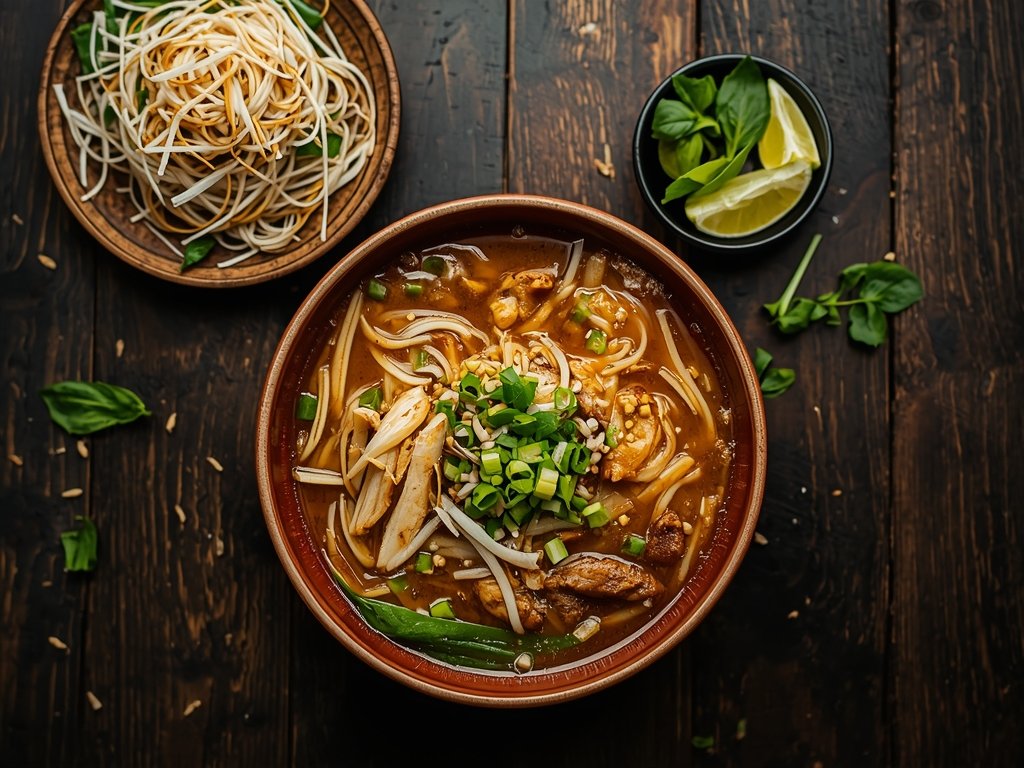
There is nothing quite as convenient as a grocery store rotisserie chicken. It is cheap, ready-to-eat, and versatile. But after you’ve stripped the legs and wings for dinner on Tuesday, you are often left with a carcass and a pile of dry white meat sitting in your refrigerator on Wednesday.
Throwing it away is a waste of money and flavor. Instead, you can unlock the secret to one of the world’s most comforting soups: Vietnamese Pho.
Traditional Pho (pronounced “fuh”) is an labor of love, often requiring hours of simmering beef bones and charred aromatics to achieve that deep, amber-colored broth. However, by using a rotisserie chicken, we can create a Pho-style soup that captures the soul of the dish without the all-day commitment.
The rotisserie chicken acts as a two-in-one ingredient: the bones create a savory, collagen-rich stock, while the leftover meat provides the protein topping. This guide will show you how to turn those leftovers into a restaurant-quality bowl of soup that is aromatic, healthy, and incredibly satisfying.
The “Hack”: Why Rotisserie Chicken Works for Pho
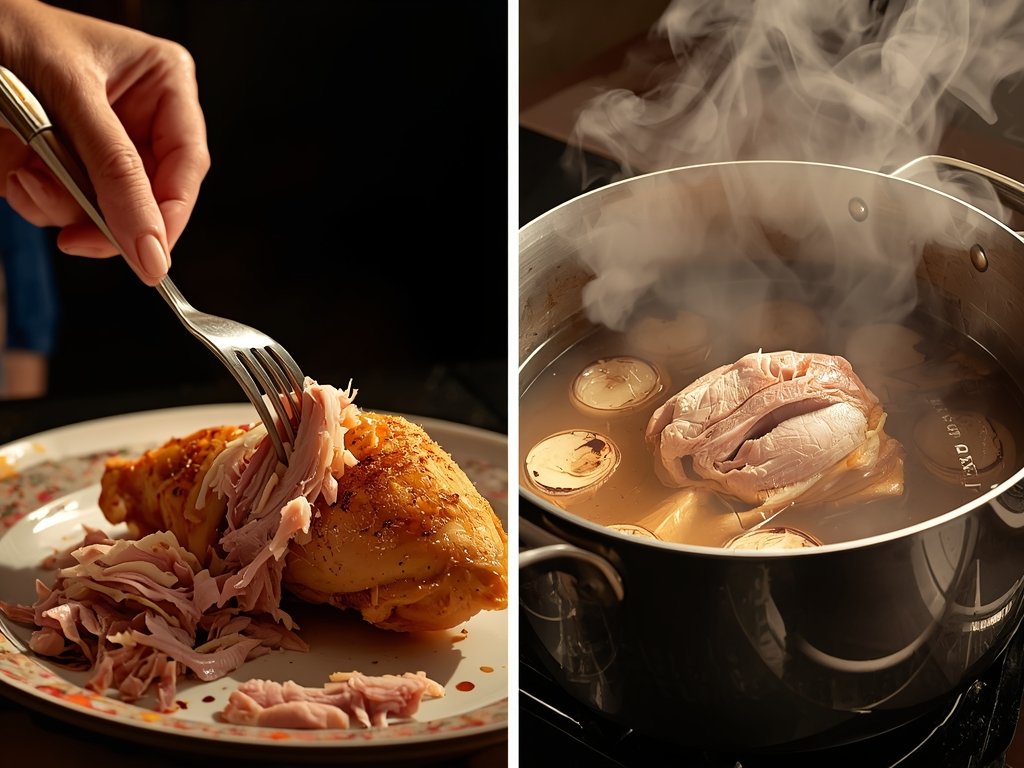
You might wonder if using cooked chicken yields a soup that is as good as the raw beef version. The answer is a resounding yes, especially for a weeknight meal.
1. The Seasoned Foundation Store-bought rotisserie chickens are heavily seasoned with salt, pepper, garlic powder, and herbs. When you boil the carcass to make broth, those seasonings leach into the water, creating an instant flavor base that would usually take hours of simmering raw chicken to achieve.
2. Speed and Texture Raw chicken Pho requires precise timing to ensure the meat isn’t rubbery. Since your leftover meat is already cooked, you simply need to warm it up in the hot broth. This means you can focus entirely on perfecting the broth and the texture of your noodles.
3. Maximizing Yield A single rotisserie chicken usually provides about 3-4 cups of meat. Once you remove the meat for the soup, the backbone and rib cage are gold mines for flavor. Simmering these parts extracts every bit of goodness, ensuring nothing goes to waste.
Gathering Your Aromatics: The Soul of the Soup
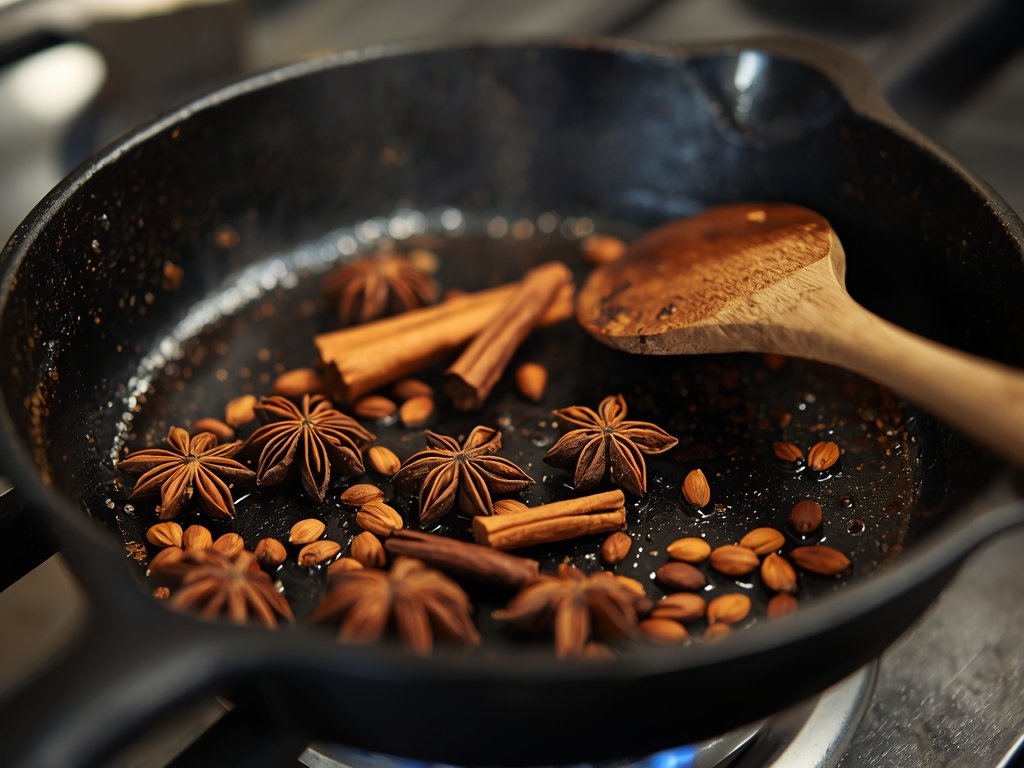
Pho is defined by its spices. You cannot just boil chicken in water and call it Pho. You need that specific aromatic profile that combines sweet, savory, and anise notes. Since we are making a “quick” version, we rely on toasting our spices to wake them up rapidly.
The Spice Blend:
- Star Anise (3 pods): This provides the signature licorice-like scent.
- Whole Cloves (3): Adds a deep, warming intensity.
- Cinnamon Stick (1 quill): Ceylon cinnamon is best for a sweeter, more delicate flavor.
- Coriander Seeds (1 tsp): Toasted and crushed, these add a lemony, floral note.
- Cardamom Pods (2 optional): For a smoky, camphor kick.
The Charred Aromatics:
- Yellow Onion: Quartered.
- Fresh Ginger: A large thumb-sized piece, smashed.
- Technique: Charring the onion and ginger over an open flame (gas stove) or under a broiler is non-negotiable. This blackens the skin and creates the sweet, caramelized undertones found in street-cart Pho.
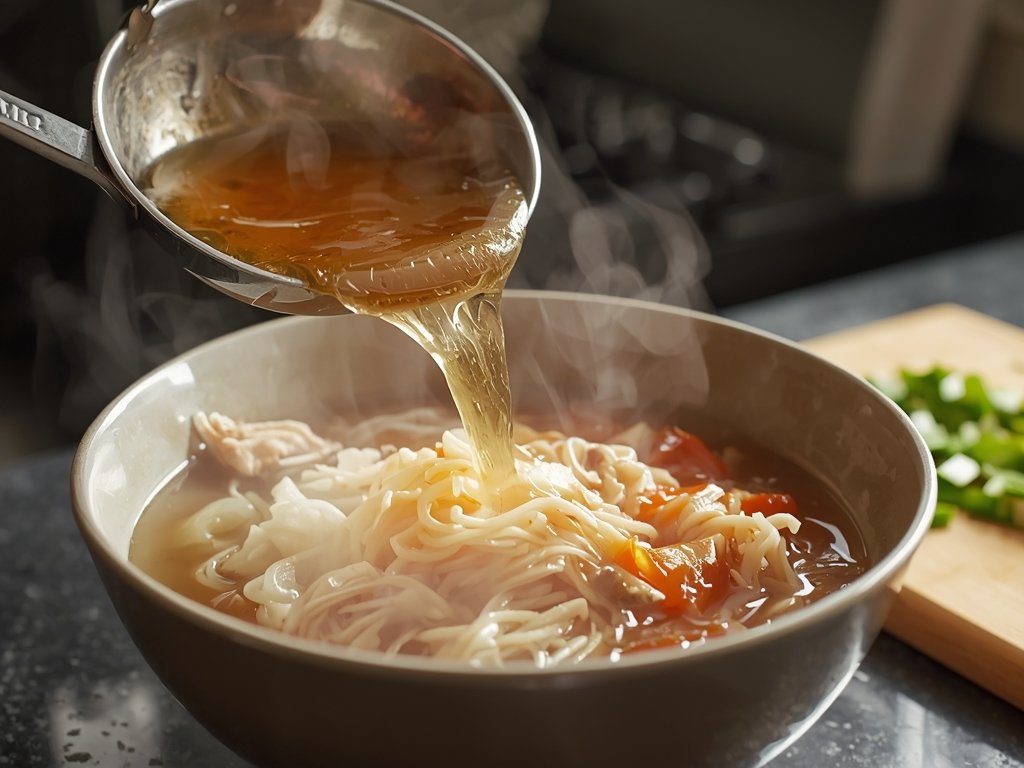
Building the Perfect Bowl: Texture and Garnishes
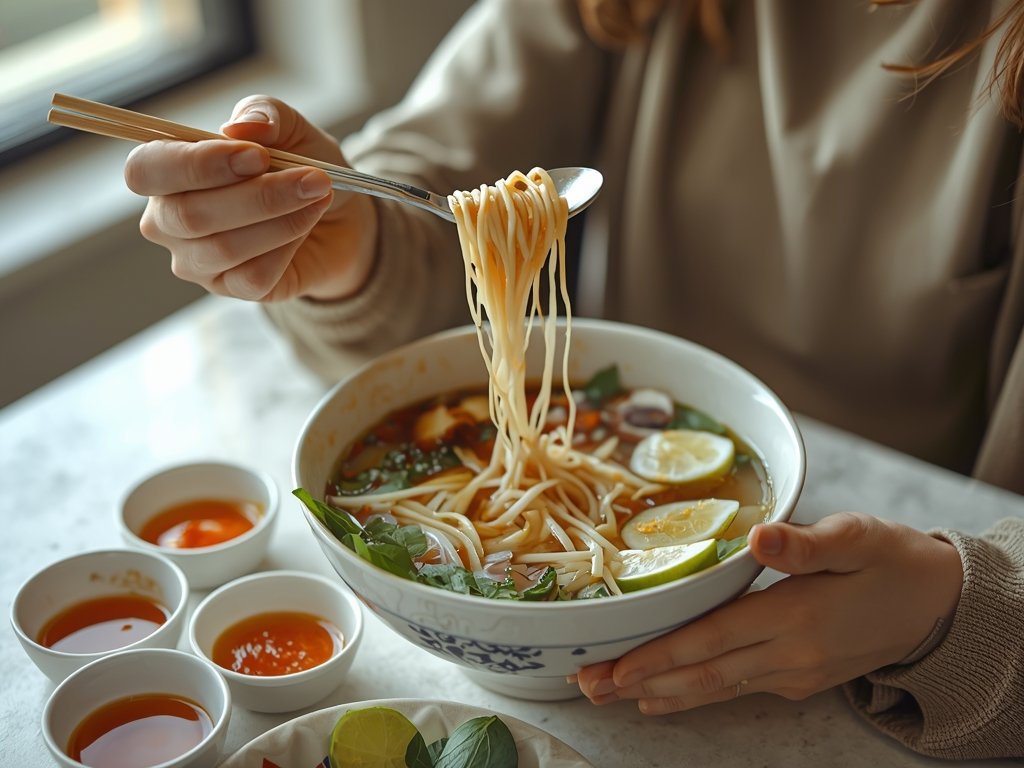
In Vietnamese cuisine, the garnish plate isn’t just decoration; it is an essential part of the eating experience. It adds crunch, acidity, and freshness to cut through the rich, spiced broth.
1. The Herbs
- Thai Basil: Unlike sweet Italian basil, Thai Basil has a distinct anise (licorice) flavor that harmonizes with the star anise in the broth. Do not cook it; add it whole at the end.
- Cilantro: Sprinkle this on top for a burst of citrusy green flavor.
- Sawtooth Herb (optional): If you can find it at an Asian market, this adds a unique, cilantro-cumin flavor that is very traditional.
2. The Crunch
- Bean Sprouts: Add these raw. They stay crunchy and cool down the soup slightly as you eat.
- Fresh Jalapeño: For those who like heat, thin slices add a sharp bite.
3. The Condiments
- Hoisin: A sweet, fermented bean paste. Swirl a small amount into the broth.
- Sriracha or Chili Oil: Add drop by drop until the desired spice level is reached.
- Lime Wedges: A heavy squeeze of lime right before eating is crucial to brighten the savory soup.
Tips for the Clearest Broth
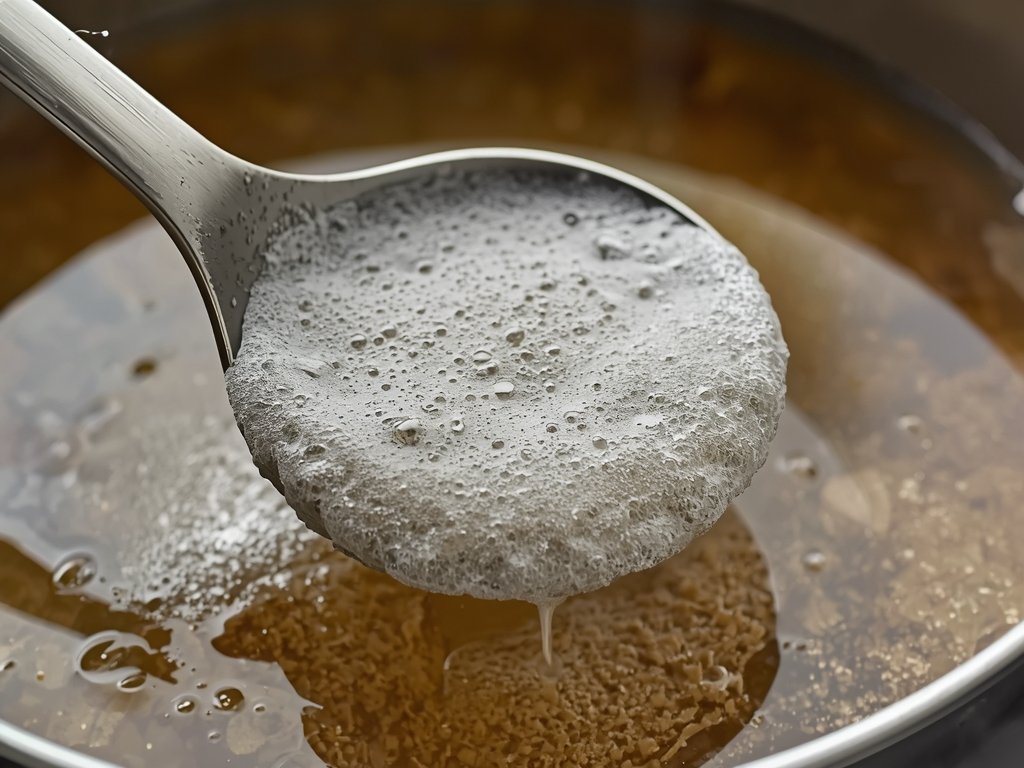
A hallmark of good Pho is a broth that is clear, not cloudy. While professional chefs have complicated techniques involving parboiling bones, you can achieve a relatively clear broth at home with these simple hacks:
- Don’t Boil Vigorously: Once the broth comes to a boil, immediately turn it down to a gentle simmer. A violent rolling boil agitates the fat and impurities, making the soup cloudy.
- Strain Well: Don’t skip the fine-mesh sieve. If you don’t have one, line a colander with cheesecloth or a coffee filter.
- Skim the Fat: Rotisserie chickens can be fatty. As the broth simmers, fat will render out and float to the top. Use a ladle to skim this off. It makes the soup lighter and cleaner tasting.
Variations: Chicken Pho for Every Diet
One of the great things about this recipe is its adaptability.
Low Carb / Keto Pho
Simply omit the rice noodles. Double up on the bean sprouts and maybe add some shirataki noodles (konjac noodles) or zucchini noodles if you miss the texture. The broth itself is naturally low-carb and high in protein.
Chicken “Pho Ga” with Vegetables
Traditional Pho Ga (Chicken Pho) is usually lighter than beef Pho. You can add vegetables directly into the broth during the last 5 minutes of simmering. Sliced carrots, bok choy, and mushrooms work wonderfully. They absorb the spiced broth and add vitamins.
The “Freezer Starter” Meal Prep
If you don’t want to make soup tonight, don’t toss the carcass. Throw the carcass, onion, ginger, and spices into a large Ziploc bag and freeze it. When you are ready to make soup, dump the frozen contents directly into a pot with water. It tastes just as good!
From Leftovers to Luxury
Leftover rotisserie chicken often feels like a burden—a repeat of the same dry meal. But by applying the techniques of Vietnamese cooking, specifically the art of Pho, you elevate that leftover bird into something luxurious.
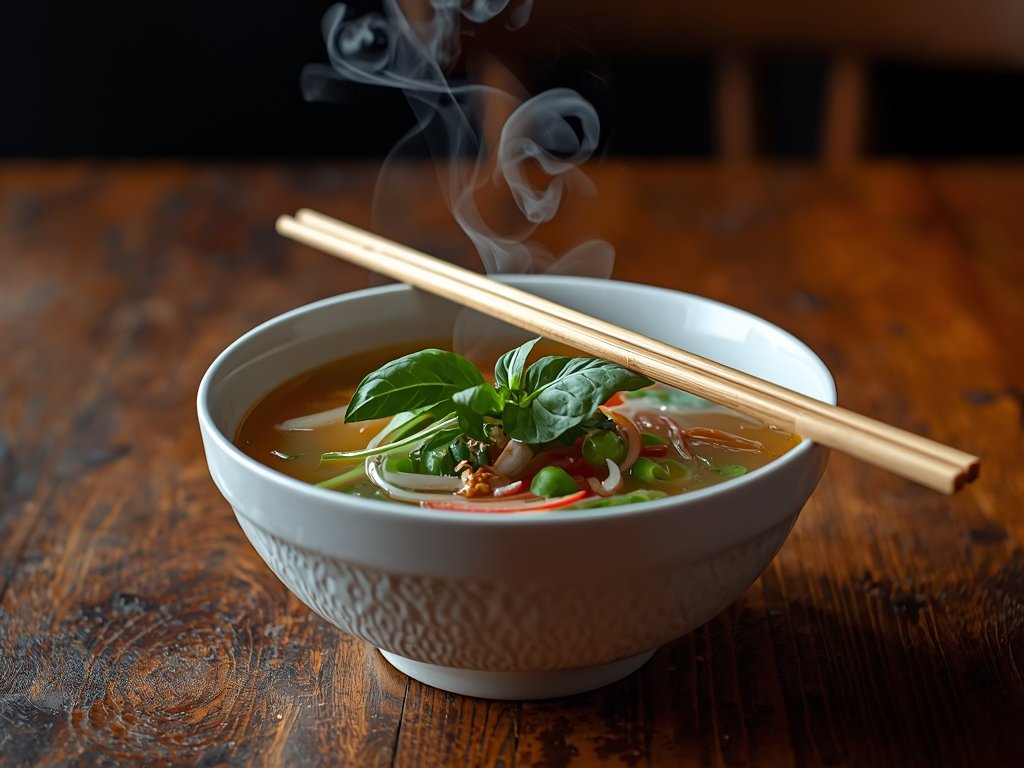
The aromatics of cinnamon and star anise will fill your kitchen with a scent that is far more complex than the effort required. This Rotisserie Chicken Pho-Style Soup proves that with the right spices and a little bit of time, you can transform basic grocery store ingredients into a culinary experience that warms the soul.
So, before you toss that chicken carcass, set a pot of water on the stove. Your new favorite weeknight comfort food is just one simmer away.
Frequently Asked Questions
1. Can I use the skin from the rotisserie chicken?
Yes, but be careful. The skin contains a lot of fat and salt. Simmering the skin adds flavor, but it can also make the broth greasy and overly salty. We recommend using the carcass (bones) and meat, but discarding or limiting the amount of thick skin you put in the pot to keep the broth lighter.
2. My broth isn’t dark enough like the restaurant’s. Why? Traditional restaurant Pho often uses rock sugar and sometimes a bit of burnt ginger or onion to achieve that deep amber color. Since this is a quick version, it will be lighter. You can add a teaspoon of “better than bouillon” or a dash of soy sauce to deepen the color without compromising the fresh flavor.
3. Is fish sauce essential? Can I substitute it? Fish sauce provides the savory “umami” base that salt alone cannot provide. If you absolutely cannot use fish sauce due to allergies or preference, you can substitute with extra soy sauce and a pinch of salt, though the flavor profile will shift from Southeast Asian to more of a generic Asian noodle soup.
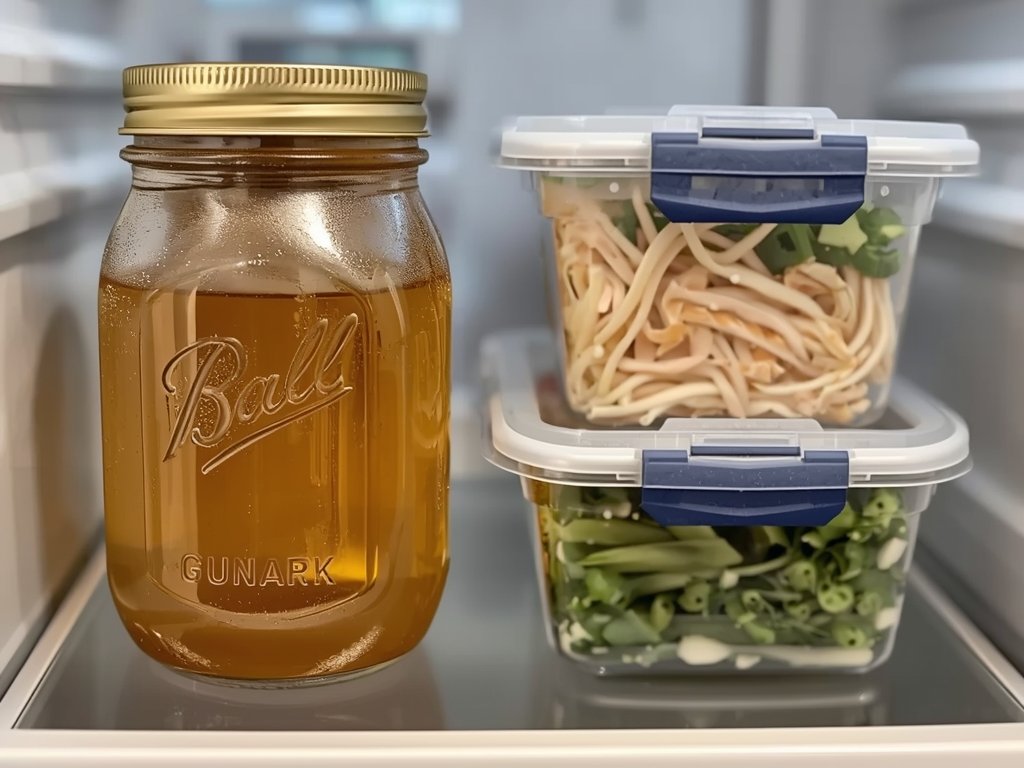
4. How long does the leftover soup keep? The broth and meat will stay good in the refrigerator for 3-4 days. However, do not store the noodles in the broth. The noodles will soak up all the liquid and become mushy. Store the broth, meat, and noodles separately. Reheat the broth, cook fresh noodles (or warm up stored noodles), and then assemble.
5. Can I make this in an Instant Pot? Absolutely. Place the carcass, water, charred aromatics, and spices in the Instant Pot. Cook on High Pressure for 20-30 minutes. Quick release, strain, and season. It creates a very flavorful, intense broth in a fraction of the time.

Amara writes for the Tasty Remakes category, turning everyday leftovers into creative new dishes. Her recipes focus on practical transformations that save time and reduce food waste — proving that yesterday’s dinner can become today’s best meal.

← Previous
Bagel Croutons: Crunchy Caesar Salad Topping
Next →
Turkey Cranberry Spring Rolls: Thanksgiving Leftovers Reinvented
Rate This Recipe
Tried this recipe? Share your experience and help others!