Follow Me On Social Media!

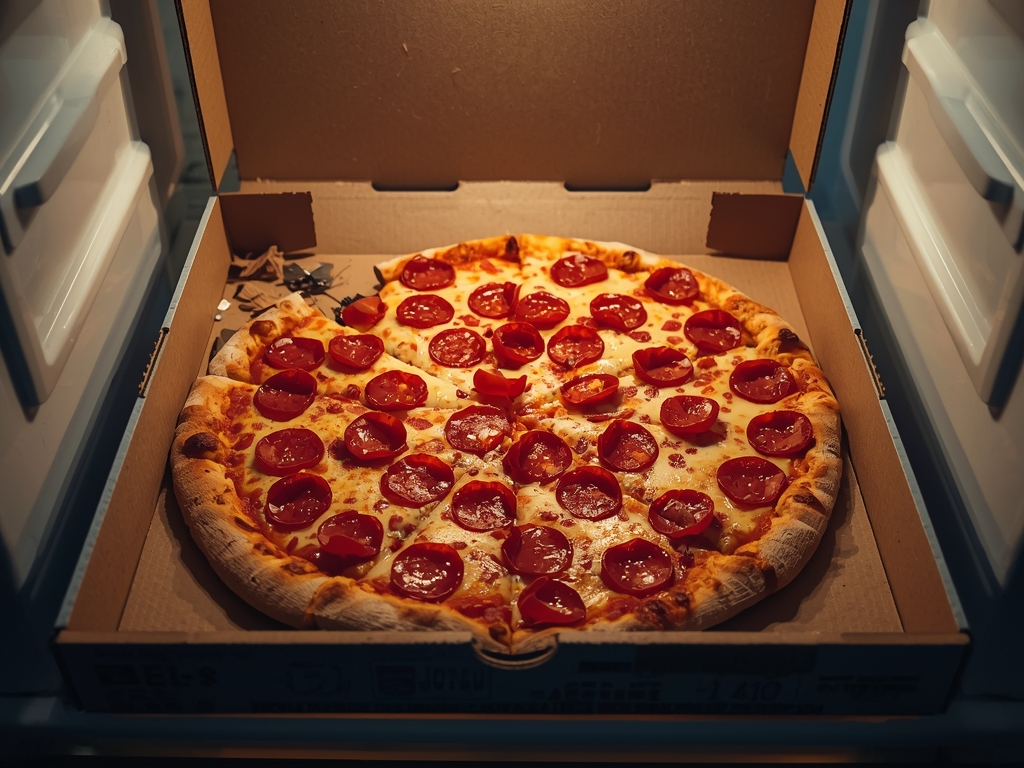
There is a specific kind of “morning-after” visual that we all know too well. You open the fridge, and there it is: the pizza box. It’s tipped sideways, or the lid is slightly ajar. Inside, the scene is a crime scene of culinary potential. There’s one sad slice with the cheese scraped off, and in the corner of the box, there’s a pile of “debris.” It’s the fallen soldiers—the pepperoni that slid off, the pile of roasted red peppers, the mushrooms that decided to take a swim in the puddle of tomato sauce and congealed oil.
Most people look at this pile of salty, greasy bits and think, “garbage.” Or worse, they try to reheat it on a paper towel, which only results in chewy meat and watery, rubbery vegetables. It’s a textural nightmare. But look closer. That pile is actually a flavor bomb waiting to happen. It’s pre-seasoned, pre-cooked, and pre-caramelized. We just need to strip away the “pizza memory”—the grease, the sogginess—and give those ingredients a new life. We are going to take those chaotic leftovers and execute a technique so precise, it turns a greasy spoon breakfast into a bistro-calorie masterpiece.
Why Pizza Toppings Break the Omelet
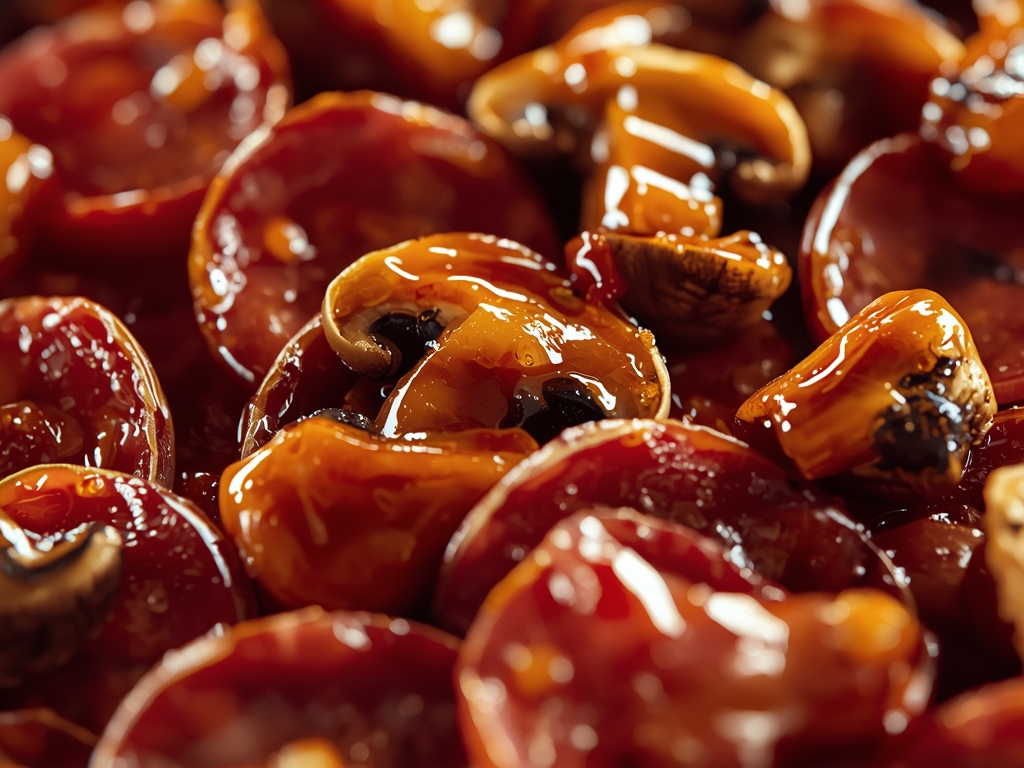
To understand why this requires a “masterclass” approach, we have to look at the chemistry of a pizza topping versus an omelet filling. Pizza toppings are designed to survive high, dry heat (the oven) and be drenched in fat and acid. Omelet filling requires moisture balance. If you just dump those cold pizza toppings into your beaten eggs, you are asking for trouble.
First, consider the water content. Mushrooms and peppers are sponges. Even after cooking, they release water as they cool, especially when sitting in that oily puddle. If you mix wet mushrooms into raw eggs, the excess water prevents the eggs from setting properly. You end up with a weepy, curdled mess that slides around the pan like a wet blanket.
Then there’s the fat. Pepperoni and sausage are packed with rendered fat and salt. In the fridge, that fat solidifies into white wax. If you cook the eggs and the pepperoni together from a cold start, the fat melts out and separates. You get orange pools of oil floating on top of your delicate egg curds. It looks greasy and feels heavy on the palate. The eggs become a vehicle for grease rather than the star of the show. We need to strip that water away and control that fat. We need to treat the toppings like ingredients in their own right, not just “toppings.”
The Render-Then-Rest Technique
Here is the secret to the Masterclass: we are going to pre-cook the toppings before they ever see an egg. This is non-negotiable. Do not mix them into the raw egg mixture. Get your skillet hot—cast iron is perfect here. No butter, no oil. We have plenty of fat already.
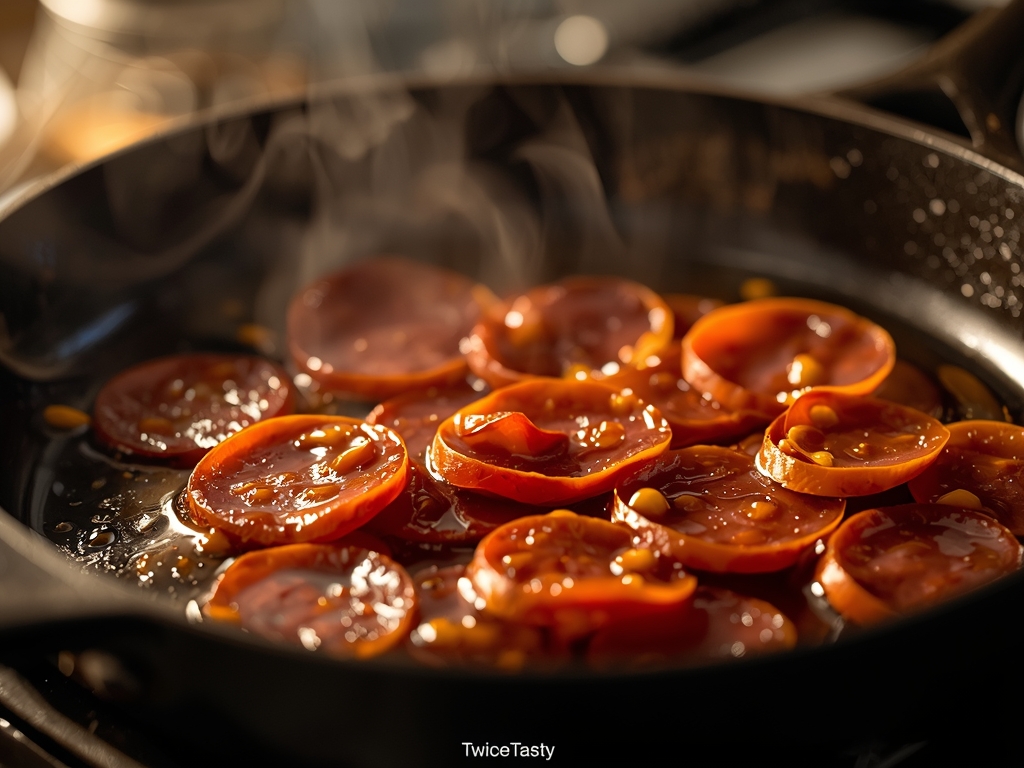
Scrape those pepperoni slices and sausage crumbles into the pan first. Listen to the sound. It shouldn’t just sizzle; it should hiss and pop. We are rendering the fat. We want the edges of the pepperoni to cup and curl, turning from a soft, cold slice into a crispy, salty chip. As the fat melts out of the meat, tilt the pan. You can actually spoon some of that excess grease out (save it for roasted potatoes later). You just want enough in the pan to coat the bottom, not swim in it.
Once the meat is crispy—about 2 or 3 minutes—toss in the veggies. The peppers and mushrooms. Drop them right into the hot pepperoni fat. Sauté them.
You aren’t trying to cook them through; they are already cooked. trying to evaporate the water. You want the mushrooms to shrink and brown slightly. You want the peppers to soften and sweeten.
This step concentrates the flavor. The water evaporates, leaving behind the caramelized sugars and savory salts. Now, here is the crucial move: Take the toppings out of the pan. Set them aside on a plate. Wipe the pan out quickly with a paper towel. You now have a clean, lightly seasoned canvas for your eggs. If you leave the burnt bits and excess grease, the eggs will brown too fast and taste bitter. We want a golden, tender omelet, not a burnt one.
The Low-and-Slow French Fold
Now that the stage is set, we cook the eggs. For a “Masterclass” texture, beat your eggs with a splash of water or cream—just a little. This helps create steam and lift. Pour them into the clean skillet over medium-low heat. We aren’t looking for a diner-style brown omelet; we want the “Bourgeois” yellow.
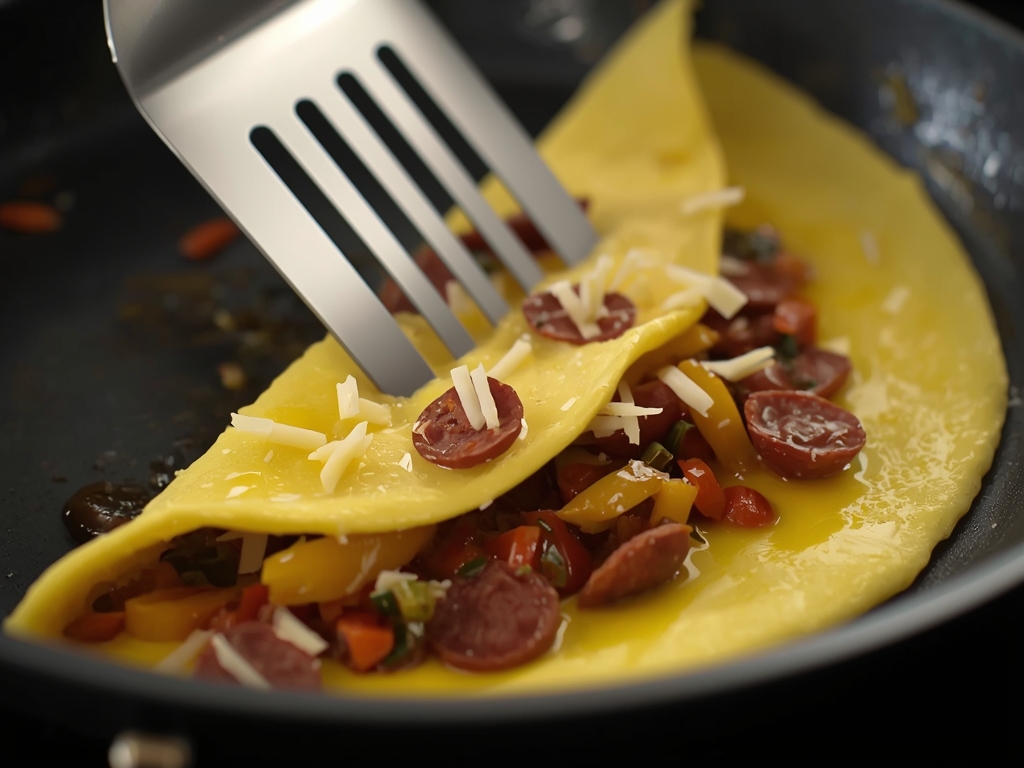
Use a rubber spatula to gently push the curds from the edges to the center. Tilt the pan to let the raw egg fill the gap. It should be creamy, not dry. Just before the eggs are fully set—while the top is still slightly runny and glossy—spill your crispy pepperoni and savory veggies back onto one half of the omelet.
Here is the texture upgrade: Don’t just fold it and slide it onto the plate. Add the cheese now. If you have leftover mozzarella, tear it up and scatter it over the toppings. If you have parmesan, grate it fresh. The residual heat of the eggs will melt the cheese instantly. The cheese acts as the glue, binding the crispy meat to the soft eggs.
Fold the empty half over the filling. Slide it out onto a warmed plate. What you have now is a study in contrasts. The outside of the omelet is soft and tender. The interior is molten and cheesy. But the filling? The filling is al dente. You get the crunch of the re-crisped pepperoni, the chew of the sautéed peppers, and the savory depth of the mushrooms, all distinct and separate, not lost in a mush of egg.
The Pizza Parlor Finish: Marinara and Basil
We have the texture of a French omelet with the soul of a New York slice. But we need to bridge the gap visually and aromatically so it doesn’t just taste like “eggs with stuff in them.”
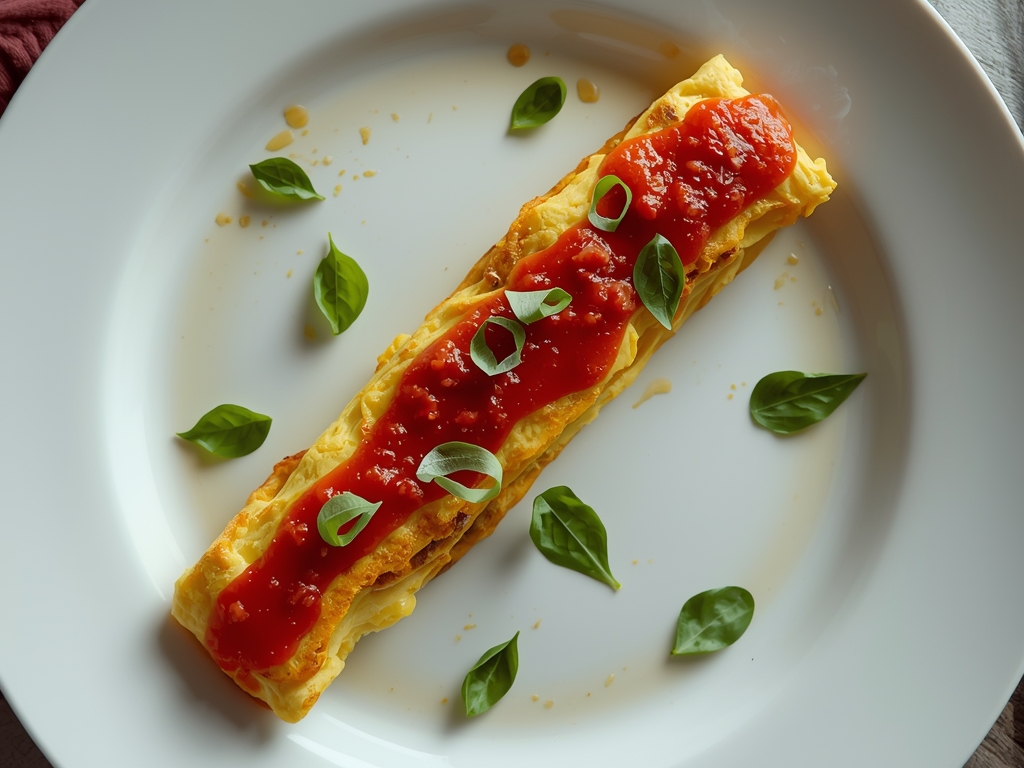
This is the final touch that earns the “Masterclass” title. Warm up a tiny amount of your leftover pizza sauce—or just some good marinara—in a small saucepan or the microwave. Do not pour it over the omelet. That will make the bottom soggy instantly.
Instead, spoon a wide, swooping stroke of the red sauce across the plate in front of the omelet, like a painter’s canvas. Slide the omelet so it sits half in the sauce. You dip the omelet as you eat it. It keeps the eggs pristine and bright, while offering that acidic, tomatoey punch that defines pizza flavor.
And the herbs? Don’t use dried oregano. Grab fresh basil. Stack the leaves, roll them tight like a cigar, and slice them into thin ribbons (a chiffonade). Scatter the green ribbons over the top of the omelet right before serving. The heat from the egg wilts the basil just enough to release that sweet, anise-like aroma.
You’ve taken the mess at the bottom of a greasy box and turned it into a balanced, beautiful breakfast. The salty crunch of the pepperoni cuts through the creamy eggs, the warm marinara adds acid, and the fresh basil brings it to life. It’s not a leftover breakfast; it’s a culinary upgrade.
Frequently Asked Questions
Can I use the actual pizza crust in this?
You can, but it changes the dish entirely. If you cube up the leftover crust and sauté it in the pan with the pepperoni before adding the eggs, you get a “Breakfast Pizza Scramble” texture. It adds a nice crunchy carb element, but it won’t be a soft, French-style omelet anymore. It turns it into a hearty scramble.
What if my toppings are really spicy (like jalapeños or hot sauce)? Spicy oils from jalapeños can actually get more potent when reheated in fat. If your pizza was spicy, dial back the added salt in the eggs. The creaminess of the eggs is actually a great neutralizer for heat, so it will be delicious, just be prepared for the kick.
Can I make this with egg whites? You can, but you lose the fat that helps carry the flavor of the pepperoni and sausage. If you use egg whites, be sure to cook your toppings very crispy so the texture contrast is still there, otherwise the dish can feel a bit rubbery and bland. A drop of olive oil in the whites might help the mouthfeel.

Amara writes for the Tasty Remakes category, turning everyday leftovers into creative new dishes. Her recipes focus on practical transformations that save time and reduce food waste — proving that yesterday’s dinner can become today’s best meal.