
There is a specific kind of culinary guilt that happens the morning after a great fish fry. You open the fridge, and there it is: the takeout box or the paper towel-wrapped plate holding the remnants of last night’s glory. You remember that first bite—flaky, steaming fish encased in a shattering, golden crust that tasted of the sea and hot oil. But now? The crust looks wrinkled and sad. It’s gone translucent in spots where it pressed against the box. It smells faintly of cold grease and, let’s be honest, a little like the low tide.
Most people, driven by a craving for that comfort food, will throw it in the microwave. This is the cardinal sin of seafood. You hit the button, you wait two minutes, and you pull out a rubbery tragedy. The batter turns into a tough, leathery skin that sticks to the fish, and the smell of hot, old fish fills the kitchen, clinging to the curtains. It’s enough to make you toss the whole thing in the trash. But before you do, know that the air fryer is essentially a time machine for fried seafood. It can reverse the chemical damage of the fridge, driving off the moisture that ruined the crunch and warming the fish without turning it into boot leather.
The Chemistry of the Soggy Crust
To fix the problem, we have to understand why fried fish fails so spectacularly when it cools down. It’s a battle of moisture. Fish is delicate meat with a high water content. The batter or breading is a dehydrated shell made of starch and flour. When these two are fresh, the hot oil instantly fries the batter, creating a crispy barrier that keeps the moisture inside the fish where it belongs.
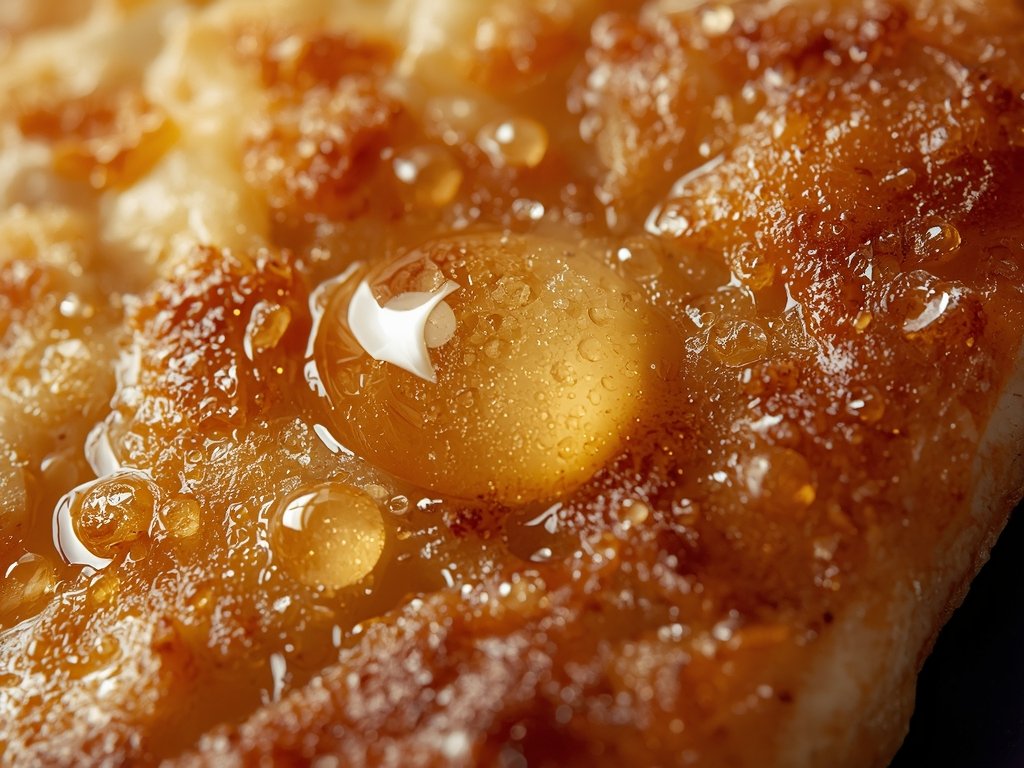
But the fridge is a humid environment. As the fish cools, that hot, steaming moisture inside the flesh starts to migrate outward, seeking to escape. It hits the crust, which acts like a thirsty sponge. The starch granules in the flour absorb that moisture, swelling up and losing their rigidity. The crust softens. At the same time, the oils in the batter congeal and thicken, turning the texture gummy rather than crisp.
The microwave is the enemy because it excites the water molecules inside the fish. It turns that internal moisture into steam, which blasts outward into the already-softened crust. You end up steaming the fish inside its own soggy wrapper. To save it, we need to remove that excess moisture from the crust and re-solidify the oils. We need dry, moving air. We need the air fryer to act as a dehydrator, sucking the water out of the batter and re-crisping the structure without overcooking the fragile protein inside.
The Convection Comeback
The air fryer is the absolute best tool for this job, but you have to be gentle. Fish is not french fries. It doesn’t have the structural integrity of a potato. It dries out in minutes. If you blast it at 400 degrees for ten minutes, you will have a piece of charcoal on the outside and a dry, flaky stick inside.
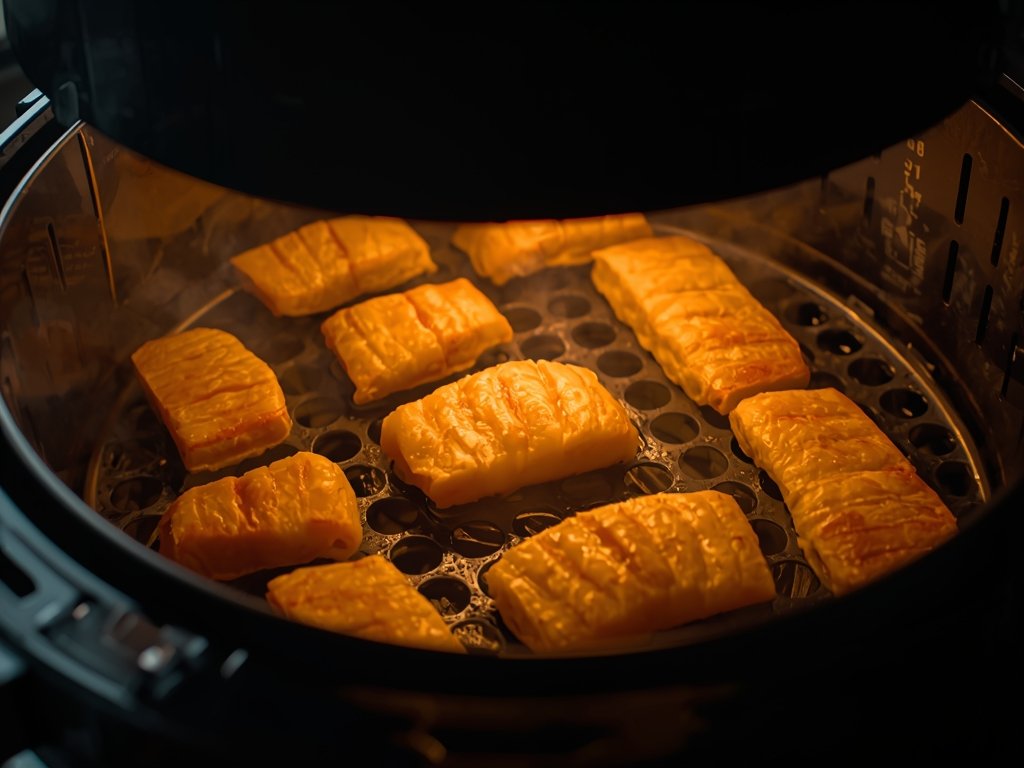
Start by preheating your air fryer. You want the basket hot the moment the fish hits it. If the air is cold, the fish sits in a warming drawer, sweating and steaming before the crisping even begins. Set the temperature to 350°F (175°C). This is the sweet spot. It’s hot enough to re-crisp the batter and melt the congealed fats, but gentle enough to warm the fish without tightening the muscle fibers.
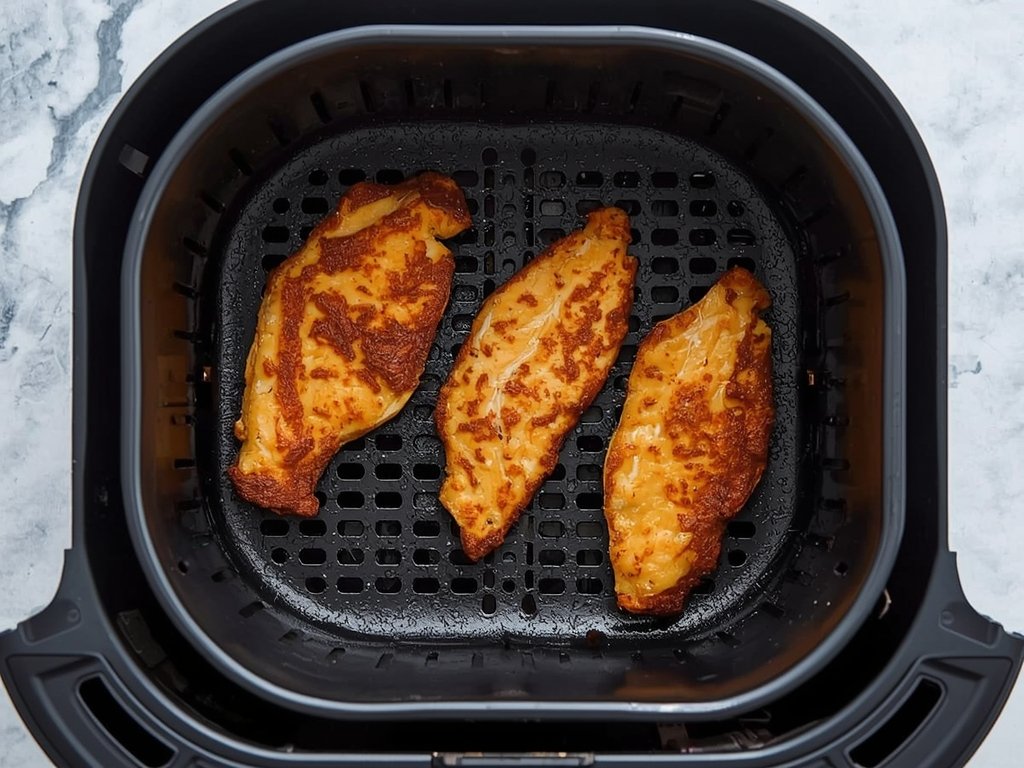
Lay the fish in the basket in a single layer. Do not stack them. This is non-negotiable. If the pieces are touching, they trap moisture between them, and you’ll end up with soggy edges where they met. You want the hot air to circulate 360 degrees around every crumb. You don’t need to add more oil—the fish is already fried—but if the batter looks very dry, a tiny spritz of oil can help it conduct heat and brown up nicely.
Set the timer for about 5 minutes. This is a short cook, but remember, the fish is already cooked. We are just restoring texture. At the 3-minute mark, pull the basket out. Give it a gentle shake. You don’t want to be too rough or you’ll knock the batter off the fish. Just tumble them slightly. Look at the color. You want the pale, greasy look to turn back into a deep, golden blonde. If it’s not quite there, give it another 2 minutes. But watch it closely. Sugar burns fast in an air fryer, and there’s often sugar in fish batters.
The “Hot Hold” Finish
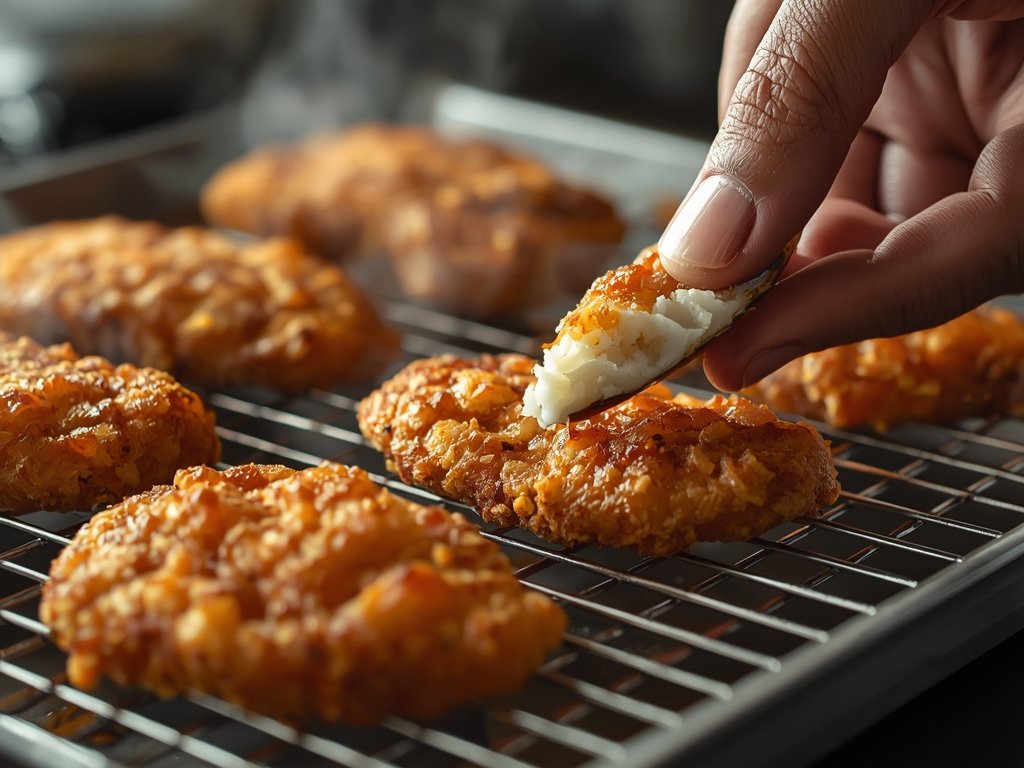
Here is where most people mess it up. They pull the fish out and immediately dig in. Or worse, they put it on a paper towel. Do not put it on a paper towel! The paper towel will suck the hot oil right out of that freshly crisped crust, leaving you with dry, tasteless batter.
Transfer the fish to a wire cooling rack immediately. Let it sit for just two or three minutes. This is the “hot hold.” The internal temperature of the fish will actually rise a few degrees during this time, finishing the warming process evenly, while the outer shell maintains its structural integrity because it’s not sitting in a pool of residual grease.
You want to hear it. When you move the fish on the rack, it should make a faint, crackling sound. That is the sound of success. That is the water leaving the crust and the structure hardening back up. The fish inside should be opaque and flaky, steaming gently. It shouldn’t be dry. Because we used a lower temperature for a shorter time, we haven’t driven the natural juices out of the meat. We’ve just fixed the shell.
The Acid Reset: Hiding the “Fridge Taste”
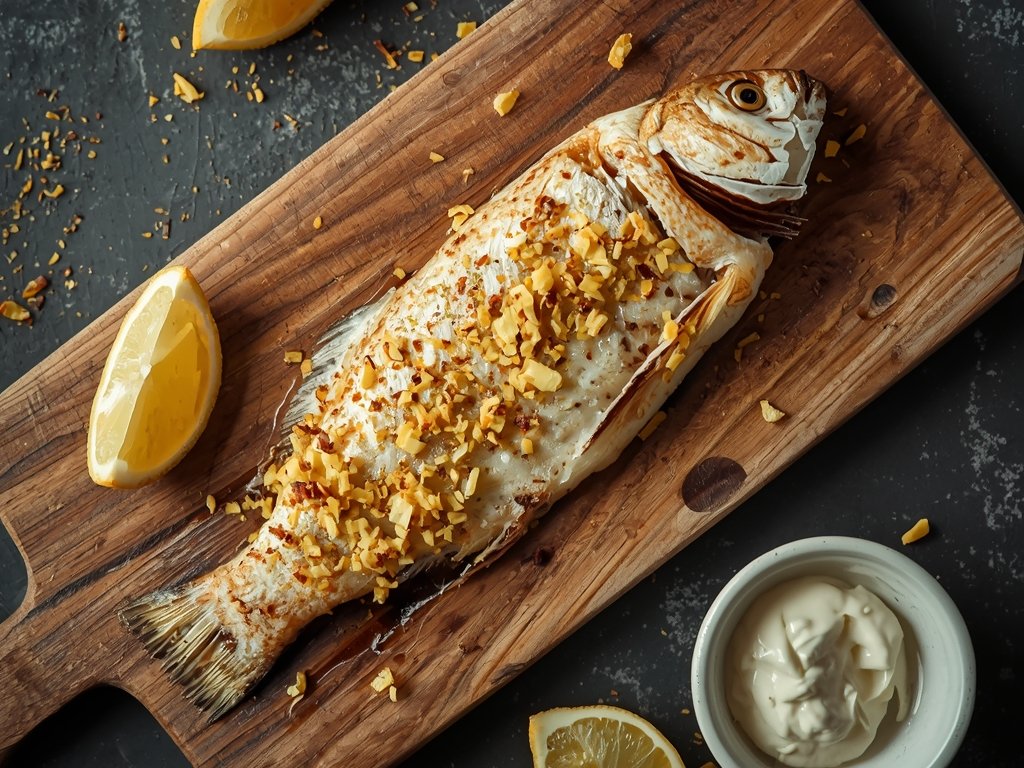
Even with perfect texture, leftover fried fish can sometimes taste a little “off.” The oils oxidize in the fridge, taking on a slightly stale, heavy flavor. The fish itself can lose that bright, briny sweetness. This is where we use a sensory trick to fool the palate into thinking this fish just came out of the fryer.
While the fish is in the air fryer, grab a lemon. Zest it. Don’t just squeeze it; use a microplane to take off the bright yellow outer skin, avoiding the bitter white pith. When the fish comes out of the air fryer and is resting on that rack, sprinkle the fresh zest over the hot crust.
The heat of the fish releases the essential oils in the lemon zest instantly. You get a burst of floral, citrus aroma that cuts right through the heavy fried flavor. It masks any staleness and brightens the whole dish. Follow it up with a squeeze of fresh lemon juice right before you eat. The acid creates a contrast that wakes up your taste buds, making the fish taste lighter and fresher than it has any right to.
Serve it with a cold tartar sauce or a remoulade. The cold, creamy sauce against the hot, crispy fish is a temperature contrast that makes the texture pop even more. You didn’t just reheat leftovers; you performed a rescue mission. The crunch is back, the fish is flaky, and the stale grease is gone, replaced by the bright scent of lemon and sea salt.
Frequently Asked Questions
Can I reheat beer-battered fish in the air fryer?
You can, but you have to be extra careful. Beer batter is lighter and more delicate than a standard flour dredge. It tends to blow off the fish in the high winds of an air fryer. Lower the temperature to 325°F and check it after 3 minutes. It’s more fragile, so handle it with tongs, not a spatula, to keep the crust intact.
What if the fish was frozen? Actually, frozen fried fish reheats beautifully in the air fryer. You don’t even need to thaw it. Just add a few minutes to the time—about 8 to 10 minutes total. The ice crystals melt and steam off, helping to keep the fish moist while the air crisps the outside. It’s often better than reheating thawed fish because the temperature difference is less drastic.
My fish is thick (like a cod fillet). How do I warm the middle without burning the crust? If the fish is very thick, the “low and slow” approach is key. Set your air fryer to 300°F. It will take longer, maybe 10-12 minutes, but the gentle heat will penetrate to the center before the exterior has a chance to burn. You can also tent the fish loosely with foil for the first 5 minutes to trap some heat and protect the crust.

The Twice Tasty Team is a collective of culinary researchers and kitchen gear experts dedicated to the art of food revival. We test every technique in our “Flavor Lab” to help you reduce food waste and transform yesterday’s meals into gourmet experiences. Professional quality, tested results.