Follow Me On Social Media!

The real timeline, the hidden risks, and how to stop guessing

Why Cooked Chicken Causes More Food Poisoning Than Almost Anything Else
Cooked chicken feels reassuring. It was hot, it was cooked through, and it often smells fine days later. That false sense of safety is exactly why chicken leftovers are one of the top causes of home foodborne illness.
Chicken doesn’t usually “go bad” loudly. It goes bad quietly.
Understanding the real fridge timeline—and what shortens it—is the difference between safe leftovers and a regretful night.
The Actual Safe Fridge Timeline (No Guessing)

Properly stored cooked chicken:
- 3–4 days maximum in the refrigerator
- Temperature must stay at ≤40°F / 4°C
This assumes:
- Chicken was fully cooked
- Cooled within 2 hours
- Stored airtight
- Not reheated and cooled repeatedly
If any one of those steps failed, the safe window shrinks fast.
Key rule:
👉 Day 4 is the limit—not the target.
Why Chicken Spoils Faster Than Other Meats

Chicken is uniquely vulnerable because:
- It has high moisture
- Its proteins break down quickly
- It’s often handled more during cooking
- It’s commonly stored already sliced
Each of these gives bacteria more opportunity to grow—even in the fridge.
This is why chicken leftovers should always be treated more cautiously than beef or pork.
What Shortens Chicken’s Fridge Life (Most People Miss These)
Cooked chicken spoils faster if it was:

- Left out more than 2 hours
- Sliced or shredded before storing
- Stored in shallow, uncovered containers
- Mixed with sauces, dairy, or gravy
- Reheated partially and put back
- Stored near the fridge door (temp fluctuations)
Pro rule:
👉 Chicken should be cooled once, reheated once, eaten once.
The 3 Signs Cooked Chicken Is No Longer Safe
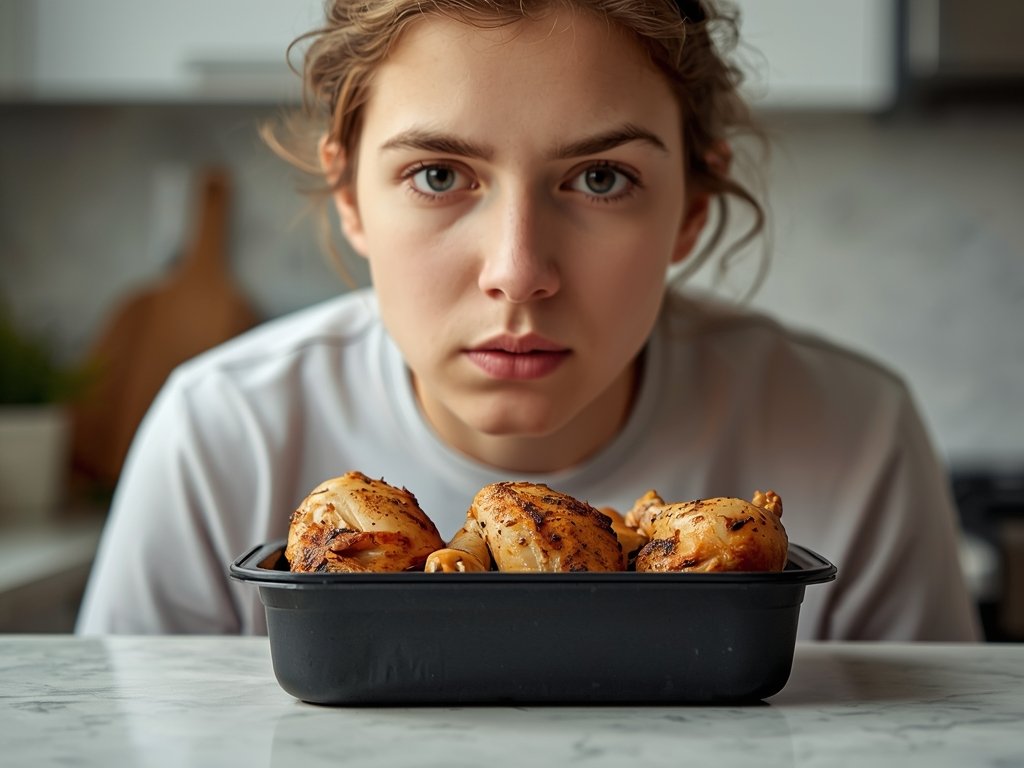
1. Sour, Sulfur, or “Eggy” Smell
Fresh cooked chicken smells mild.
Bad chicken smells sharp, sour, or unpleasant—even faintly.
If your nose hesitates, don’t taste it.
2. Slimy or Sticky Surface

Moist is normal.
Slimy is not.
If the chicken feels slick or sticky and doesn’t rinse clean, bacteria are already active.
Heating it will not make it safe.
3. Gray, Greenish, or Uneven Discoloration
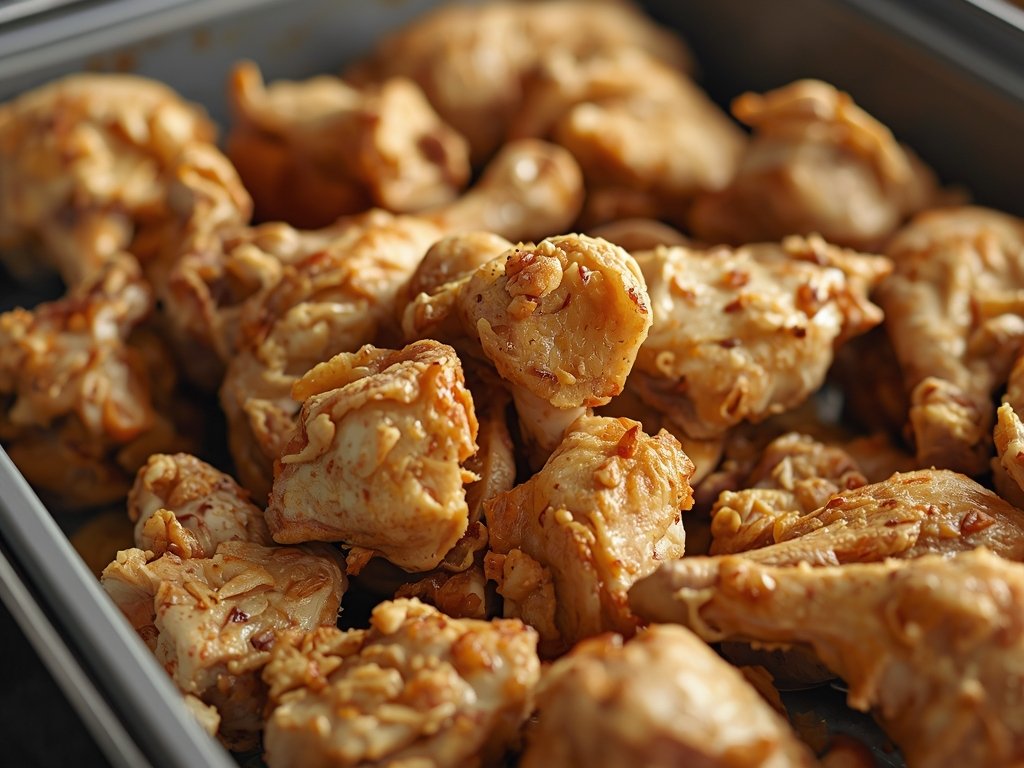
Slight drying or dullness is normal.
Patchy gray, green, or yellow tones—especially with odor—are not.
When color changes combine with age, throw it out.
The Dangerous Myth: “It Smells Fine, So It’s Fine”

Some harmful bacteria don’t produce strong odors.
If cooked chicken is:
- Older than 4 days
- Unlabeled
- Reheated more than once
- Stored improperly
…it can be unsafe even if it smells okay.
If you can’t remember when it was cooked, that’s your answer.
How to Store Cooked Chicken So It Actually Lasts

Do this
- Cool within 2 hours
- Store in airtight glass containers
- Keep pieces whole when possible
- Label with cooking date
- Store on a middle fridge shelf (coldest zone)
Avoid this
- Cooling on the counter “for later”
- Wrapping loosely in foil
- Reheating straight from cold repeatedly
- Storing near the fridge door
Freezing Cooked Chicken (The Smart Backup Plan)

If you won’t eat it within 3 days—freeze it.
Freezer guidelines
- Freeze within 2–3 days of cooking
- Use airtight freezer-safe containers or bags
- Best quality within 2–3 months
Pro tip: Freeze chicken plain, then add sauces when reheating.
Reheating Chicken Without Ruining Safety or Texture

- Reheat only what you’ll eat
- Heat to 165°F / 74°C
- Add a splash of broth to prevent drying
- Eat immediately after reheating
Never reheat chicken twice.
FAQ – People Also Ask

Can cooked chicken last 5 days in the fridge?
Not safely. Risk rises sharply after day 4.
Does reheating kill all bacteria?
No. Some toxins remain even after heating.
Is shredded chicken less safe than whole pieces?
Yes. More surface area = faster spoilage.
Can I freeze chicken after it’s been reheated?
No. Reheated chicken should be eaten immediately.
Final Thought
Cooked chicken doesn’t need to smell terrible to be dangerous. Respect the 3–4 day rule, store it properly, and don’t reheat it endlessly. When in doubt, don’t gamble—chicken is never worth the risk.

Lina leads the Fresh Hacks category, covering food storage tips, freshness preservation, and smart ways to extend the life of your groceries. Her guides help readers keep ingredients at peak quality for longer.

← Previous
Save Pasta Water: The Secret to Perfect Sauces and More
Next →
The Best Containers for Reheating Food in the Air Fryer