Follow Me On Social Media!

The Great American Steak Debate: Cast Iron vs. Stainless Steel
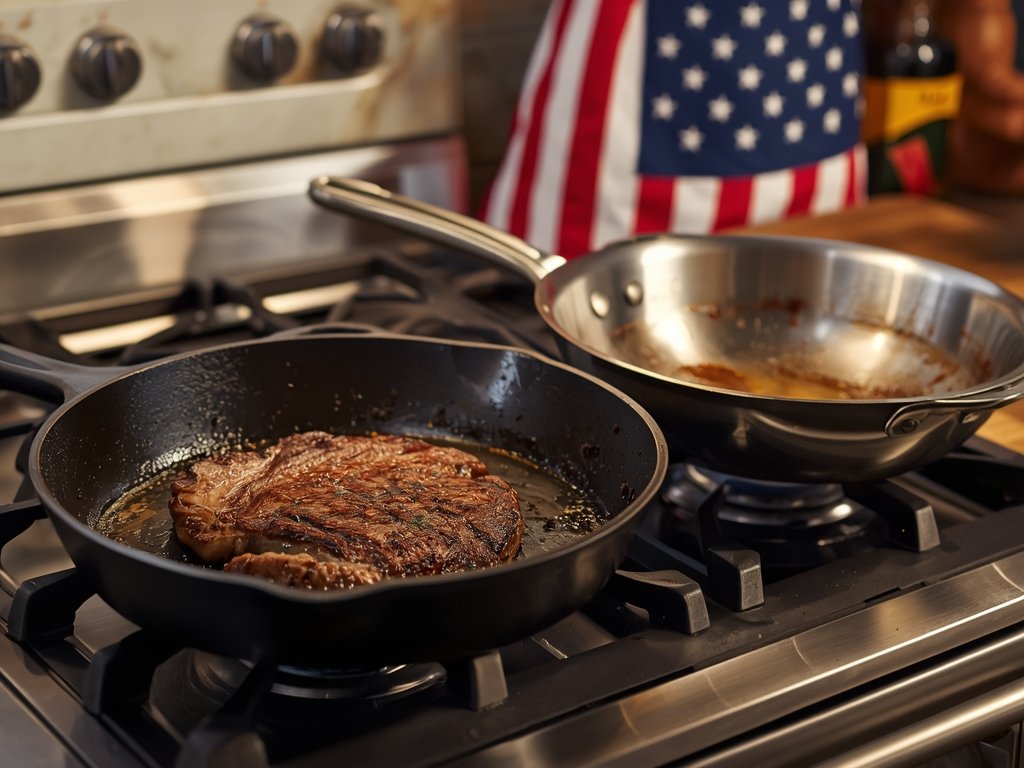
When it comes to achieving the perfect sear on your steak, the debate between cast iron and stainless steel is as heated as a Fourth of July barbecue. Both materials have their loyal followers, each swearing by their preferred pan’s ability to deliver that mouthwatering, caramelized crust that makes a steak truly exceptional. But which one reigns supreme in the land of the free and the home of the brave?
The Heavyweight Champion: Cast Iron’s Timeless Appeal
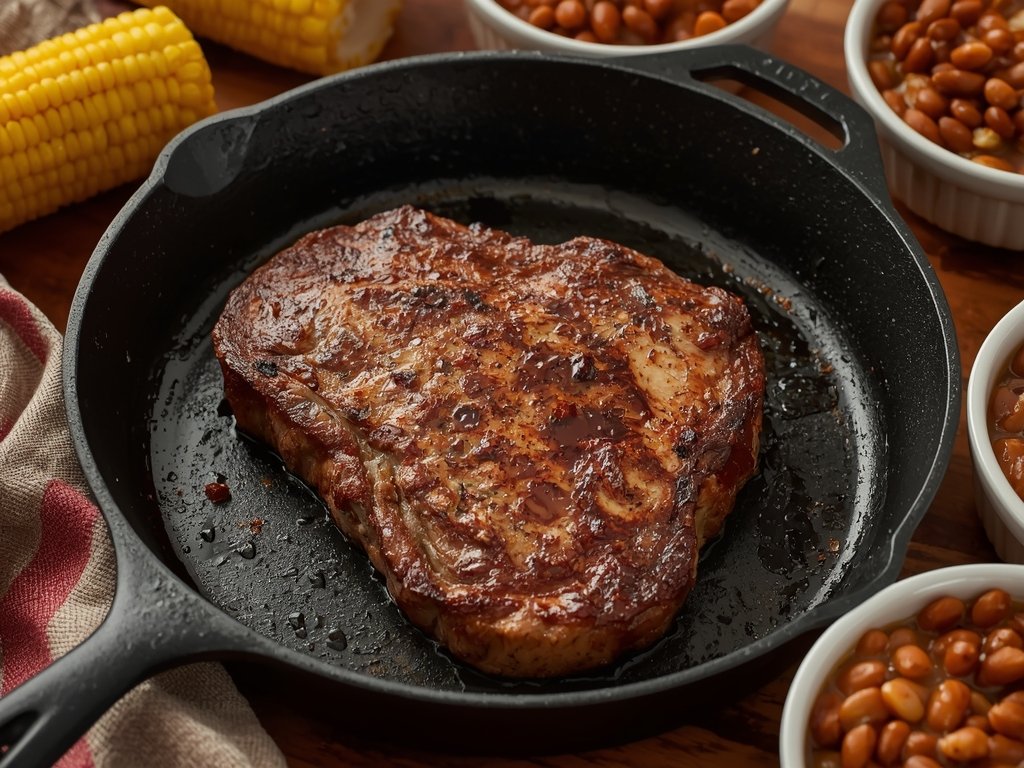
Cast iron has been a staple in American kitchens since the days of the Wild West. Its durability and heat retention make it a favorite for searing steaks, as it can withstand high temperatures and distribute heat evenly. The natural non-stick surface of a well-seasoned cast iron skillet also allows for easy food release, ensuring your steak stays intact when you flip it.
Pros of Cast Iron
- Heat Retention: Cast iron holds heat exceptionally well, allowing for consistent searing.
- Durability: With proper care, a cast iron skillet can last for generations, becoming a cherished family heirloom.
- Non-Stick Surface: A well-seasoned cast iron pan develops a natural non-stick coating, making it ideal for searing delicate cuts of meat.
Cons of Cast Iron
- Weight: Cast iron is notoriously heavy, which can make it challenging to handle, especially when full of sizzling steak and juices.
- Maintenance: Proper seasoning and cleaning are essential to prevent rust and maintain the non-stick surface.
- Reactivity: Cast iron can react with acidic foods, potentially affecting the flavor and color of your steak.
The Sleek Contender: Stainless Steel’s Modern Edge
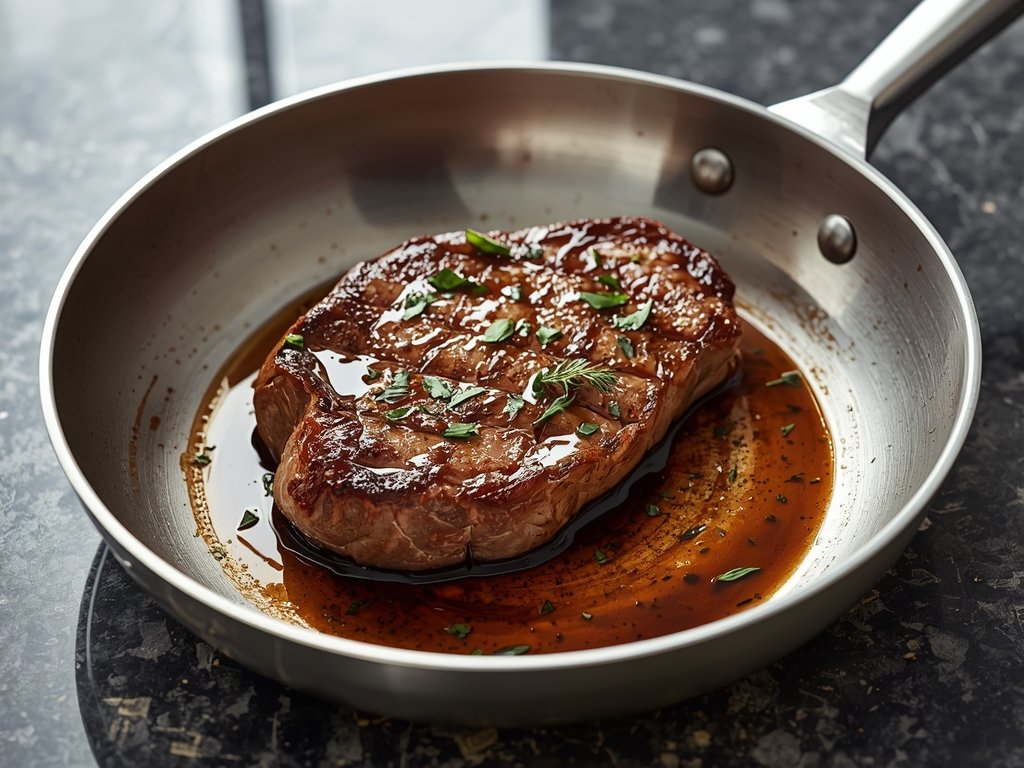
Stainless steel has gained popularity in recent years, thanks to its sleek appearance and low-maintenance nature. While it may not have the same heat retention as cast iron, stainless steel offers excellent heat distribution and is less prone to hot spots. Its non-reactive surface also makes it a great choice for searing steaks with acidic marinades.
Pros of Stainless Steel
- Low Maintenance: Stainless steel is dishwasher safe and requires minimal upkeep, making it a convenient option for busy home cooks.
- Non-Reactivity: Stainless steel won’t react with acidic foods, ensuring your steak’s flavor remains unaltered.
- Lightweight: Compared to cast iron, stainless steel is significantly lighter, making it easier to handle and maneuver.
Cons of Stainless Steel
- Heat Distribution: While stainless steel distributes heat well, it may not retain heat as effectively as cast iron, potentially affecting searing performance.
- Stickiness: Stainless steel can be more prone to sticking, especially if not properly preheated or if the steak is not dry enough.
- Cost: High-quality stainless steel cookware can be more expensive than cast iron, although it often comes with a lifetime warranty.
The Science of Searing: Heat Distribution and Retention
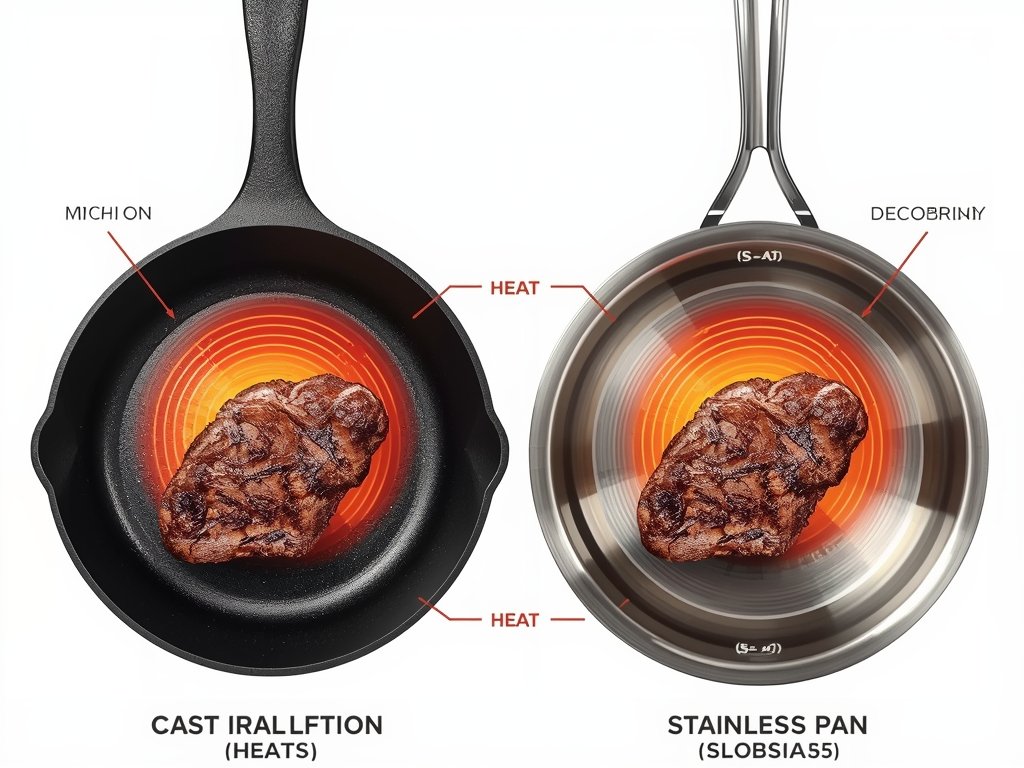
To understand which material is better for searing, we need to delve into the science of heat distribution and retention. A perfect sear requires even heat distribution to create a consistent crust, while heat retention ensures the steak cooks evenly throughout.
Heat Distribution
Stainless steel typically excels in heat distribution due to its thin, even walls. Cast iron, on the other hand, can have hot spots due to its thicker construction. However, a well-made cast iron skillet with a smooth, even surface can distribute heat nearly as well as stainless steel.
Heat Retention
Cast iron’s superior heat retention is a result of its high thermal mass. This means it can absorb and store more heat, releasing it slowly and evenly as the steak cooks. Stainless steel, while efficient at distributing heat, may not retain it as effectively, potentially leading to uneven cooking.
The Taste Test: Real-World Results
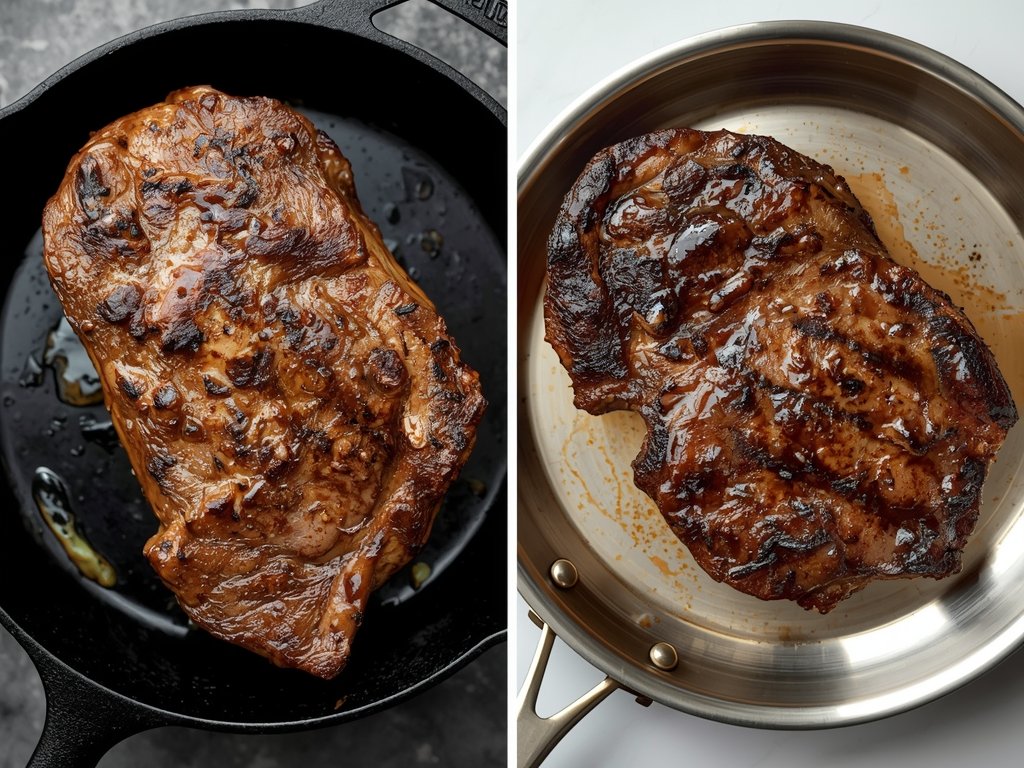
To settle the debate, we conducted a real-world taste test, searing identical steaks in both cast iron and stainless steel pans. A panel of diverse American food enthusiasts, from Texas barbecue aficionados to New York City foodies, sampled the steaks and provided their feedback.
Texture and Crust
The cast iron-seared steak consistently delivered a thicker, more even crust, thanks to its superior heat retention. The stainless steel steak had a slightly thinner crust, although it was still well-seared and flavorful.
Flavor and Juiciness
Both steaks were remarkably juicy, with the cast iron steak edging out in terms of overall flavor. The stainless steel steak was still delicious, but some panelists noted a slight metallic taste, likely due to the pan’s reactivity with the steak’s marinade.
The Verdict: Which Pan Reigns Supreme?
After careful consideration and real-world testing, we declare cast iron the winner in the battle for the perfect sear. Its superior heat retention, durability, and ability to deliver a thick, even crust make it the ideal choice for steak enthusiasts. However, stainless steel remains a strong contender, especially for those who prioritize low maintenance and non-reactivity.
FAQ
Can I use stainless steel for high-heat searing?
Yes, stainless steel can be used for high-heat searing, but it’s essential to preheat the pan properly and ensure the steak is dry to prevent sticking.
How do I season a cast iron skillet?
To season a cast iron skillet, coat it with a thin layer of oil, then bake it upside down in a 350°F oven for 1 hour. Repeat this process several times to build up a non-stick surface.
Is cast iron safe for acidic foods?
While cast iron can react with acidic foods, a well-seasoned skillet will have a protective layer that minimizes this reaction. However, it’s still best to avoid cooking highly acidic foods in cast iron for extended periods.
Can I put stainless steel in the dishwasher?
Most stainless steel cookware is dishwasher safe, but it’s always best to check the manufacturer’s instructions to ensure your specific pan can withstand the dishwasher’s heat and detergents.
Which material is better for beginners?
Stainless steel is generally more forgiving and easier to use for beginners, thanks to its low maintenance and non-reactivity. However, with proper care and seasoning, cast iron can also be a great option for novice cooks.

David handles the Kitchen Gear category, reviewing tools, equipment, and accessories that make cooking and food storage easier. His articles focus on practical recommendations for everyday home cooks.

← Previous
Air Fryer vs. Toaster Oven: The Ultimate Reheating Showdown
Next →
7 Genius Rice Cooker Hacks Beyond Rice