Follow Me On Social Media!

How to Use Leftover Burger Patties for Quick Beef Stroganoff
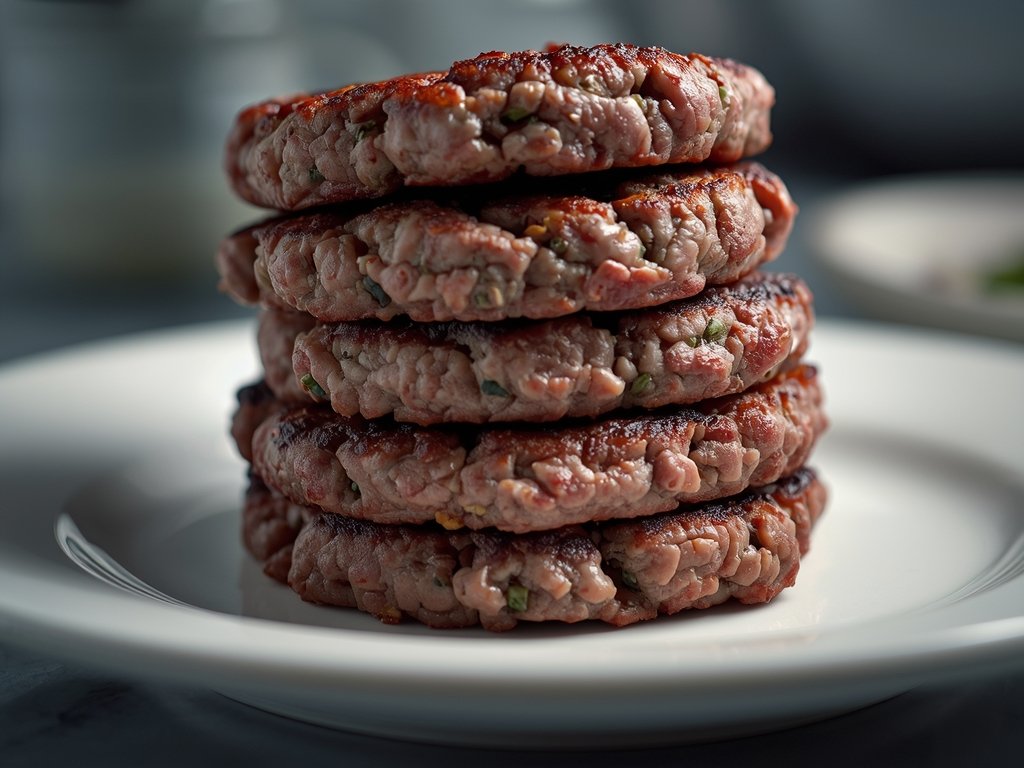
There is a specific kind of “BBV”—Burger Burnout Vibe—that hits the day after a cookout. You open the fridge, and there it is: the stack of disappointment. Three, maybe four, leftover burger patties sitting on a plate wrapped in foil. They look grey. The once-sizzling fat has congealed into a white, waxy rim around the edges. The buns are either missing or turned into a soggy bottom for the meat. You look at those patties and think, “I guess I’m eating a cold burger for lunch.”
But that sounds depressing. You bite into a cold, pre-formed patty, and the texture is dense and rubbery. The seasoning, which tasted like summer and charcoal last night, now just tastes like salty, cold fridge air. Most people reheat them in the microwave, which only tightens the proteins further, turning the meat into a tough, gray puck. But what if we stopped thinking about them as burgers? A burger patty is, at its core, just a pre-seasoned, pre-cooked disk of ground beef. And ground beef is the soul of a good Beef Stroganoff. We can take that dense, sad meat and bathe it in a rich, tangy cream sauce until it forgets it ever had a bun.
The Dense Meat Dilemma
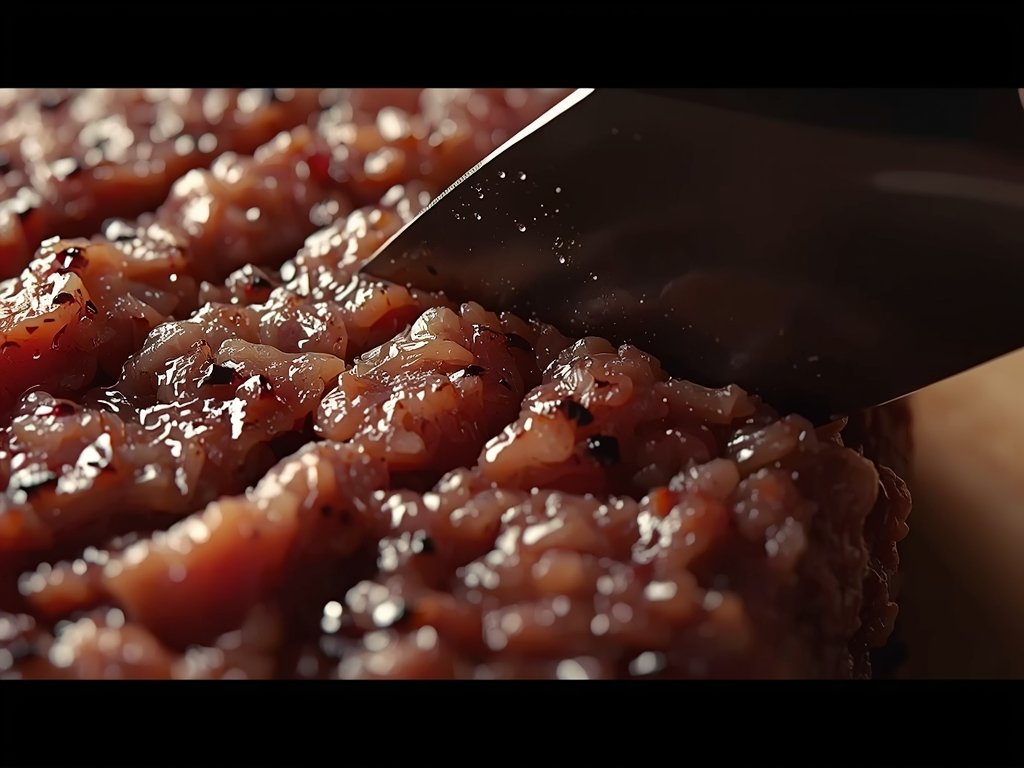
To understand why this hack works, we have to look at the physics of a burger patty. Unlike a steak, which is a single muscle, a burger is emulsified meat—muscle fibers, fat, and binders all ground together. When you cook it the first time, the fat renders out and the proteins contract tightly. When it cools down in the fridge, that remaining fat solidifies, and the proteins squeeze out any remaining moisture.
This is why a leftover burger is so dry and dense. It’s lost its juice. If you try to make a traditional Stroganoff by sautéing this meat like fresh beef, you’re going to have a bad time. It won’t brown nicely; it will just gray out and crumble into pebbles because it’s already cooked.
The trick is to stop trying to cook the meat and start using it as a flavor base. We need to slice it. By cutting the cold patty into thin strips, we increase the surface area. We aren’t looking for a steak-like chew; we’re looking for little strips of savory beef that can absorb the sauce. The flavor is already there—the garlic, the salt, the pepper, the smoke from the grill. We just need to hide the dry texture and rehydrate it with fat and cream. We are essentially repurposing a fast-food staple into a rustic, comfort-food classic.
The Sizzle and the Simmer
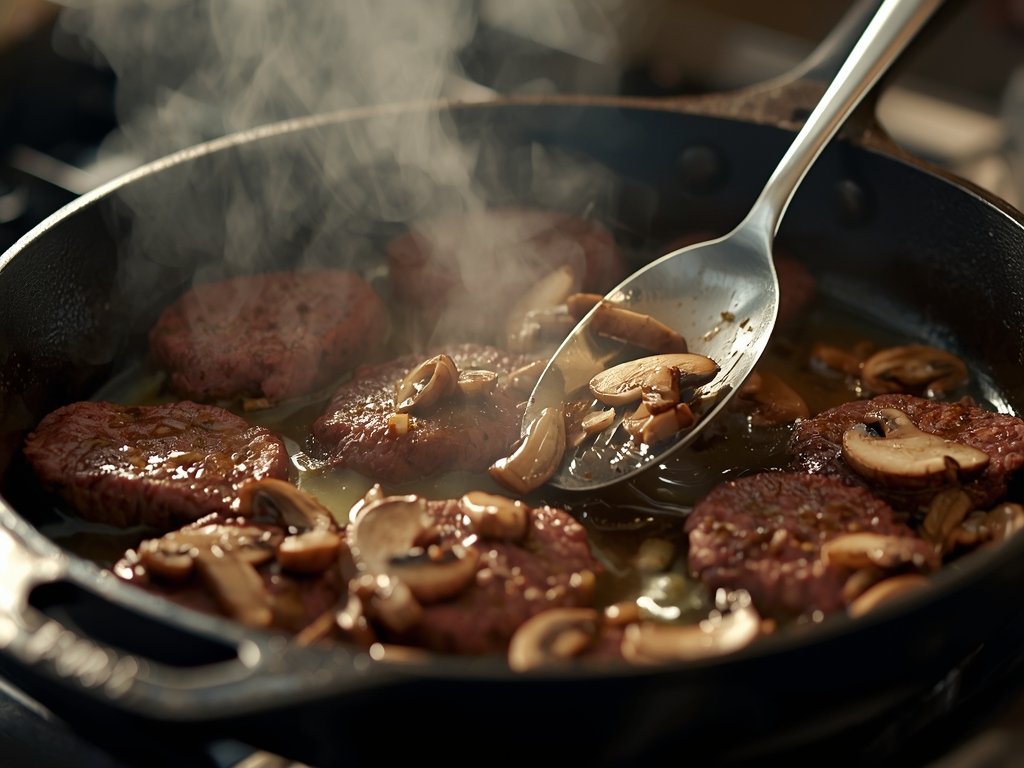
Start by trimming any hard, gristly bits off the patties—you don’t want surprises in your sauce. Then, slice the meat into thin strips. Don’t worry if it breaks apart; Stroganoff loves crumbles. Get a skillet hot—cast iron is great here. Add a little butter, because leftover burgers are often leaner than we remember by the second day.
Toss in the sliced beef. Listen. It won’t sizzle like fresh meat because there’s no water left to explode, but you’ll hear the fat rendering. You aren’t trying to cook the beef through; you’re just trying to warm it up and wake up the Maillard reaction on the surfaces. You want the edges to get a little crispy.
Now, the aromatics. Toss in a diced onion and some sliced mushrooms. Let them cook down in the beef fat. The mushrooms will release their own moisture, which is actually a blessing here. That liquid will mix with the rendered burger fat and the browned bits on the bottom of the pan (the fond). This creates the base of your gravy.
Once the onions are soft and the mushrooms have given up their ghost, it’s time to deglaze. A splash of beef broth is essential here—it brings back the “beefy” flavor that might have faded. But the real magic is the sour cream or crème fraîche. Take the pan off the heat. This is crucial. If you boil sour cream, it will curdle and separate, turning your beautiful sauce into a greasy, oily mess. Stir in the cream off the heat, letting the residual warmth of the pan turn it into a velvety, pale gold sauce that clings to every strip of beef.
The Acid Upgrade: Cutting the Richness
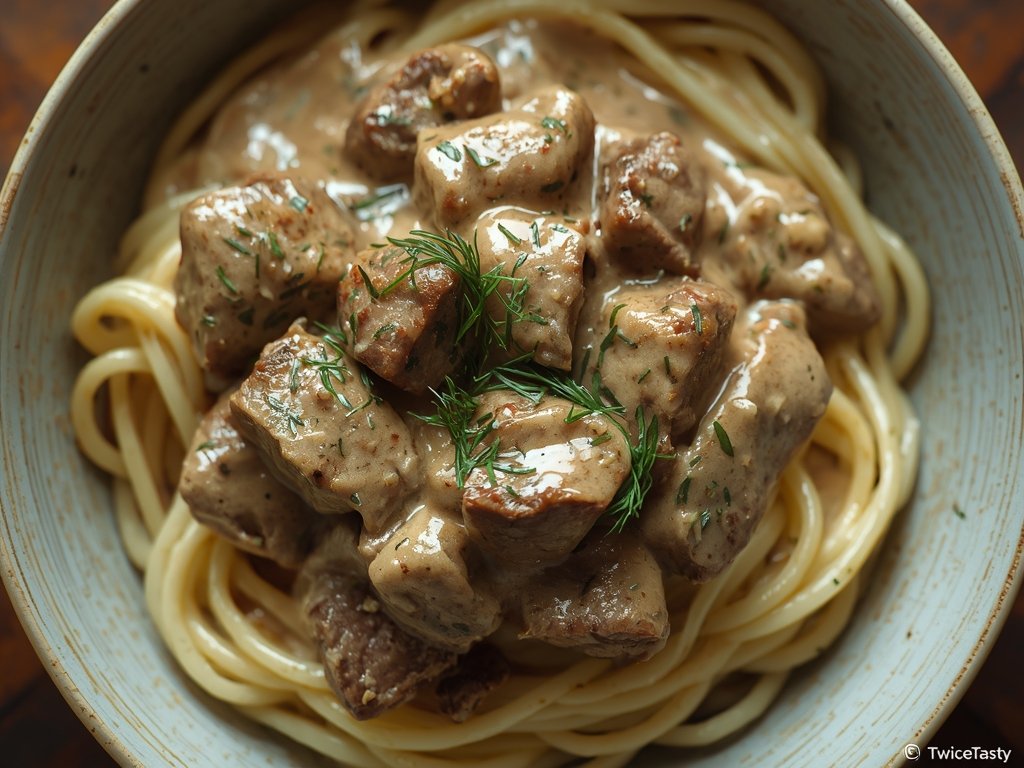
You have a rich, savory, creamy bowl of comfort now. The burger meat has softened in the sauce, soaking up that tangy cream flavor. But because we started with highly seasoned patties, the dish can sometimes feel a little “flat” or heavy. We need brightness.
This is where the “Quick Stroganoff” differs from the traditional hour-long version. We need a sharper acid. Lemon juice is okay, but for a burger base, pickle brine is the secret weapon. Splash a teaspoon of the juice from your pickle jar into the sauce. The vinegar and dill in the brine cut right through the richness of the beef and the heavy cream. It mimics the acidity you’d get from a good white wine but keeps that slightly retro, burger-shop vibe that makes this dish feel fun.
Stir in a handful of fresh parsley or dill at the very end. Don’t cook it; just let it wilt in the hot sauce. Serve this over egg noodles, mashed potatoes, or even toast. The contrast is wild: you get the savory, smoky hit of the grilled beef, the earthiness of the mushrooms, and the cool, tangy embrace of the sour cream sauce. That sad, grey patty is gone. In its place is a bowl of pure, liquid comfort that tastes like it took all day, even though you just hacked together lunch in 15 minutes.
Frequently Asked Questions
Can I use cheeseburgers for this?
You can, but be careful with the cheese. If the patties have a thick layer of cheddar or American cheese on them, scrape it off before slicing. The cheese can make the sauce oily and weirdly textured as it melts into the sour cream. However, if it’s just a little bit of melted cheese, it will just add extra richness.
My burger patties are really salty. How do I fix that? Takeout or frozen burgers can be salt bombs. Since you can’t remove the salt, you have to balance it. Increase the acidity (more pickle juice or lemon) and maybe add a splash more water or broth to dilute the sauce slightly. Serving it over unsalted plain rice or noodles instead of mashed potatoes also helps balance the sodium.
Can I freeze this Stroganoff? You can, but cream-based soups and sauces can sometimes separate or become grainy when frozen and thawed. If you plan to freeze it, I recommend cooking the beef, onions, and mushrooms, then cooling that part down and freezing it. Make the sour cream sauce fresh when you reheat it and mix them together. It ensures the texture stays velvety.