Follow Me On Social Media!

The Great Air Fryer Debate: Silicon Mats vs. Parchment Paper
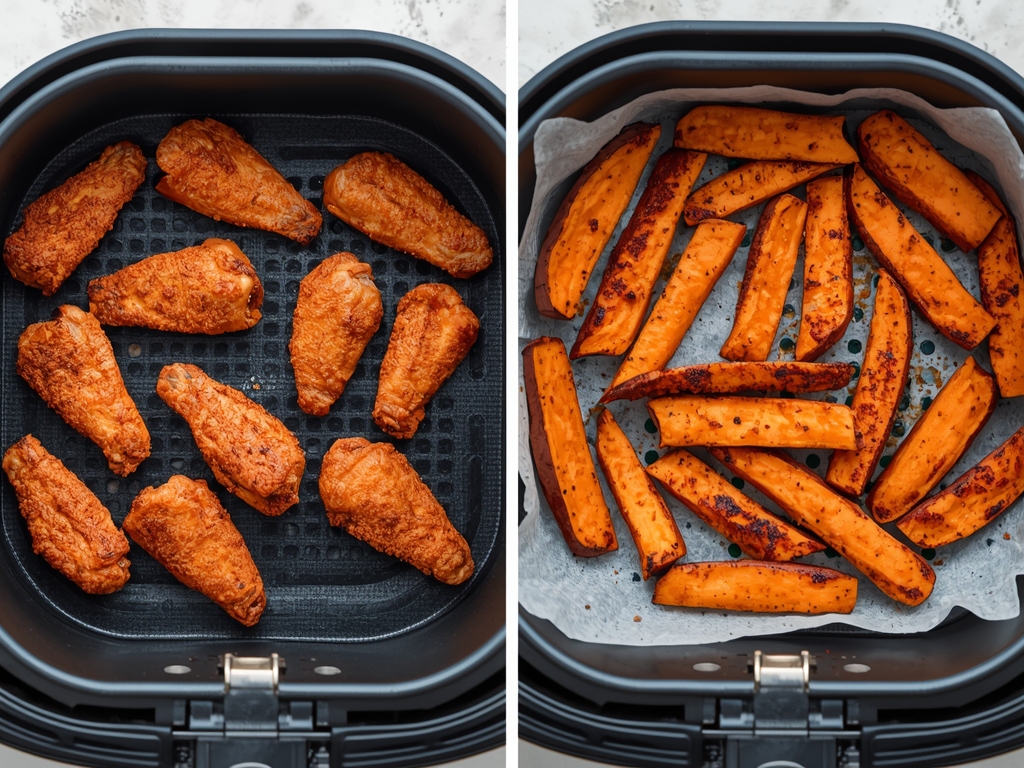
If you’re an air fryer enthusiast, you’ve likely found yourself staring at the baking aisle, wondering which non-stick option is best for your beloved appliance. Silicon mats and parchment paper are both popular choices, but which one is safer and more effective for air frying?
As someone who’s spent countless hours experimenting with air fryer recipes, I’ve had my fair share of trials and errors with both materials. From sticky messes to uneven cooking, I’ve experienced it all. So, let’s dive into the world of air fryer accessories and settle the score once and for all.
What’s the Big Deal About Non-Stick Surfaces?

Before we compare silicon mats and parchment paper, let’s talk about why non-stick surfaces are essential for air frying. Air fryers work by circulating hot air around your food, creating a crispy exterior while keeping the inside moist and tender.
However, this process can be hindered by food sticking to the basket or tray. Not only does this make cleaning a nightmare, but it can also lead to uneven cooking and less-than-perfect results. That’s where non-stick surfaces come in – they provide a barrier between your food and the air fryer, ensuring even cooking and easy cleanup.
Silicon Mats: The Reusable Wonder
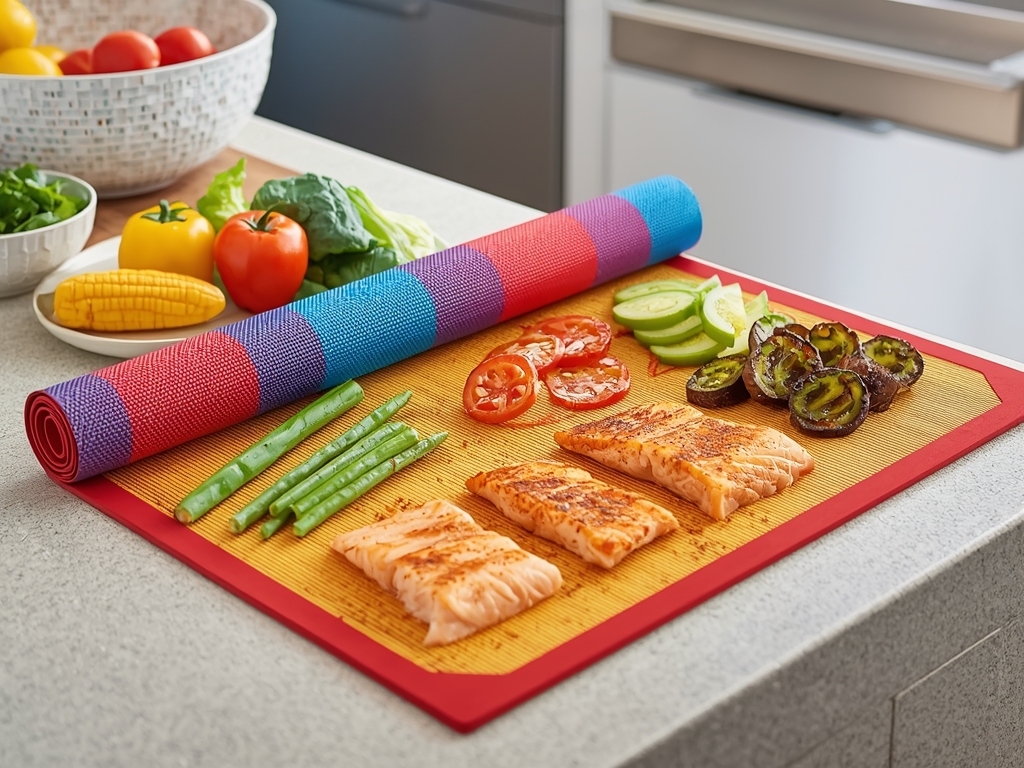
What Are Silicon Mats?
Silicon mats are reusable, non-stick sheets made from food-grade silicon. They’re designed to withstand high temperatures, making them perfect for air frying, baking, and even candy making. These mats are available in various sizes and shapes, allowing you to find the perfect fit for your air fryer basket.
Benefits of Silicon Mats
- Reusable: Silicon mats can be used hundreds of times, making them an eco-friendly and cost-effective option.
- Non-Stick: Food slides right off these mats, making cleanup a breeze.
- Heat-Resistant: Most silicon mats can withstand temperatures up to 450°F (230°C), which is well within the range of most air fryers.
Potential Drawbacks
- Initial Cost: Silicon mats can be more expensive upfront compared to parchment paper.
- Storage: These mats can be bulky and may require more storage space than parchment paper.
Parchment Paper: The Classic Choice
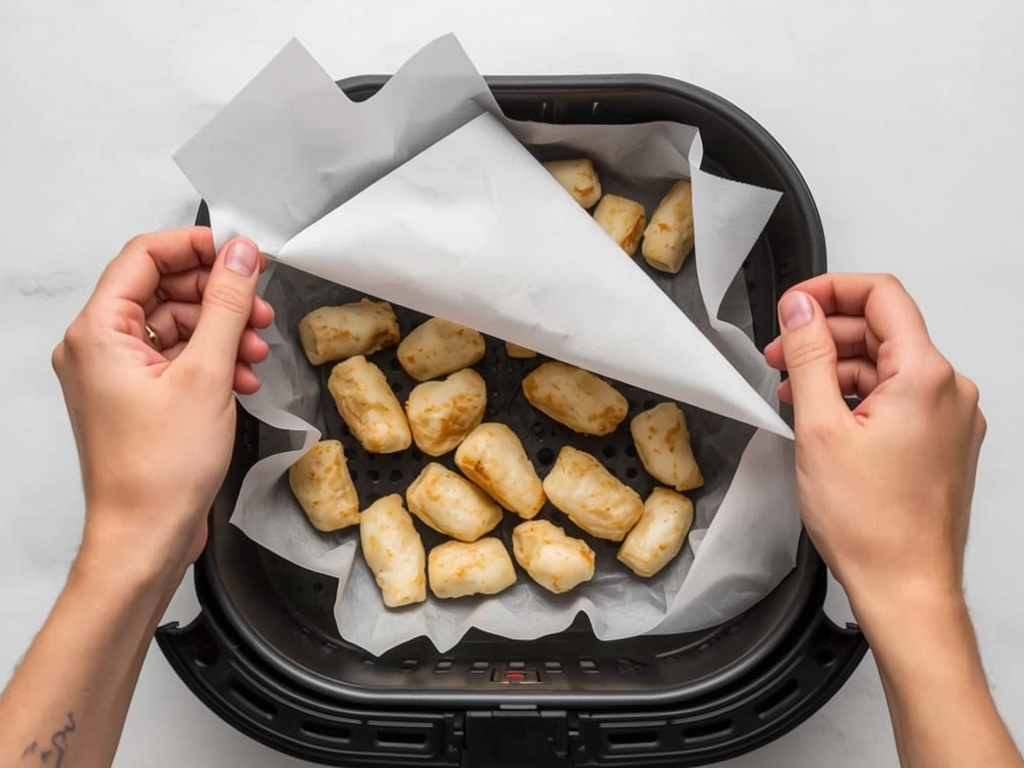
What is Parchment Paper?
Parchment paper is a classic kitchen staple made from paper that’s been treated with a non-stick coating. It’s widely available, affordable, and perfect for lining baking sheets, air fryer baskets, and more.
Benefits of Parchment Paper
- Affordable: Parchment paper is generally cheaper than silicon mats, making it an attractive option for those on a budget.
- Convenient: It’s widely available and easy to store, requiring minimal space in your kitchen.
- Disposable: No need to worry about cleaning – simply toss the parchment paper after use.
Potential Drawbacks
- Waste: As a single-use product, parchment paper contributes to waste, which may not align with eco-friendly values.
- Heat Limitations: While parchment paper can withstand high temperatures, it may not be as durable as silicon mats and can tear or burn if not used properly.
Safety Concerns: What You Need to Know
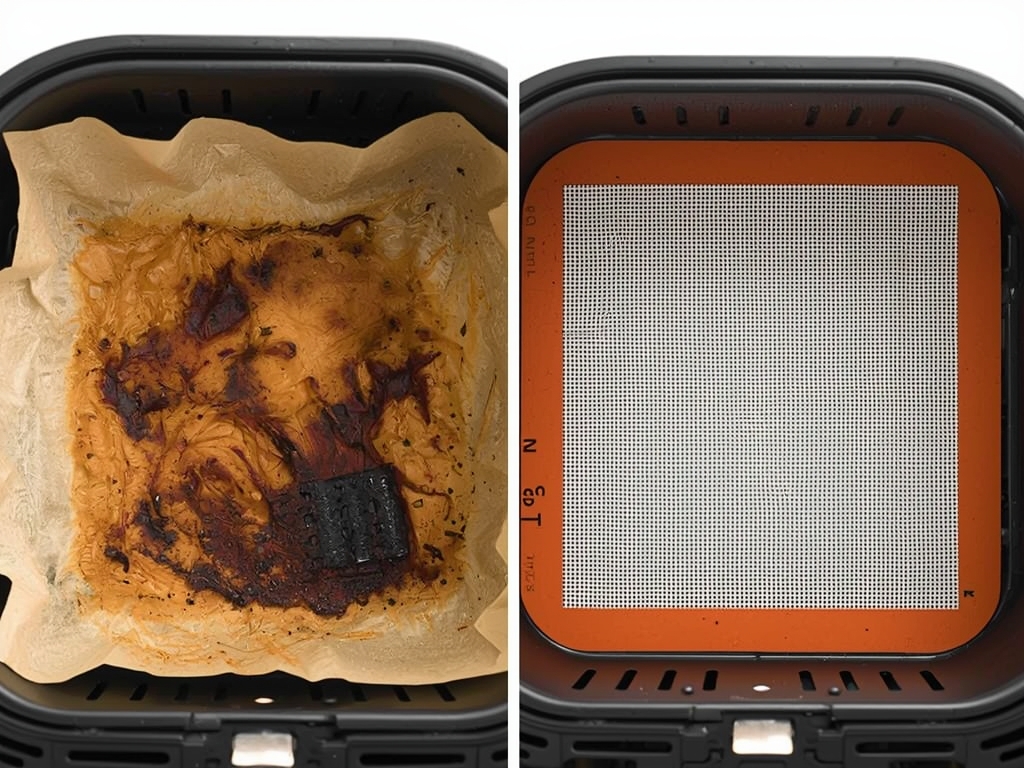
When it comes to safety, both silicon mats and parchment paper have their pros and cons. Silicon mats are generally considered safe, as they’re made from food-grade materials and don’t release harmful chemicals when heated.
Parchment paper, on the other hand, can be a bit more tricky. While it’s designed to withstand high temperatures, it’s essential to choose a high-quality brand that’s specifically labeled for air fryer use. Some lower-quality parchment papers may contain chemicals that can be released when heated, potentially posing a health risk.
Performance Comparison: Which One Comes Out on Top?

Crispiness and Texture
In terms of crispiness and texture, silicon mats tend to produce slightly crispier results due to their ability to distribute heat more evenly. Parchment paper can sometimes create a steamier environment, which may result in slightly softer textures.
Cooking Time and Temperature
Both silicon mats and parchment paper can be used at similar temperatures, typically up to 400°F (200°C). However, silicon mats may require slightly longer cooking times due to their thickness, while parchment paper allows for more direct heat transfer.
Ease of Use and Cleanup
Silicon mats are generally easier to clean, as they can be washed with soap and water or popped into the dishwasher. Parchment paper, being disposable, eliminates the need for cleaning altogether, but contributes to waste.
FAQ
Can I use silicon mats in my air fryer?
Yes, silicon mats are safe to use in air fryers, as long as they’re made from food-grade silicon and can withstand the temperature range of your appliance.
Is parchment paper safe for air frying?
Parchment paper is safe for air frying, but it’s essential to choose a high-quality brand specifically labeled for air fryer use to avoid potential chemical release.
Can I reuse parchment paper in my air fryer?
While it’s possible to reuse parchment paper, it’s generally not recommended, as it can become brittle and tear after the first use, potentially posing a safety risk.
How do I clean my silicon mat after air frying?
Silicon mats can be cleaned with soap and water or popped into the dishwasher for easy cleanup. Avoid using abrasive sponges or scrubbers, as these can damage the non-stick surface.
Which one is more cost-effective in the long run?
While silicon mats have a higher upfront cost, they’re more cost-effective in the long run due to their reusability. Parchment paper, being a single-use product, can add up in cost over time.

David handles the Kitchen Gear category, reviewing tools, equipment, and accessories that make cooking and food storage easier. His articles focus on practical recommendations for everyday home cooks.

← Previous
Why Food Sticks to Ceramic Pans (And How to Fix It)
Next →
Meat Thermometer Guide: Why 1-Degree Matters for Food Safety