Follow Me On Social Media!

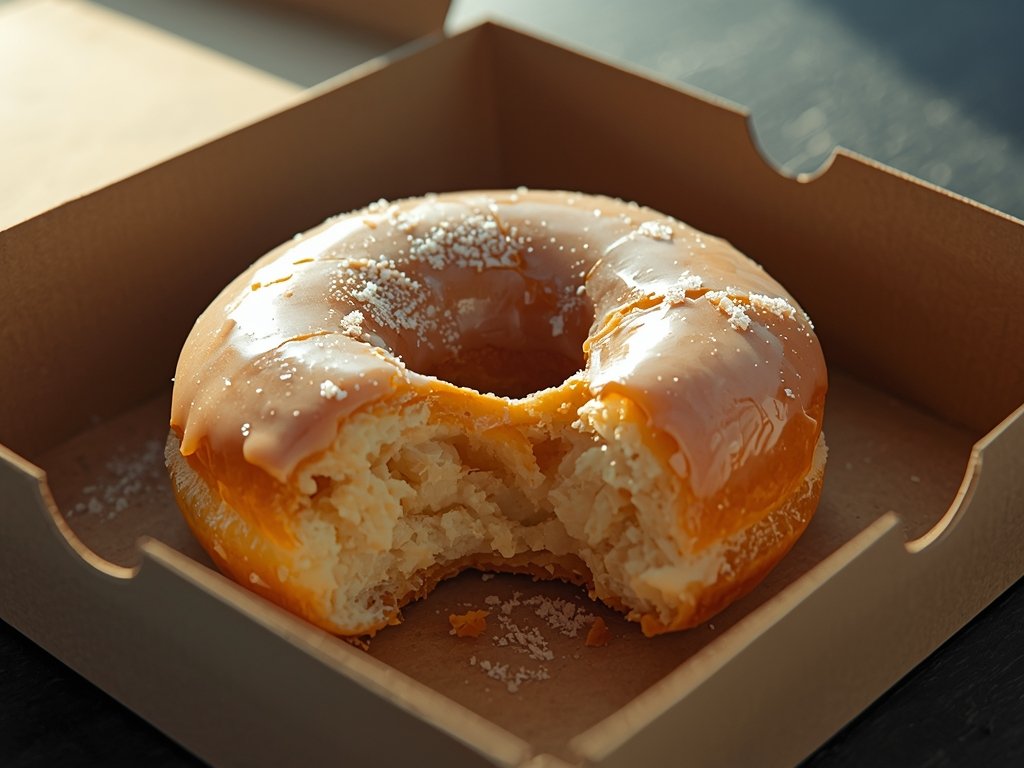
There is a specific kind of heartbreak found at the bottom of a pink cardboard box. It’s the morning after, and you’re staring at a glazed donut that was once a beacon of joy. Now, it looks sad. The glaze, which was once a mirror-like sheen of liquid sugar, has turned into a dull, frosty white crust. It’s cracked in places, looking more like a cracked sidewalk than a sweet treat. You pick it up, and it feels heavy and dense. The dough, which was supposed to be light and airy, feels like a cold, tight sponge.
We’ve all been there. You take a bite, hoping the nostalgia will carry you through, but it’s a disappointment. The sugar crunches between your teeth in a gritty, unpleasant way, and the dough is cold and chewy in a way that sticks to the roof of your mouth. Most people throw these in the trash, or worse, suffer through the cold, gritty texture. But the genius of a glazed donut is that it’s mostly sugar and fat. Those are two things that react beautifully to heat, specifically a very specific, very short burst of it. You can bring that liquid sheen back in less time than it takes to brew your coffee.
The Frosty Glaze Phenomenon
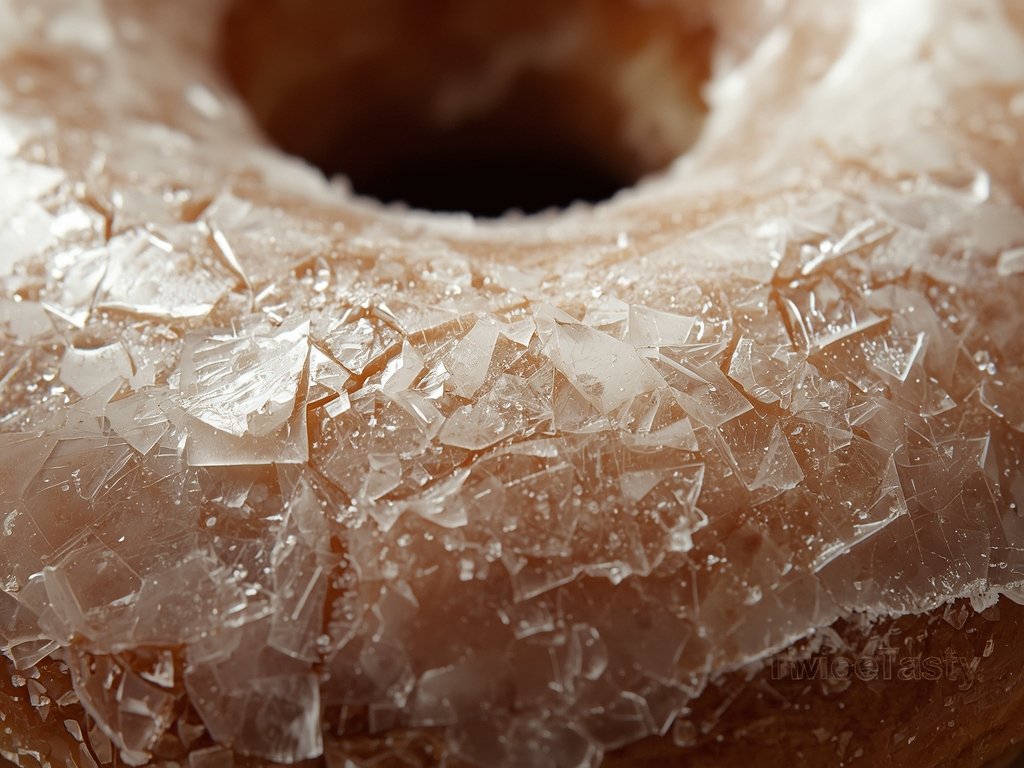
To understand how to fix it, we have to look at what that glaze actually is. It’s essentially a supersaturated solution of sugar, water, and usually a little milk or corn syrup. When the donut is fresh and hot, that sugar is dissolved completely into the water, creating a thick, liquid syrup that coats the dough. As it cools down to room temperature, the water evaporates slightly, and the sugar molecules start to panic. They look for stability and begin to crystallize.
They lock into a rigid, solid structure. That’s that “frosty” look. It’s technically millions of tiny sugar crystals forming a hard shell over the dough. Inside the donut, the yeast dough is undergoing retrogradation. The starches are squeezing out water and tightening up, turning the soft crumb into a dense, rubbery network.
The problem with a toaster or an oven is that they are dry heat. They will just evaporate more water, driving the sugar further into hardness and turning the dough into a brick. We need to do the opposite. We need to add energy to break those sugar bonds without driving off the moisture that makes the glaze liquid. We need to melt it.
The 10-Second Microwave Meltdown
Here is where the microwave, usually the enemy of pastries, becomes the unlikely hero. But you have to be surgical. You cannot just walk away. Put your donut on a microwave-safe plate. Paper towel? No. A paper towel will stick to that melting glaze and ruin the moment. Just the plate.
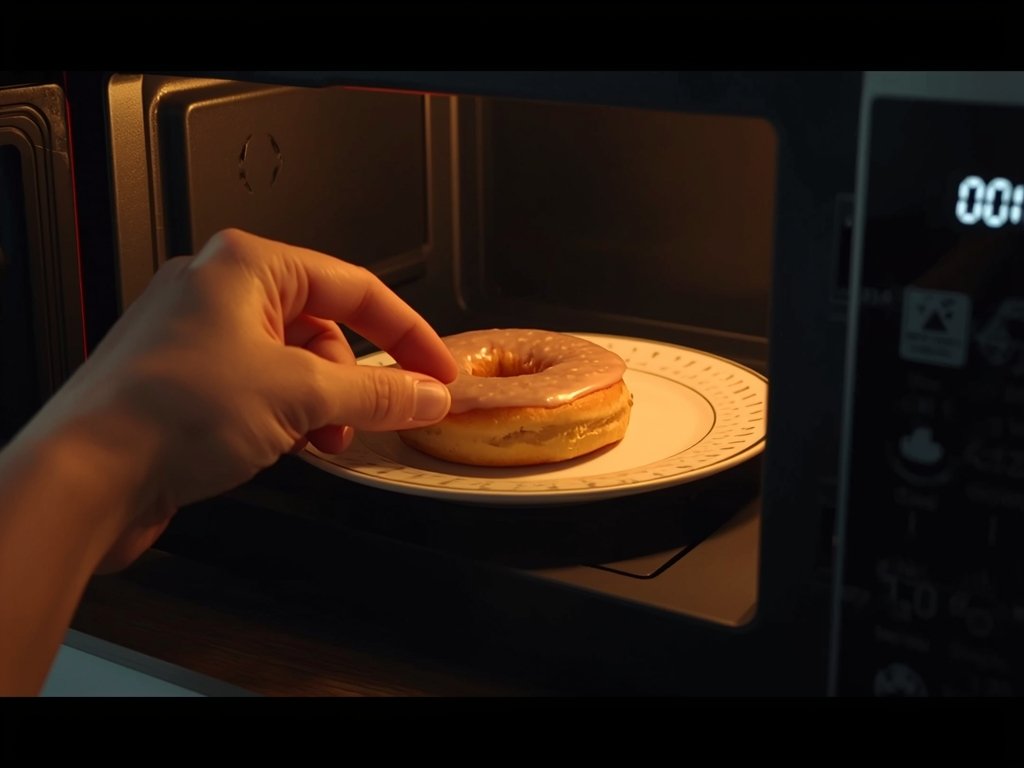
Set the timer for 10 seconds. High power. That’s it. Not 15, not 20. Ten.
In those ten seconds, the water molecules inside the glaze and the dough vibrate wildly. They generate friction, which creates heat instantly. This heat is just enough to break the crystal lattice of the sugar. The solid “frost” melts back into a viscous, warm syrup. At the same time, the heat softens the tightened starches in the dough, relaxing the gluten and making the crumb tender again.
When you open the door, you’ll see it. The glaze is glistening. It’s starting to slide down the sides of the donut just a little bit, like it did when it was first dipped. The aroma of toasted sugar hits you. It looks alive. If it’s not quite melted to your liking, give it another 5 seconds. But stop there. If you go too long, the water turns to steam, the dough puffs up weirdly, and then collapses into a rubbery tire when it cools down. Ten seconds is the sweet spot where chemistry works in your favor.
The Air Fryer Texture Upgrade
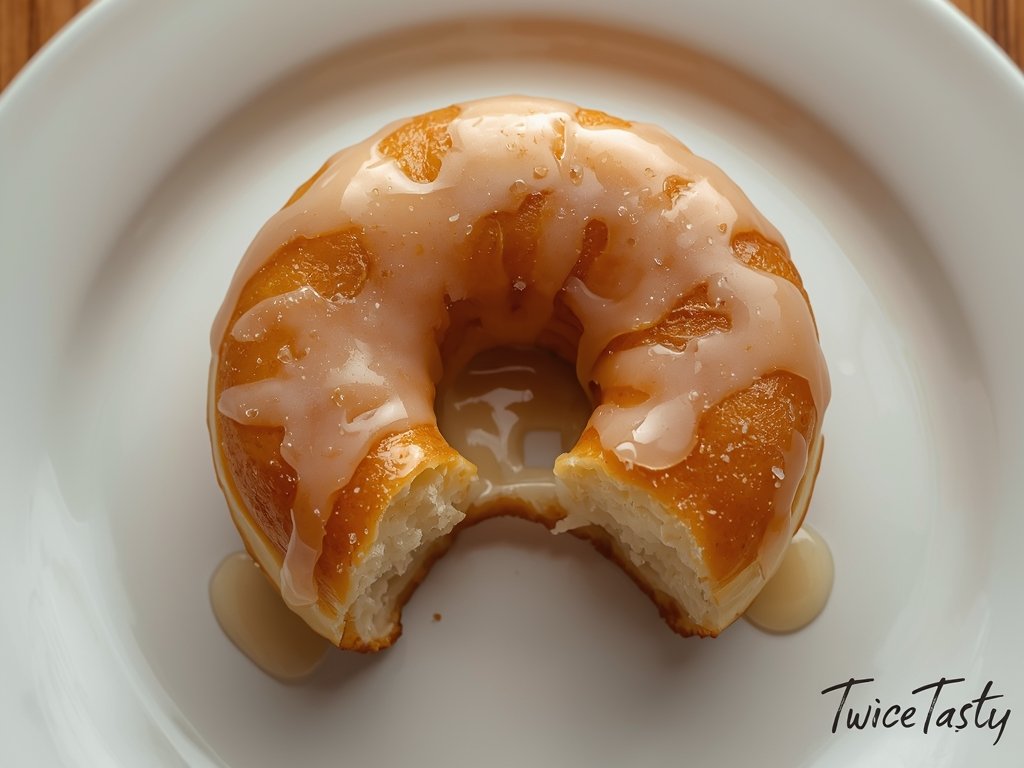
Now, let’s be honest. The 10-second microwave fixes the glaze and warms the dough, but it doesn’t bring back the crust. A fresh donut has that slight crispness on the exterior, a tiny bit of fryer oil that has set. The microwave makes the outside a bit soft, almost damp. If you have an extra three minutes and you care about texture as much as you do that sugar rush, there is a better way.
After you do your 10-second zap to melt the glaze, transfer the donut to your air fryer. Set it to 350°F. Put the donut in for just 2 or 3 minutes.
Here is the magic: The microwave hydrated the donut, making the dough soft. The air fryer then takes that surface moisture and flash-evaporates it. It re-crisps the exterior crust, giving you that slight fried texture again. But because the inside is already warm from the microwave, you don’t need to leave it in long enough to dry it out.
You get the best of both worlds. The glaze is melted and gooey thanks to the microwave, but the dough has a texture closer to fresh because of the air fryer. It’s hot, it’s shiny, and it has a crunch when you bite through the sugar into the soft bread. It’s a two-step process that elevates a leftover donut into something that feels like a deliberate treat.
Frequently Asked Questions
Can I reheat cream-filled or jelly donuts this way? Be very careful with filled donuts. The 10-second microwave rule still applies, but the filling (like jam or cream) holds heat differently than dough or glaze. It can get scorching hot while the dough is still cool. Stick to the 10-second limit, then let it sit for a minute. The filling will continue to cook in the center.
What if I don’t have a microwave? You can use the oven, but it’s a slower game. Wrap the donut loosely in foil to prevent the outside from drying out, and warm it at 350°F for about 5-7 minutes. You won’t get that instant “melt” on the glaze—it might stay a bit hard—but the dough will be soft.
Why does my donut get greasy when I reheat it? If you overheat it, the oil that was absorbed during frying separates from the dough and rises to the surface. The microwave causes the oil to break down and leak out of the crumb structure. This is another reason to stick to the short 10-second burst. You just want to warm it, not cook it again.

Marco covers the Reheat Pro category on TwiceTasty, focusing on reheating techniques and texture preservation. His articles help home cooks bring leftovers back to life with the right methods for every type of food — from crispy fried chicken to creamy pastas.

← Previous
Reheat Ramen Like a Pro: Broth & Noodles Separately
Next →
How to Reheat Leftover Gnocchi So They Stay Pillowy