Follow Me On Social Media!

The Great Spice Debate: Mortar and Pestle vs. Spice Grinder
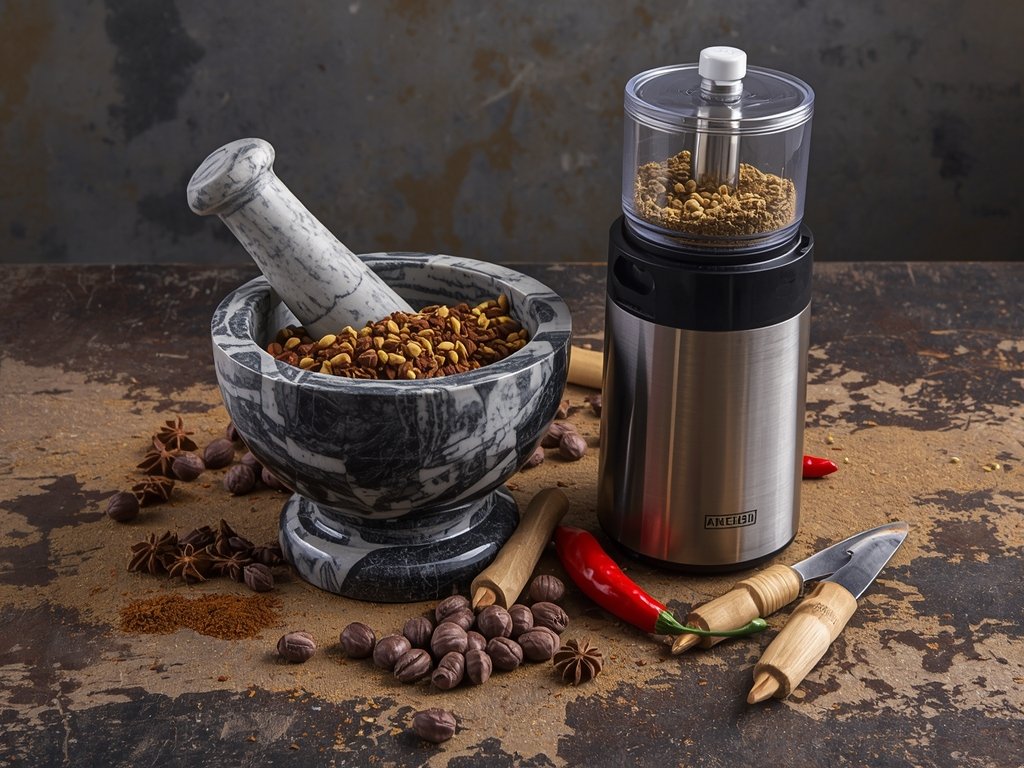
When it comes to unlocking the full flavor potential of spices, the tools you use matter more than you might think. In the United States, where culinary traditions blend global influences with local ingenuity, the debate between using a mortar and pestle versus a spice grinder is hotter than a jalapeño pepper. Whether you’re whipping up a classic Thanksgiving stuffing or experimenting with a Tex-Mex chili, the way you prepare your spices can make or break your dish.
The Timeless Charm of the Mortar and Pestle
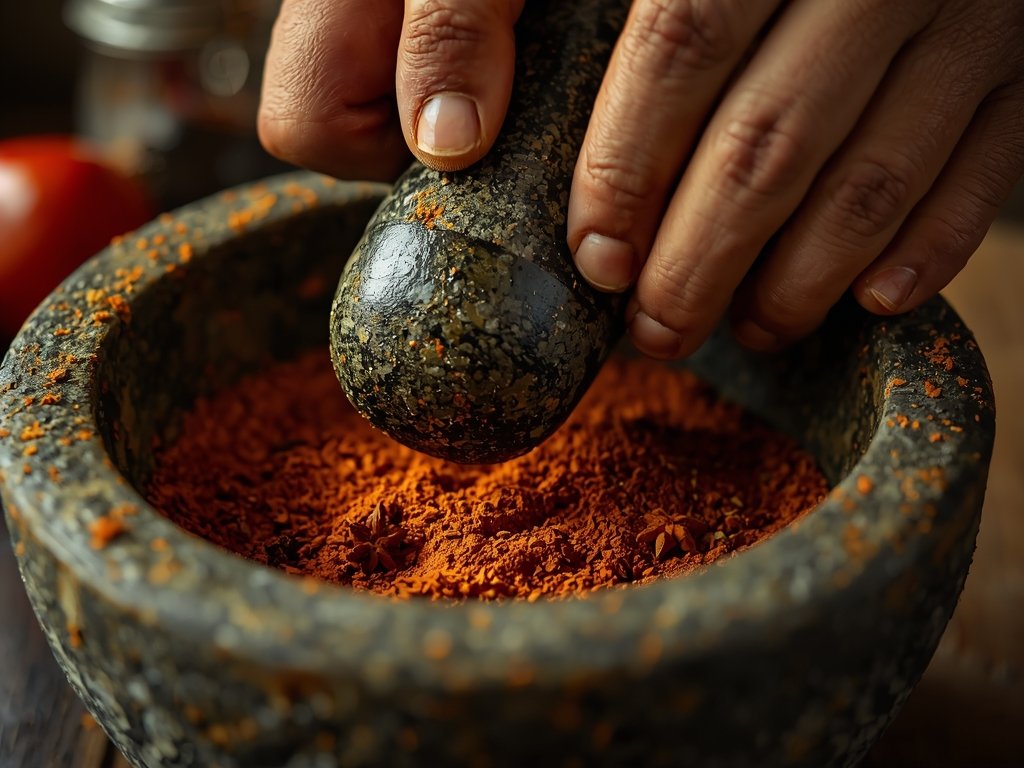
The mortar and pestle has been a kitchen staple for centuries, cherished for its ability to release the essential oils and flavors of spices. This ancient tool is particularly popular in regions like the American South, where traditional recipes often call for freshly ground spices. Think of it as the slow cooker of the spice world—it takes time, but the results are worth it.
Using a mortar and pestle allows you to control the texture of your spices, from coarse to fine. This is especially useful in dishes like pesto or curry, where the consistency of the spices can affect the overall mouthfeel. Plus, there’s something meditative about the rhythmic motion of grinding, a practice that connects you to generations of cooks before you.
Why It’s a Favorite Among Chefs
Many professional chefs swear by the mortar and pestle for its ability to preserve the integrity of spices. Unlike electric grinders, which can generate heat and potentially alter the flavor profile, this manual method keeps spices cool, ensuring their aromatic compounds remain intact. It’s no wonder that in cities like New Orleans, where spice blends like Creole seasoning are sacred, the mortar and pestle is a treasured tool.
The Modern Convenience of the Spice Grinder

On the other side of the spectrum, the spice grinder is the epitome of modern convenience. Perfect for busy home cooks, this gadget can grind spices in seconds, making it ideal for weeknight meals. From New York City apartments to suburban kitchens in California, the spice grinder has become a go-to for those who want efficiency without sacrificing flavor.
Electric grinders are particularly handy for hard spices like cinnamon sticks or nutmeg, which can be challenging to break down by hand. They also offer consistency, ensuring every batch of spices is ground to the same texture. This is a game-changer for baking, where precision is key.
The Science Behind the Grind
Spice grinders use blades to pulverize spices quickly, which can create a finer texture than most people can achieve with a mortar and pestle. However, the heat generated by the blades can sometimes dull the flavor of delicate spices. For this reason, it’s best to use a grinder for hardier spices and reserve the mortar and pestle for more sensitive ingredients like saffron or cardamom.
Flavor Face-Off: Which Tool Reigns Supreme?
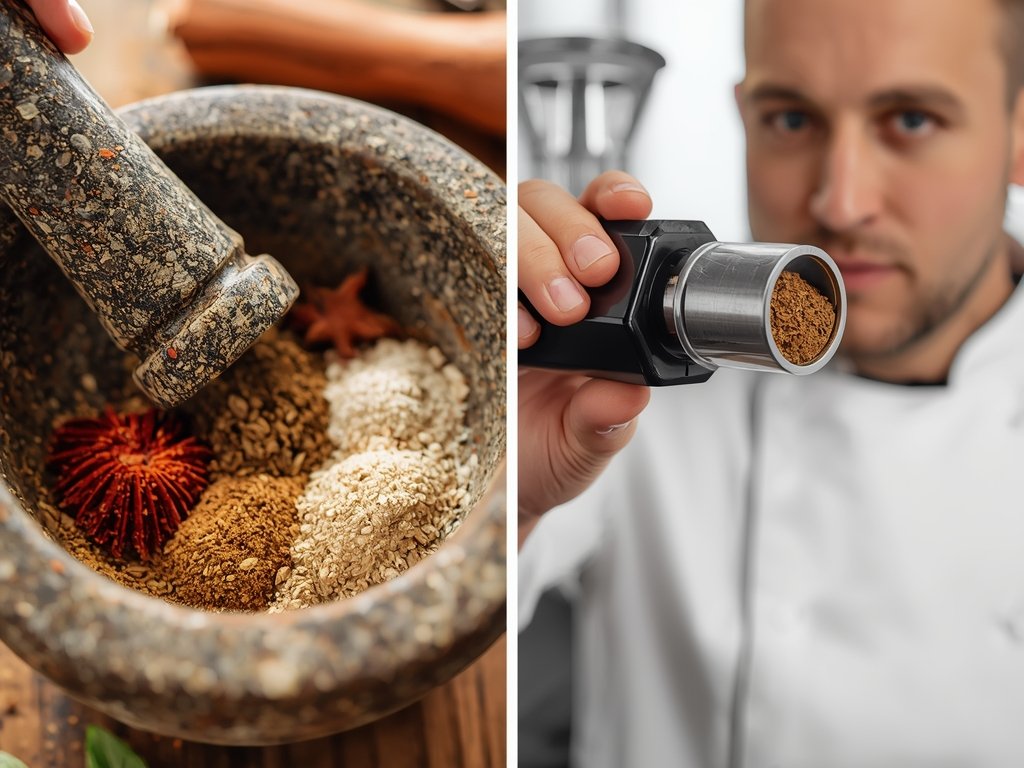
The million-dollar question: which tool produces more flavor? The answer depends on the spice and the dish. For example, in a hearty Midwest chili, the robust flavors of cumin and chili powder can hold up well to the heat of a spice grinder. But in a delicate dish like a New England clam chowder, where subtle flavors are key, the mortar and pestle might give you the edge.
A study by the Institute of Culinary Excellence found that spices ground with a mortar and pestle retained up to 20% more essential oils compared to those ground in a spice grinder. This means that while both tools have their merits, the mortar and pestle often delivers a more intense flavor profile.
The Role of Technique
It’s not just the tool that matters—technique plays a huge role too. With a mortar and pestle, the pressure and motion you apply can affect the release of flavors. Similarly, with a spice grinder, the duration of grinding can impact the final result. Experimenting with both tools can help you discover which works best for your cooking style.
Cultural Context: How America’s Melting Pot Influences Spice Preferences

The United States is a melting pot of cultures, and this diversity is reflected in our spice preferences. In cities like Los Angeles, where Mexican and Asian cuisines are deeply ingrained, the mortar and pestle is often used for traditional dishes like guacamole or Thai curry paste. Meanwhile, in the Midwest, where convenience is king, the spice grinder is more commonly found in kitchens.
This cultural divide highlights the importance of context in the mortar and pestle vs. spice grinder debate. For some, the mortar and pestle is a symbol of tradition and authenticity, while for others, the spice grinder represents progress and efficiency. Both have a place in the American kitchen, depending on the cook and the cuisine.
Practical Tips for Choosing the Right Tool

So, how do you decide which tool to use? Here are some practical tips to guide your choice:
- Consider the Dish: For delicate flavors, opt for a mortar and pestle. For bold, robust dishes, a spice grinder can save you time.
- Think About Texture: If you need a specific texture, like a coarse grind for rubs, the mortar and pestle gives you more control.
- Time is of the Essence: If you’re short on time, the spice grinder is your best bet. For a more leisurely cooking experience, go with the mortar and pestle.
FAQ
Can I use a spice grinder for wet ingredients?
Most spice grinders are designed for dry ingredients only. For wet ingredients like garlic or ginger, a mortar and pestle or a food processor is a better option.
How do I clean a mortar and pestle?
Wash it with warm, soapy water after each use. For stubborn stains, grind a mixture of salt and water to scrub away residue.
Is it worth investing in a high-end spice grinder?
If you frequently grind spices, a high-end grinder with durable blades and a powerful motor can be a worthwhile investment.
Can I grind coffee beans in a spice grinder?
Yes, but be aware that coffee oils can linger, affecting the flavor of spices. It’s best to use a dedicated coffee grinder for beans.
Which tool is better for small quantities of spices?
A mortar and pestle is ideal for small quantities, as it allows for precise control over the grinding process.

David handles the Kitchen Gear category, reviewing tools, equipment, and accessories that make cooking and food storage easier. His articles focus on practical recommendations for everyday home cooks.

← Previous
Meat Thermometer Guide: Why 1-Degree Matters for Food Safety
Next →
Immersion Blender Secrets: Mayo, Soups, and More Made Easy