Follow Me On Social Media!

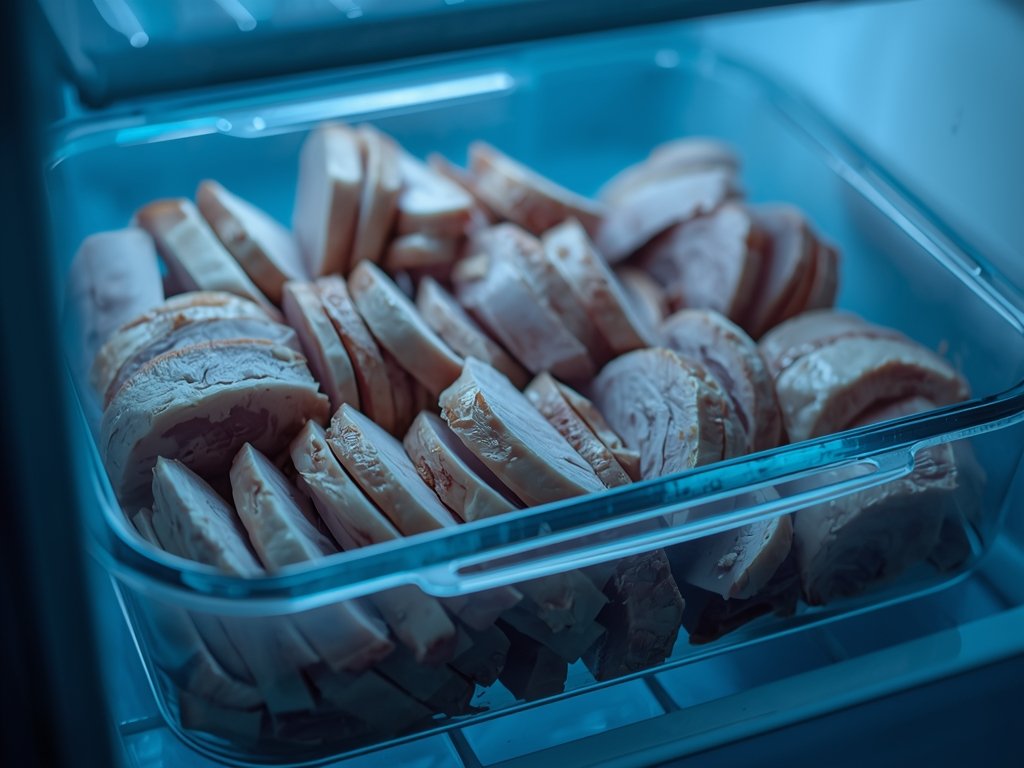
There is a specific kind of culinary fatigue that hits around day three of a holiday roast. You open the refrigerator door, and there it is: The Turkey Mountain. Whether it’s the carcass stripped bare or Tupperware containers filled with slices of white meat, the sight is overwhelming. The magic of the roast dinner has faded. The slices of breast meat look dry and fibrous, leaning against each other like exhausted travelers. You know that if you make another sandwich, the bread is going to soak up whatever moisture is left in that bird, leaving you with a dry, sad lunch.
But here is the thing about turkey: it is the ultimate flavor chameleon. It’s mild, it’s lean, and it has a structure that loves to absorb liquid. While turkey might be terrible leftover in a sandwich, it is actually the perfect vehicle for a Thai-style curry. We aren’t trying to roast it again; we are trying to rehydrate it in a bath of coconut milk and fiery spices. By taking those dry slices and dunking them into a velvety red curry, we aren’t just using up leftovers—we are creating a dish that is arguably better than the roast itself. It’s spicy, it’s creamy, and it solves the dry-meat problem in one go.
Why Turkey Thirsts for Fat
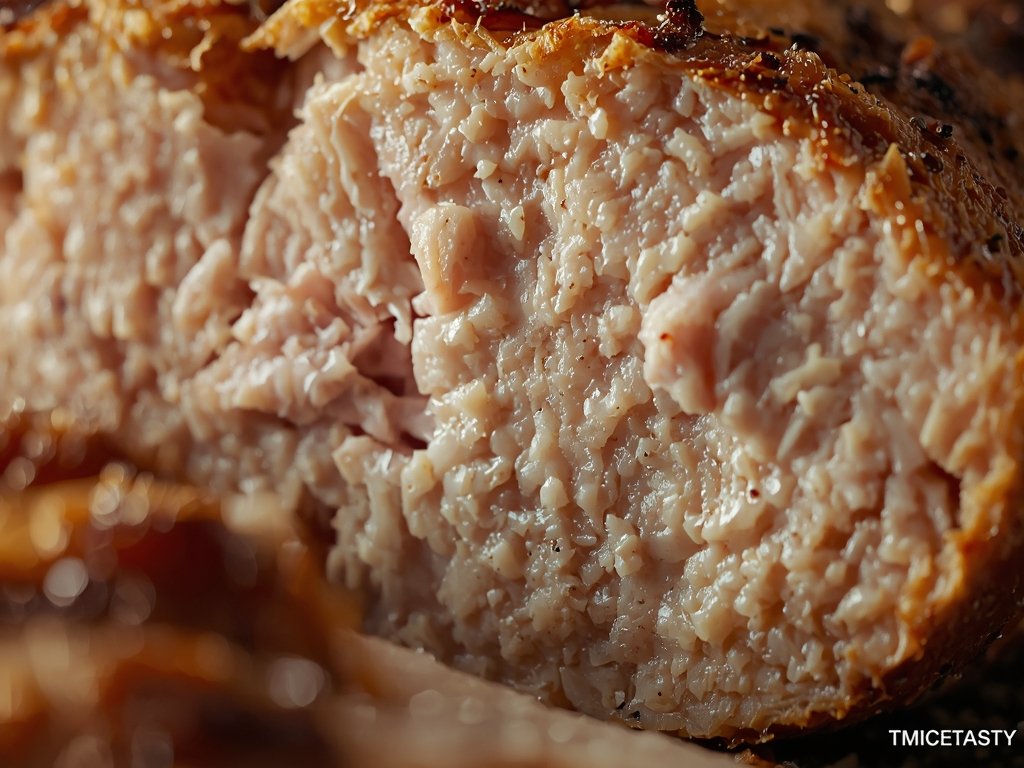
To understand why this works, we have to look at the enemy: dryness. Roast turkey, especially the breast, is very low in fat. When you roast it, you drive off a lot of the internal moisture. As it sits in the fridge, the remaining moisture evaporates, and the proteins tighten up into a dense, chewy network. It’s essentially a sponge that has been squeezed dry.
If you try to reheat it in the oven or microwave, you are applying dry heat to a dry sponge. It just gets tougher. But a curry is essentially a soup of fat and water. Coconut milk is full of saturated fats that coat the tongue and lubricate the throat. When you simmer dry turkey in coconut milk, the liquid forces its way into the muscle fibers.
The proteins in the turkey are like empty cups waiting to be filled. The rich, spicy coconut fat seeps into those gaps, replacing the lost moisture with flavor. It’s a braising technique. We are trading the “roasted” flavor for a “curried” flavor. The turkey stops being the main event and becomes the texture element—a hearty, meaty chunk that carries the punchy chili, garlic, and galangal notes of the curry paste. It goes from being the problem to being the solution.
Building the Coconut Oil Base
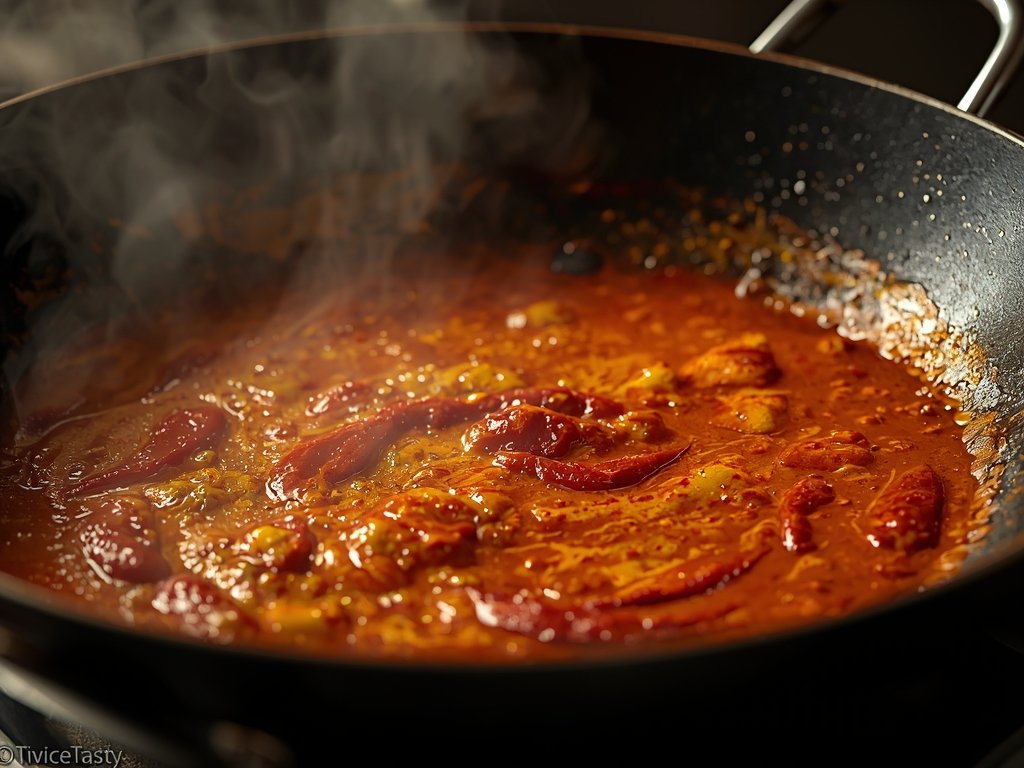
The secret to a restaurant-style curry at home isn’t just dumping the can of coconut milk in. You have to bloom the paste. Start with a heavy pot or a wok. Turn the heat to medium-low. Scoop out the thick cream from the top of the coconut milk can— that white, solid layer is pure fat and gold.
Spoon that cream into the pot. Let it sizzle. As it heats up, it will separate and start to bubble. Now, add your red curry paste. How much? That depends on your bravery, but start with a few tablespoons. Stir it into the oil. You aren’t just mixing; you are frying the spices. The garlic, the chili, the lemongrass, and the shrimp paste inside that jar need heat to wake up. Frying them in the coconut oil releases their essential oils. Your kitchen should start to smell like a street stall in Bangkok—pungent, spicy, and mouth-watering.
Once that paste has darkened slightly and smells fragrant, pour in the rest of the coconut milk. Add a splash of water or chicken stock if you want it thinner. Bring it to a gentle simmer. Do not let it boil furiously; coconut milk can split and curdle if you bully it. We want a gentle, rolling bubble. Add your vegetables—maybe some bamboo shoots, red bell pepper, or sweet potato. Let them soften.
The “Don’t Boil” Rule

Now, the turkey. This is the critical moment where most people ruin the texture. You have your hot curry sauce bubbling away. You take your sliced turkey and you dump it in. Then, you walk away for twenty minutes. Don’t do that.
Turkey is already cooked. If you boil it in the curry for twenty minutes, the muscle fibers will contract so tightly they squeeze out all the coconut milk you just tried to put in. It will become dry and stringy again. You want to treat the turkey like a delicate flower.
Slice your leftover turkey into bite-sized strips or chunks. Slide them into the simmering sauce. Gently press them down so they are submerged. Turn the heat down to the lowest setting. Let them hang out there for just 3 to 5 minutes. You are essentially poaching the meat in the fat. You just want it to heat through and absorb the flavor of the broth.
Taste it. The turkey should be tender, but it should still have a little bit of bite. It shouldn’t be falling apart like a pulled pork; it should hold its shape against the soft vegetables. The curry should be thick and glossy, coating every piece of meat in a red, velvety sheen.
The Crunch and Zing Finish
A curry can be a “one-note” flavor profile—just salty, spicy, and hot. To make it a complete meal that doesn’t taste like leftovers, you need texture and acid. The turkey is soft, the sauce is liquid, the vegetables are soft. You need a crunch.
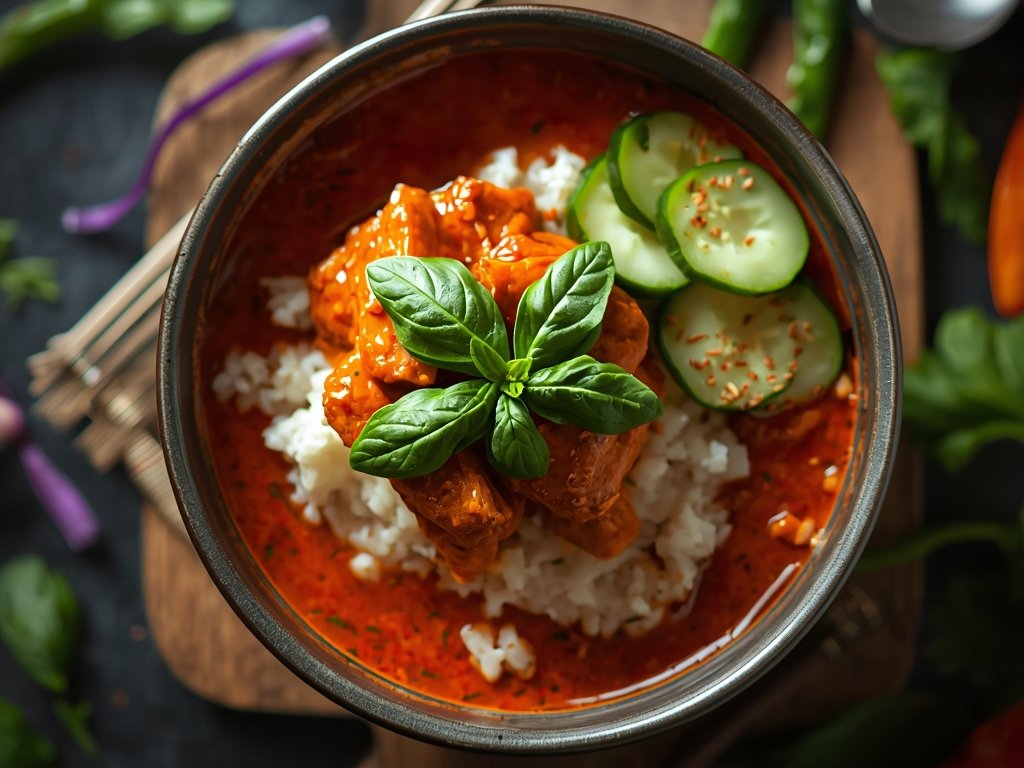
Thai cuisine balances this with fresh garnishes. Just before you serve, squeeze half a lime into the pot. The acid cuts through the heavy coconut fat and brightens the turkey flavor. Then, the texture. If you have them, throw in a handful of Thai basil leaves at the very end. Don’t cook them; just stir them in so they wilt slightly. The anise flavor of the basil pairs perfectly with the bird.
But for the ultimate crunch, grab some cucumber or some raw red onion. Slice them thin. Serve the curry over jasmine rice, but top it with those raw, crisp vegetables. Every spoonful gives you the hot, creamy, spicy turkey and sauce, followed by the cool, crisp snap of the cucumber. It’s a temperature and texture contrast that makes the dish feel alive. You’ve turned a dry, leftover bird into a vibrant, spicy bowl of comfort that has absolutely nothing to do with the holidays, and everything to do with flavor.
Frequently Asked Questions
Can I use the turkey carcass for this?
You can, but that’s a soup, not a curry. If you want to make a broth, simmer the carcass with water first, then strain it and use that liquid instead of chicken stock in the curry. It adds a deeper turkey flavor, but you’ll still need meat to eat, so use the leftover slices for the chunks.
My curry paste looks oily and separated. Did I mess up? This often happens if the heat is too high or you stir it too much once the coconut milk is added. It still tastes delicious, it just doesn’t look as pretty. To fix it, whisk in a tiny bit of cornstarch slurry (cornstarch mixed with cold water) while simmering. It helps re-emulsify the fat and liquid into a smooth sauce.
Is this dish spicy? It depends on your paste. Red curry paste is generally quite spicy, but the coconut milk tames it significantly. If you are sensitive to heat, start with less paste and add more lime juice and fish sauce at the end for flavor without the burn. You can always add heat, but you can’t take it away.

Amara writes for the Tasty Remakes category, turning everyday leftovers into creative new dishes. Her recipes focus on practical transformations that save time and reduce food waste — proving that yesterday’s dinner can become today’s best meal.

← Previous
Turning Leftover Cornbread into Sweet & Savory Bread Pudding
Next →
How to Use Leftover Burger Patties for Quick Beef Stroganoff