Follow Me On Social Media!

The Holy Grail of Leftovers: Chasing That Crispy Paella Bottom
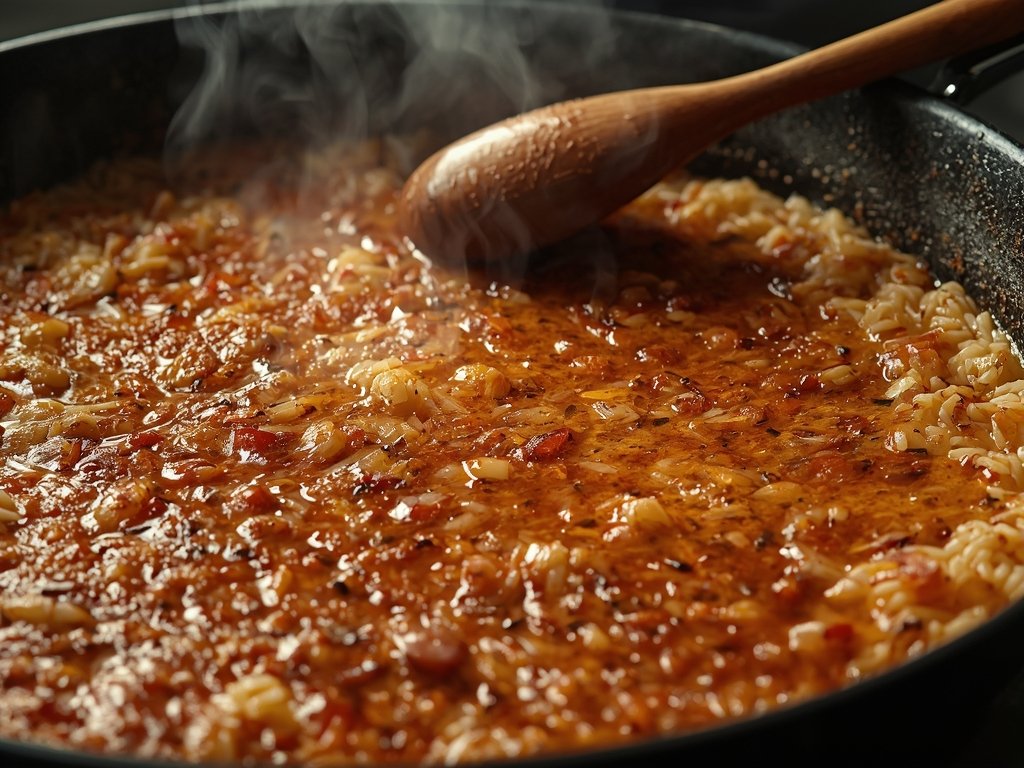
If you’ve ever scraped the bottom of a paella pan, you know the magic of socarrat – that caramelized, crispy rice layer that’s the holy grail of Spanish cooking. But what happens when yesterday’s paella becomes today’s leftover dilemma? Fear not, fellow food enthusiasts! We’re about to embark on a quest to resurrect that coveted crunch.
In the land of leftovers, paella often gets a bad rap. The rice can turn gummy, the flavors muted. But with a few clever tricks, you can transform those remnants into a dish that rivals the original – crispy bottom and all.
Understanding the Science of Socarrat
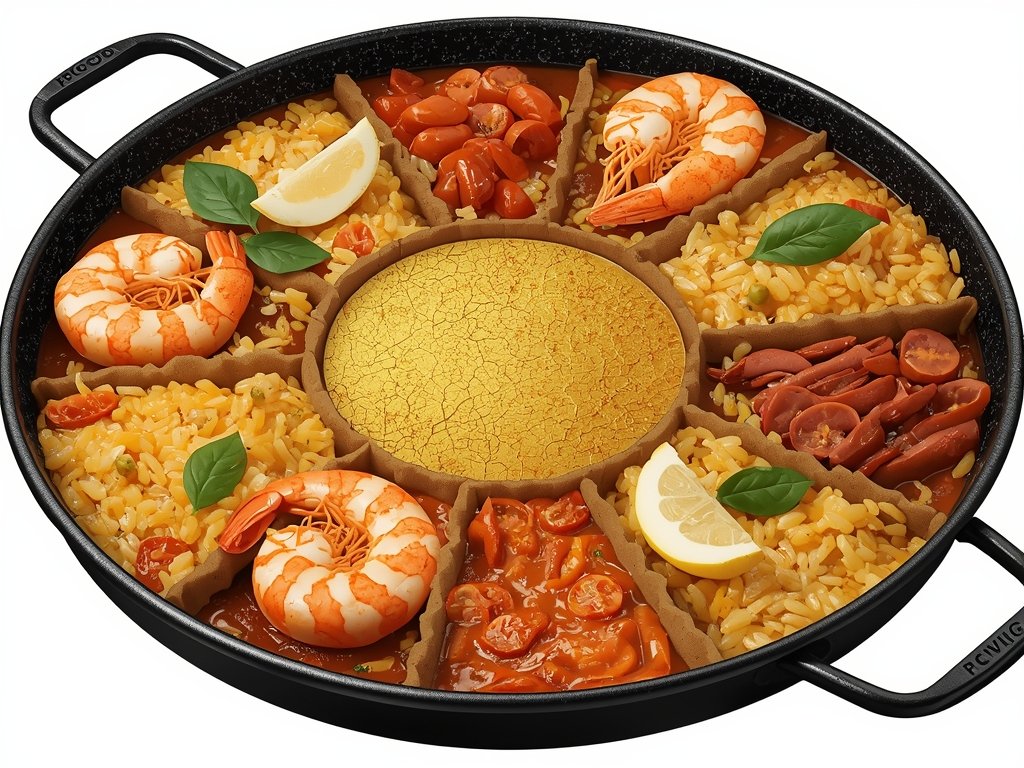
Before we dive into the resurrection process, let’s appreciate the science behind socarrat. This magical layer forms when the rice at the bottom of the pan caramelizes, creating a delicate balance of crispy and chewy textures. It’s the result of precise heat distribution, moisture control, and timing.
In traditional paella making, the socarrat is a testament to the cook’s skill. But with leftovers, we’re working with a different set of variables. The rice has already absorbed most of the liquid, and the flavors have melded. Our challenge is to reintroduce that crispy texture without overcooking or drying out the dish.
The Role of Heat and Moisture
To achieve socarrat, we need to create a dry, hot environment at the bottom of the pan. This allows the rice to caramelize without burning. In a traditional paella, this happens naturally as the liquid evaporates. With leftovers, we’ll need to manipulate the heat and moisture levels manually.
Prepping Your Leftover Paella for Resurrection
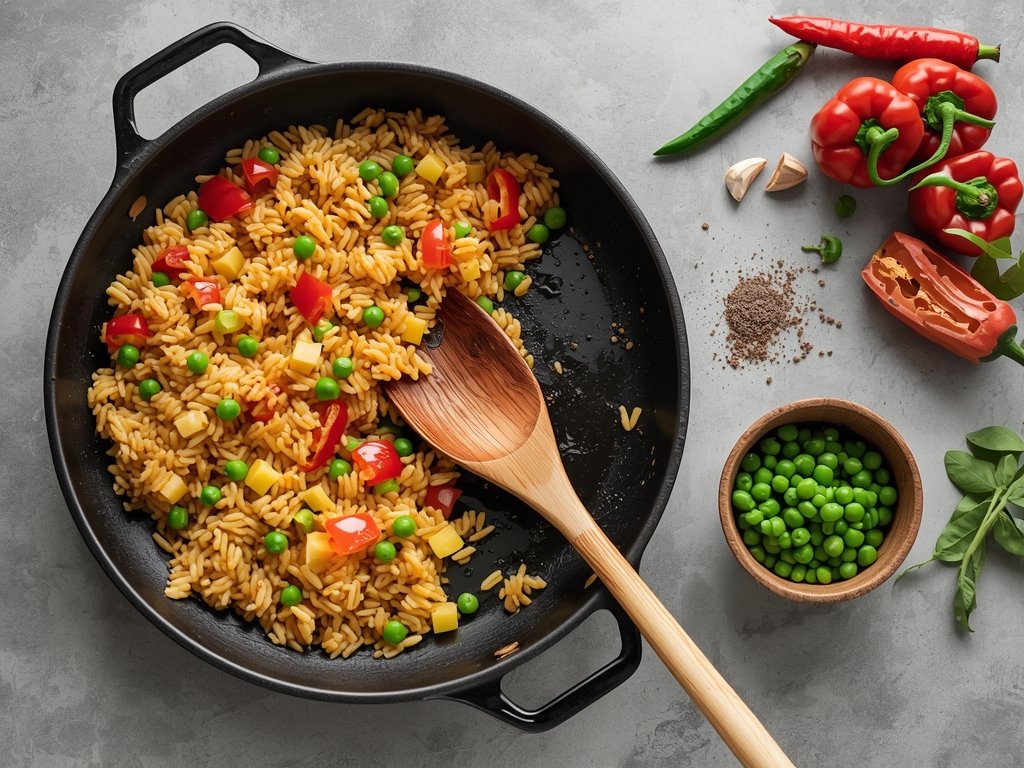
Not all leftover paella is created equal. Before you start, assess the state of your dish. Is it dry and crumbly, or moist and clumpy? The former will require more moisture, while the latter needs careful heat management to avoid sogginess.
The Importance of Even Distribution
Break up any large clumps of rice to ensure even heating. This prevents hot spots that can burn the rice while leaving other areas undercooked. Use a fork or spatula to gently separate the grains, being careful not to mash them.
Adding Fresh Ingredients
Consider incorporating fresh vegetables or proteins to enhance the flavor and texture. Sautéed bell peppers, peas, or even diced chicken can add a welcome contrast to the rich, savory rice. Just be mindful of the additional moisture these ingredients bring.
The Secret Weapon: The Skillet Method
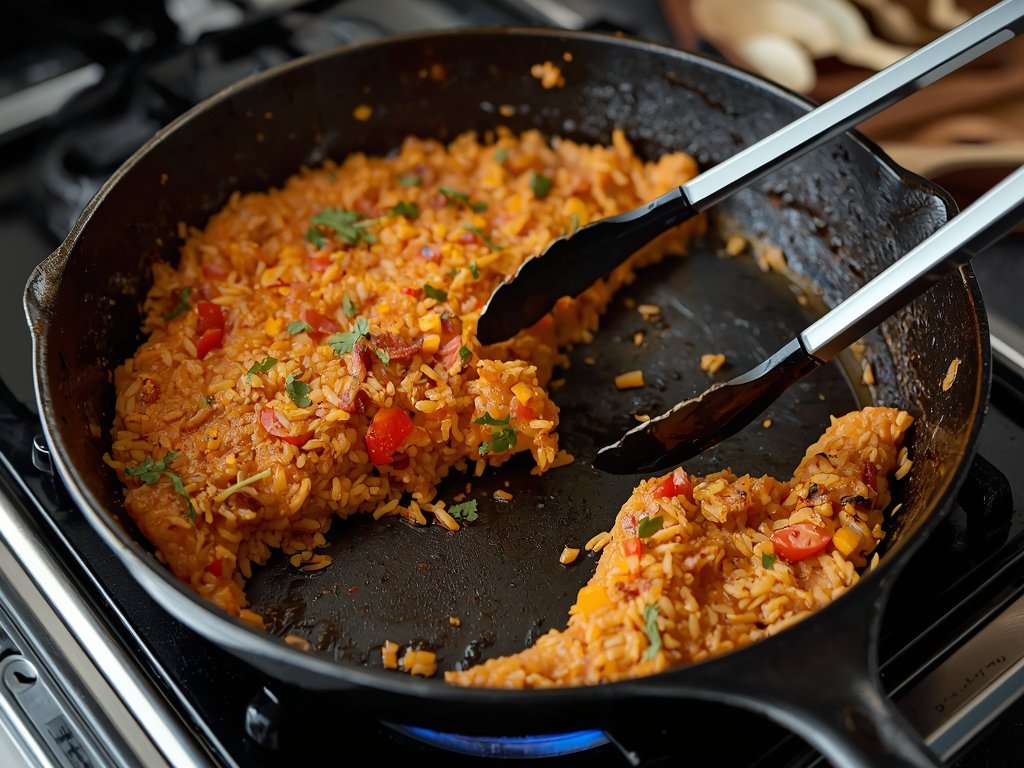
Now, let’s get down to business. The skillet method is your secret weapon for achieving that elusive socarrat. By using a wide, heavy-bottomed skillet, you can control the heat more effectively than in a traditional paella pan.
Step-by-Step Skillet Socarrat
- Heat the Skillet: Place a cast-iron or stainless-steel skillet over medium heat. Allow it to heat up for a few minutes – you want it hot but not smoking.
- Add the Paella: Spread your leftover paella in an even layer across the skillet. Press it down gently with a spatula to ensure good contact with the surface.
- Cover and Cook: Cover the skillet with a lid to trap the moisture. This helps to rehydrate the rice and distribute the heat evenly. Cook for 5-7 minutes, checking occasionally to prevent burning.
- Uncover and Crisp: Remove the lid and continue cooking for another 5-7 minutes. The rice should start to sizzle and crisp at the edges. Use a spatula to lift and check the socarrat – it should be golden brown and fragrant.
Alternative Techniques for the Adventurous Cook
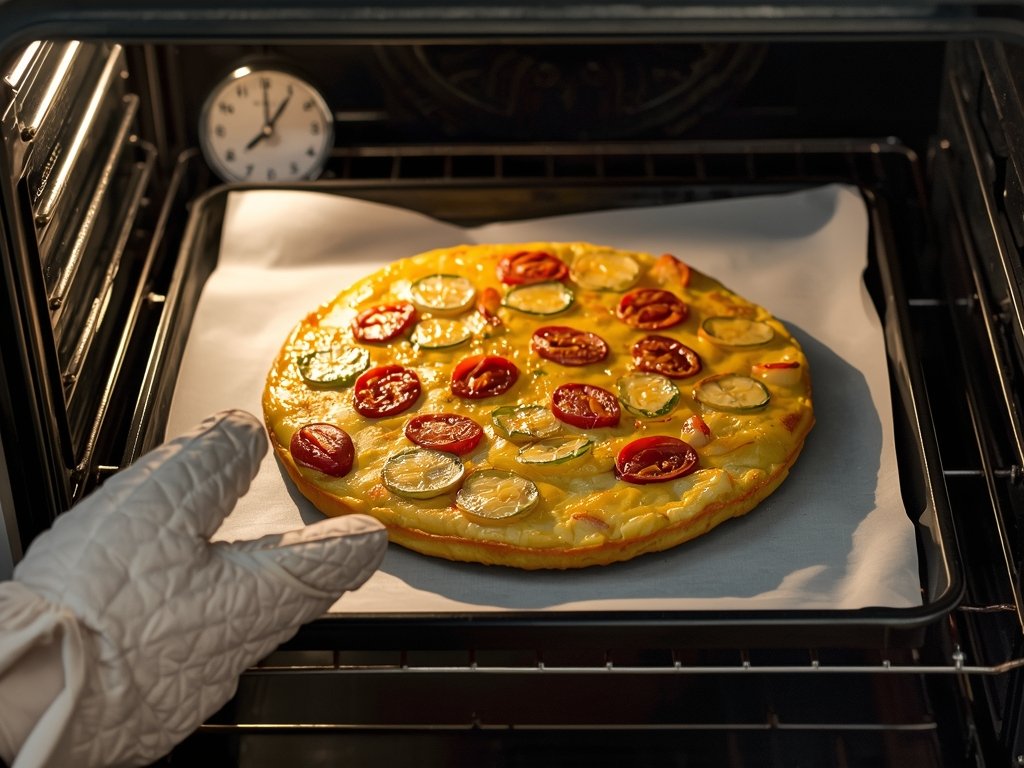
If the skillet method doesn’t suit your style, fear not! There are other paths to socarrat enlightenment. Each method has its own nuances, so choose the one that best fits your kitchen setup and personal preference.
The Oven Method
For a hands-off approach, try the oven method. Preheat your oven to 400°F (200°C). Spread your leftover paella on a baking sheet in a thin, even layer. Bake for 10-15 minutes, or until the edges are crispy. This method is great for larger quantities but may not achieve the same depth of flavor as the skillet method.
The Broiler Method
If you’re short on time, the broiler method can deliver quick results. Place your paella in an oven-safe dish and position it under the broiler. Keep a close eye on it, as the broiler can go from perfect to burnt in a matter of seconds. This method is best for small portions and requires constant vigilance.
Serving and Savoring Your Second Socarrat
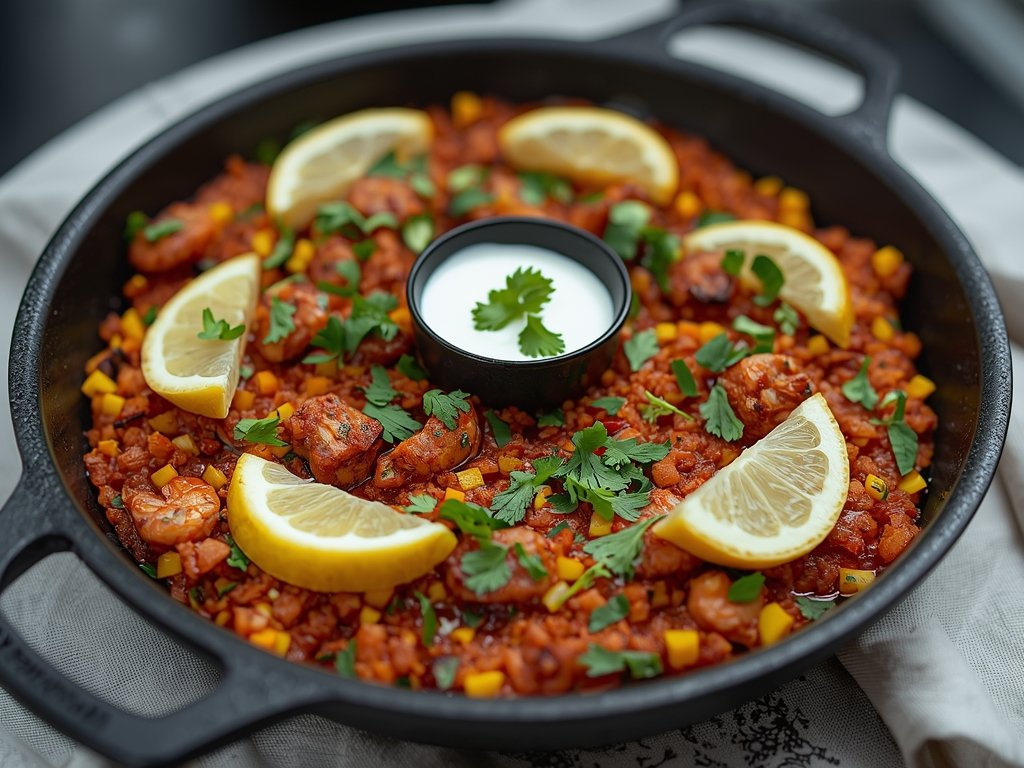
Once you’ve achieved that golden socarrat, it’s time to serve and savor. But don’t stop there – elevate your dish with thoughtful garnishes and pairings that complement the rich, savory flavors.
Garnishes and Pairings
- Lemon Wedges: A squeeze of fresh lemon juice brightens the dish and cuts through the richness.
- Fresh Herbs: Chopped parsley or cilantro adds a burst of freshness and color.
- Garlic Aioli: A dollop of aioli on the side provides a creamy contrast to the crispy rice.
- Wine Pairing: A crisp white wine, like a Spanish Albariño, complements the flavors of the paella without overwhelming them.
FAQ
Can I use any type of rice for paella?
While traditional paella uses short-grain rice like Bomba or Calasparra, you can experiment with other varieties. Just keep in mind that the texture and absorption rate may differ, affecting the final result.
How do I store leftover paella to maintain its quality?
Store leftover paella in an airtight container in the refrigerator for up to 3 days. To prevent the rice from drying out, add a thin layer of olive oil or broth before sealing.
Can I freeze leftover paella?
Yes, paella freezes well. Portion it into freezer-safe containers and freeze for up to 2 months. Thaw in the refrigerator overnight before reheating.
What if my socarrat burns?
If your socarrat burns, scrape off the charred layer and adjust your heat settings. Lower the heat and cook for a longer period, monitoring closely to achieve the desired crispiness without burning.

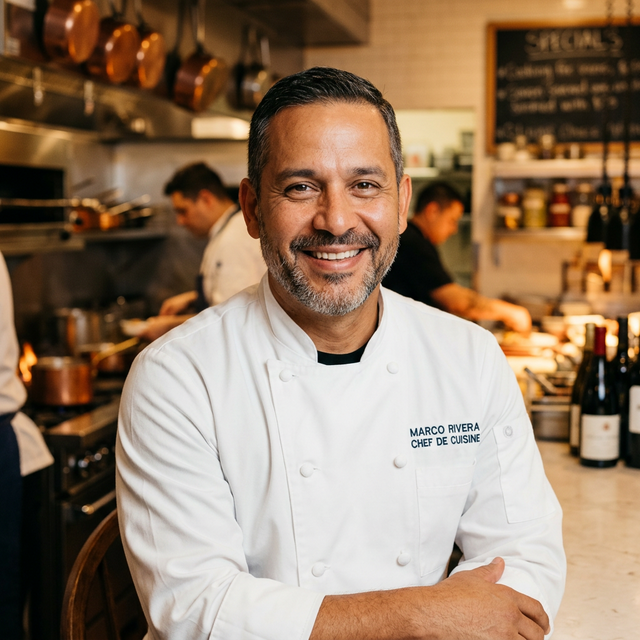
Marco covers the Reheat Pro category on TwiceTasty, focusing on reheating techniques and texture preservation. His articles help home cooks bring leftovers back to life with the right methods for every type of food — from crispy fried chicken to creamy pastas.
← Previous
Revive Fish & Chips: Dry Heat Oven Magic
Next →
Reheat Phyllo Meat Pies Perfectly: Crispy, Not Greasy