Follow Me On Social Media!

Leftover Meatballs Shakshuka: A Middle Eastern Twist.
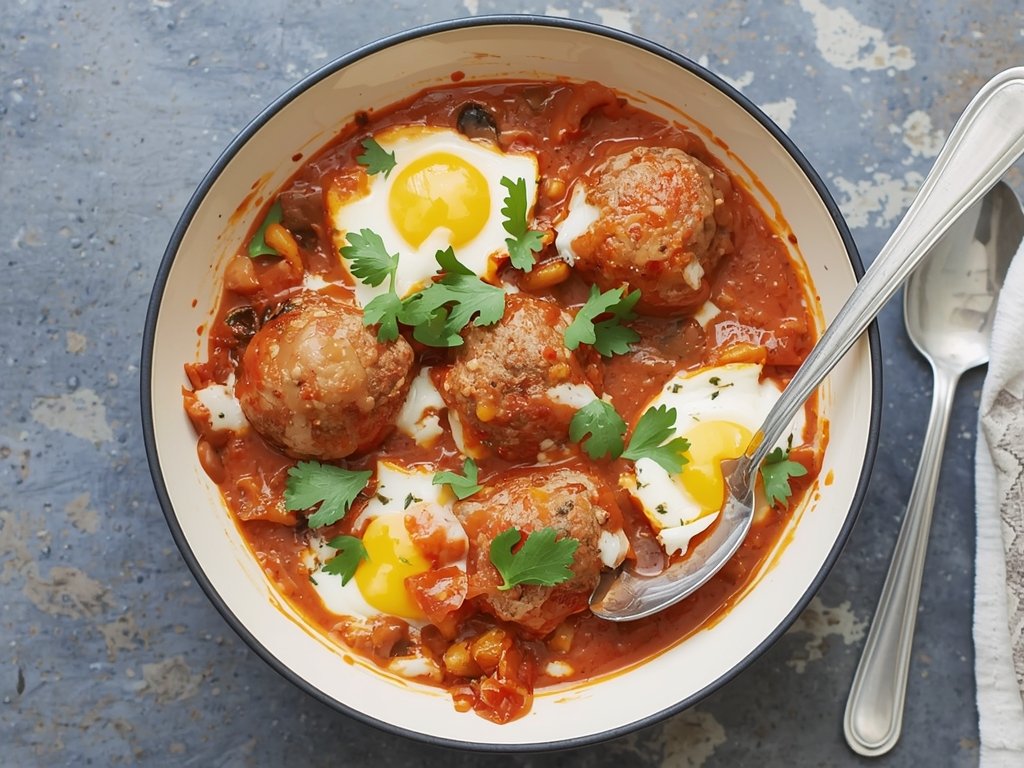
We have all been there. You hosted a dinner party, or perhaps made a massive batch of Italian-style meatballs for spaghetti night, and now you are left with a container of cold, leftover spheres of ground meat sitting in your refrigerator. While reheating them with more pasta is an option, it can feel repetitive and heavy.
What if you could transport those leftovers to the sun-drenched streets of Tel Aviv or Marrakech with just a few pantry staples? Enter Leftover Meatballs Shakshuka.
Shakshuka, a traditional dish of eggs poached in a sauce of tomatoes, olive oil, peppers, onions, and garlic, is beloved across the Middle East and North Africa. By introducing your pre-cooked meatballs into this simmering spiced sauce, you add protein, depth, and a savory richness that turns a simple breakfast or brunch dish into a hearty, complete dinner.
This article will guide you through creating this fusion masterpiece, optimizing your leftovers for maximum flavor, and serving a meal that looks impressive but requires minimal effort.
Why Meatballs and Shakshuka Are the Perfect Pair
At first glance, Italian meatballs and Middle Eastern tomato sauce might seem like an unlikely couple. However, culinary fusion is often born from necessity, and in this case, the chemistry is undeniable.
1. Flavor Bridge
Traditional Italian meatballs are often seasoned with garlic, parsley, and oregano. Traditional Shakshuka sauce relies heavily on cumin, paprika, and cayenne. These flavor profiles share a “savory earth” foundation. The herbs in the meatballs do not clash with the spices in the sauce; instead, they mellow out the heat of the paprika and add a layer of herbal freshness.
2. Texture Contrast
Shakshuka is inherently soft: poached eggs, stewed peppers, and simmered tomatoes. Adding meatballs introduces a necessary chew and texture variance. It turns the dish from a “dip” into a substantial meal.
3. The “Double Cook” Effect
When you reheat meatballs in the oven or microwave, they often dry out. However, reheating meatballs directly in the Shakshuka sauce allows them to braise. The meatballs absorb the liquid from the tomatoes, softening further and becoming juicy pockets of flavor infused with cumin and smoky paprika.
Gathering Your Ingredients: The Pantry Checklist

The beauty of this recipe is that 80% of the work is already done (thanks to the leftover meatballs). The remaining 20% requires fresh produce and spices you likely have in your cupboard.
The Base:
- Leftover Meatballs: 6 to 10 meatballs, depending on size. If they are large, slice them in half so they heat through faster and absorb more sauce.
- Aromatics: 1 yellow onion (diced), 1 red bell pepper (diced), and 3-4 cloves of garlic (minced).
- The Sauce: One 28-ounce can of crushed tomatoes or whole peeled tomatoes (crushed by hand). Fire-roasted tomatoes add an excellent depth of flavor.
The Spices (The Middle Eastern Twist):
- Cumin: 1 teaspoon. Essential for that earthy flavor.
- Smoked Paprika: 1 teaspoon. Provides a smoky backdrop.
- Chili Powder or Cayenne: 1/4 to 1/2 teaspoon (adjust for heat).
- Salt and Black Pepper: To taste.
The Finishers:
- Eggs: One per person (usually 4-6 eggs).
- Garnishes: Fresh cilantro or parsley, crumbled feta cheese (optional but recommended), and a drizzle of good quality olive oil.
Step-by-Step: Cooking the Ultimate Leftover Meatball Shakshuka
This recipe comes together in about 25 minutes, making it faster than delivery and infinitely healthier.
Step 1: Sauté the Aromatics
Heat a tablespoon of olive oil in a large, deep skillet or cast-iron pan over medium heat. Add the diced onions and red bell peppers. Sauté for about 5-7 minutes until the onions are translucent and the peppers have softened. Add the minced garlic and cook for just one minute more until fragrant. Be careful not to burn the garlic, or it will turn bitter.
Step 2: Build the Spice Base
Lower the heat slightly and add your cumin, smoked paprika, and chili powder. Stir the spices into the onion and pepper mixture. Toasting the spices in the oil for about 30 seconds releases their essential oils, waking up the flavors before the liquid hits the pan.
Step 3: Simmer the Sauce
Pour in the can of crushed tomatoes. Fill the empty can halfway with water, swish it around to catch the remaining tomato juice, and pour that into the pan as well. Season with salt and pepper. Bring the mixture to a gentle simmer. Let it cook for 5-10 minutes until the sauce thickens slightly.
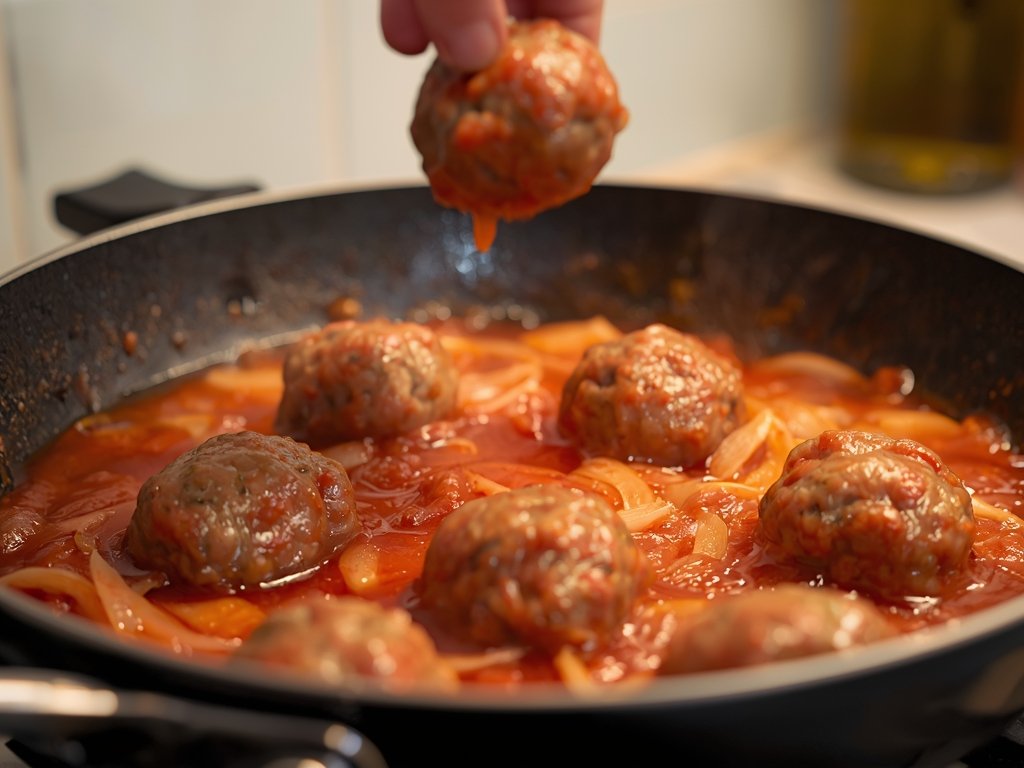
Step 4: Introduce the Meatballs
Gently nestle your leftover meatballs into the sauce. If they are very large, cut them in half. Spoon some of the sauce over the tops of the meatballs. Cover the pan and let it simmer for another 5-7 minutes. This step ensures the meatballs are heated all the way through and begin to absorb the spicy tomato flavor.
Step 5: The Eggs
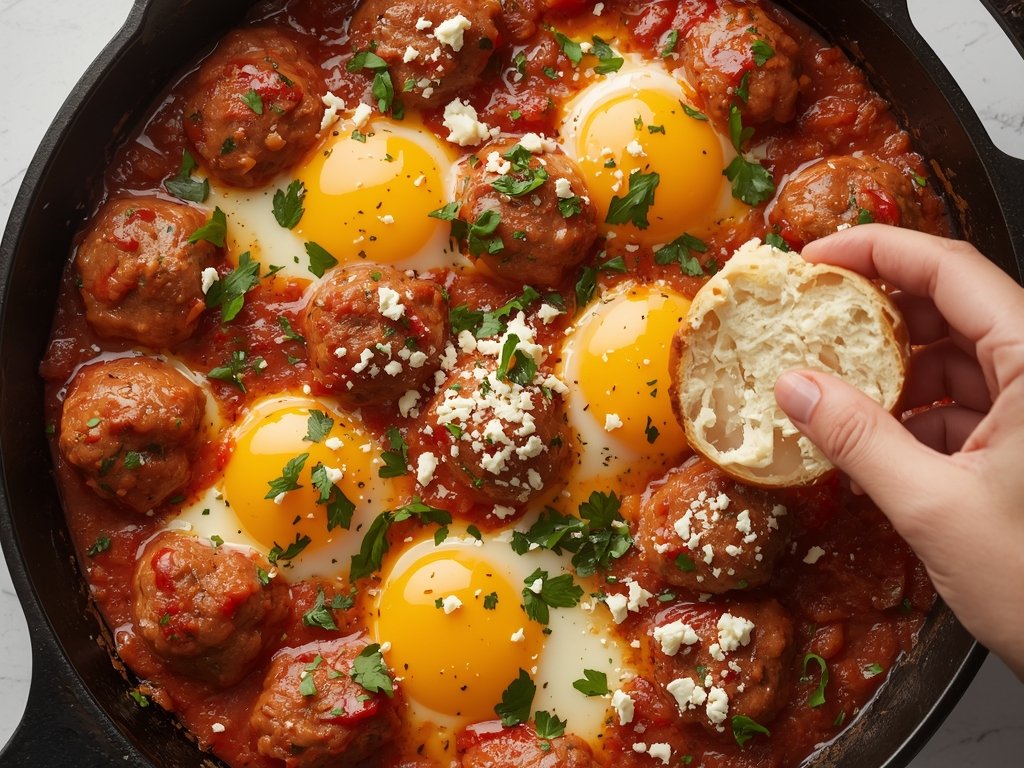
Use a spoon to make small “wells” or indentations in the sauce between the meatballs. Crack an egg directly into each well. Depending on the size of your pan, you may fit 4 to 6 eggs.
Crucial Tip: If you prefer firm whites but runny yolks, cover the pan for this step. If you like a bit of crispy edge on the whites, leave it uncovered.
Step 6: The Final Poach
Cover the pan and reduce the heat to low. Simmer for 5-8 minutes. Check the eggs frequently. You want the whites to be opaque and set, but the yolks to remain jiggly and golden.
Step 7: Garnish and Serve
Remove from heat immediately. Sprinkle generously with fresh parsley or cilantro, crumbled feta, and a final drizzle of extra virgin olive oil. Serve directly from the skillet to keep it rustic and hot.
Variations: Customizing Your Dish
One of the best aspects of Shakshuka is its versatility. Depending on what kind of meatballs you have left over, you can tweak the recipe to match.
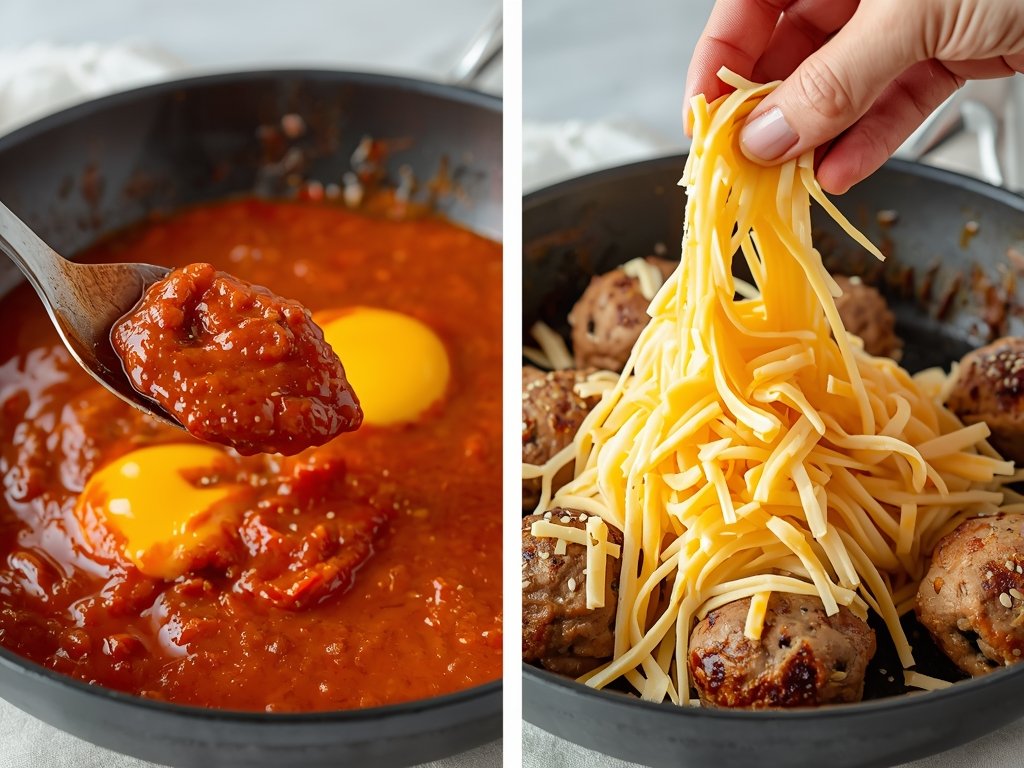
1. The “Spicy Harissa” Twist
If your leftover meatballs are mild (like Swedish style or plain beef), kick up the heat. Stir in a tablespoon of Harissa paste or a dollop of Calabrian chili paste along with the tomatoes. This adds a complex, fermented heat that pairs beautifully with eggs.
2. The “Green” Shakshuka
If you are looking to cut down on carbs or increase your veggie intake, you can replace half the tomato sauce with sautéed spinach or kale. Add the greens in after the sauce has simmered and before you crack the eggs. The meatballs provide enough protein to carry the dish even with less tomato.
3. The “Cheesy” Mel
Take inspiration from the North African variation. Sprinkle a layer of shredded mozzarella or Monterey Jack cheese over the entire dish during the last 2 minutes of cooking. Cover the pan to let it melt completely. The result is a gooey, stringy, comforting delight that kids will love.
Serving Suggestions: What to Eat with Shakshuka
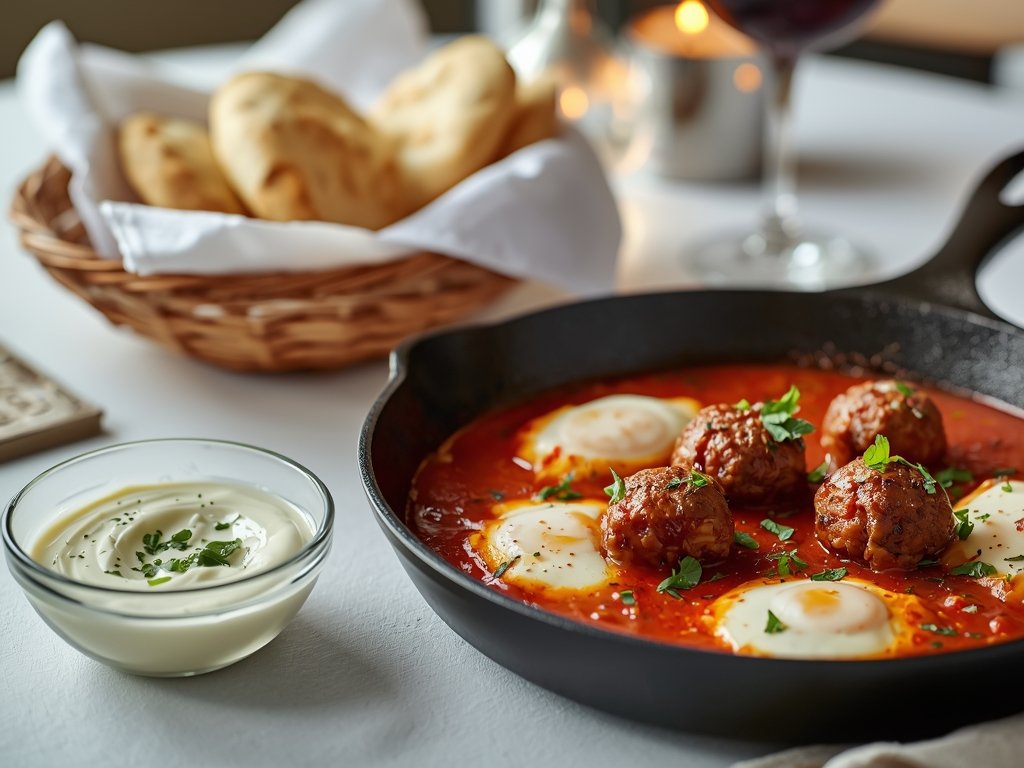
Shakshuka is technically a stew, but in the Middle East, it is almost always eaten as a dip. You need a vehicle to scoop up that runny yolk and spiced sauce.
1. Pita Bread
The classic choice. Warm your pita bread in the oven or on a gas flame so it puffs up. The pocket is perfect for grabbing a meatball and a piece of egg.
2. Crusty Baguette or Sourdough
If you don’t have pita, a crusty loaf works wonderfully. Toast slices of sourdough to give them some crunch so they don’t get soggy when dipped.
3. Couscous or Rice
If you want to make this a more substantial fork-and-knife dinner, serve the Shakshuka over a bed of fluffy couscous or basmati rice. The grains soak up the sauce beautifully, turning it into a deconstructed meatball stew.
4. Yogurt Sauce
The spice from the cumin and paprika can build up heat. A simple side sauce of Greek yogurt mixed with lemon juice, minced garlic, and a little dill provides a cooling contrast.
Storage and Reheating Tips
Shakshuka is best eaten fresh, primarily because of the eggs. However, leftovers are inevitable if you cook a large batch.
Storing
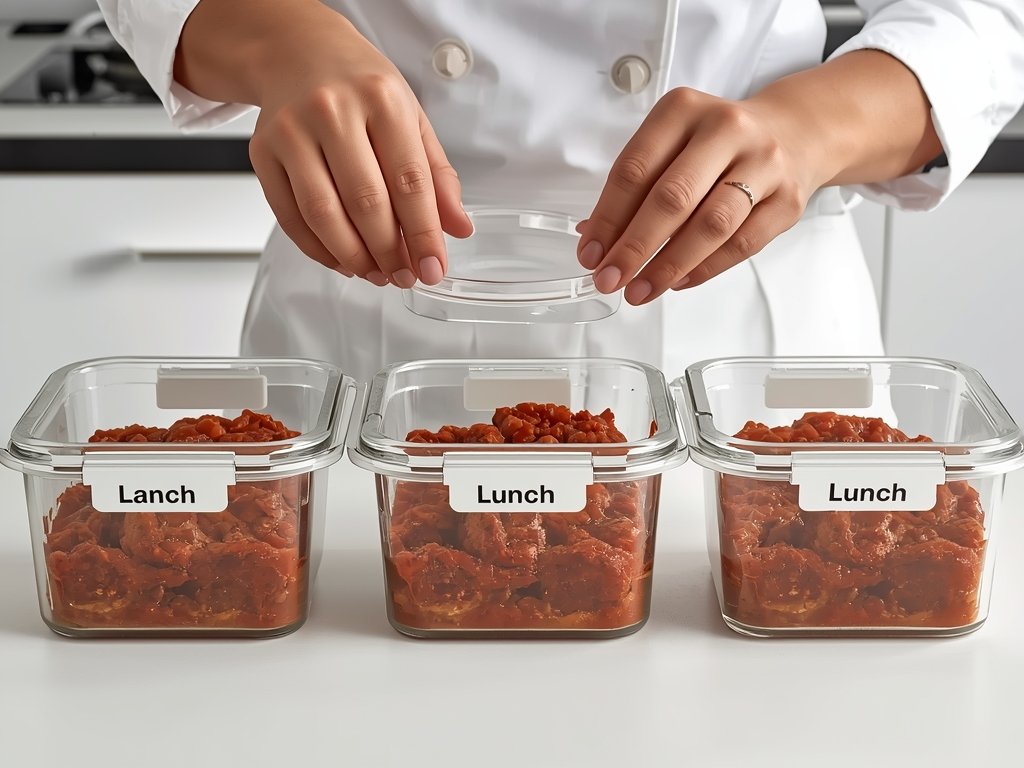
- Refrigerator: Store the Shakshuka in an airtight container in the fridge for up to 3 days.
- The Egg Issue: The texture of the poached eggs will change in the fridge. The yolks will become hard and the whites rubbery.
- Pro Tip: If you know you will have leftovers, try to cook only as many eggs as you plan to eat immediately. Store the remaining sauce and meatballs without eggs, and poach fresh eggs when you eat the leftovers.
Reheating
Reheat the sauce and meatballs in a pan over medium-low heat until bubbling. If you have leftover cooked eggs, place them on top of the heating sauce just to warm through, but avoid boiling them. Microwave reheating is possible but may cause the sauce to separate slightly; a quick stir usually fixes this.
A Zero-Waste Victory
Turning leftover meatballs into Shakshuka is more than just a dinner hack; it is a culinary transformation. It takes the familiar, comforting taste of home-cooked meatballs and dresses it up in the exotic, vibrant spices of the Middle East.
This dish proves that leftovers should never be boring. With a can of tomatoes, a few eggs, and a raid of your spice cabinet, you can create a dinner that is Instagram-worthy, nutritious, and deeply satisfying. So next time you stare at that container of leftover meatballs, skip the microwave and reach for the skillet. Your taste buds are in for a trip.
Frequently Asked Questions (FAQs)

1. Can I use frozen meatballs for this recipe?
Yes! Frozen meatballs work exceptionally well and are actually a great shortcut if you don’t have “leftovers” on hand. Since they are usually fully cooked, just toss them into the simmering sauce to thaw and heat through. You may need to simmer the sauce for an extra 5 minutes to ensure they are hot in the center.
2. What kind of meatballs work best? Beef and veal meatballs are the traditional choice and hold up well in the sauce. Turkey or chicken meatballs are lighter and also work deliciously, especially if you want a leaner meal. Avoid meatballs that have a very thick, sweet BBQ glaze, as the sugar might burn in the skillet or clash with the cumin.
3. My shakshuka sauce is too acidic/tart. How do I fix it? Tomatoes can vary in acidity. If your sauce tastes too sharp, add a pinch of baking soda (it sounds strange, but it neutralizes acid without a taste) or a teaspoon of sugar or honey to balance it out. A little bit of butter stirred in at the end also cuts the acidity and adds richness.
4. Can I make this vegetarian? Absolutely. You can swap the meatballs for vegetarian “meatballs” or simply add more veggies like diced zucchini, eggplant, or chickpeas to the sauce to make it a hearty vegetarian Shakshuka.
5. How do I prevent the eggs from overcooking? Eggs continue to cook even after you take the pan off the heat due to residual temperature. To ensure runny yolks, remove the pan from the heat the moment the whites are set but the yolks still look jiggly. Let it rest for a minute off the stove before serving—the residual heat will finish the whites without solidifying the yolks completely.