Follow Me On Social Media!

The Essential Trio: Your Kitchen’s MVPs
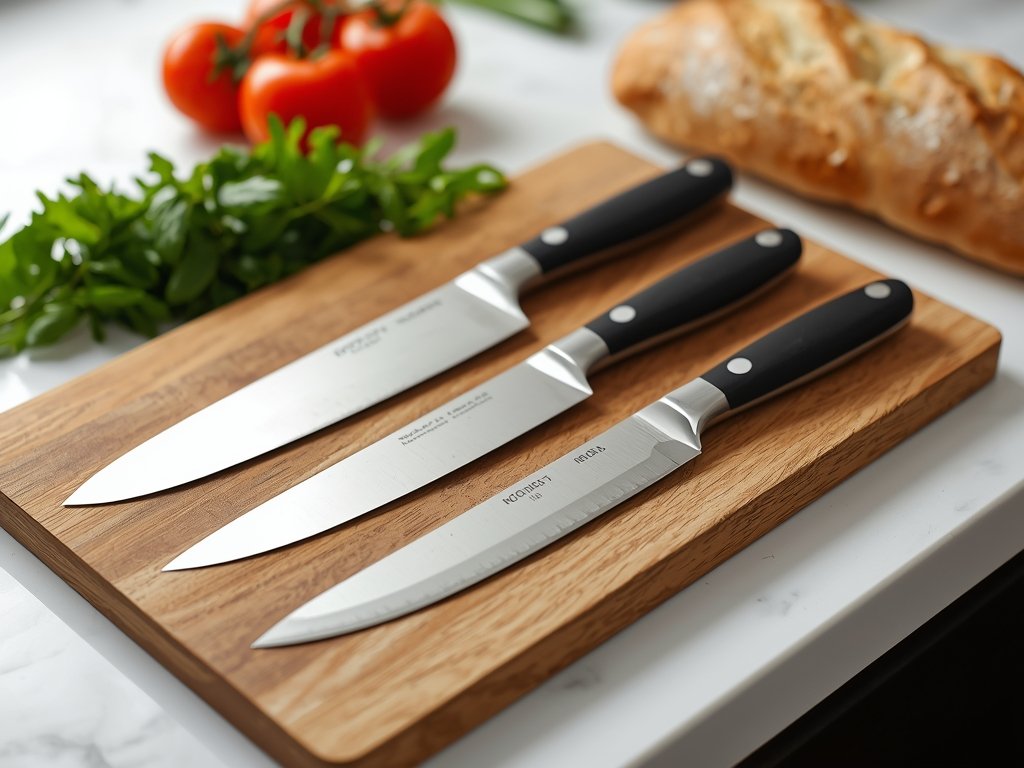
Let’s face it: the knife section at your local Bed Bath & Beyond can be overwhelming. With rows upon rows of shiny blades, each promising to revolutionize your cooking game, it’s easy to get sucker-struck into buying more than you need. But as a home cook who’s spent years testing and tossing (yes, literally) various knives, I’m here to tell you: you only need three.
That’s right – just three knives to tackle everything from mincing garlic to carving a Thanksgiving turkey. In this article, we’ll dive into the essential trio that’ll save you money, counter space, and sanity. Say goodbye to cluttered drawers and hello to efficient, effective cooking.
Meet the Dream Team: Your Go-To Knives
The Workhorse: Chef’s Knife
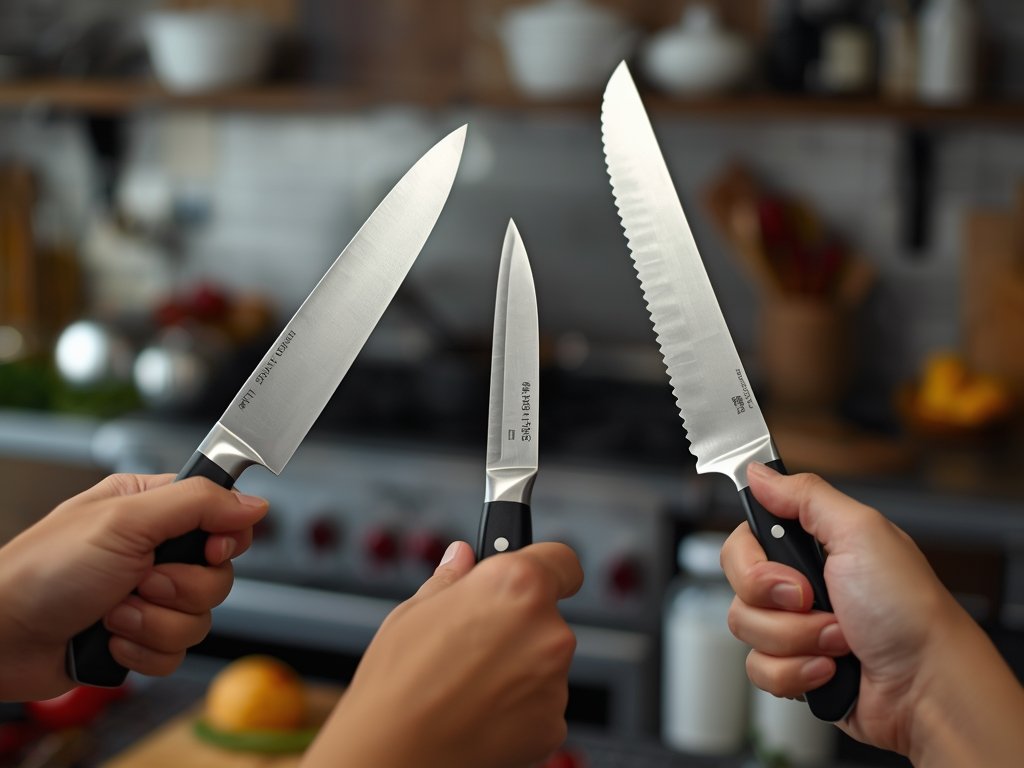
If you could only own one knife, make it a chef’s knife. This versatile blade is the MVP of your kitchen, handling everything from chopping onions to slicing meats. Look for a high-carbon stainless steel knife with a comfortable, ergonomic handle – you’ll be using it a lot.
My personal favorite is an 8-inch German-style chef’s knife, which provides the perfect balance of weight and precision. Brands like Wüsthof and Zwilling J.A. Henckels offer excellent options, but you don’t need to break the bank – a mid-range knife from Victorinox or Mercer will serve you well.
The Precision Player: Paring Knife
When your chef’s knife feels like overkill, reach for a paring knife. This small, nimble blade is perfect for delicate tasks like peeling fruits, trimming vegetables, and deveining shrimp. It’s also great for scoring bread or creating intricate garnishes.
A 3- to 4-inch blade with a comfortable grip is ideal. I prefer a spear-point design, which offers more control and precision than a bird’s beak or sheepfoot shape. Look for a knife with a full tang (meaning the metal runs through the entire handle) for added durability.
The Bread Master: Serrated Knife
Slicing through a crusty baguette or a soft tomato without squashing it can be a challenge – unless you have a serrated knife. This toothy blade grips and cuts without tearing, making it essential for bread, cakes, and delicate produce.
A 10-inch blade is the sweet spot, offering enough length to tackle large loaves while remaining manageable. Avoid cheap, flimsy serrated knives that’ll dull quickly – invest in a quality blade from brands like Shun or Global for long-lasting performance.
Why These Three? A Deep Dive into Their Superpowers
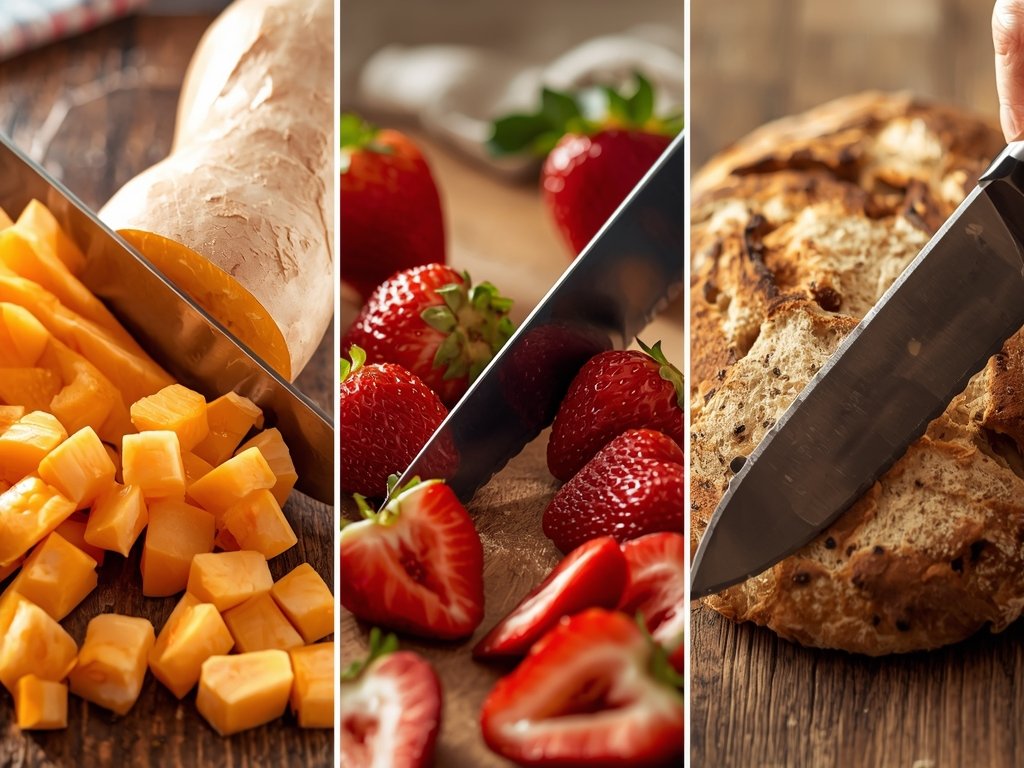
These three knives cover all your bases, from heavy-duty chopping to delicate slicing. But what makes them so special? Let’s break it down:
- Versatility: The chef’s knife can handle 80% of your cutting tasks, while the paring knife tackles the remaining 15%. The serrated knife takes care of the last 5%, ensuring you’re equipped for any recipe.
- Efficiency: With these three knives, you’ll spend less time switching between blades and more time cooking. No more fumbling through a crowded drawer to find the right knife for the job.
- Durability: By investing in high-quality knives and using them correctly, you’ll save money in the long run. No more constantly replacing cheap, dull blades that can’t handle the demands of a busy home kitchen.
Real-Life Applications: How These Knives Shine
Meal Prep Made Easy
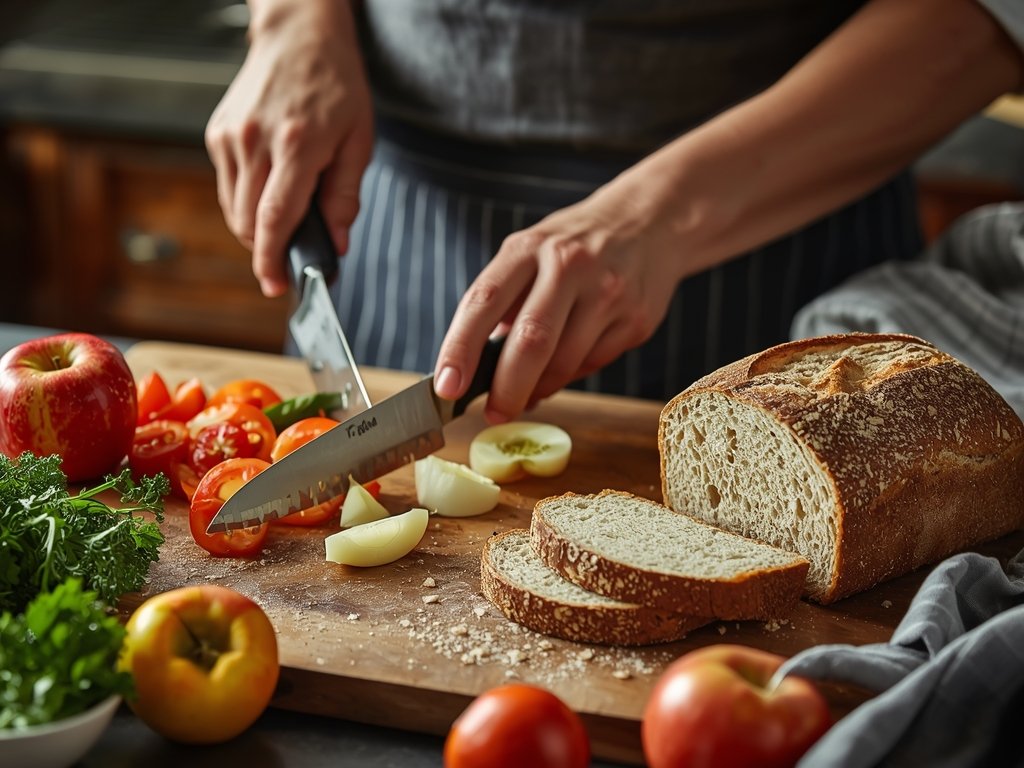
Imagine you’re prepping a week’s worth of meals. Your chef’s knife will be your go-to for chopping veggies, slicing meats, and mincing herbs. The paring knife will come in handy for peeling and trimming, while the serrated knife will make quick work of slicing bread for sandwiches.
With these three knives, you’ll breeze through meal prep, saving time and energy for the fun stuff – like experimenting with new recipes or enjoying a glass of wine while you cook.
Holiday Entertaining: A Breeze
The holidays are a time for feasting, but they can also be stressful for home cooks. With your essential trio, you’ll be ready to tackle everything from carving the Thanksgiving turkey to slicing a Christmas ham. The serrated knife will ensure your homemade pies and cakes look as good as they taste, while the chef’s knife will make quick work of chopping ingredients for stuffing or gravy.
And when it’s time to clean up, you’ll appreciate having fewer knives to wash and store. More time for eggnog and holiday cheer!
Caring for Your Knives: Tips and Tricks
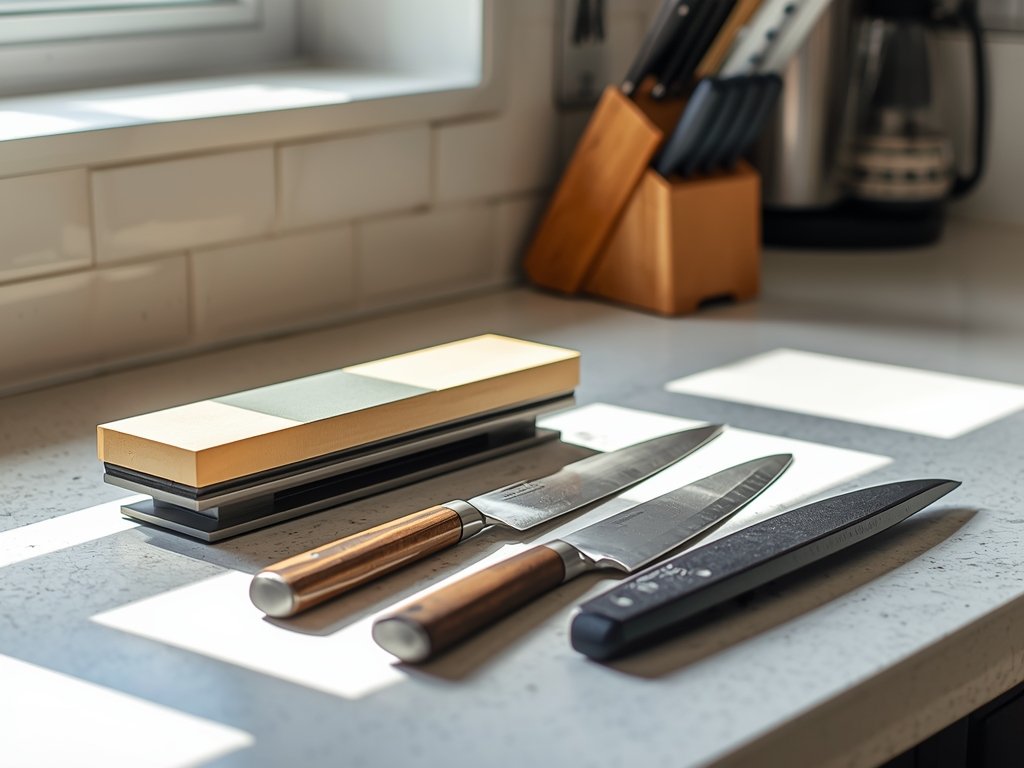
To keep your knives in top shape, follow these simple care tips:
- Hand-wash only: Dishwashers can dull and damage your knives. Hand-wash them with mild soap and warm water, then dry immediately.
- Sharpen regularly: Invest in a whetstone or honing steel to keep your knives sharp. A sharp knife is safer and more efficient than a dull one.
- Store properly: Use a knife block, magnetic strip, or in-drawer storage to protect your knives from damage and keep them within easy reach.
By treating your knives with care, you’ll ensure they last for years, if not decades. And when it’s time to replace them, you’ll know exactly which three knives to buy.
FAQ
What if I already own a set of knives?
If you’ve invested in a knife set, don’t worry – you can still streamline your collection. Keep your chef’s knife, paring knife, and serrated knife, and consider donating or selling the rest. You’ll be surprised at how little you miss those extra blades.
Can I use a serrated knife for tasks other than bread?
Absolutely! Serrated knives are great for slicing delicate produce like tomatoes, as well as cakes, pies, and other soft foods. Just be gentle – the teeth can tear through more delicate items if you’re not careful.
How often should I sharpen my knives?
It depends on how frequently you use them. As a general rule, sharpen your knives every 3-6 months, or when you notice them becoming dull. Honing your knives regularly (every 2-3 uses) will also help maintain their edge.
What’s the best way to store knives in a small kitchen?
If counter space is limited, consider using a magnetic strip or in-drawer storage. These options keep your knives within easy reach while saving valuable counter real estate. Just be sure to install them securely and keep them out of reach of children.
Are expensive knives really worth the investment?
While you don’t need to break the bank, investing in high-quality knives will pay off in the long run. Look for knives with comfortable handles, full tangs, and high-carbon stainless steel blades. With proper care, they’ll last for years, making them a worthwhile investment for any home cook.

David handles the Kitchen Gear category, reviewing tools, equipment, and accessories that make cooking and food storage easier. His articles focus on practical recommendations for everyday home cooks.

← Previous
7 Genius Rice Cooker Hacks Beyond Rice
Next →
Glass vs Plastic: The Ultimate Food Storage Safety Guide